Category Archives: Markets

Bunnings Timber Price Lists

Bunnings is the largest hardware chain in Australia. When Australians think of timber they think of Bunnings. Bunnings sets the baseline when it comes to timber prices.

https://www.bunnings.com.au/

Bunnings two main timbers are Tasmanian Oak and Radiata pine. If you want timber other than these species you need to go to a specialist timber retailer. But Bunnings don’t show their prices on a per cubic metre basis, so I’ve done the homework.

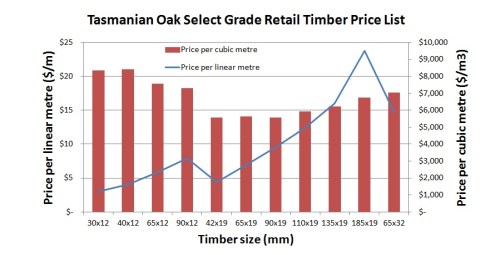
Firstly the price list for kiln-dried, dressed, Select Grade Tas Oak as at June 2016:
BunningsTOak0616

Tasmanian oak is a native forest hardwood tree, so the costs of growing Tas oak are considerable in terms of management, regulation, roading, harvesting and transport. Most Tas Oak comes from public native forests managed by Forestry Tasmania. Forestry Tasmania is NOT run as a fully commercial profit-driven business, and has received considerable taxpayer subsidies over many years.

So these prices do not reflect the actual cost of growing the timber.

Prices range between $5,500 and $8,500 per cubic metre, with something of a trend of increasing prices for larger dimension timber to (perhaps) reflect the increased cost (to the taxpayer) of growing bigger, older trees.

Next is the price list for Radiata pine.

Radiata pine is a highly domesticated plantation-grown tree species, where scale, volume and efficiency dominate the market. It is grown primarily for the construction and pulp markets. The pine market is extremely competitive so these prices should accurately reflect the dynamic between supply and demand and the cost of production.

The other point to be made here is that Radiata pine must represent the absolute cheapest that solid wood of any kind can be commercially grown. It’s the bargain basement of solid wood prices.

The price list is for Standard grade pine, with Premium clearwood prices shown in yellow.

BunningsPine0616

Growing Premium grade, knot-free pine requires thinning and pruning the plantations at significant cost compared to growing Standard grade, hence the higher price for Premium grade pine.

Does the 100% markup per cubic metre for the Premium pine make it more profitable for the grower? I hope so!

Prices for the Standard Grade pine range between $1,100 and $3,500, whilst Premium grade ranges between $2,400 and $3,500 per cubic metre for a limited range of sizes.

And here we have a retailer selling blackwood for the same price as radiata pine:

https://blackwoodgrowers.com.au/2015/10/19/blackwood-pricing-and-the-forest-industry-1/

It’s completely insane!

According to Bunnings Select grade Tasmanian oak is 2.5 to 5.2 times more valuable than Standard grade radiata pine (when comparing the same sizes), and 1.7 to 2.6 times more valuable than Premium pine.

Given that Tas Oak is much slower growing than pine and is a native forest species (ie. higher cost of production, lower productivity), one would think that a 2x times price premium can in no way reflect the relative costs of production!

No wonder then that our native forest industry is in such trouble with give-away prices like these.

Also given that Tasmanian oak is not generally regarded as a premium appearance grade timber and is relatively abundant, what would be the relative price of select grade blackwood, which is regarded as a premium timber and is relative scarce? Would it be 3.0 times the price of Premium grade pine, ie. $7,500 per cubic metre? Or 2.0 times the price of Select grade Tasmanian oak, ie. $12,000 per cubic metre?

Surely Tasmanian blackwood timber should be priced well above Tasmanian oak!!

For my previous reviews of timber (including blackwood) price lists see here:
https://blackwoodgrowers.com.au/category/price-lists/

IST Blackwood Log Tender Results 2015-16

IST 0815 log23double

In the interests of greater market and price transparency in the forest industry here is my annual summary of blackwood log tender results from Island Specialty Timbers (IST) for the 2015-16 financial year.

This is the only publically available competitive market price data for blackwood logs.

http://www.islandspecialtytimbers.com.au

Unfortunately IST does not produce any market reports or annual summaries of their sales or other activities, which is why I produce this report every year.

During the year 15 lots were tendered across 9 separate tenders. These comprised 11 individual blackwood logs, and 4 log parcels totalling 70.4 cubic metres (100 logs at an average volume of 0.70 cubic metres per log). Total volume tendered was 91.1 cubic metres. This is less than 1% of all blackwood harvested from our public native forests.

This volume compares with 32 and 20 cubic metres of blackwood logs tendered in 2015 and 2014 respectively.

In addition to the IST tenders there were two tenders by Hydrowood during the year, run through IST, one of which included 16 premium blackwood logs totalling 21.4 cubic metres.

http://hydrowood.com.au/

You can read my review of this Hydrowood tender result here:

https://blackwoodgrowers.com.au/2015/12/11/tasmanian-blackwood-sawlogs-at-625-per-cubic-metre/

For the IST tenders the best result for the year was a small (0.68 cubic metres) plain-grain blackwood log (show in the above picture) that sold for $850 per cubic metre.

The worst result for the year was a 30 cubic metre parcel of 44 plain-grain logs that sold for a very low $100 per cubic metre.

One highlight for the year was a very large blackwood log that measured 4.35 cubic metres, with a length of 7.5 metres and a large-end diameter of 98 cm! Unfortunately this log had spiral grain and was deeply fluted so the sale price was only $275 per cubic metre.

Of the four parcels of logs tendered only 2 parcels sold totalling 34.6 cubic metres for an average price of $135.50 per cubic metre, average log volume of 0.72 cubic metres. These are small logs. The average volume of the Hydrowood blackwood logs that sold for $625 per cubic metre was 1.5 cubic metres. An average plantation grown blackwood sawlog contains 1.5 cubic metres.

The table below summarises the IST tender results for the 2015-16 financial year:

IST_Annual table_16

All up the IST tender results for 2015-16 are a mixed bag with indications of a soft market. This is indicated by the low prices for the figured grain logs, by the fact that half the volume put to tender failed to sell, and total blackwood tender sales revenue ($10,096) was 50% down on last year. The real stand out result for the year was the Hydrowood tender at $625 per cubic metre for a large parcel of good size plain-grain logs.

For what it’s worth here is a chart showing IST blackwood log tender price trends for the past 3 years:

IST_Annual chart_16

Unfortunately the volume of IST blackwood tender material is too small and the quality too variable to allow meaningful market/price comparisons between years. Much of the material is of poor quality, or in the case of the log parcels, the logs are of small size compared to what would be produced in a well managed blackwood plantation. Large volumes of large, good quality logs from blackwood plantations should generally command better prices than shown by the IST result.

Wouldn’t it be great if this chart represented more meaningful data?

So whilst an increasing (if still miniscule) volume of blackwood log is being put to public tender by IST, the volume of quality blackwood sawlog from public native forest continues to decline. Half of the volume of special timbers now harvested from public native forest in Tasmania constitutes “non-millable” material in order to make up the politically correct headline figure.

Despite the fact that blackwood comprises over 80% of the volume of special timbers harvested from Tasmania’s public native forests, it comprises only 15% of the volume put to tender by IST. The blackwood market desperately needs more tradability, more transparency and much more commercial credibility.

Caveats:

  1. Island Specialty Timbers (IST) is an enterprise of Forestry Tasmania established in 1992 to increase the recovery, availability and value of specialty timbers from harvesting activities in State forests.
  2. Forestry Tasmania manages its special timbers operations (including IST) as a taxpayer-funded, non-commercial, non-profit, community service. Last year each cubic metre of blackwood log harvested by Forestry Tasmania received a taxpayer subsidy of $82! No private blackwood grower received any taxpayer subsidy.
  3. Note that all logs and wood sold by IST (excluding the Hydrowood logs) come from the harvesting of public native old-growth forest and rainforest certified under AFS (PEFC).
  4. It is unlikely that this tiny set of market-based blackwood log prices is representative of the broader blackwood market.
  5. The dataset is too small and variable in quality to allow any analysis or correlations to be made between price and log quality apart from the obvious result that feature-grain logs attract a significant price premium over plain-grain.
  6. Remember also these tender prices are effectively mill door prices that already include harvesting and transport costs. They are not stumpage prices.

So whilst Forestry Tasmania, the State government and the State parliament all regard the special timbers industry as a taxpayer-funded community service and political play-thing rather than a commercial opportunity, then blackwood’s commercial future remains difficult.

“The lack of price transparency for forest products, particularly from hardwood forests/plantations [in Australia], represents an impediment to the uptake of farm forestry. Unlike other commodities, price information for forest products is not published through the newspaper or accessible online. Better price transparency is required to encourage smallscale investment in trees” (p. 71. FWPA Report PN: PNA243-1112/2, 2013).

http://www.fwpa.com.au/rd-and-e/market-access/229-the-case-for-renewed-development-in-plantations-identifying-forest-values-and-the-constraints-to-attainment-stage-one-and-two.html

This quote from a recent forest industry report says it all. Even the forest industry recognises price transparency is a major issue, but then does nothing about it.

  1. One of the authors of this report was none other than the recently appointed Director of Forestry Tasmania. Does this mean we will see greater transparency and competition at FT?

When will Tasmania get a fully commercial, profitable forest industry, based on profitable tree-growing?

For previous years IST tender reviews see:

https://blackwoodgrowers.com.au/2015/06/18/ist-blackwood-sawlog-tender-results-2014-15/

https://blackwoodgrowers.com.au/2014/06/14/blackwood-sawlog-tender-results-2013-14/

Martin Custom CE07 Australian Blackwood

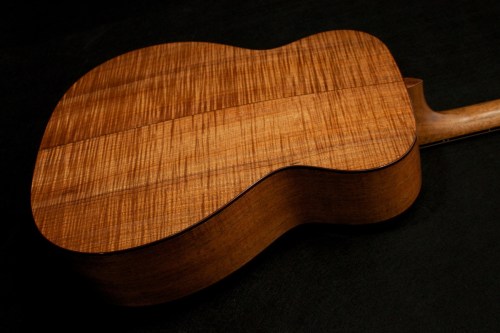
MartinCEO7TB_double.jpg

Is a single custom made Tasmanian blackwood guitar worth promoting on this website?

I guess it qualifies if it comes from CF Martin in Nazareth, Pennsylvania, the world’s most renowned guitar company.

And positive blackwood stories are rare enough that even small stories have value.

The fact that I’m a guitar-centric person may also have some influence…

The classical, restrained elegance of Martin’s design ethos is clearly evident in this guitar. I love that colourful edge binding and back strip.

This guitar has a huge, powerful voice that barks twice as loud as you’d imagine.

http://themusicemporium.com/guitars/martin-custom-ce07-australian-blackwood

CF Martin seems to enjoy producing these limited edition models for the collectors market.

This one has already sold so I guess the marketing strategy is working.

Nice work Mr Martin!

Further web searching tells me this guitar is from 2 years ago. Still a good old news story!

For my previous reviews of Martin blackwood guitars see here:

https://blackwoodgrowers.com.au/?s=Martin

Taylor Guitars latest Tasmanian blackwood promotion

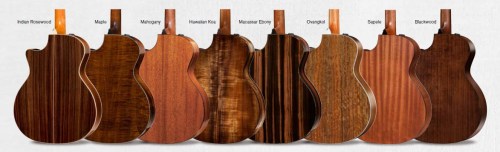
TaylorTonewoods.jpg

The latest Wood & Steel magazine (Winter 2016) from Taylor Guitars offers yet another big promotion of Tasmanian blackwood, featuring in three of the articles in the magazine:

  • New 12-String Voices
  • 12-Fret Revival
  • The 300 Series Branches Out

https://www.taylorguitars.com/wood-and-steel

Here’s the main Tasmanian blackwood promotion found on page 15:

Blackwood’s Broadening Appeal

“Blackwood is one of my all-time favorite tonewoods,” declares Taylor’s master guitar designer Andy Powers, reflecting on the Tasmanian timber’s addition to the series. “I‘ve enjoyed its characteristics in every guitar I’ve built with it. It always sounds good.”

A lot of us at Taylor, in fact, are fans of the tonewood. Our product development team has crafted several series of limited edition blackwood guitars in recent years (including our 2014 500 Series Fall Limiteds) in the hope of broadening the appreciation among guitar players who haven’t been exposed to it. While blackwood has been a staple among guitar makers in and around its native region of Australia, its usage has been more limited in North America due in part to its lack of geographic proximity.

“That’s one of the factors blackwood had going against it,” Andy says. “It’s a long way to America from Australia. Historically, in the formative years of the steel-string guitar, it was a lot easier to get mahogany and rosewood here because they were already being imported for furniture.”

Despite its more limited usage in this hemisphere, blackwood has earned a loyal following across the industry.

“Martin has built some nice guitars with heavily figured blackwood, and they sound great,” Andy says. “And I know a number of small builders who work with it and live in the same camp as me; we all feel it’s amazing.”

The supply is also sustainable, with a healthy sourcing outlook for the future. From a guitar-making point of view, blackwood’s relatively rapid growth cycle can often yield guitar quality wood in under 40 years, and the abundant supply of older, bigger trees produces a lot of straight-grained wood that is easy for guitar makers to work with. We purchased our blackwood from Tasmanian wood supplier Bob Mac Millan (profiled in our Fall 2014 issue), who also sourced the much rarer blackheart sassafras we recently used for limited edition models.

http://tasmaniantonewoods.com/

As an acacia wood species, blackwood sometimes draws comparisons to Hawaiian koa, another member of the acacia family, although, in reality, Andy says, the two species are unique.

“People sometimes refer to blackwood as the old cousin of koa, a more prehistoric version,” he explains. “While that may be so, blackwood has some distinct working characteristics, color, and grain structure, which distinguish it from koa.”

While blackwood will occasionally display exotic figure, Andy says our grading specifications for the sets used with the 300 Series call for more of a classic, straight-grained structure.

“We wanted a staple wood we could count on,” he says. “It’s a high quality guitar wood, clean, clear and straight-grained. In terms of color and overall appearance, it’s not a dramatic change from the classic mahogany or sapele aesthetic. It has a similar look a lot of times, especially paired with the mahogany tops and with a nice shaded edgeburst. Frankly, a lot of players may not even visually notice the difference unless they’re really looking for it.”

A color-matched stain for the blackwood back and sides and mahogany top and neck brings a seamless visual cohesion to the guitars, adding a rich undertone to the natural cinnamon-brown hues and highlighting the similar grain structure of both woods. Tonally, blackwood yields a strong midrange focus — dry and clear yet also warm, like mahogany and koa — with a splash of top-end shimmer and richness similar to rosewood. Its musicality, Andy says, suits a variety of body sizes and musical styles. Paired with a mahogany top, players can expect plenty of dynamic range.

Phew!

There’s a lot of promise, hope and opportunity in all those excellent words. Can they be matched by some clever product development and marketing, and finally by market acceptance and appreciation?

On top of the blackwood promotion there is other good news including the fact that Taylor Guitars has been the top-selling acoustic guitar brand in the USA for 26 straight months, with total (acoustic and electric) production in 2015 of 165,000 guitars and employ over 1,000 people! Even then they still can’t keep up with the demand.

Also the article Forestry for the Future on page 5 by Bob Taylor makes for interesting reading. Mr Taylor says “A word that has now become part of my daily vocabulary is “forestry.” He goes on…” The foresters I’ve met are mostly very good and brimming with concern, ideas and skills to help us all. And they’re frustrated because they work in a structure that often doesn’t allow them to work. Their work takes committed clients, and it also takes time.”

And as we have seen in Tasmania over the past 40 years, good intentions can so easily become corrupted and distorted to the point where the forest industry struggles to operate effectively because of the domination of ego, ideology and politics.

Bob Taylor says that forestry is the answer. I would say that good leadership is the answer. And I’m happy to say that Bob Taylor fits the leadership role pretty well!

I certainly sympathise with the expression of frustration! Being a forester in Tasmania means living with permanent dose of frustration.

Taylor Guitars and Bob Mac Millan at Tasmanian Tonewoods are doing their bit to bring Tasmanian blackwood to the world stage.

Now what can we in Tasmania do to support Taylor Guitars promotion of profitable, sustainable Tasmanian blackwood tonewood?

This is a commercial opportunity going begging.

Are Tasmanian farmers interested?

Are our politicians interested?

Is the TFGA interested?

We need leadership!

We need cooperation!

Plantation blackwood resonator guitar

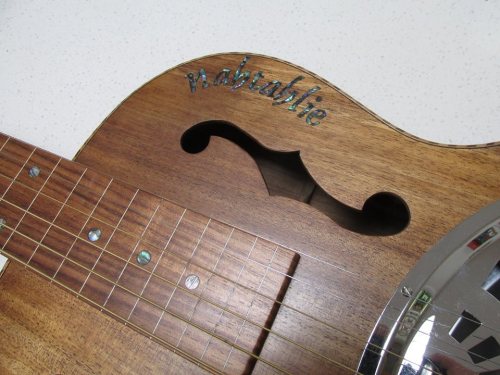
Burgin_resonator.jpg

Wellington, New Zealand-based luthier Paddy Burgin has created another beautiful musical instrument using plantation-grown blackwood.

http://www.burginguitars.co.nz/

Made for a local (NZ) steel player who wanted an instrument made totally from NZ grown woods. Paddy’s plantation-grown blackwood comes from Golden Bay at the northern tip of New Zealand’s south island. The tree was about 35 years old when harvested.

https://www.facebook.com/paddy.burgin/media_set?set=a.10154096475482429.1073741829.692202428&type=3

I only wish more instrument buyers and luthiers would take the plantation tonewood challenge and try plantation grown blackwood.

Great work Paddy!

A new super-limited edition Martin J-14f featuring Tasmanian blackwood

Martin J14F

More like super rare than “limited” with only 3 of these J-14fs made.

http://www.guitarworks.ca/martin-custom-j-14f-torrefied-premium-adirondack-tasmanian-blackwood-ser-1855802/

This one is available right now from Guitarworks in Calgary, Alberta, Canada for only $CAD6,200. That’s about $AUD6,310.

It’s nice to see Martin still pumping out a few quality guitars featuring Tasmanian blackwood, if only occasionally.

https://www.martinguitar.com/

It’s amazing what you find just meandering around the internet!

Taylor Guitars 2016 Spring Limited models

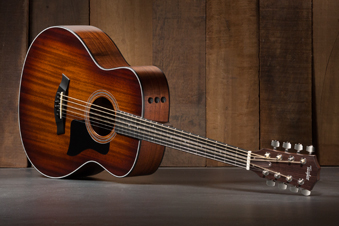
2016-limiteds-326

As a new addition to the 300-series Tasmanian blackwood/mahogany models, Taylor Guitars have added a limited release 8 string baritone model.

https://www.taylorguitars.com/guitars/limited-editions/2016-limited-editions

https://www.taylorguitars.com/guitars/acoustic/326e-baritone-8-ltd

Read my review of the 300-series here:

http://blackwoodgrowers.com.au/2016/01/25/new-taylor-300-series-solid-tasmanian-blackwood/

This is Tasmanian farm-grown blackwood timber supplied by Tasmanian Tonewoods:

http://tasmaniantonewoods.com/

The future of Tasmanian special species timbers is here!

“..we will take wood….”

gutwein

It didn’t take long.

No sooner had UNESCO ruled out logging the Tasmanian Wilderness World Heritage Area than the Tasmanian Government and sectors of the special timbers industry are already setting themselves up for yet another conflict with consumers, the environment movement and the Tasmanian community.

Tasmanian forest policy especially around so called special timbers just keeps going from the sublime to the ridiculous in a never ending spiral of senseless politics, waste, conflict and stupidity.

We are all being played for fools.

http://www.themercury.com.au/news/politics/unesco-report-sparks-state-search-for-speciality-timbers-outside-of-world-heritage-area/news-story/97d8e65a2ff6fcb1d35f8c3b7abd404d#load-story-comments

http://www.themercury.com.au/news/tasmania/showdown-set-for-tasmanias-special-timber-as-state-government-seeks-way-to-source-supply/news-story/dedecb43ecb8b1b0478738b1609d1084

http://www.abc.net.au/news/2016-03-22/cut-out-wastage-of-specialty-timbers-to-reduce-need-for-harvest/7265402?section=tas

Here’s the press release from the Resources Minister Peter Gutwein (above):

http://www.premier.tas.gov.au/releases/government_committed_to_working_with_the_special_species_timber_industry

Much of the information in the press release is old news as shown on the Department of State Growth website:

http://www.stategrowth.tas.gov.au/forestry/special_species_timber_management_plan

But the rhetoric in the press conference is clearly hostile and inflammatory. With a State election campaign coming up in 2017 forestry is yet again going to be one of the key election issues.

“…I’m not going to point the finger at anyone, but they know who they are…”

“..we will take wood…”

This is now very personal and vindictive, and above all else political.

It’s not about business.

It’s not about profitable tree growing.

It’s about taking wood [a public resource] and giving it to the “deserving” regardless of the cost or consequences.

When will Tasmania get a fully commercial profitable forest industry?

What can I do?

What can Tasmanian farmers do in the face of such relentless reckless commercial-opportunity and market-destroying stupidity?

Tasmania abandons World Heritage Area logging plans on UNESCO advice

TWWHA.jpg

Hooray!!

It’s time to break out the champagne!!

In a rare show of forest-policy commonsense the Tasmanian Government has apparently accepted the umpire’s decision and abandoned plans to log special timbers (including Tasmanian blackwood) in the Tasmanian Wilderness World Heritage Area (TWWHA).

http://www.abc.net.au/news/2016-03-20/unesco-tasmania-abandons-world-heritage-area-logging-plans/7261350

News reports just in say the UNESCO recommendations will be accepted but that the Government was still committed to supporting the [special timbers] industry.

Here’s the Tasmanian Governments announcement on the UNESCO Report:

http://www.premier.tas.gov.au/releases/monitoring_mission_report_on_the_twwha

Here’s the single recommendation in the UNESCO report regarding logging the TWWHA and some worthwhile comments from the UNESCO Mission:

Recommendation 2

The State Party should confirm an unambiguous commitment that the property is off-limits to commercial logging in its entirety, and fully reflect this commitment in the Management Plan for the whole of the property.


The mission would like to put on record that it considers the interests of the special species timber sector per se fully legitimate and by no means excessive. Despite the regrettable lack of conclusive data, the mission finds it difficult to imagine that resource security could not be achieved in the vast forest estate available for logging outside of the TWWHA. While a mixed World Heritage property, recognized for globally significant cultural and natural heritage, is not the place to experiment in the view of the mission, there is every reason to further discuss and test sustainable forest management elsewhere in Tasmania in less polarized fashion. The political support to the special species timber industry should be channelled to areas available to commercial logging outside of the TWWHA, while fully considering that there are areas outside of the TWWHA, which are likewise of the highest conservation value, including in the Tarkine area. New approaches to manage the desired species can draw on longstanding research conducted in Tasmania and a growing body of knowledge about the ecology of the species (UNESCO, p. 13).


The concept of “outside the TWWHA” should include commercial private growers.

Here is the link to the UNESCO report:

http://whc.unesco.org/en/documents/140379

To see my many blogs on this issue go here:

http://blackwoodgrowers.com.au/?s=UNESCO

So now the State Government is faced with developing a Special Timbers Management Plan with next-to-no public special timbers resource.

http://www.stategrowth.tas.gov.au/forestry/special_species_timber_management_plan

What will be the next political play?

Tasmanian blackwood has been and will continue to be the backbone of the special timbers industry, and the only Tasmanian special timber species with the potential for a profitable commercial future on private land.

Will the Tasmanian Government and Parliament now look to a different future for the special timbers industry or will politics continue to reign supreme in Tasmanian forest policy?

Cort Frank Gambale Signature Model

CortGambale

Australian jazz guitarist Frank Gambale has teamed up with Cort Guitars to produce the world’s first artist signature model acoustic guitar featuring Australian blackwood.

Unveiled at the Winter NAMM Show in January 2016 the Frank Gambale Signature Model is a concert body shaped acoustic guitar. This model features a solid Adirondack spruce top, a flamed blackwood back and sides, a mahogany neck, an ebony fingerboard featuring a custom inlay, an ebony bridge, gold tuners, and a 43mm nut. Each Frank Gambale Signature Model is equipped with LR Baggs EAS-VTC EQ onboard electronics.

Developed in conjunction with legendary guitarist Frank Gambale, this is a true signature model in that the artist had a great deal of input on each detail of the guitar. Ideal for high-speed soloing, this innovative acoustic-electric guitar also features custom wooden rosette and custom fingerboard inlay designed by Frank Gambale himself. This is a truly unique acoustic guitar as envisioned by a true guitar legend.

Frank Gambale has spent nearly four decades playing, writing, recording, performing, and teaching. His sweep-picking technique revolutionized guitar playing and continues to inspire generations of musicians in all genres.

Here’s a video review:

The Cort distributor in Australia has advised “it will be a little while before we can get our hands on it here in Australia”. I’ll keep readers informed.

www.cortguitars.com

www.frankgambale.com

Cort Guitars has been steadily increasing its use of Australian blackwood on a range of models including acoustic guitars and basses, and ukuleles. This signature model guitar throws Australian blackwood well and truly onto centre stage.