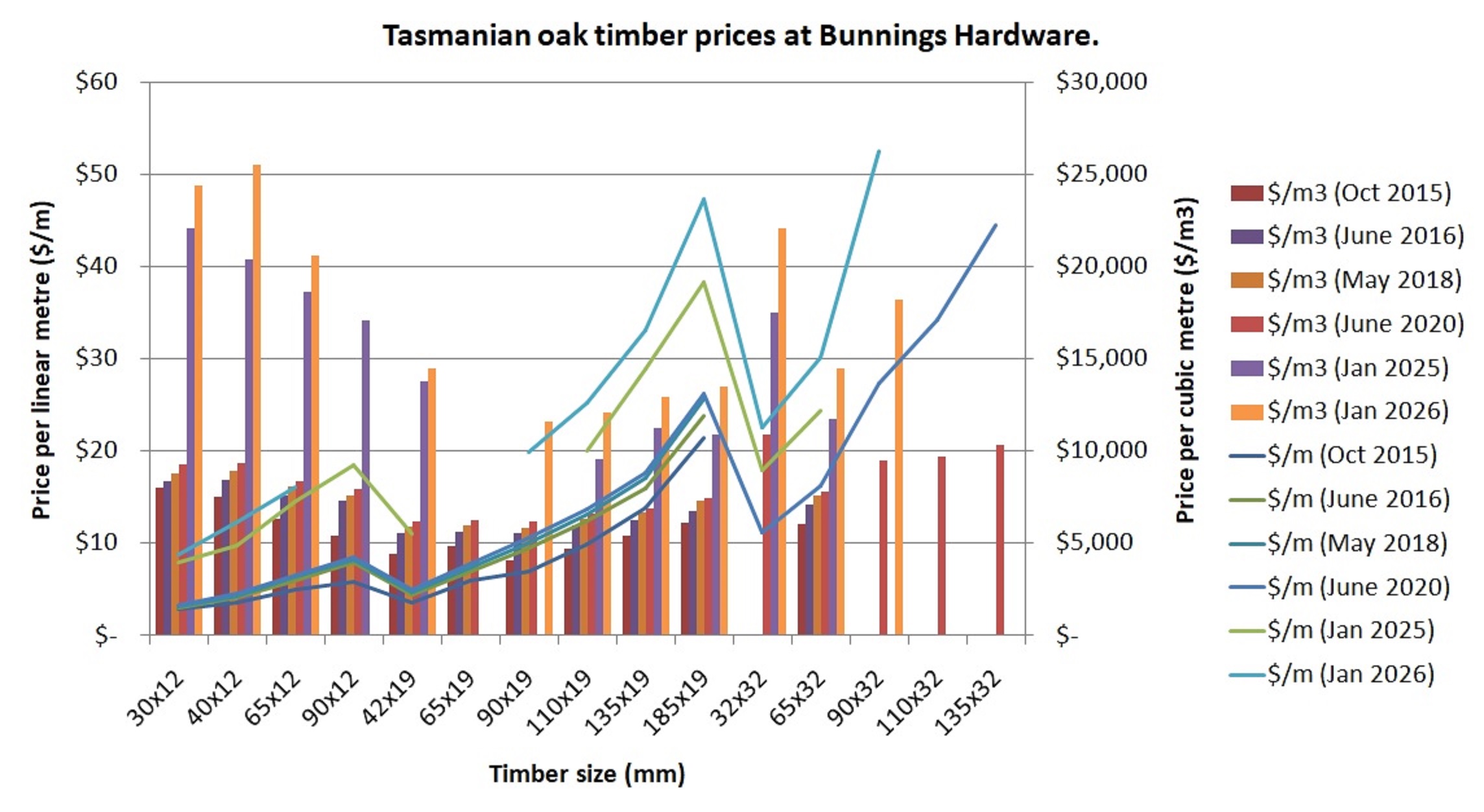
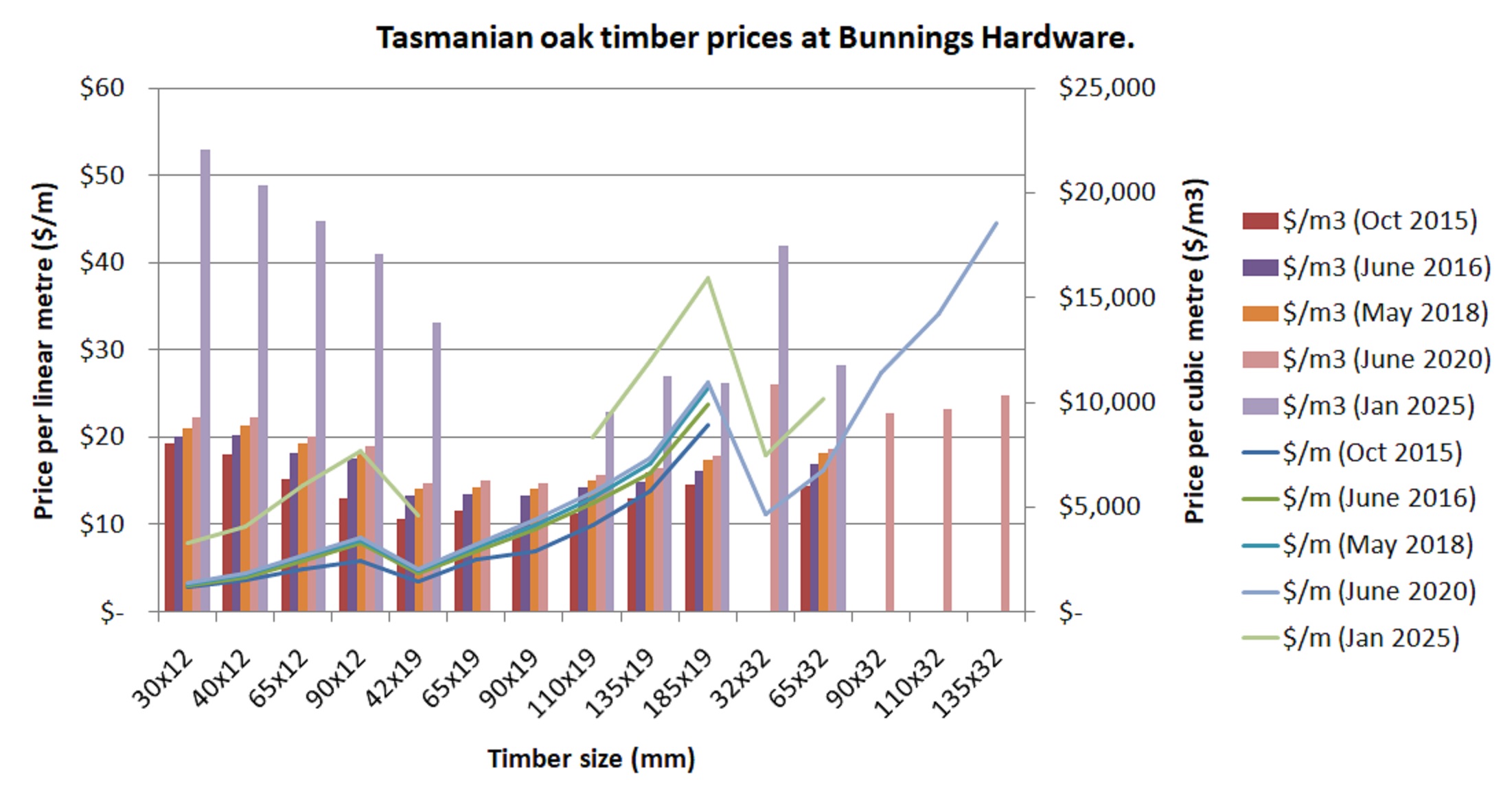
Another year passes since I last looked at premium hardwood (Tas oak) prices at Bunnings hardware. Another year of pretty serious price increases in a timber resource plundered from Tasmanian public native forests at taxpayers expense.
You can read about the “at taxpayers expense” here:
These prices are for Select Grade Tasmanian oak. Prices have increased from 5 to 26% over the last 12 months.
These price increases should be causing an absolute revolution in the forest industry, in timber markets and in the farming community!
Instead all I hear is deathly silence!
Why isn’t the Australian timber market working like any other agricultural market? Increasing prices generally mean an increase in production as farmers look to cash in on low supply, high demand and high profits. That’s how markets work!! Basic economics!
The Australian forest industry and Australian timber markets have never followed basic economics.
You ask an Australian forester about costs and prices, supply and demand, products and markets and they will give you a blank stare in return.
Which is one reason why the Australian farming community has never been engaged to grow and supply premium timber for domestic markets.
And these extraordinary timber price increases are met with utter silence.
Not even Bunnings, Australia’s largest timber retailer, has any interest in engaging with the rural community.
I received this message a while back from a blackwood grower in New Zealand and offered to post details on my website:
Hello all,
We own a small blackwood forest/plantation in NZ and are trying to find how we can sell our logs into the Australian market, rough details, 600-800mm DBH, clear pruned to between 6/8m approx age 30 years, roughly 300 trees, willing to fell and export to australia in shipping containers once buyer/wholesaler found..
Any help greatly appreciated feel free to email me at jamieinbrussels@gmail.com for further details etc.
Regards
Jamie
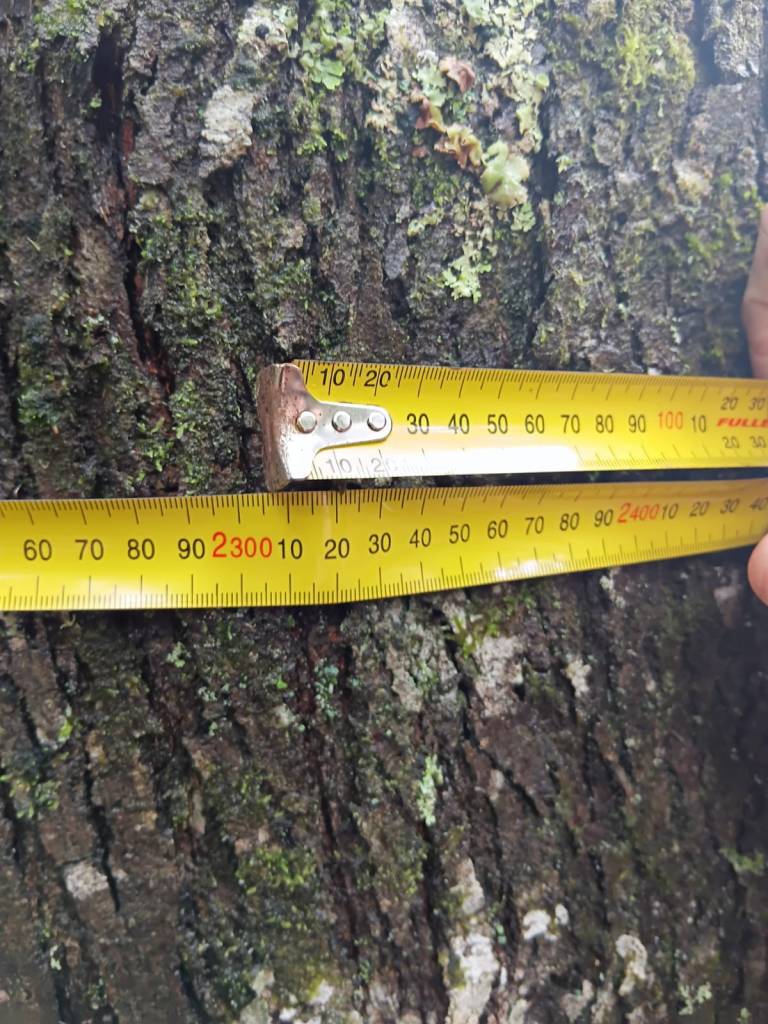
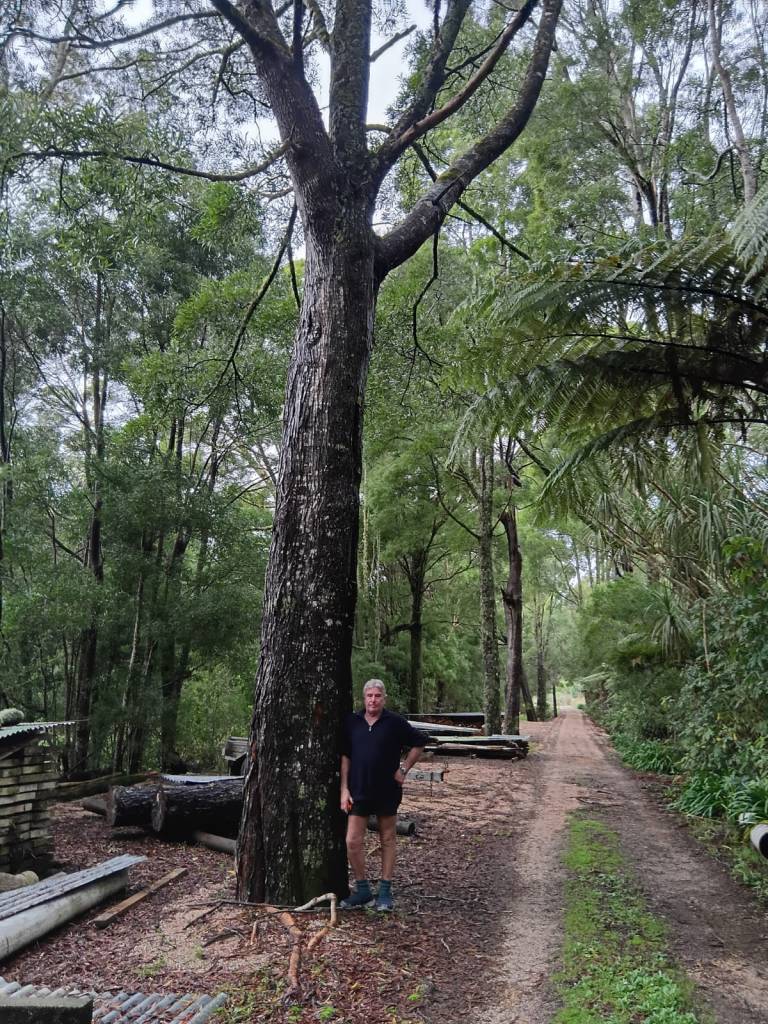
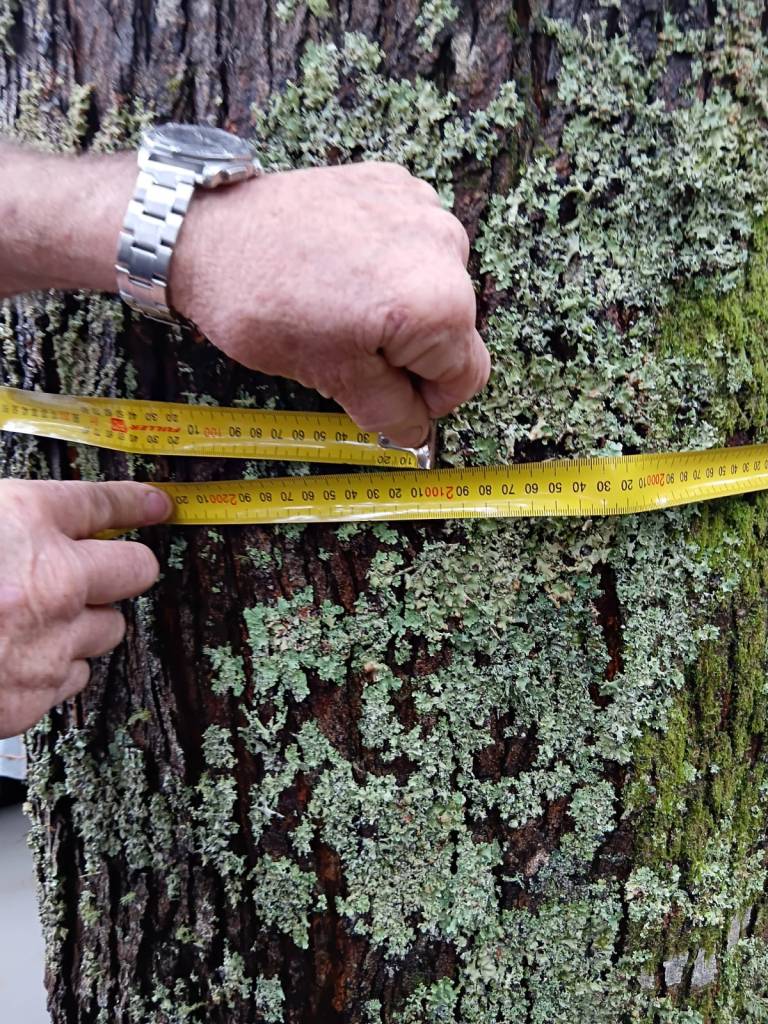
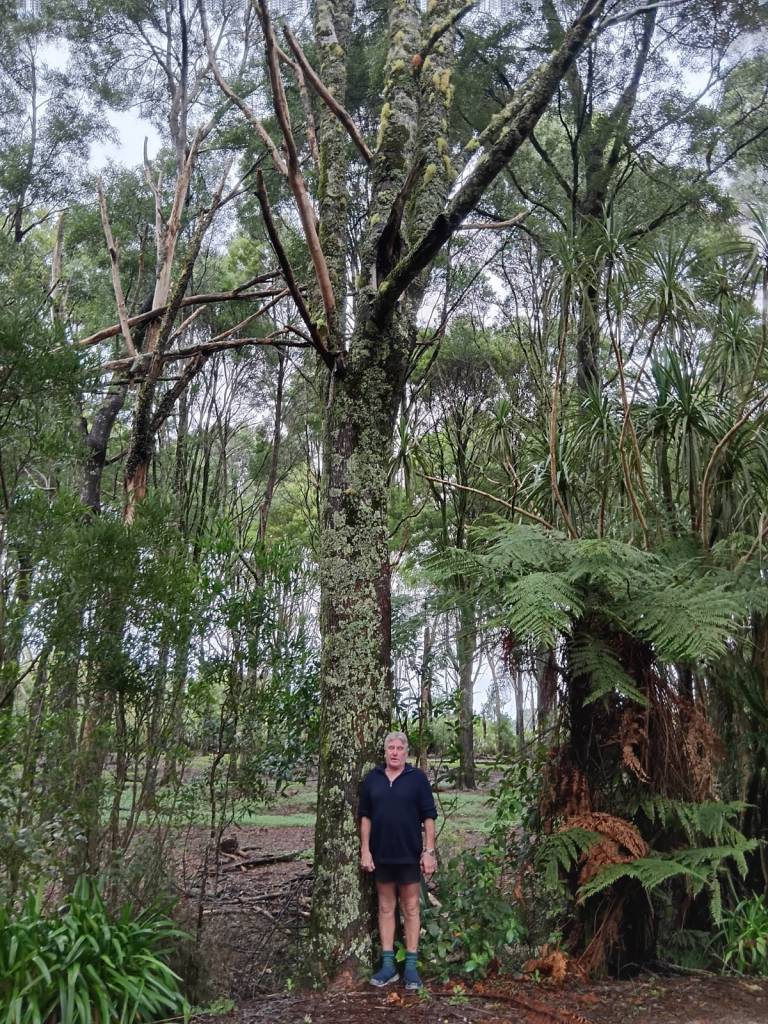
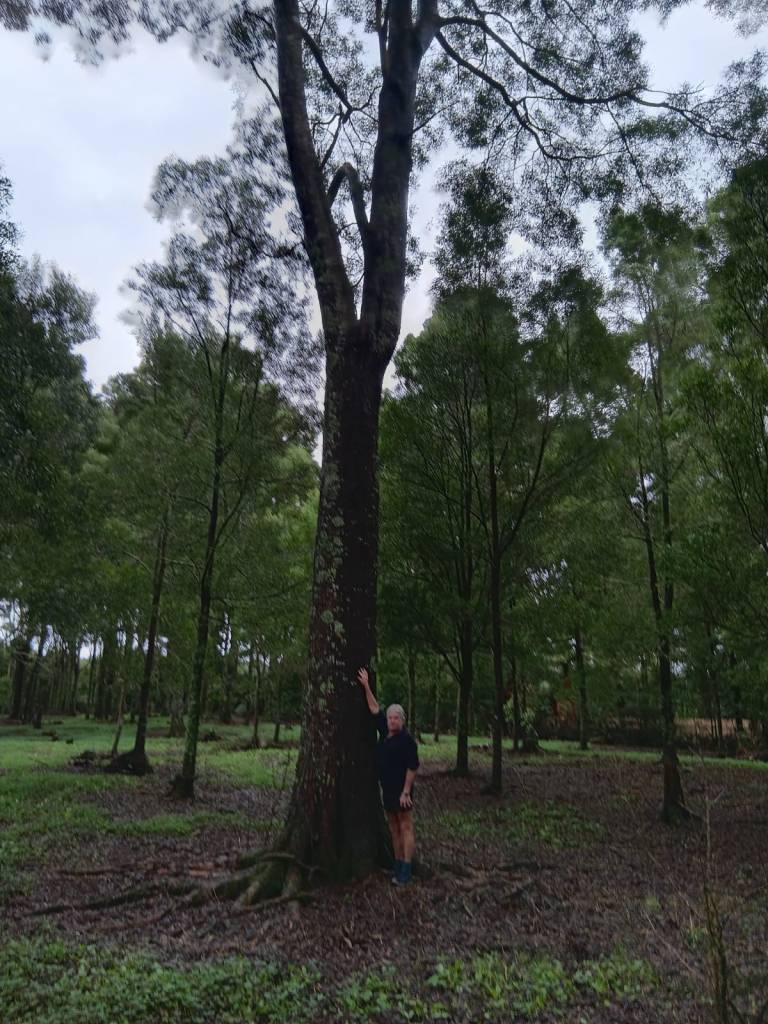
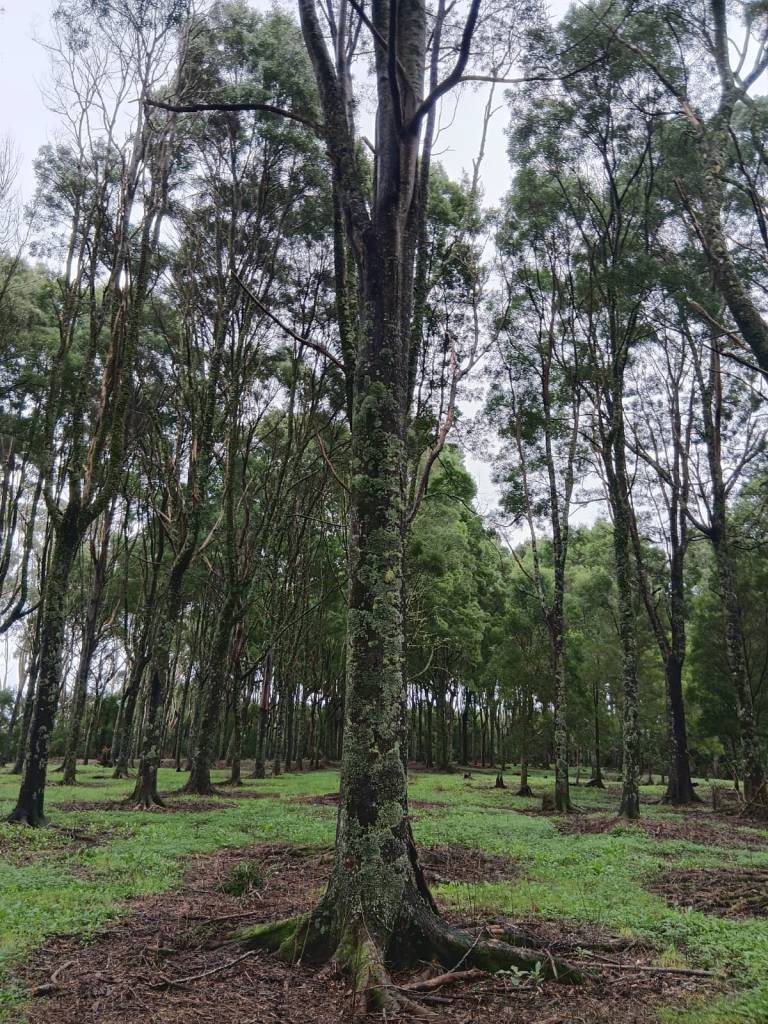
Photos of this resource are below.
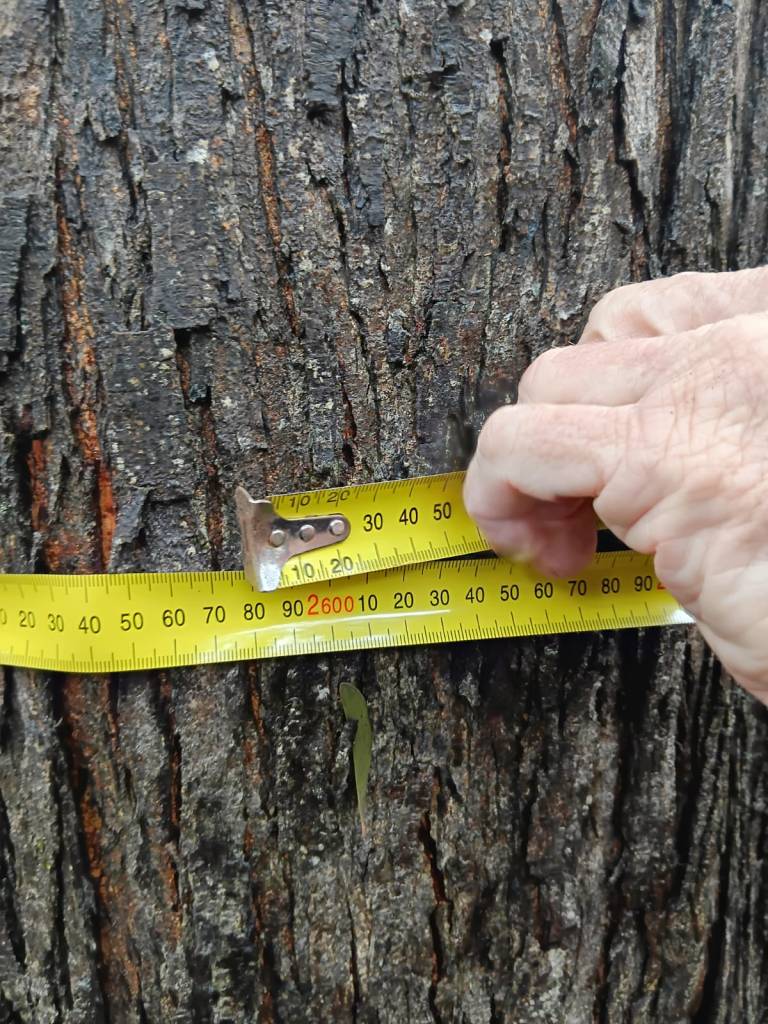
Please note: A 600/800mm diameter (DBH) tree has a circumference of 188/251 cm. Some trees are over 800mm diameter
From the above description and the photographs, this plantation (if well pruned and managed) should contain 300 – 500 cubic metres of premium blackwood logs 6 – 8 metres in length.
It is very difficult for small time tree farmers to break into the timber market. There are very few businesses (sawmillers, log merchants and timber merchants) out there supporting small scale tree farmers either in New Zealand or Australia. This is one of the major issues holding back farm forestry.
Unfortunately the diary containing the plantation management and pruning history for this plantation has not been located. From a log buyers perspective it is important to understand the management history of a plantation especially the pruning history. The price difference between a clear pruned log and a knotty log can be very significant!
(comment from owner) within the next few weeks one log will be milled and photos available upon request to provide an idea of grain, knots and quality. please email for details
This premium blackwood timber resource would suit an architect, designer or developer working on a large project such as premium apartments or offices. Beautiful farm grown timber with a great back story.
If there is anyone out there in either Australia or New Zealand (or elsewhere) who may be interested in this opportunity please contact Jamie directly on:
I’ve been reading your MONA Forest Congress Blogs. They make for entertaining reading, although many who should be reading them may be put off by the girlie style.
I’m writing this letter because at the present time (and since the 2014 Tasmanian State election), you seem to be the only hope of shifting fossilised and entrenched positions in the debilitating forest wars.
What you have achieved to date offers me a small ray of hope. Congratulations!
But there is a long road ahead.
I’m a professional forester, having been associated with the Tasmanian industry since 1978. It has been a difficult and frustrating career to say the least.
From my experience and perspective I could write volumes about the failures of the forest industry. They are legion!
And so in a short open letter what can I say, what questions can I ask, that would catch your attention? Cause you to pause and think!
Public Native Forestry
Many people regard resolving the thousands of issues around public native forest logging as achievable……just find the answer!!
But there is NO ANSWER!!
The use of any public resource/asset is fundamentally about politics. The 2014 Tasmanian State election proved that in spades for our public forests.
Any attempt to find THE ANSWER is a waste of time, and deflects us from the only possible future.
Old Growth
Protecting what is left of our current old growth forest is all very fine, but never forget that todays regrowth is tomorrows old growth.
The future
The future of the forest industry (and our future supply of timber) is with the rural community planting trees as a commercial and profitable crop.
But profitable tree growing has never ever been the focus of forest policy in Australia.
The forest industry in Australia has never, ever demonstrated an ounce of commercial credibility.
So how do we engage the rural community in the forest industry as a viable commercial opportunity?
Do we have proper functioning timber markets in Australia? No we do not!
Show me a sawmiller or log/wood merchant who really and truthfully supports private tree growers! You mention Shawn Britton. The Britton Timbers website provides no information for existing or potential private tree growers. Does Shawn Britton take responsibility for his future log supply? Does he want to compete in open, competitive markets for his logs, paying private growers real market prices?
It’s been five years since I checked the prices of conflict-driven, welfare-dependent Tasmanian oak timber at Bunnings Hardware, Australia’s largest timber retailer. Given my previous post about timber prices after the shutdown of welfare forestry in West Australia and Victoria, I thought I should do an update.
It seems that as welfare public forestry is shut down in Australia, the price of hardwood timber has increased dramatically. Small sizes are now over $22,000 per cubic metre and the cheapest at $9,500 per cubic metre. These are massive price increases from 5 years ago!
These massive hardwood timber price increases should be sending ripples through the Australian farming community. So far I’ve seen no evidence that is happening! Why??
The future of the forest industry in Australia is with farm forestry. Surely these hardwood prices now make growing quality hardwood in private plantations a viable and profitable agricultural activity.
I’ve just come back from a holiday in south west Western Australia, where I was reminded once again what great potential the region has for farmers to grow quality hardwoods, and I find this article in the news media!!
Hallelujah!!
Is this the beginning of a REAL forest industry in Australia??
Having put an end to public native WELFARE forestry, are we about to see farmers and the marketplace finally wake up and plant trees for our future wood supply?
I sincerely hope so!
Farm forestry has never really succeeded in Australia whilst State governments have been dominant growers and manipulators of the log marketplace. No farmer wants to grow trees in competition with politicians that’s for sure!
But now with public native welfare forestry in decline around Australia, the marketplace is starting to wake up and realise it is prepared to pay much higher prices for quality hardwood logs.
This powerful message needs to spread far and wide throughout the farming community in Australia.
If Australian sawmillers, log merchants and timber traders want Australian farmers to plant trees then they had better start pumping the market!!!
And instead of perpetually whinging all the time, the orthodox forest industry should instead get on board and focus on profitable farm forestry.
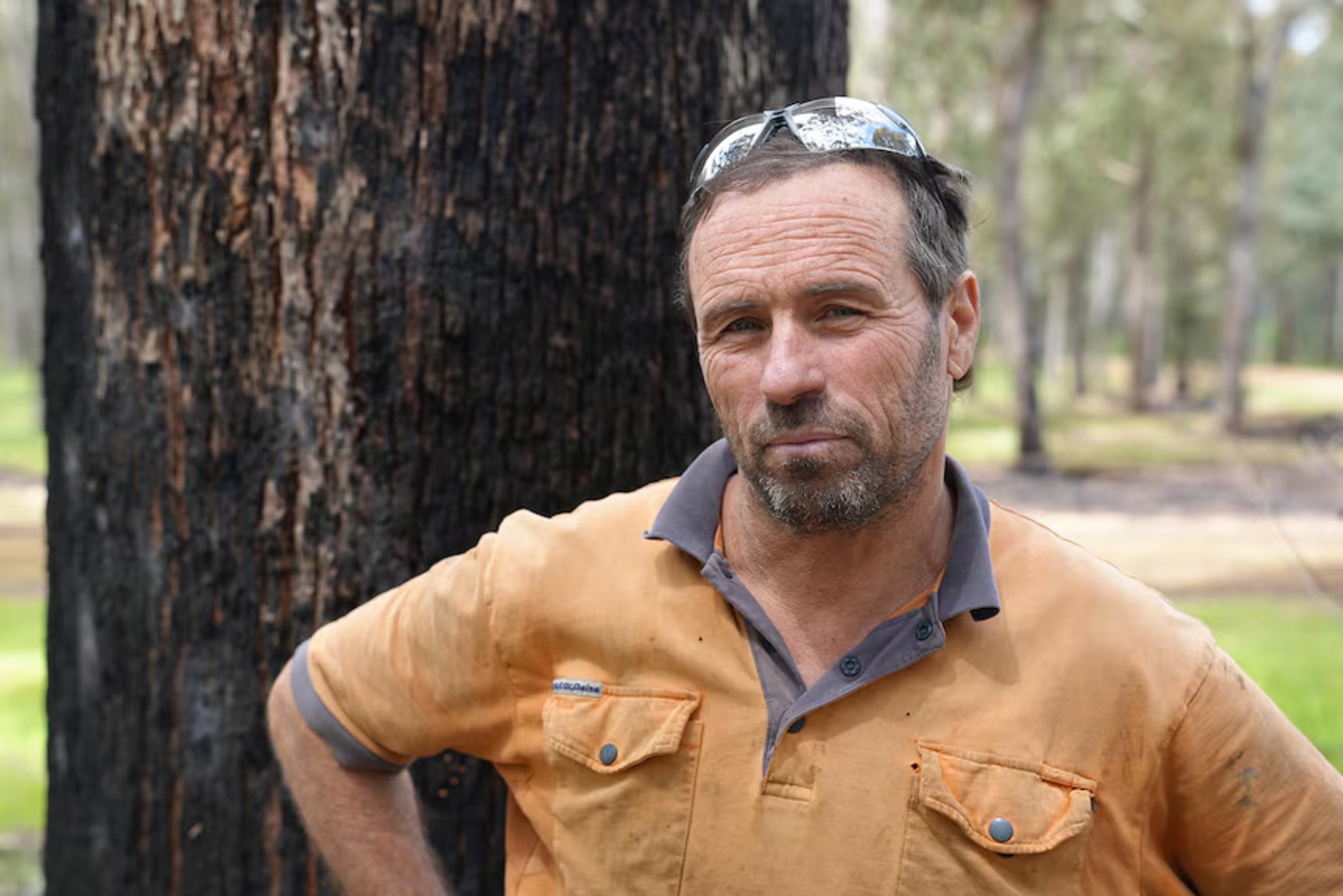
Good luck to Mr North from Walpole, WA! May his trees (and his bank balance) continue to grow!!
It is so good (and rare) to have a positive news story in the forest industry.
Island Specialty Timbers is the only source of competitive, transparent log prices anywhere in Australia, including blackwood sawlog prices. That simple statement tells us a great deal about the dire condition of the forest industry!
IST themselves never do any market updates so I decided to do that job for them. Otherwise the forest industry would have no market information at all.
The lack of commercial credibility is just one of the many challenges facing the forest industry in Australia.
IST is a business enterprise of Sustainable Timber Tasmania (STT) which sources and retails raw material of Tasmanian specialty timbers from harvest or salvage operations conducted on State owned Permanent Timber Production Zone land (PTPZl).
IST is not really a “business” just as the State forest agency Sustainable Timber Tasmania is not a business either. Logging of public native forest in Tasmania requires significant taxpayer subsidies every year.
IST conducted 7 tenders during the year with approximately 280 cubic metres of special species sawlog and craftwood put to public tender. Tasmania defines “special species” as any native forest timber apart from plain grain Tasmanian oak (Eucalyptus sp.).
Blackwood Results
IST put a mere 20 blackwood logs to tender totalling 21.7 cubic metres in 2023-24. Only one log had feature grain, all the rest being straight plain grain logs. Six logs (including the feature grain log) totalling 7.7 cubic metres failed to sell at tender. For the 14.0 cubic metres of sold plain grain logs, prices ranged from $250 to $925 per cubic metre with an average price of $454 per cubic metre.
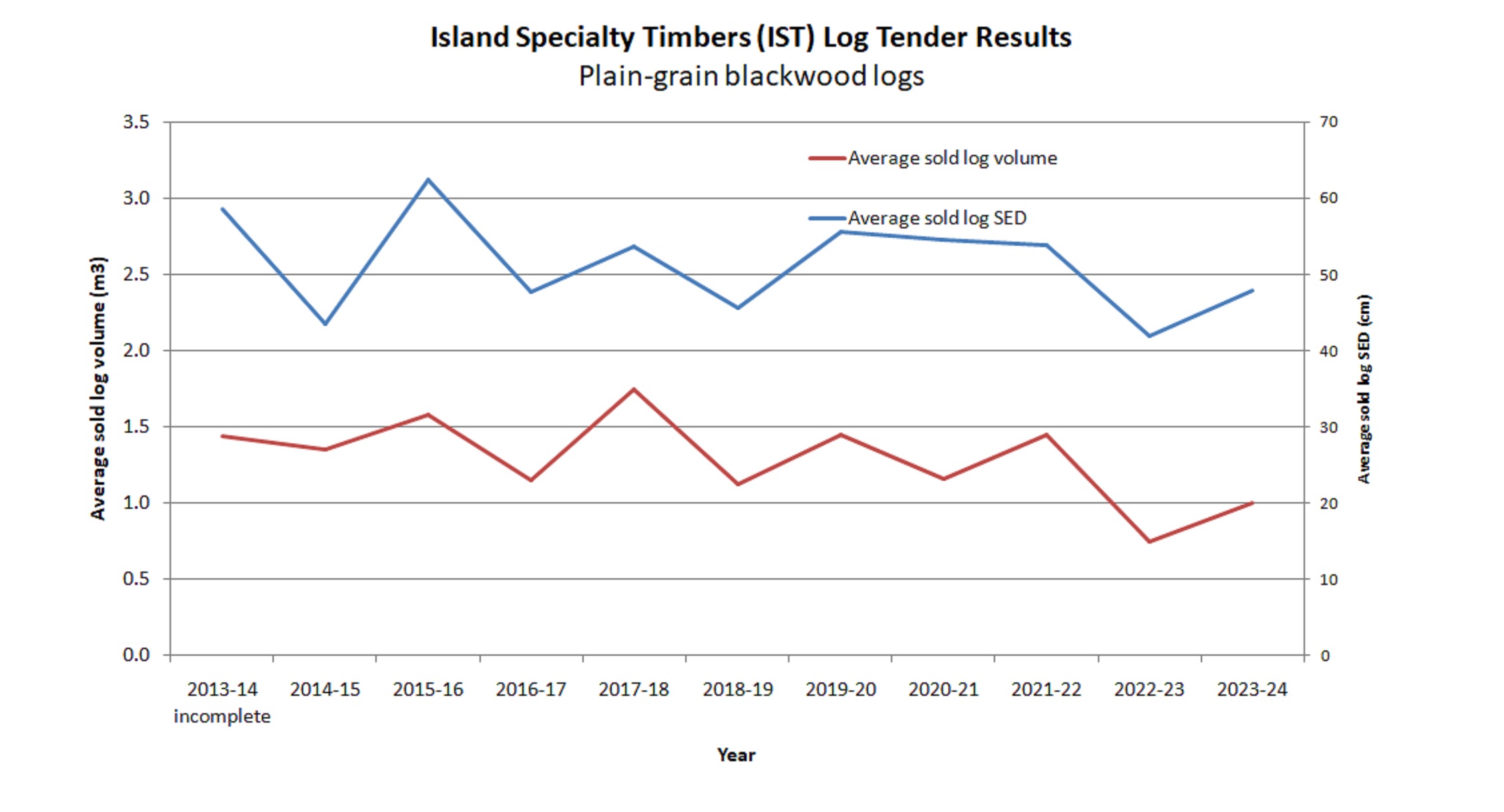
The last few years have seen mixed results in the market as shown in the following chart. This year saw an increase in the minimum and maximum prices paid but a fall in the average price.
The chart below shows the average volume and small end diameter (SED) for sold blackwood logs. Average log size was slightly up on last years, but still much smaller than a target size for plantation-grown blackwood. Smaller logs mean less sawn timber recovery per log volume so lower prices.
Generally ~9,000 cubic metres of blackwood is harvested annually from Tasmania’s public native forests with 99.99% being sold at heavily discounted Government prices on long term sales contracts. The Tasmanian government deliberately engages in anti-commercial, anti-competitive behaviour. These log tender results need to be interpreted bearing this fact in mind.
Premium plain grain sawlogs are what can be grown in blackwood plantations. The “target” sawlog in a blackwood plantation is 1.5 cubic metres in volume.
This year marks 10 (complete) years of blackwood sawlog price reporting. It is my small contribution to light a candle in the deep dark recesses of the Tasmanian forest industry. To my knowledge none of this price reporting has resulted in any change whatsoever in the blackwood marketplace, either at the farming community end nor in the processor/end user marketplace.
Trying to establish a proper functioning specialty timber market where supply and demand, cost and price are connected and in balance will be a very long process indeed, if it ever happens at all.
General Results
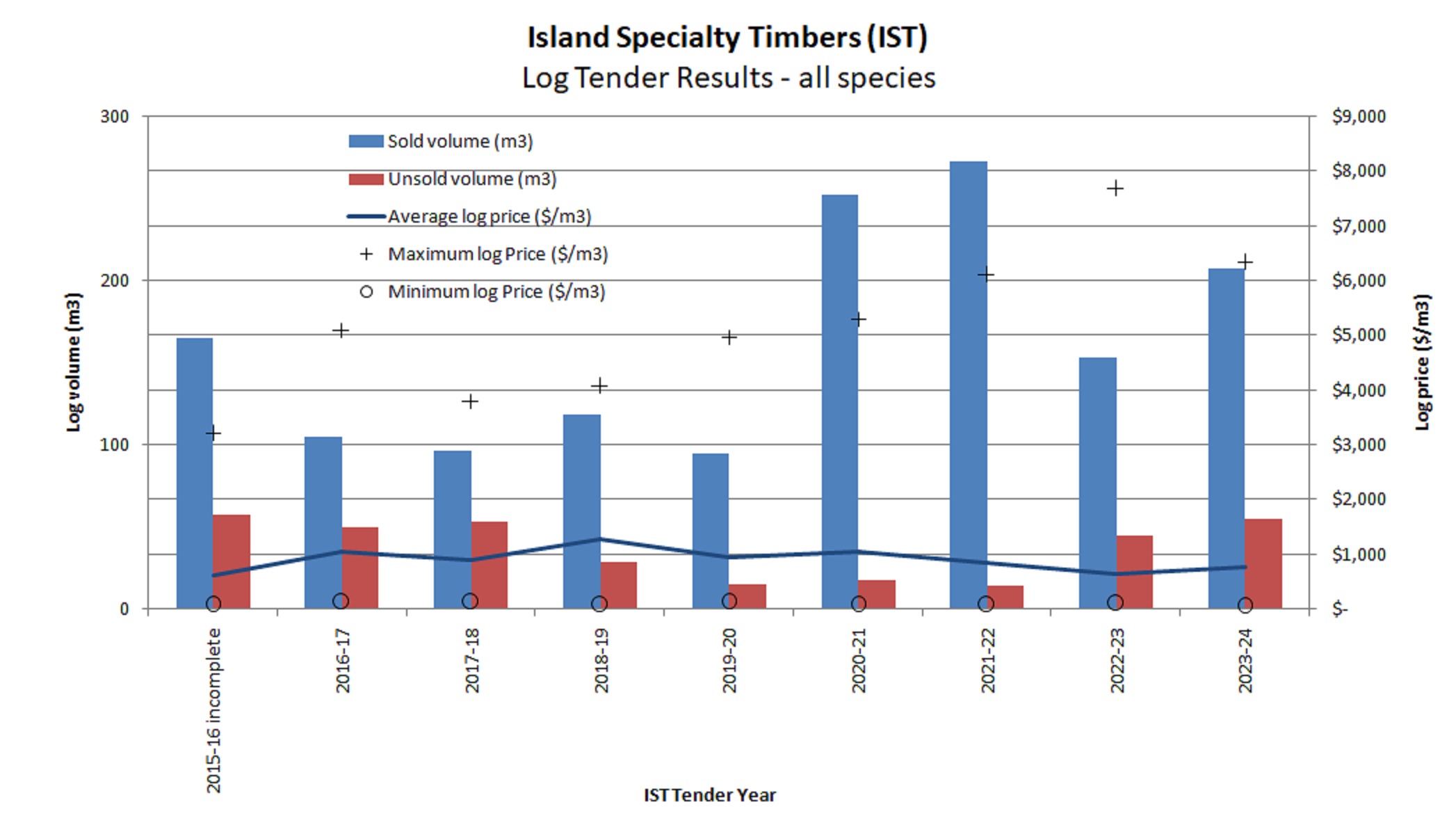
Overall a total of 262 cubic metres of special species sawlog and craftwood were put to public tender during the year. Fifty five cubic metres failed to sell at tender.
Average log price for 2023-24 ($769 per cubic metre) was slightly up on last year, probably partly helped by the slight increase in average log size.
Total tender revenue for 2023-24 was $159,400, the result of the combined higher volumes and slightly higher prices.
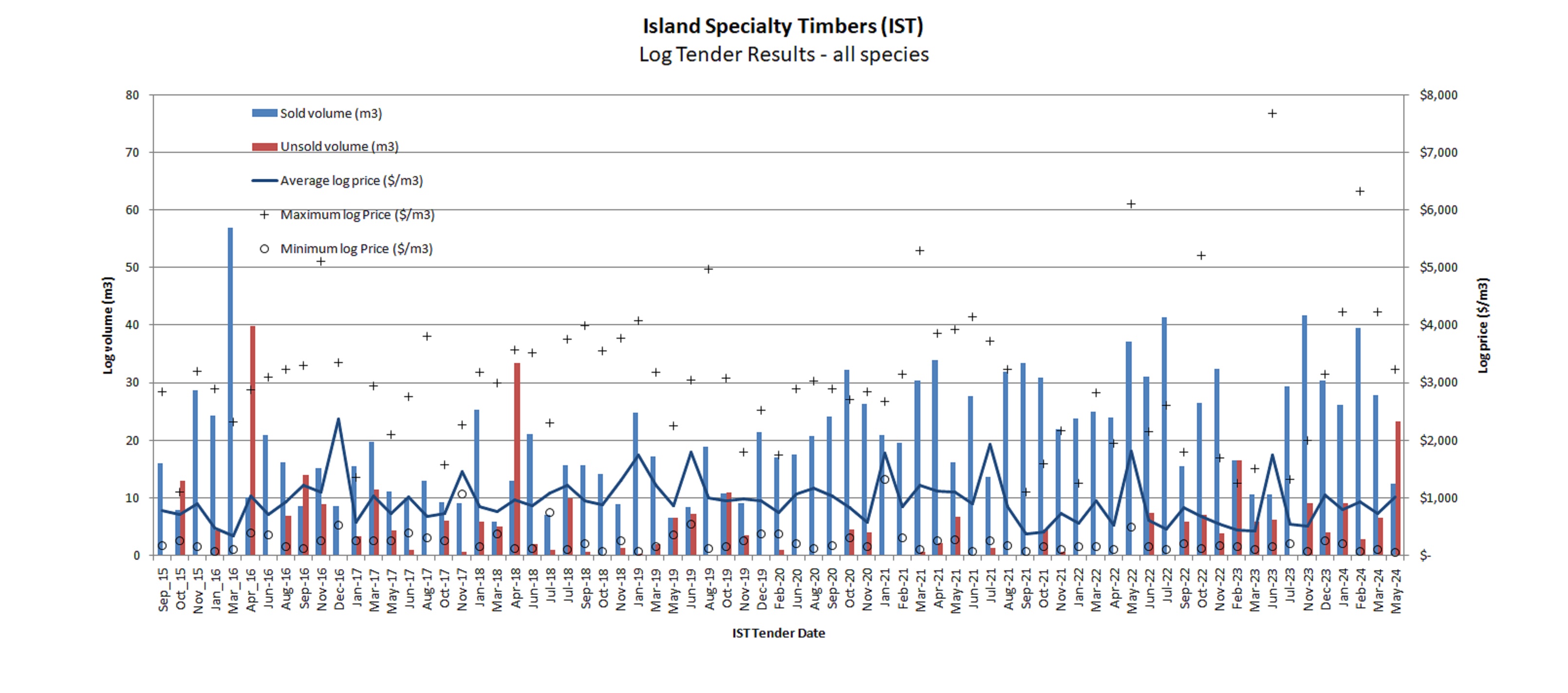
Following 5 years of increasing maximum log price paid for specialty logs this year saw a decline. Does this indicate a softening of the specialty timbers market, in line with the general economy? The prize this year went to a large Huon pine log in the February 2024 tender. This log – 75cm small end diameter, 5.3m length and 3.0 cubic metres volume – sold for $6,325 per cubic metre, or a total price of $18,975!!
Remember these IST tender sales represent tiny log volumes sold into the small southern Tasmanian market. They represent mill door prices not stumpages.
The following chart shows the volume and price summary for 65 IST log tenders back to 2015. That is over 1800 cubic metres of tendered log and craftwood.
The tiny volumes and wide variability in species and quality of logs that IST put to tender makes assessing market trends over time difficult.
One thing is obvious in the above chart is the lack of increase in the average price paid for this rare old growth forest resource over the last 9 years.
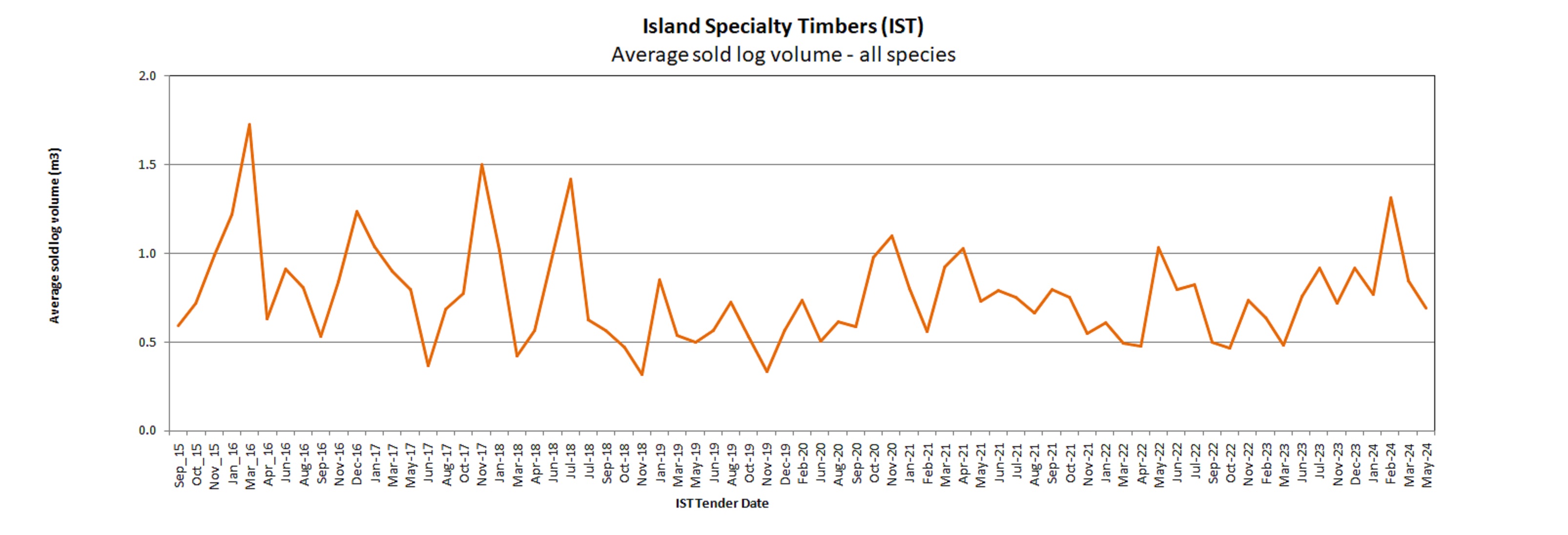
The following chart shows that average log size at the IST tenders continues to be small. Extracting value out of these small logs must present quite a challenge for the buyers.
With Tasmania and New South Wales now being the only States continuing to log public native forest the future of Island Specialty Timbers must now be on borrowed time.
I won’t be writing these annual reports for much longer!
I was going to write about this New Zealand report a few months ago but didn’t.
And now I realise what the problem was!
New Zealand farmers have been planting and growing a wide range of timber species for many decades now. And now there is an increasing backlog of timber waiting to find a market!
But the New Zealand domestic market is not used to buying farm grown timber (unless its pine or douglas fir).
Most decorative and specialist timber in New Zealand is imported.
Hence the name of the report!
But the name is wrong and reflects poorly on the report authors.
That kind of national self-sufficiency, anti-commercial, anti-competitive thinking is typical of the forest industry in Australia.
But New Zealand has a fully commercial, fully competitive forest industry.
New Zealand farm foresters don’t want industry protection (as the name of the report implies). They want access to proper functioning timber markets.
That means providing a quality product at the right price that the market wants.
It means better understanding by farmers of what timber the market wants and at what price. Growing a random assortment of tree species in the hope of one day finding a market for your timber is bound to end in disappointment.
It means building relationships between key market players – growers, loggers, sawmillers, wood merchants, builders, architects, etc..
And critically it also means creating export markets for New Zealand grown decorative and specialist timber, because New Zealand farmers will eventually overwhelm local markets.
So a better name for this report would have been “DEVELOPING MARKET ACCESS”.
Let me finish on a positive note…
Despite the dodgy name the report is an excellent summary of the numerous issues facing New Zealand farm foresters as they try and build a proper functioning timber market. I wish them every success!
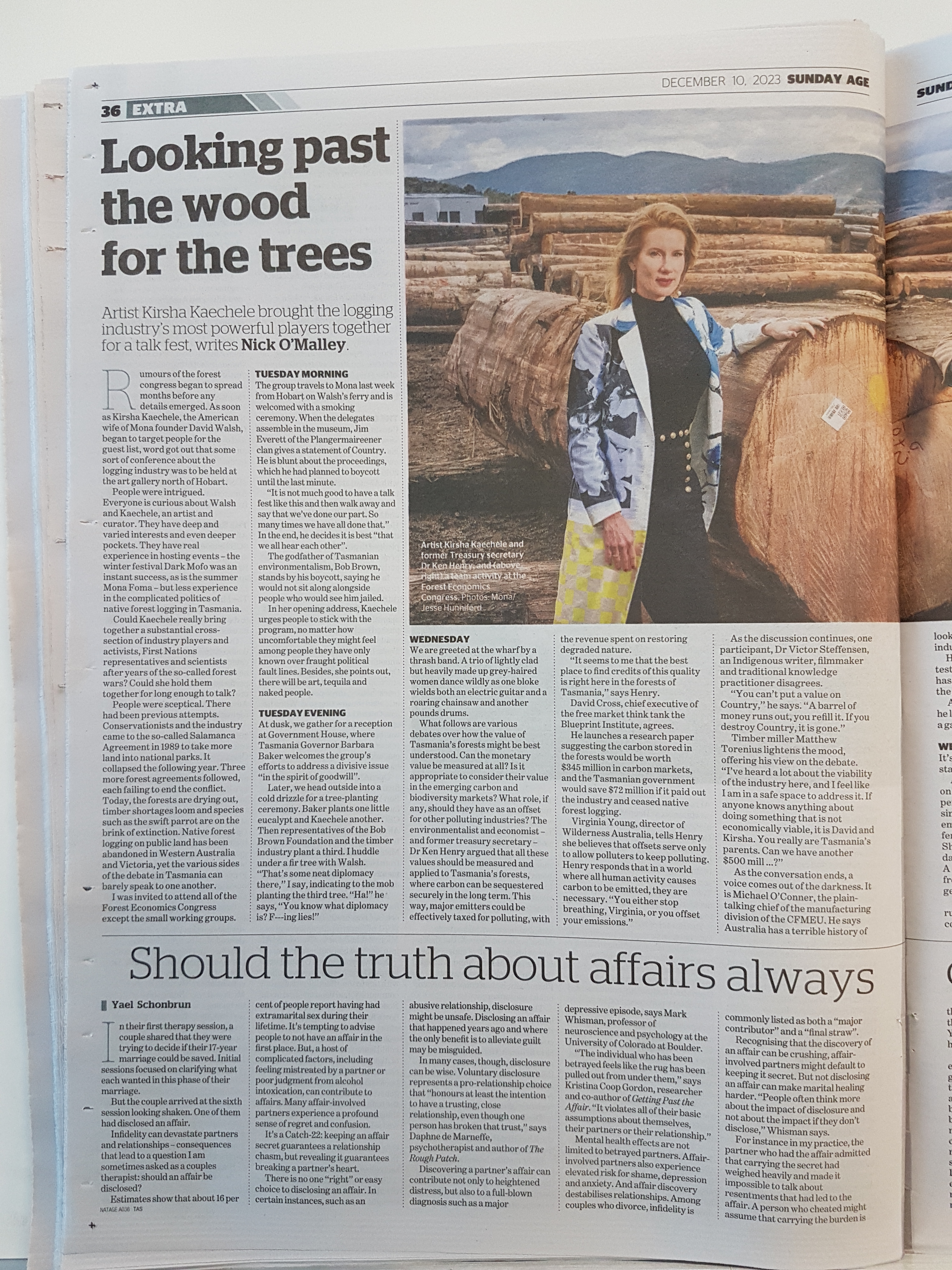
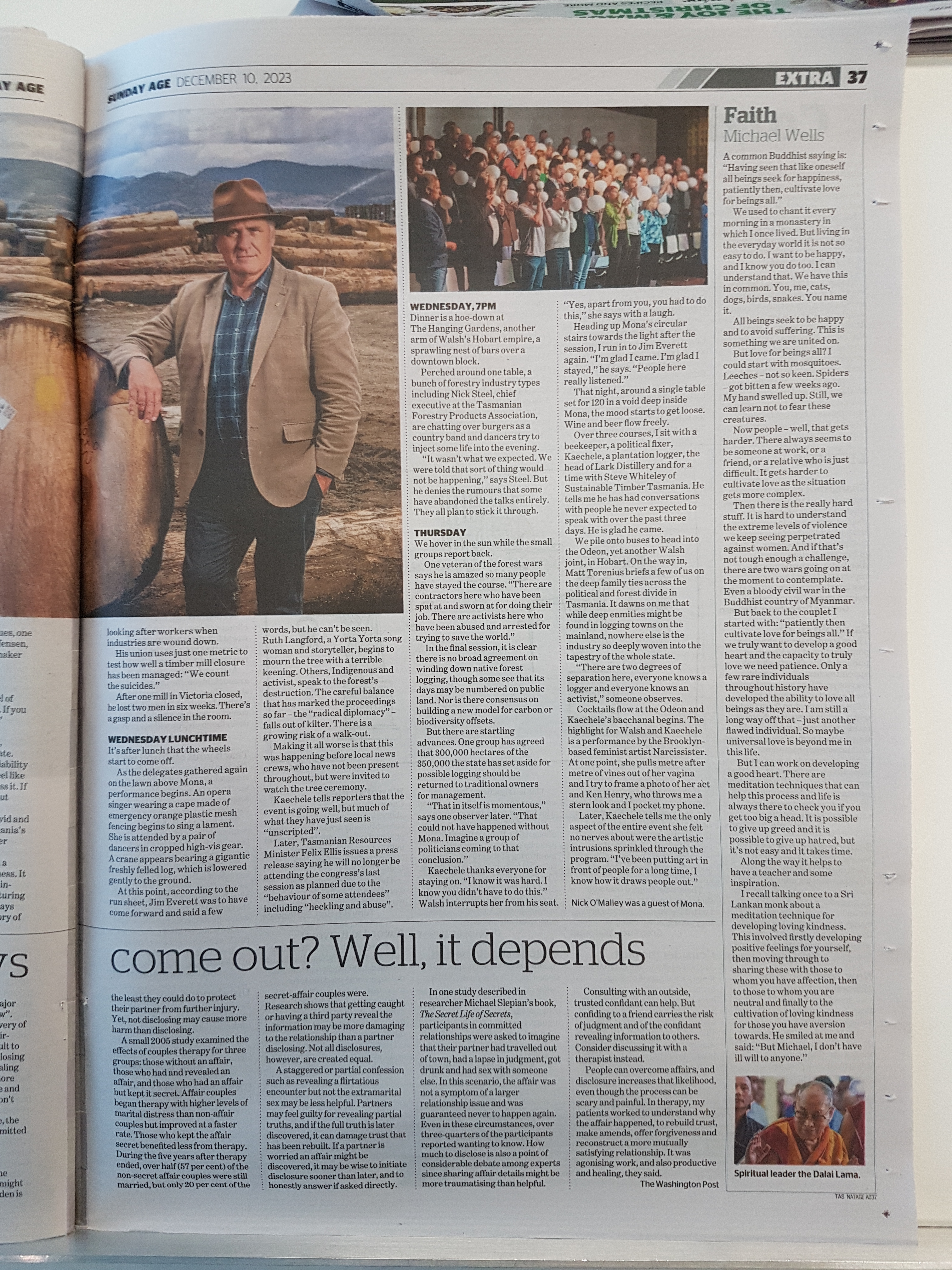
The following 2 page article appeared in The Age newspaper Sunday 10th December written by Nick O’Malley. It is a superficial summary of the three day congress:
It’s a long and wordy article that provides few insights into what actually happened at the congress apart from the artistic interludes.
Given that it took many painful months of negotiation to conclude the 2012 Tasmanian Forestry Agreement, a three day meeting was hardly going to start a revolution.
One gets the impression that the congress made little progress..
The fact that the congress didn’t even issue a joint communiqué expressing thanks to Messrs Kaechele and Walsh, and a hope for the future, tells us that there is unlikely to be any subsequent meetings.
If Ms Kaechele wishes to resolve the 40+ year old Tasmanian Forestry Wars she will have to be more creative and imaginative. A less direct approach to the problem may provide surprises.
I did not get an invitation to the congress so I cannot write from personal experience, only from what I have read and my long history in Tasmanian politics and the forest industry.
The congress received considerable media coverage, especially on the mainland.
The only post-congress media coverage was the following article in The Mercury newspaper Saturday 2nd December.
To date MONA has not published any details about the congress – who were the speakers, what was discussed, what was agreed and what was disagreed?
As expected, the usual suspects attempted to make political mileage out of the congress, rather than act in a respectful and positive manner. There are plenty of people who want the status quo to remain.
The further “working sessions” that Ms Kaechele plans to organise should be interesting. Where is all this discussion heading? Any change in the forest industry status quo will inevitably result in winners and losers. How do we stop this becoming yet another forestry bun fight?
Edit: We have had “collaboration” before in 2011-2012 with the 2013 Tasmanian Forestry Agreement, but that collaboration was betrayed by Tasmania’s corrupt political system and the 2014 Tasmanian State election. The corrupt political system remains a major threat to Ms Kaechele’s plans.
The fundamental problem is that public native forestry is a political decision made by the Tasmanian government, and the Tasmanian parliament has made it perfectly clear that the status quo is unlikely to change.
If Ms Kaechele wishes to promote change in the forest industry and politics, then she must engage with the wider Tasmanian community. Otherwise she risks repeating the disaster of the 2013 Tasmanian Forestry Agreement/2014 State election. She, and the members of the congress, must convince a significant portion of the Tasmanian community that a better future is available. Otherwise the congress will become yet another forestry political football used to divide and destroy the Tasmanian community, just like the 2013 Forestry Agreement.
The failure of both the Tasmanian government and the Tasmanian forest industry to respond positively to the congress may well be the straw that finally breaks the camel’s back. This charade called public native forestry is teetering on the brink. Any player in the charade may finally decide the game is over, and bring the house of cards crashing to the ground.







 Tasmanian Blackwood Growers Cooperative
Tasmanian Forest Economics Congress – what next?
The much anticipated MONA Forest Economics Congress has been and gone.
I wrote a commentary back in August when the event was first announced.
I did not get an invitation to the congress so I cannot write from personal experience, only from what I have read and my long history in Tasmanian politics and the forest industry.
The congress received considerable media coverage, especially on the mainland.
The only post-congress media coverage was the following article in The Mercury newspaper Saturday 2nd December.
To date MONA has not published any details about the congress – who were the speakers, what was discussed, what was agreed and what was disagreed?
https://mona.net.au/blog/2023/08/forest-economics-congress-new-a-class
As expected, the usual suspects attempted to make political mileage out of the congress, rather than act in a respectful and positive manner. There are plenty of people who want the status quo to remain.
The further “working sessions” that Ms Kaechele plans to organise should be interesting. Where is all this discussion heading? Any change in the forest industry status quo will inevitably result in winners and losers. How do we stop this becoming yet another forestry bun fight?
Edit: We have had “collaboration” before in 2011-2012 with the 2013 Tasmanian Forestry Agreement, but that collaboration was betrayed by Tasmania’s corrupt political system and the 2014 Tasmanian State election. The corrupt political system remains a major threat to Ms Kaechele’s plans.
The fundamental problem is that public native forestry is a political decision made by the Tasmanian government, and the Tasmanian parliament has made it perfectly clear that the status quo is unlikely to change.
If Ms Kaechele wishes to promote change in the forest industry and politics, then she must engage with the wider Tasmanian community. Otherwise she risks repeating the disaster of the 2013 Tasmanian Forestry Agreement/2014 State election. She, and the members of the congress, must convince a significant portion of the Tasmanian community that a better future is available. Otherwise the congress will become yet another forestry political football used to divide and destroy the Tasmanian community, just like the 2013 Forestry Agreement.
The failure of both the Tasmanian government and the Tasmanian forest industry to respond positively to the congress may well be the straw that finally breaks the camel’s back. This charade called public native forestry is teetering on the brink. Any player in the charade may finally decide the game is over, and bring the house of cards crashing to the ground.
We can only hope!!
3 Comments
Posted in Commentary, Politics, Public Native Forestry, Sustainable Timbers Tasmania, Tasmanian Forest Products Association
Tagged MONA