The alternative title for this blog should be “The Failure of Timber Markets”.
And here is another update from NZ:
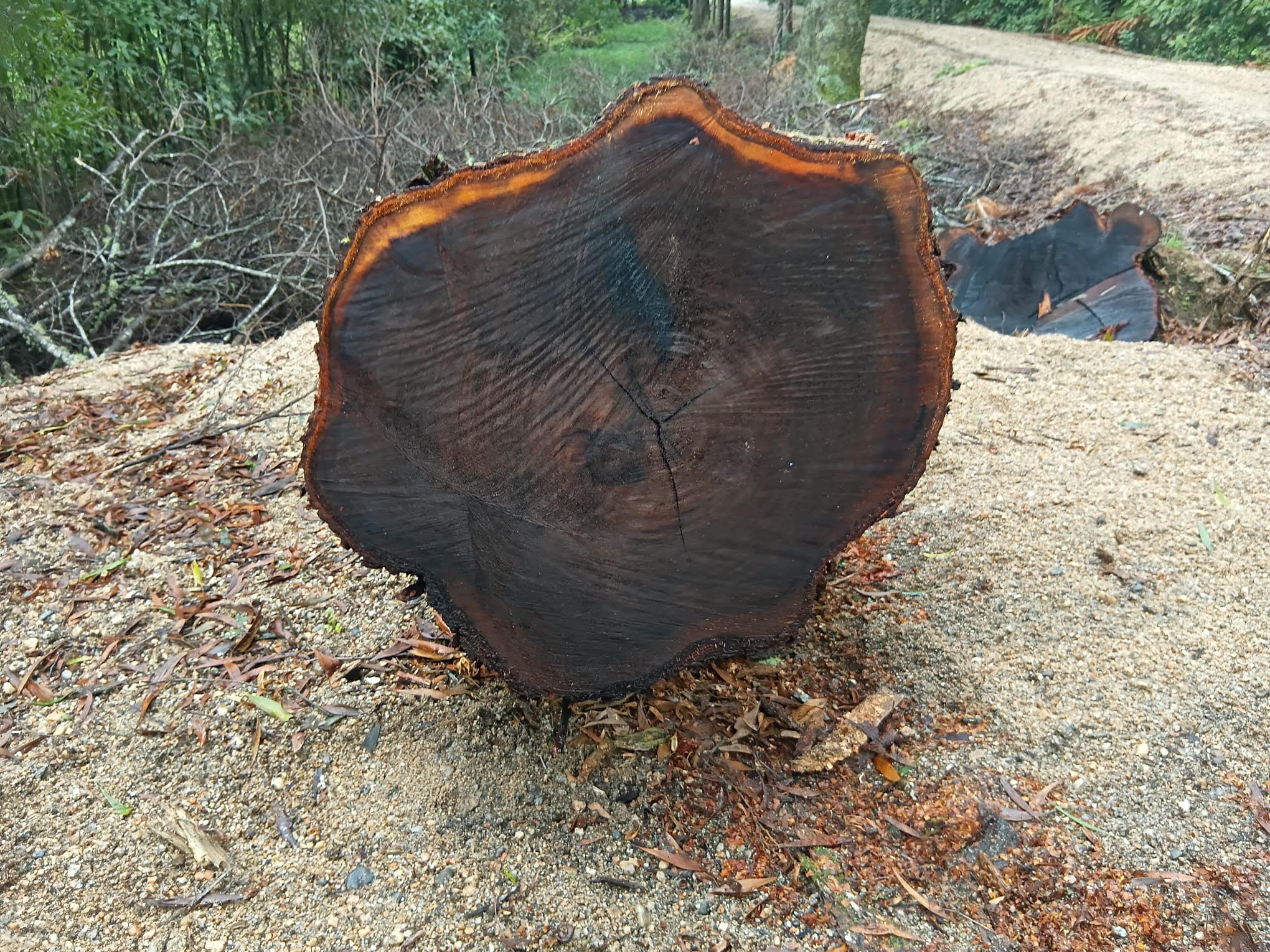
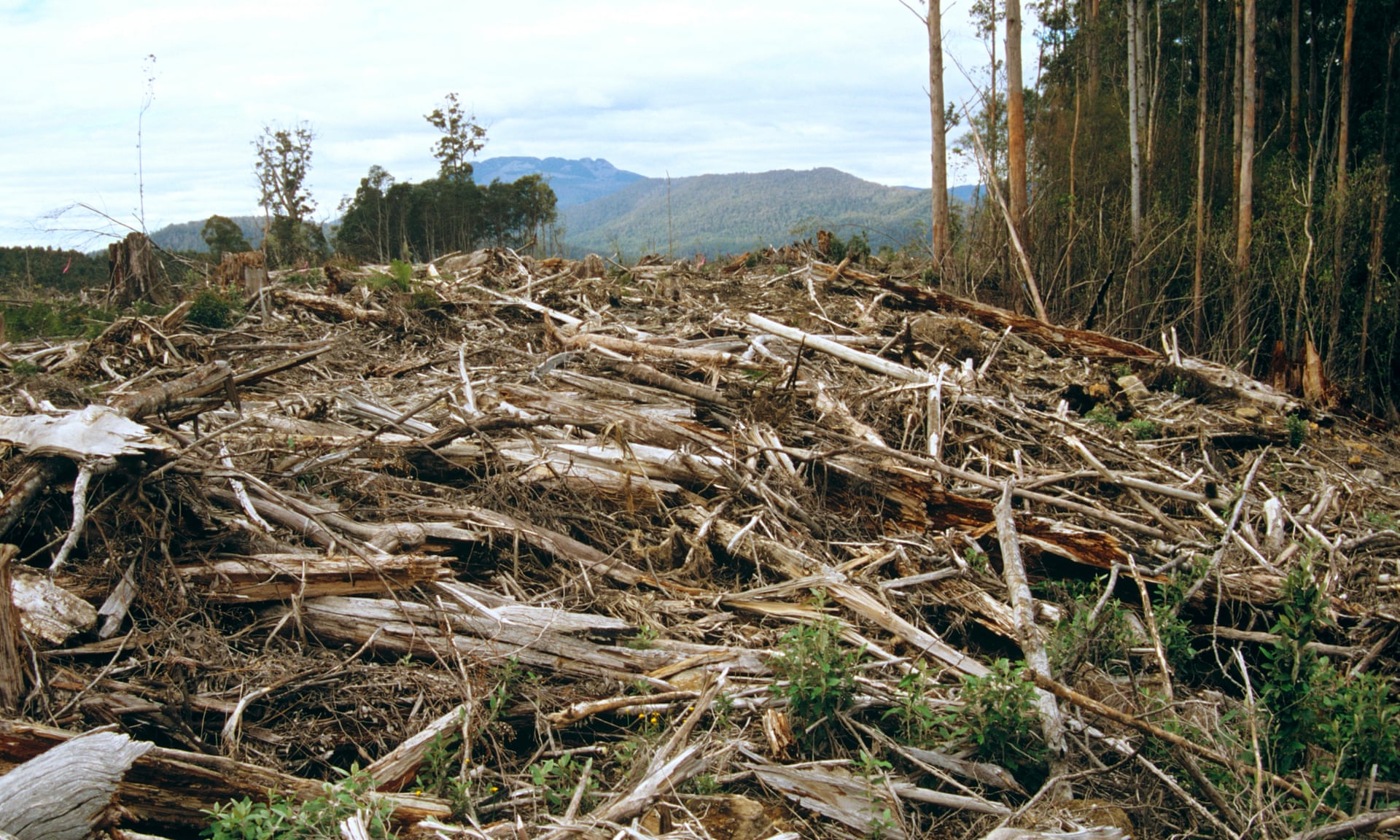
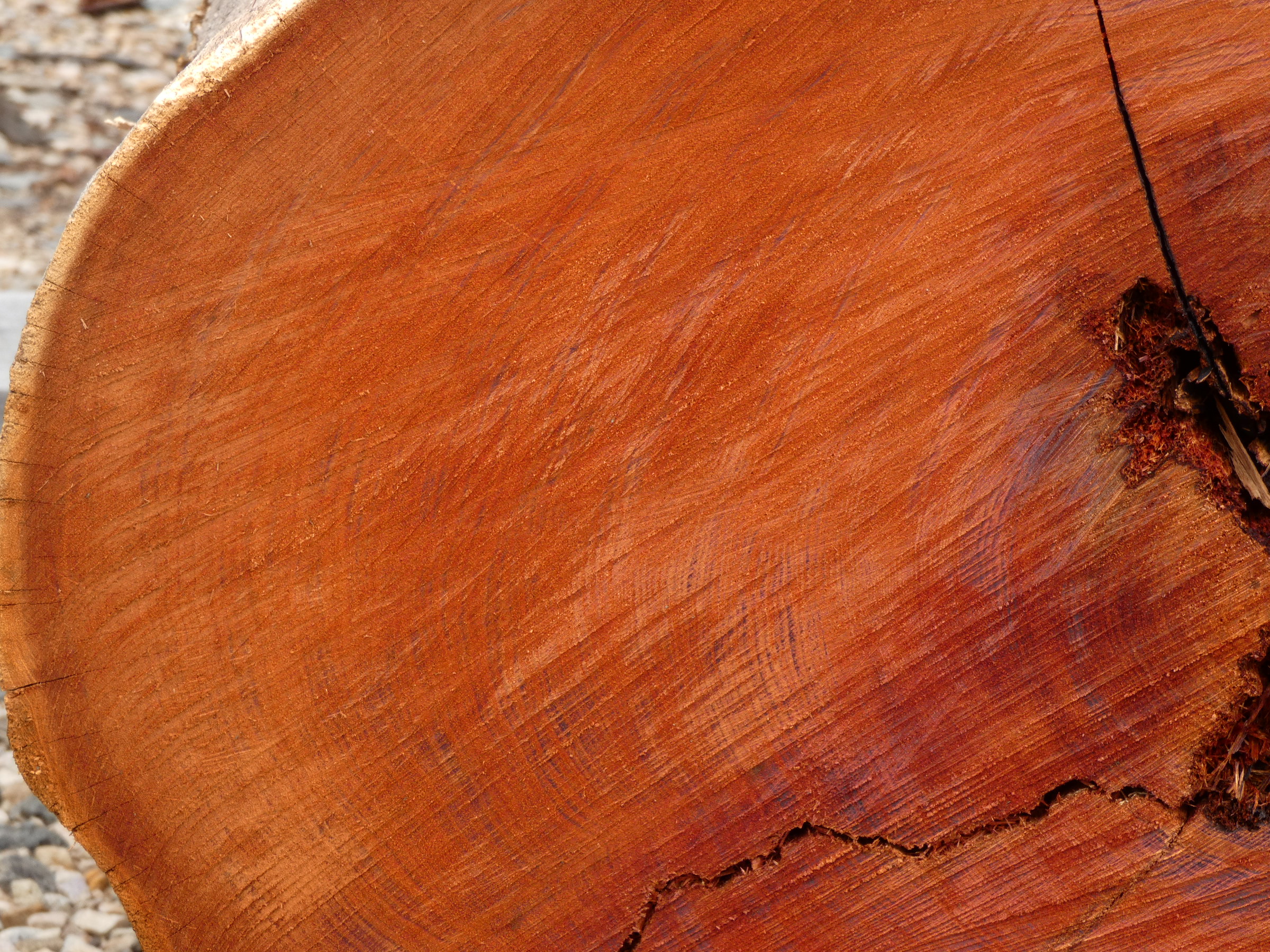
Dad just dropped a few trees to clear way for the milling pad. There is the heartwood.
Guess we will be milling as its too high a percentage to burn..
Regards Jamie.
In a few years time Australia will be importing Tasmanian blackwood timber from New Zealand farmers. All I can say is good luck to New Zealand farmers, because Australian/Tasmanian farmers couldn’t care less.
That photo is just outstanding. Premium grade Tasmanian blackwood grown by New Zealand farmers.
In the forestry world cup: New Zealand 20, Australia 0.
The alternative title for this blog should be “The Failure of Timber Markets”.
Back in August last year I received an email from a blackwood grower in New Zealand who had a blackwood plantation ready to harvest. He was looking for buyers.
Here is his latest email. It makes for depressing reading.
Hi Gordon,
Just wanted to share with you a brief summary of our experience trying to sell tasmanian blackwoods in nz.. its been a difficult and frustrating road. Feel free to share if you like.
So we have reached out to dozens of sawmills, brokers etc in nz with details of our small but ready to fell forest.
(Approx 200-300 trees, 35 years old, 6-8m clear trunks with a DBH between 600-800mm)
Several have been great with communication but the price offers have been truly abysmal..
We are getting an offer with a rough average price of NZ $200/ton for the logs delivered to the mill… given freight costs etc this would end up closer to $150/ton
It’s been quite a shock as this is even lower than we would receive in firewood prices..
So we now will consider looking into purchasing a mill and milling/drying etc ourselves but given the amount of work involved we may yet reach the conclusion that simply selling this beautiful timber as firewood is the better option.
A rather sad outcome given the hard work, love and dedication my father has poured into this forestry project over 35 years.
The disparity between what the consumer is asked to pay and what the growers are offered is just too big.. I have sympathy for the builder or house owner trying to put in beautiful blackwood flooring and being quoted tens of thousands of dollars while the price given to growers is a few hundred.
Once this is finally behind us next will come the question of what to plant next? Given the prices for blackwoods I can’t justify doing it again so we will perhaps give up on this industry and continue instead with firewood production which is selling for $300-$500 per ton.
Such a sad end to a wonderful project, the logs being mostly 8m clear will produce beautiful flooring, tables, desks etc but may never be given the chance to become anything more than ash in someone’s fireplace.
Thank you for your emails over the last year your work is appreciated and your site a wealth of knowledge.
Kindest regards
Jamie
Unfortunately Jamie’s experience is not unusual. In New Zealand, and to a much lesser extent in Australia, farmers have been planting and growing durable and decorative hardwoods and softwoods in the hope of one day selling their logs/timber into an appreciative timber market. After many decades that appreciative timber market is yet to appear. The hopes and dreams of those farmers are been destroyed.
Neither here in Australia nor in New Zealand has proper functioning timber markets ever developed.
Here in Australia there are 10,000’s of businesses that rely on a supply of durable and decorative timbers and I have yet to find a single business that expresses any interest in their future timber supply.
Trees take a while to grow. Much forward planning and work is needed if any timber will be available in the future. And 10,000s of businesses couldn’t care less. Is it wilful ignorance or head in the sand?
Even Australia’s biggest timber retailer @Bunnings expresses zero interest in the future supply of timber.
The timber market is heading for a catastrophic collapse in a few years time. That is 100% guaranteed. All decorative and durable timbers will have to be imported, assuming they are even available. Public native welfare forestry will end in Australia. That is 100% guaranteed.
After decades of hard work and waiting it would be an absolute travesty to see Jamie’s blackwood timber resource turned into firewood, and his father’s legacy destroyed. But that common story seems to be what the timber market wishes. The result of wilful ignorance!
The only future for durable and decorative hardwood and softwood timbers is with farm forestry. Fully commercial and profitable. That wont happen until the timber market wakes up!
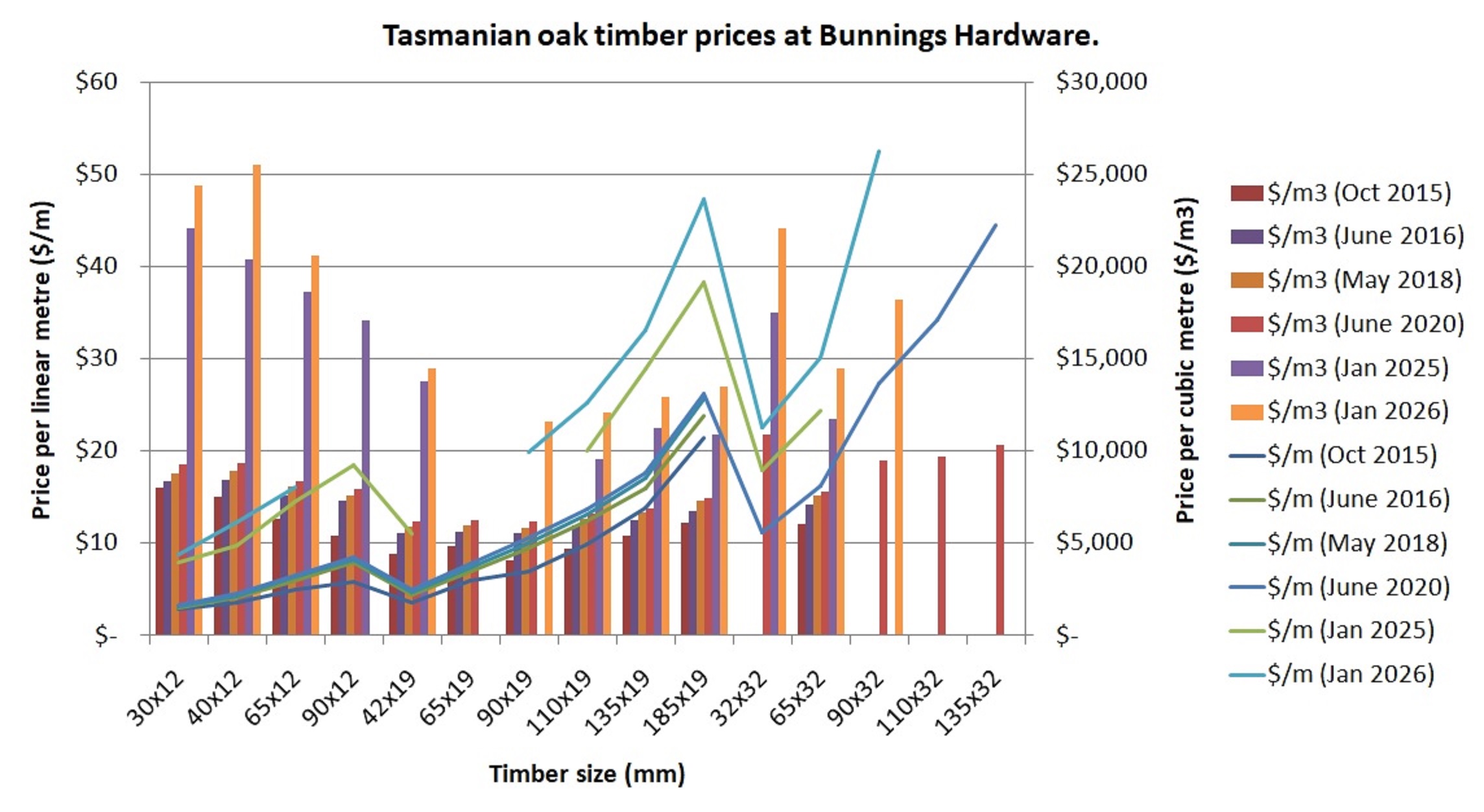
Another year passes since I last looked at premium hardwood (Tas oak) prices at Bunnings hardware. Another year of pretty serious price increases in a timber resource plundered from Tasmanian public native forests at taxpayers expense.
You can read about the “at taxpayers expense” here:
These prices are for Select Grade Tasmanian oak. Prices have increased from 5 to 26% over the last 12 months.
These price increases should be causing an absolute revolution in the forest industry, in timber markets and in the farming community!
Instead all I hear is deathly silence!
Why isn’t the Australian timber market working like any other agricultural market? Increasing prices generally mean an increase in production as farmers look to cash in on low supply, high demand and high profits. That’s how markets work!! Basic economics!
The Australian forest industry and Australian timber markets have never followed basic economics.
You ask an Australian forester about costs and prices, supply and demand, products and markets and they will give you a blank stare in return.
Which is one reason why the Australian farming community has never been engaged to grow and supply premium timber for domestic markets.
And these extraordinary timber price increases are met with utter silence.
Not even Bunnings, Australia’s largest timber retailer, has any interest in engaging with the rural community.
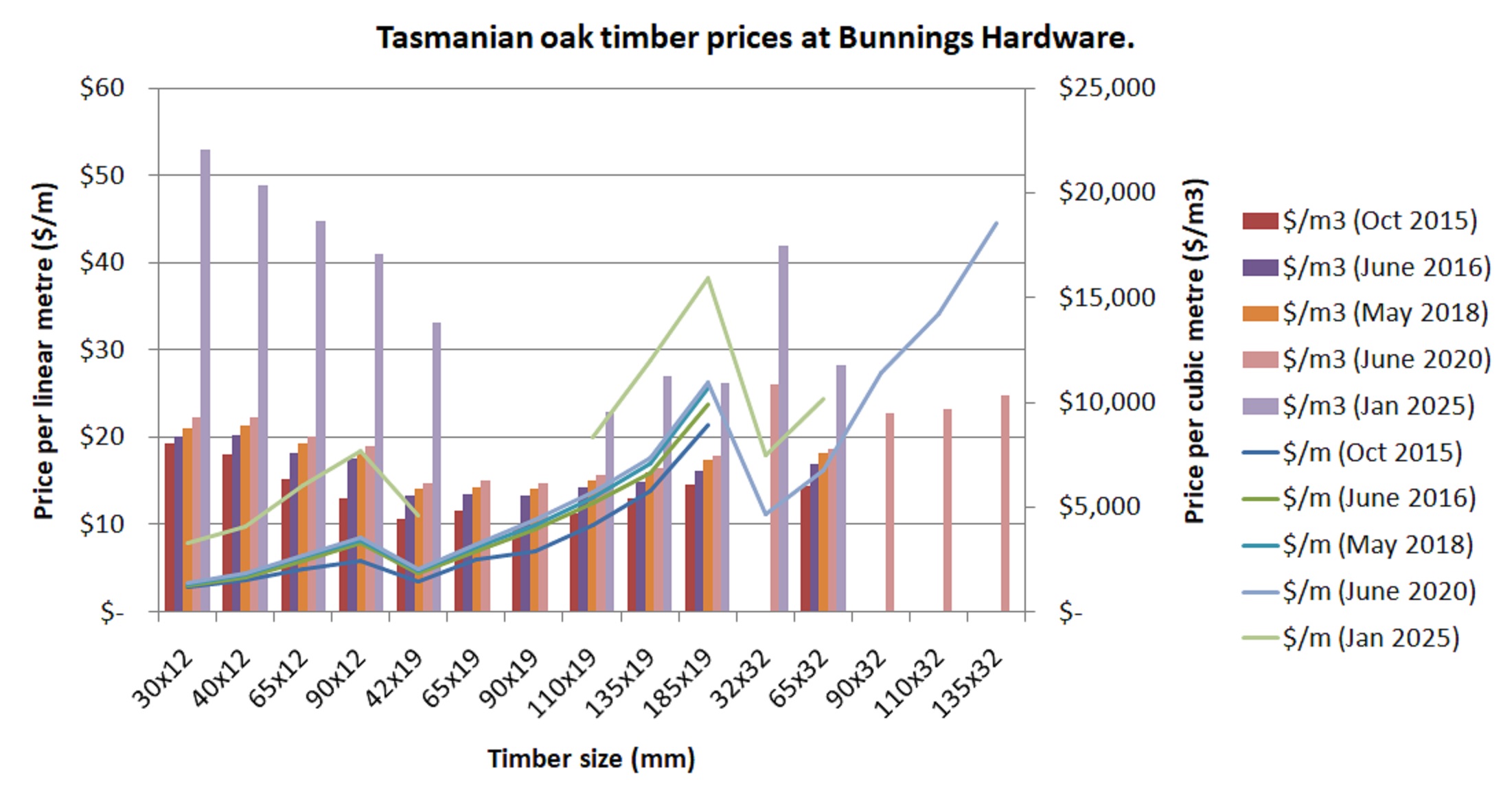
It’s been five years since I checked the prices of conflict-driven, welfare-dependent Tasmanian oak timber at Bunnings Hardware, Australia’s largest timber retailer. Given my previous post about timber prices after the shutdown of welfare forestry in West Australia and Victoria, I thought I should do an update.
It seems that as welfare public forestry is shut down in Australia, the price of hardwood timber has increased dramatically. Small sizes are now over $22,000 per cubic metre and the cheapest at $9,500 per cubic metre. These are massive price increases from 5 years ago!
These massive hardwood timber price increases should be sending ripples through the Australian farming community. So far I’ve seen no evidence that is happening! Why??
The future of the forest industry in Australia is with farm forestry. Surely these hardwood prices now make growing quality hardwood in private plantations a viable and profitable agricultural activity.
I’ve just come back from a holiday in south west Western Australia, where I was reminded once again what great potential the region has for farmers to grow quality hardwoods, and I find this article in the news media!!
Hallelujah!!
Is this the beginning of a REAL forest industry in Australia??
Having put an end to public native WELFARE forestry, are we about to see farmers and the marketplace finally wake up and plant trees for our future wood supply?
I sincerely hope so!
Farm forestry has never really succeeded in Australia whilst State governments have been dominant growers and manipulators of the log marketplace. No farmer wants to grow trees in competition with politicians that’s for sure!
But now with public native welfare forestry in decline around Australia, the marketplace is starting to wake up and realise it is prepared to pay much higher prices for quality hardwood logs.
This powerful message needs to spread far and wide throughout the farming community in Australia.
If Australian sawmillers, log merchants and timber traders want Australian farmers to plant trees then they had better start pumping the market!!!
And instead of perpetually whinging all the time, the orthodox forest industry should instead get on board and focus on profitable farm forestry.
Good luck to Mr North from Walpole, WA! May his trees (and his bank balance) continue to grow!!
It is so good (and rare) to have a positive news story in the forest industry.
Island Specialty Timbers is the only source of competitive, transparent log prices anywhere in Australia, including blackwood sawlog prices. That simple statement tells us a great deal about the dire condition of the forest industry!
IST themselves never do any market updates so I decided to do that job for them. Otherwise the forest industry would have no market information at all.
The lack of commercial credibility is just one of the many challenges facing the forest industry in Australia.
IST is a business enterprise of Sustainable Timber Tasmania (STT) which sources and retails raw material of Tasmanian specialty timbers from harvest or salvage operations conducted on State owned Permanent Timber Production Zone land (PTPZl).
IST is not really a “business” just as the State forest agency Sustainable Timber Tasmania is not a business either. Logging of public native forest in Tasmania requires significant taxpayer subsidies every year.
IST conducted 7 tenders during the year with approximately 280 cubic metres of special species sawlog and craftwood put to public tender. Tasmania defines “special species” as any native forest timber apart from plain grain Tasmanian oak (Eucalyptus sp.).
Blackwood Results
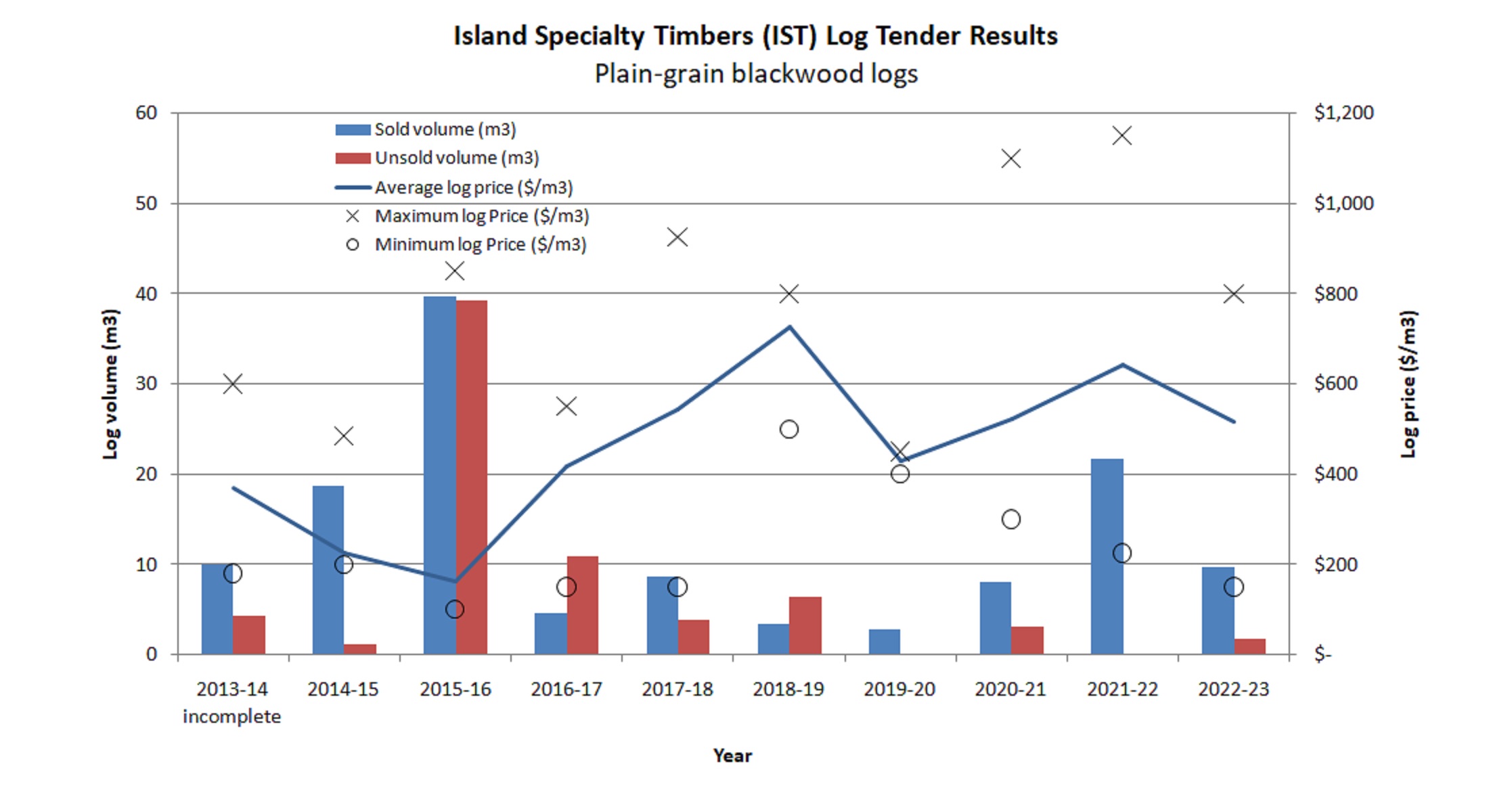
IST put a mere 20 blackwood logs to tender totalling 21.7 cubic metres in 2023-24. Only one log had feature grain, all the rest being straight plain grain logs. Six logs (including the feature grain log) totalling 7.7 cubic metres failed to sell at tender. For the 14.0 cubic metres of sold plain grain logs, prices ranged from $250 to $925 per cubic metre with an average price of $454 per cubic metre.
The last few years have seen mixed results in the market as shown in the following chart. This year saw an increase in the minimum and maximum prices paid but a fall in the average price.
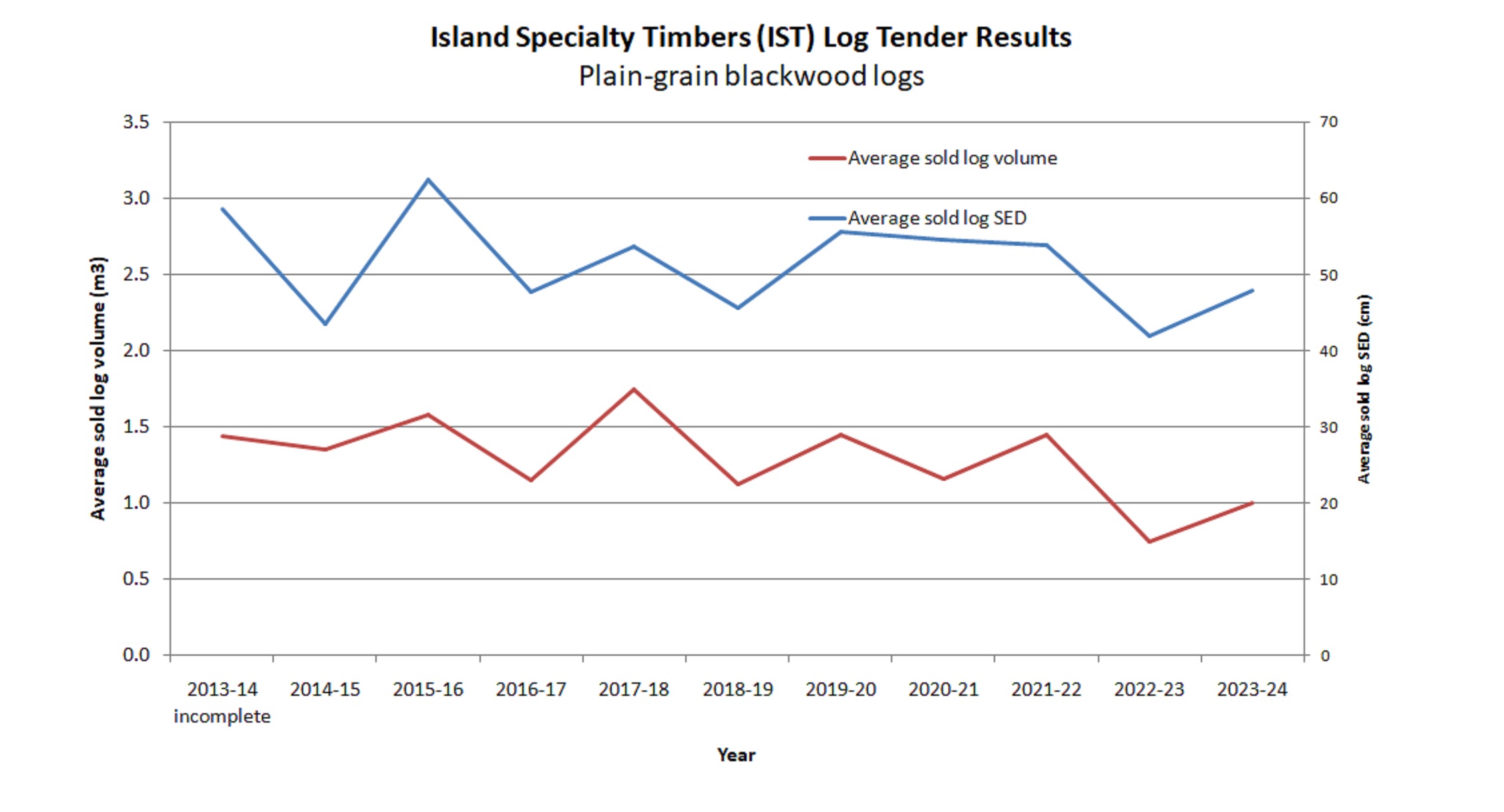
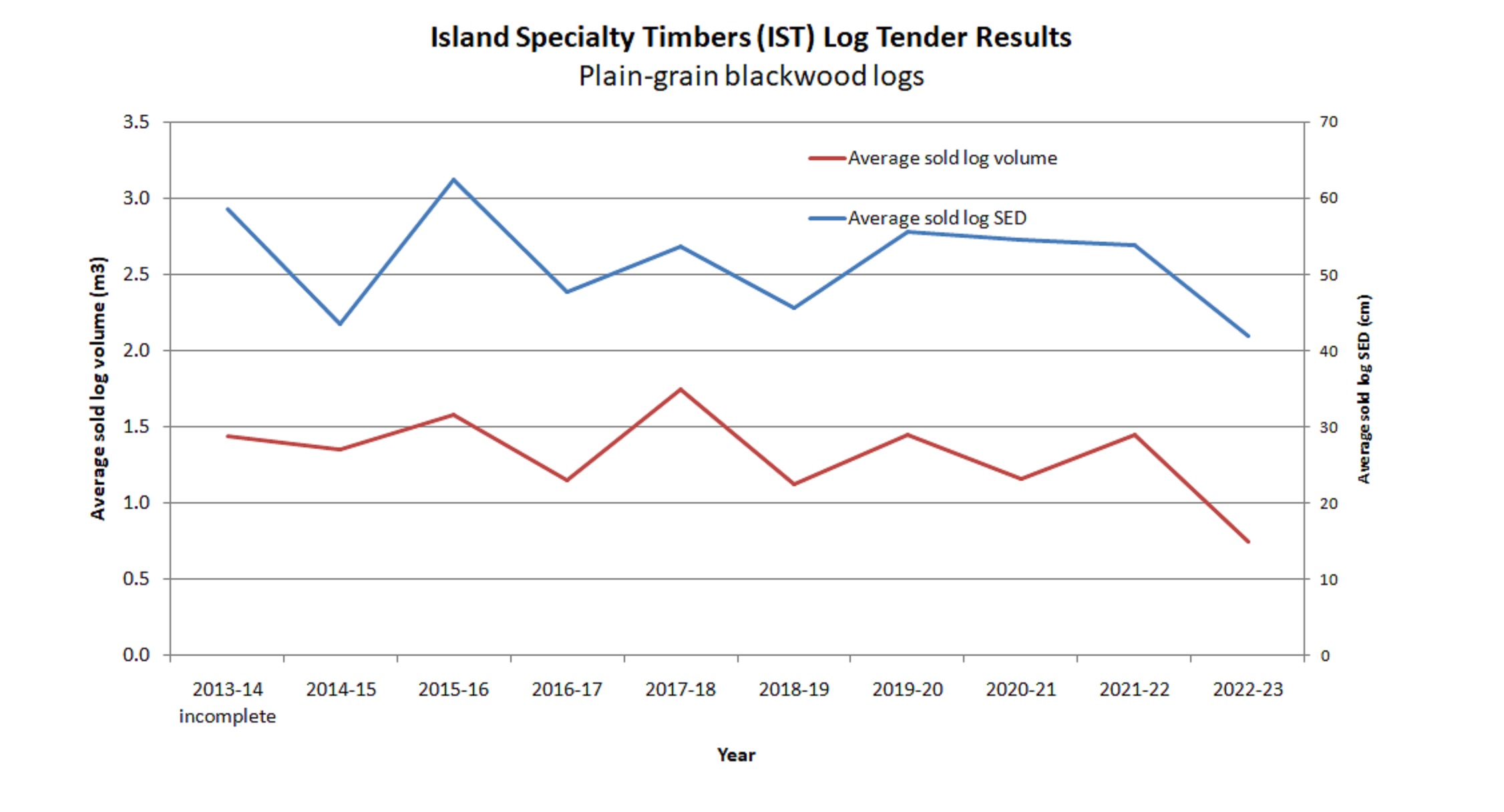
The chart below shows the average volume and small end diameter (SED) for sold blackwood logs. Average log size was slightly up on last years, but still much smaller than a target size for plantation-grown blackwood. Smaller logs mean less sawn timber recovery per log volume so lower prices.
Generally ~9,000 cubic metres of blackwood is harvested annually from Tasmania’s public native forests with 99.99% being sold at heavily discounted Government prices on long term sales contracts. The Tasmanian government deliberately engages in anti-commercial, anti-competitive behaviour. These log tender results need to be interpreted bearing this fact in mind.
Premium plain grain sawlogs are what can be grown in blackwood plantations. The “target” sawlog in a blackwood plantation is 1.5 cubic metres in volume.
This year marks 10 (complete) years of blackwood sawlog price reporting. It is my small contribution to light a candle in the deep dark recesses of the Tasmanian forest industry. To my knowledge none of this price reporting has resulted in any change whatsoever in the blackwood marketplace, either at the farming community end nor in the processor/end user marketplace.
Trying to establish a proper functioning specialty timber market where supply and demand, cost and price are connected and in balance will be a very long process indeed, if it ever happens at all.
General Results
Overall a total of 262 cubic metres of special species sawlog and craftwood were put to public tender during the year. Fifty five cubic metres failed to sell at tender.
Average log price for 2023-24 ($769 per cubic metre) was slightly up on last year, probably partly helped by the slight increase in average log size.
Total tender revenue for 2023-24 was $159,400, the result of the combined higher volumes and slightly higher prices.
Following 5 years of increasing maximum log price paid for specialty logs this year saw a decline. Does this indicate a softening of the specialty timbers market, in line with the general economy? The prize this year went to a large Huon pine log in the February 2024 tender. This log – 75cm small end diameter, 5.3m length and 3.0 cubic metres volume – sold for $6,325 per cubic metre, or a total price of $18,975!!
Remember these IST tender sales represent tiny log volumes sold into the small southern Tasmanian market. They represent mill door prices not stumpages.
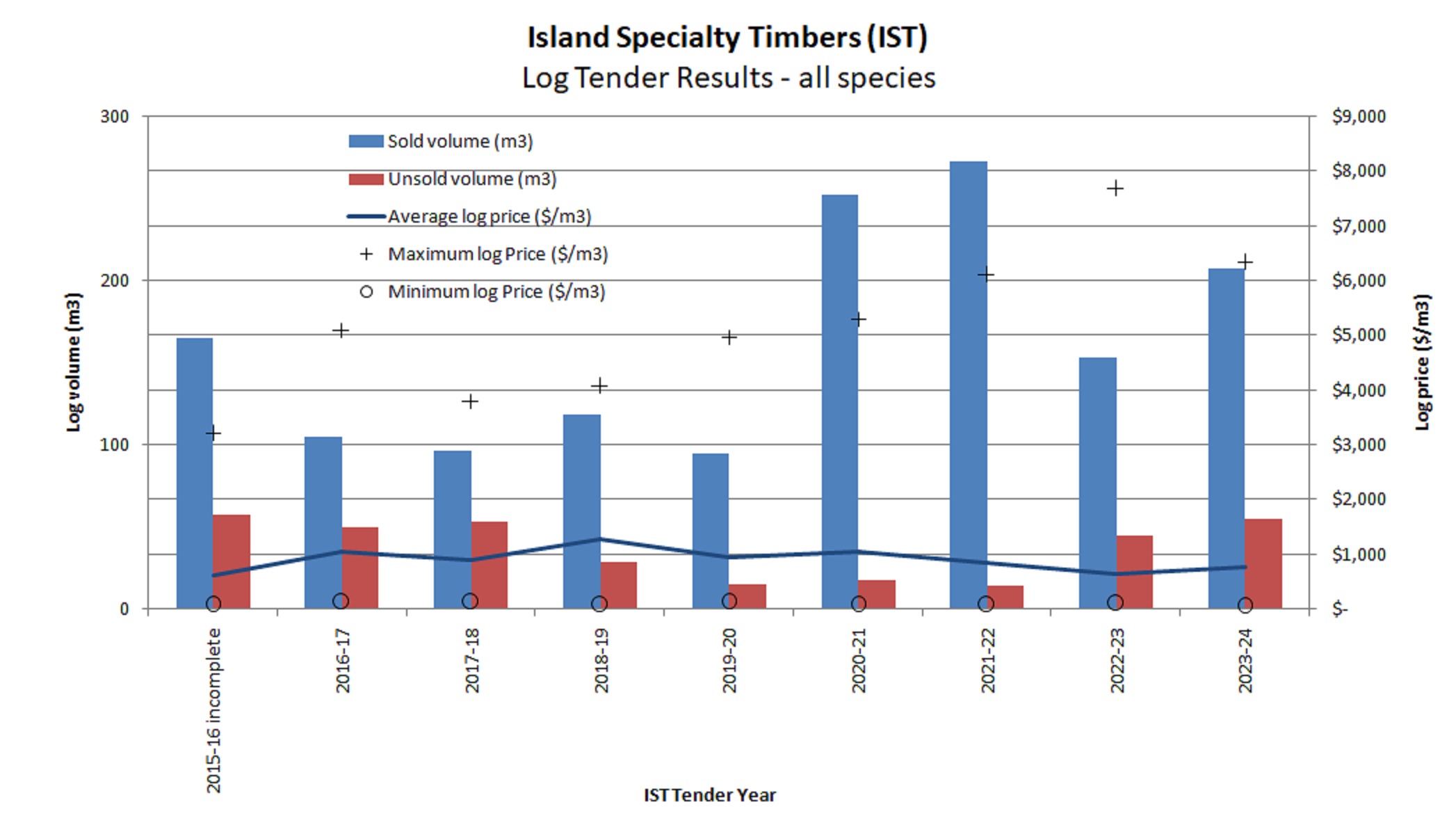
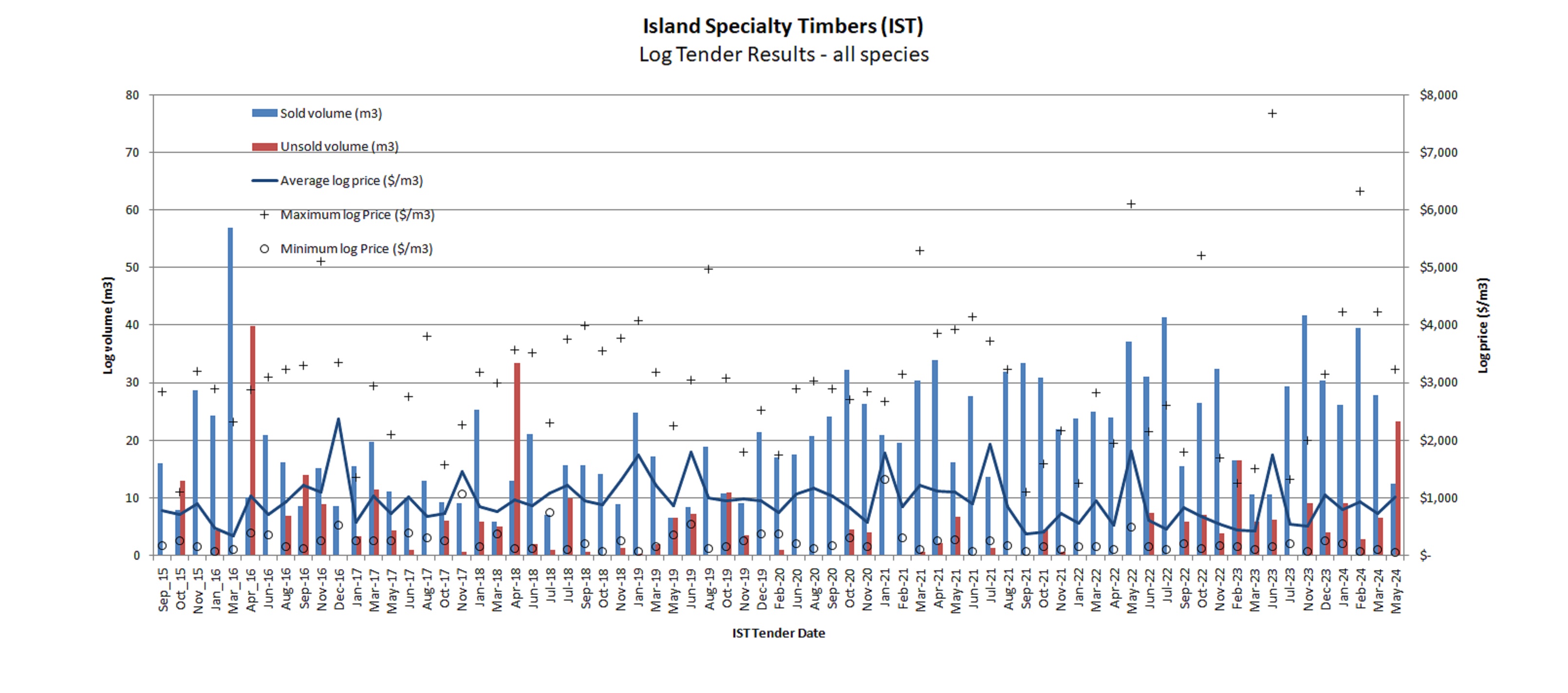
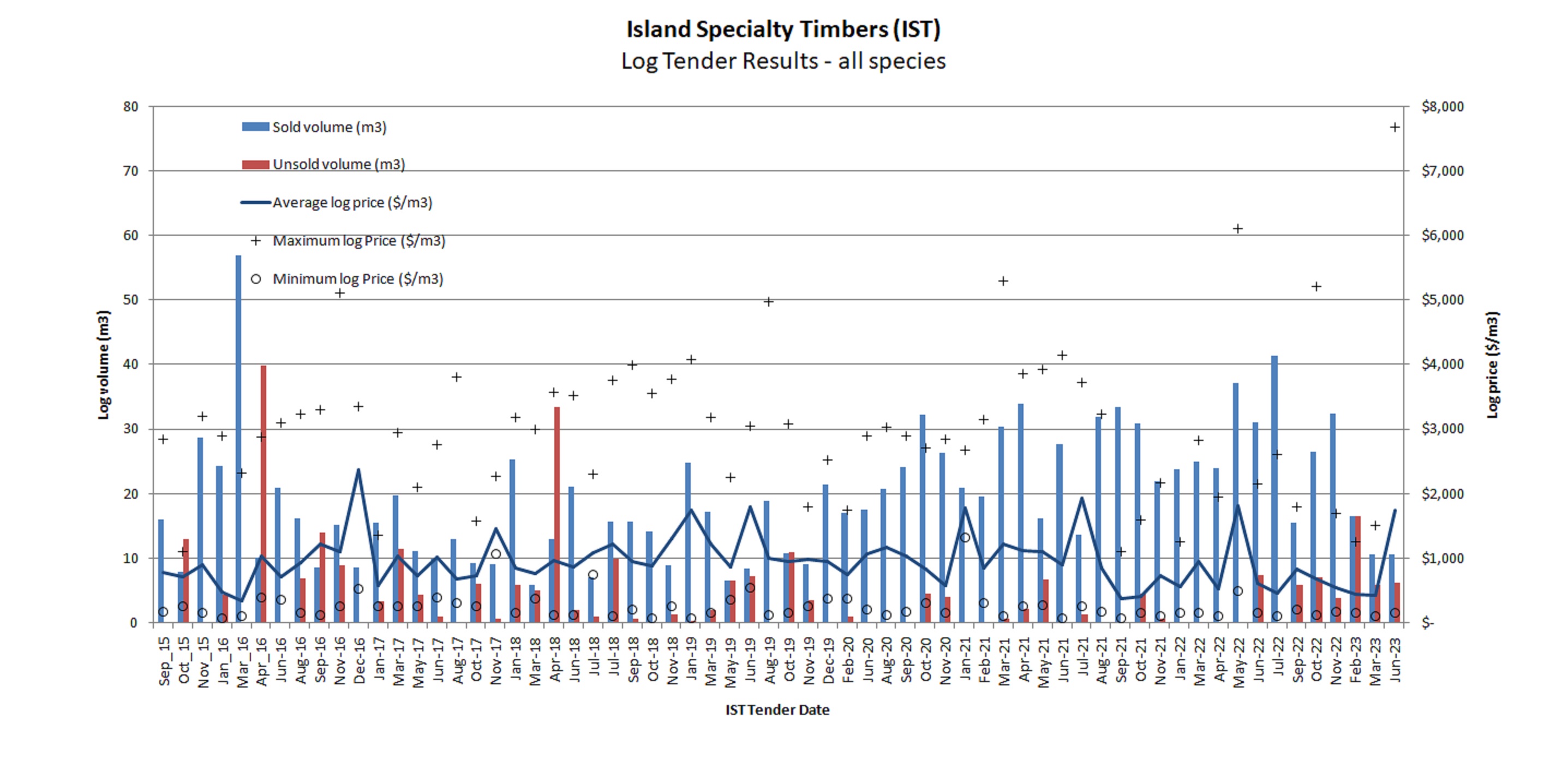
The following chart shows the volume and price summary for 65 IST log tenders back to 2015. That is over 1800 cubic metres of tendered log and craftwood.
The tiny volumes and wide variability in species and quality of logs that IST put to tender makes assessing market trends over time difficult.
One thing is obvious in the above chart is the lack of increase in the average price paid for this rare old growth forest resource over the last 9 years.
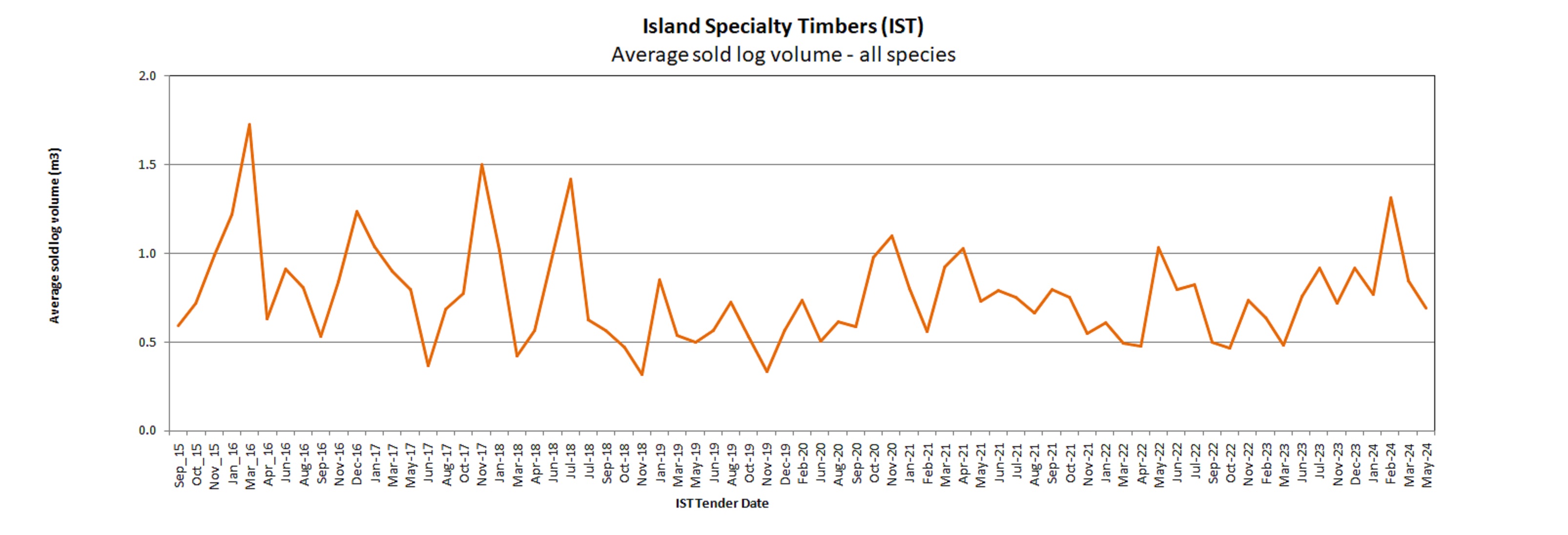
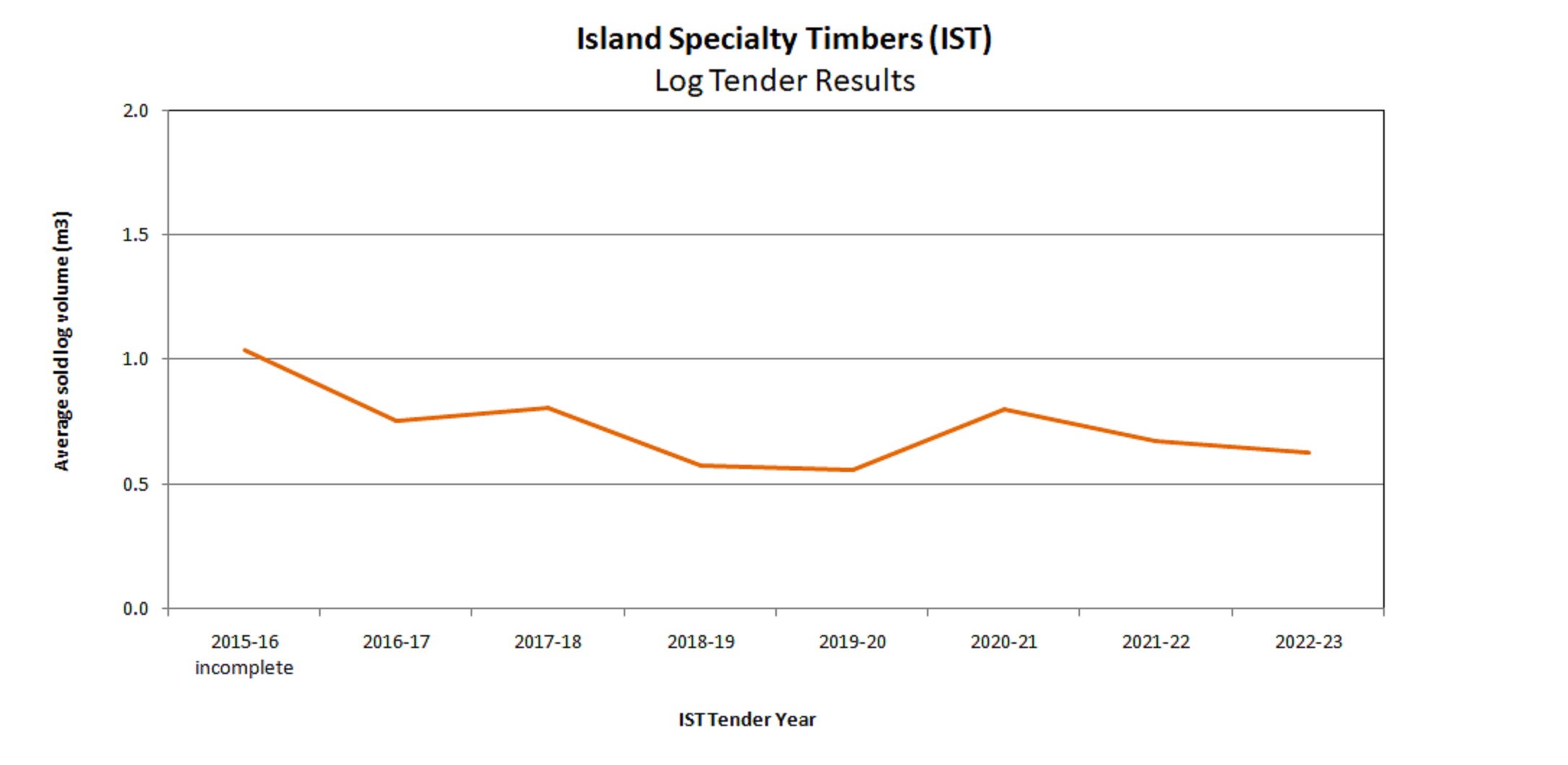
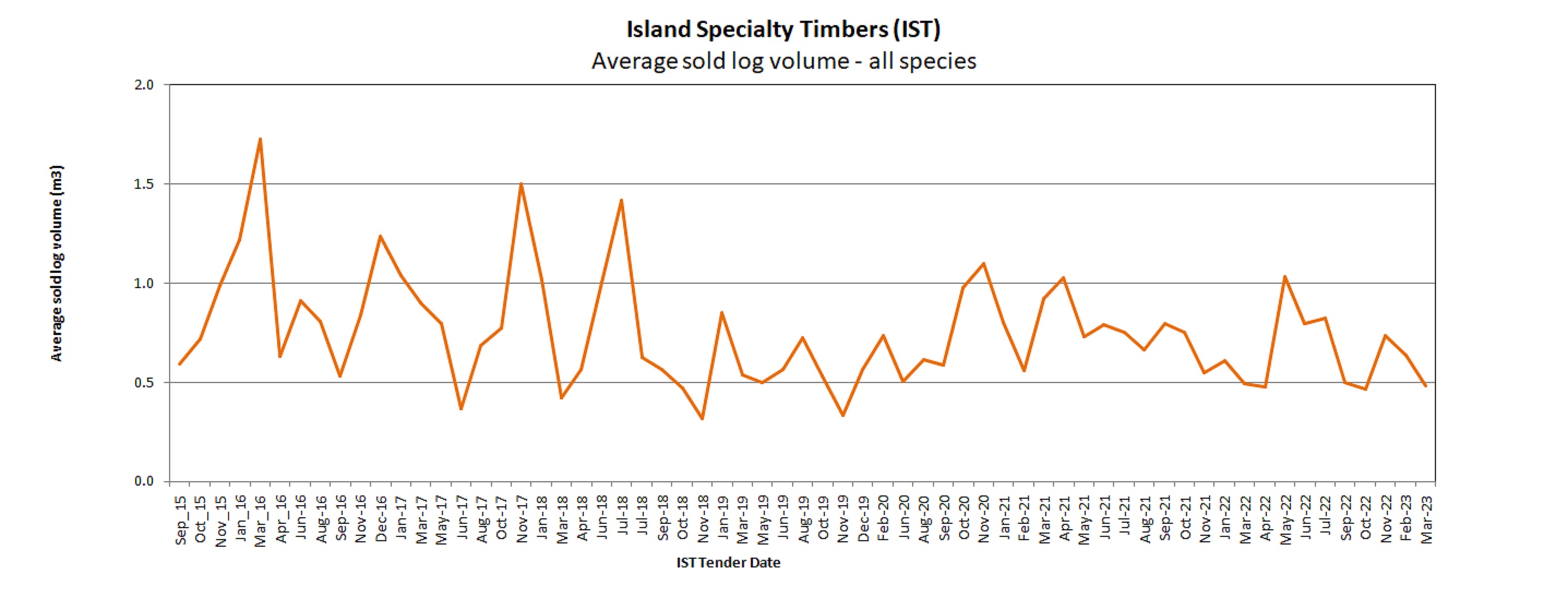
The following chart shows that average log size at the IST tenders continues to be small. Extracting value out of these small logs must present quite a challenge for the buyers.
With Tasmania and New South Wales now being the only States continuing to log public native forest the future of Island Specialty Timbers must now be on borrowed time.
I won’t be writing these annual reports for much longer!
I was going to write about this New Zealand report a few months ago but didn’t.
And now I realise what the problem was!
New Zealand farmers have been planting and growing a wide range of timber species for many decades now. And now there is an increasing backlog of timber waiting to find a market!
But the New Zealand domestic market is not used to buying farm grown timber (unless its pine or douglas fir).
Most decorative and specialist timber in New Zealand is imported.
Hence the name of the report!
But the name is wrong and reflects poorly on the report authors.
That kind of national self-sufficiency, anti-commercial, anti-competitive thinking is typical of the forest industry in Australia.
But New Zealand has a fully commercial, fully competitive forest industry.
New Zealand farm foresters don’t want industry protection (as the name of the report implies). They want access to proper functioning timber markets.
That means providing a quality product at the right price that the market wants.
It means better understanding by farmers of what timber the market wants and at what price. Growing a random assortment of tree species in the hope of one day finding a market for your timber is bound to end in disappointment.
It means building relationships between key market players – growers, loggers, sawmillers, wood merchants, builders, architects, etc..
And critically it also means creating export markets for New Zealand grown decorative and specialist timber, because New Zealand farmers will eventually overwhelm local markets.
So a better name for this report would have been “DEVELOPING MARKET ACCESS”.
Let me finish on a positive note…
Despite the dodgy name the report is an excellent summary of the numerous issues facing New Zealand farm foresters as they try and build a proper functioning timber market. I wish them every success!
The Australia Institute is hosting this event at the Hobart Town Hall 1.00 pm Tuesday 14th November.
I wish I could go, but I’ll be away then.
So here are my thoughts on how to end Public Native Welfare Forestry in Tasmania.
The Tasmanian Parliament WILL NEVER, EVER END THE FORESTRY WARS!
That fact is perfectly clear!
Therefore the end of public native forest logging in Tasmania MUST come from outside Tasmania, either from Canberra or the marketplace.
Forest protests have very limited impact on Government policy and no impact on the marketplace.
The current Federal Labor government, led by Prime Minister Anthony Albanese, has proven itself to be a conservative Liberal government in disguise. The Federal Labor government will not enter the national forestry wars!
This leaves us with only one choice – the marketplace!
Traditionally the Australian timber marketplace has been more than happy to support the continuing plunder of our public native forests in the face of overwhelming data and community opposition. Tens of thousands of Australian businesses remain utterly mute on their most important resource.
And to date little community focus has been placed on this marketplace complacency.
I believe it is well past time for the marketplace to be held accountable for its complacency and arrogance.
Bunnings and Mitre10 are the biggest retailers of Tasmanian timber in Australia.
It is time to put significant community pressure on both of these major timber retailers.
The Australia Institute meeting in the Hobart Town Hall must pass a resolution calling upon Bunnings and Mitre10 to stop selling all Tasmanian oak products immediately.
There is no other option to end public native logging in Tasmania.
This article appeared in The Mercury newspaper last Saturday the 15th July.
It’s a monster!
Terry Edwards is the old Tasmanian forest industry warhorse now retired. But old warhorses never really retire.
And here is Terry back beating the war drums once again.
This time it’s not “The Greenies” he is raging against but the State government!
How dare the Tasmanian State government not continue to subsidise the very welfare dependent forest industry.
How dare the Tasmanian State government sell it’s forest products onto the open commercial market, and not give them to local sawmillers.
It’s an outrage!!!
No! It’s the forest welfare industry doing what it has always done – cry poor and play politics!
It doesn’t say but I assume the sawlogs being discussed are the first harvest of Regional Forest Agreement pruned hardwood plantation sawlogs, that the local sawmillers said they weren’t interested in 25 years ago when they were planted.
My how times change! And old behaviours and attitudes don’t!
What Terry Edwards is saying is that the Tasmanian sawmillers don’t want to operate in a competitive commercial marketplace. They haven’t for 200+ years and they certainly are in no position to be competitive now. Two hundred years living on forest welfare has left the Tasmanian industry a complete basket case.
Subsidizing sawmillers has been government policy in Australia since 1788, which is why our forest industry today is now at deaths door.
The other message from Mr Edwards is about sawlog price control and manipulation. The forest industry does not want an open competitive market operating in Tasmania.
That is a very clear message to Tasmanian farmers to never plant a tree for the forest industry because you will never ever get a fair market price!
Terry Edwards wants the forest industry to wither and die.
I could also point out that what Mr Edwards is proposing is in breach of numerous commercial and trade practice laws. Those cashed up Victorian sawmillers may very well take the Tasmanian government to the High Court, and bring the whole facade crashing down.
Now that would be fun to watch!
Until we get all the welfare recipients and their supporters (like Mr. Edwards) out of the forest industry there will no future.
Island Specialty Timbers is the only source of competitive, transparent log prices anywhere in Australia, including blackwood sawlog prices. That simple statement tells us a great deal about the dire condition of the forest industry!
The lack of commercial credibility is just one of the many challenges facing the forest industry in Australia.
IST is a business enterprise of Sustainable Timber Tasmania (STT) which sources and retails raw material of Tasmanian specialty timbers from harvest or salvage operations conducted on State owned Permanent Timber Production Zone land (PTPZl).
IST is not really a “business” just as the State forest agency Sustainable Timber Tasmania is not a business either. Logging of public native forest in Tasmania requires significant taxpayer subsidies every year.
IST conducted 7 tenders during the year with a total of 198 cubic metres of special species sawlog and craftwood put to public tender. Tasmania defines “special species” as any native forest timber apart from plain grain Tasmanian oak (Eucalyptus sp.).
Blackwood Results
Following two years of strong price increases for plain grain blackwood logs, this year saw a softening of markets. Maximum, minimum and average log prices all declined in 2022-23.
IST put a mere 16 plain grain blackwood logs to tender totalling 11.5 cubic metres. Three logs totalling 1.8 cubic metres were unsold at tender. Prices ranged from $150 to $800 per cubic metre with an average price of $518.
One possible explanation for the softer prices was the significant drop in log size from previous years. Smaller logs mean less sawn recovery per log volume so lower prices.
One figured grain blackwood log (1.6 cubic metres) was sold at tender for a $800/m3.
Generally ~9,000 cubic metres of blackwood is harvested annually from Tasmania’s public native forests with 99.99% being sold at heavily discounted Government prices on long term sales contracts.
The Tasmanian government dominates and deliberately undermines the blackwood log and timber market. These log tender results need to be interpreted bearing this fact in mind.
Premium plain grain sawlogs are what can be grown in blackwood plantations. The “target” sawlog in a blackwood plantation is 1.5 cubic metres in volume.
General Results
Overall a total of 198 cubic metres of special species sawlog and craftwood were put to public tender during the year. Forty five cubic metres failed to sell at tender, a significant increase over the last few years.
Apart from the June 2023 tender that contained a large volume of Huon pine material, 2022-23 continued the trend from last year of declining average prices.
Total tender revenue for 2022-23 was only $97,400 which is a significant drop from last year, and the result of the combined lower volumes and lower prices.
It’s a good thing Island Specialty Timbers is not run as a business otherwise they would be calling in the receivers. Just more taxpayer-funded welfare for the woodcraft industry.
The one positive result for the year was a record price paid for a Tasmanian special timbers log. The June 2023 tender saw a Huon pine log (66cm LED, 47cm SED, 2.4m length, 0.41 cubic metres volume) sell for $7,675 per cubic metre. This continues the trend of the past five years of ever increasing maximum prices paid for quality premium timber.
After a year 2020-21 where average log size increased, the last 2 years have seen a resumption of falling log size at the IST tenders.
Remember these IST tender sales represent tiny log volumes sold into the small southern Tasmanian market. They represent mill door prices not stumpages.
The following chart shows the volume and price summary for 64 log tenders back to 2015.
The tiny volumes and wide variability in species and quality of logs that IST put to tender makes assessing market trends over time difficult.
The following chart shows that average log size at the IST tenders continues to be very small. Extracting value out of these small logs must present quite a challenge for the buyers.
With Tasmania and New South Wales being the only States that have not committed to closing down public native forestry, the future of Island Specialty Timbers is now very much on borrowed time.
I won’t be writing these annual reports for much longer!







Blatant market manipulation
It’s a monster!
Terry Edwards is the old Tasmanian forest industry warhorse now retired. But old warhorses never really retire.
And here is Terry back beating the war drums once again.
This time it’s not “The Greenies” he is raging against but the State government!
How dare the Tasmanian State government not continue to subsidise the very welfare dependent forest industry.
How dare the Tasmanian State government sell it’s forest products onto the open commercial market, and not give them to local sawmillers.
It’s an outrage!!!
No! It’s the forest welfare industry doing what it has always done – cry poor and play politics!
It doesn’t say but I assume the sawlogs being discussed are the first harvest of Regional Forest Agreement pruned hardwood plantation sawlogs, that the local sawmillers said they weren’t interested in 25 years ago when they were planted.
My how times change! And old behaviours and attitudes don’t!
What Terry Edwards is saying is that the Tasmanian sawmillers don’t want to operate in a competitive commercial marketplace. They haven’t for 200+ years and they certainly are in no position to be competitive now. Two hundred years living on forest welfare has left the Tasmanian industry a complete basket case.
Subsidizing sawmillers has been government policy in Australia since 1788, which is why our forest industry today is now at deaths door.
The other message from Mr Edwards is about sawlog price control and manipulation. The forest industry does not want an open competitive market operating in Tasmania.
That is a very clear message to Tasmanian farmers to never plant a tree for the forest industry because you will never ever get a fair market price!
Terry Edwards wants the forest industry to wither and die.
I could also point out that what Mr Edwards is proposing is in breach of numerous commercial and trade practice laws. Those cashed up Victorian sawmillers may very well take the Tasmanian government to the High Court, and bring the whole facade crashing down.
Now that would be fun to watch!
Until we get all the welfare recipients and their supporters (like Mr. Edwards) out of the forest industry there will no future.
Leave a comment
Posted in Commentary, Markets, Plantations, Politics