Another blackwood timber price list

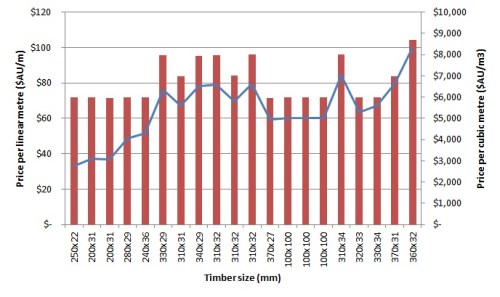
Here’s a blackwood timber price list for a timber retailer in Tasmania.

This sawmiller/retailer specialises in Tasmanian “specialty timbers”.

These timbers obviously come from Tasmanian public native forest, which as everyone should know by now, comes to market at great cost to Tasmanian taxpayers and the plundering of the last of our oldgrowth and rainforest.

https://www.theguardian.com/environment/2018/mar/29/tasmanian-forest-agreement-delivers-13bn-losses-in-giant-on-taxpayers

These prices are for individually priced boards, kiln dried and dressed, select grade (ie. Knot-free plain grain).

I’ve sorted these boards by the wood volume per metre, which seems to provide the best (but by no means perfect) explanation for the variation in price. The other curiosity besides the odd pricing structure is the diverse range of dimensions.

Note the variation in price for the boards of the same dimension eg. 310 x 32mm.

Given that timber is sold in Australia just on a price and NOT price per m or price per cubic metre, most customers would not spot this fraudulent behaviour.

Buyer beware!

ZXSJT

That this sawmiller is getting away with selling select grade blackwood for $8,000 per cubic metre should get some tongues wagging (I hope!).

The fact that getting this timber to market costs Tasmanian taxpayers is the criminal aspect of all this. Welcome to the Tasmanian forest industry!

Taylor 358e LTD

Taylor358eLTD

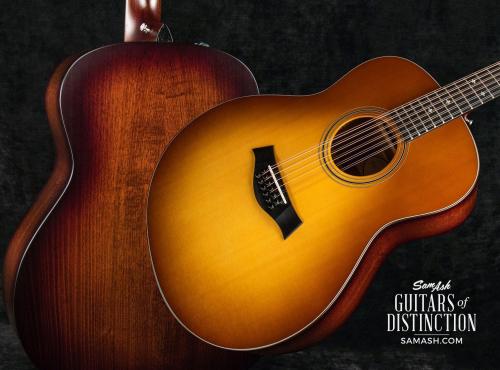
I haven’t done a guitar feature for ages so here we have the latest from Taylor Guitars featuring farm-grown Tasmanian blackwood courtesy of Tasmanian Tonewoods.

I wonder who were the lucky Tasmanian farmers who grew this premium product?

https://tasmaniantonewoods.com

This is a limited edition Grand Orchestra 12 string model in the 300 series.

This guitar was introduced at the 2018 Winter NAMM show in Anaheim, California.

It’s so new it isn’t even featured on Taylor’s website yet.

https://www.taylorguitars.com

In 2016 Taylor Guitars introduced Tasmanian blackwood into their regular production in the 300 series, becoming the first major guitar company to do so. The 300 series is the entry level series featuring all solid wood bodies.

To date the 300 series has not included an Orchestra Model in the line up. I guess this is Taylor testing the market to see if there is demand for a large body 12 string model in this price range. Currently 12 string Orchestra Models are only available in the 400 and 800 series.

Here’s a great review of the guitar from Alamo Music:

If you are after a big guitar with a BIG sound this is your axe!

Enjoy!

PS. I do like that shaded edge-burst on the blackwood back and sides. Good one Mr Taylor!

New Zealand Cypress Market Report

And one VERY switched on sawmiller!!

Macdirect

This has little to do with farm grown Tasmanian blackwood, but in terms of where I wish the forest industry in Tasmania was right now, this is a fantastic example. In fact I would rate this little piece as one of the best things I’ve read in my 40 year career as a forester:

http://www.nzffa.org.nz/specialty-timber-market/headlines/member-profile—macdirect/

It’s a shame it’s hidden away in a corner of the New Zealand Farm Forestry Association (NZFFA) website so that very few people will ever read it.

I suspect Murray Grant, Director/Owner of MacDirect Ltd., didn’t set out to write a cypress market report. But that is exactly what this is. This “member profile” is jam packed with lots of useful information for existing and potential cypress growers.

Most Tasmanians would only know macrocarpa cypress as large scraggly farm windbreak trees. Only a handful of Tasmanians know that this tree is fast growing and produces a high value, high quality, durable timber. New Zealand farmers have been growing it in commercial plantations for 40 years. There are only a handful of small cypress plantations in Tasmania.

MacDirect Ltd is NZ’s number 1 Building Grade Macrocarpa supplier.

https://www.macdirect.co.nz/

To me the thing that makes Murray Grant unique is that he’s not just thinking about how to improve his sawmills profitability; he’s not just thinking about the logs that will be coming into his sawmill tomorrow or next week.

He’s thinking about the logs that will be harvested in 10, 20 and 30 years time!!

He’s thinking about the trees that need to be planted tomorrow!!

The major priority of EVERY sawmiller is NOT to produce profitable sawn timber! That’s the easy part of the business!!

Given that timber takes 30+ years to grow, the major priority of every sawmiller is to ensure that farmers are growing more (profitable) trees for wood production to meet market demand.

Sawing up logs is the easy part!!!

And Murray Grant knows this when he says:

We would love to hear from any farm foresters who are keen to work closely with us to grow plantations into the future, get our perspective on silviculture for the marketplace and/or look at log price and harvesting.

Murray Grant knows the critical part that sawmillers (and the market generally) play in ensuring their own future.

Murray Grant is a hero!

He needs a medal!!


Bunnings Timber Price List Update

Bunnings

It’s been almost 2 years since I last reviewed Bunnings timber prices.

https://blackwoodgrowers.com.au/2016/07/01/bunnings-timber-price-lists/

Bunnings timber prices (per linear metre) are readily available on their web page.

https://www.bunnings.com.au/our-range/building-hardware/timber/dressed-timber/hardwood

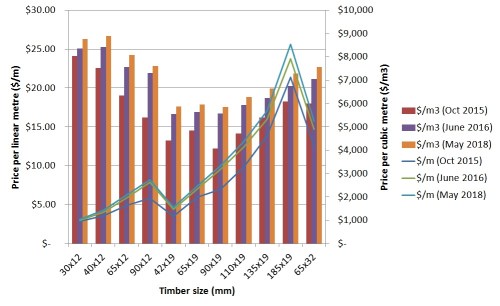
From these I have created the following chart showing the current retail price for Tasmanian Oak Select Grade Dressed All Round (DAR), together with two previous price points.

Prices are shown per linear and cubic metre.

BunningsTasOak3

The retail price for tas oak hasn’t increased that much over the last 2 years. This is curious given there is supposed to be a timber shortage due to the building boom. Obviously the building boom is doing nothing for the fortunes of public native forestry.

Current retail prices range from $5,850 to $8,900 per cubic metre.

These prices do not reflect the actual cost of growing the wood and managing our public native forests as this recent article in The Guardian newspaper makes perfectly clear:

https://www.theguardian.com/environment/2018/mar/29/tasmanian-forest-agreement-delivers-13bn-losses-in-giant-on-taxpayers

Almost all Tasmanian oak comes from the harvesting of Tasmanian public native forests.

Bringing Tas oak to market comes at the expense of Tasmanian schools and hospitals, roads and public housing; never mind the 35 years of bitter community conflict.

Australia will never have a real forest industry whilst the market continues to support uneconomical public native forestry.

So where does that leave Bunnings?

Bunnings seems to be a pretty good company and corporate citizen. They have some good policies:

https://www.bunnings.com.au/about-us/our-actions/bunnings-and-timber

Our actions

We pursue sustainability within our operations by striving to make them socially responsible, environmentally aware and economically viable.

Bunnings has a great Responsible Timber Sourcing Policy and is obviously proactive in helping protect the world’s forests:

We are confident that more than 99 per cent of timber products are confirmed as originating from low-risk sources including plantation, verified legal, or certified responsibly sourced forests. Within that, more than 85 per cent of our total timber products are sourced from independently certified forests or sourced with demonstrated progress towards achieving independent certification, such as that provided by the Forest Stewardship Council and the Programme for the Endorsement of Forest Certification (PEFC).

We continue to seek advice from Greenpeace and WWF on our procurement and we remain grateful for their ongoing support.

We are proud that our long term efforts and commitment to timber procurement has provided customers and team members with the knowledge that our timber is responsibly sourced.

Bunnings is Australia’s leading retailer of Tasmanian oak timber, legally sourced from public native forests in Tasmania, and certified under the Australian Forestry Standard/PEFC, but not under the Forest Stewardship Council (FSC).

I think it is time for Bunnings to live up to its policies and stop plundering Tasmania’s forests and Tasmanian taxpayers.

It is time for Bunnings to stop selling Tasmanian oak.

Public native forestry in Tasmania is not profitable or sustainable. Never has been and never will be.

Bunnings in New Zealand does not sell any dressed hardwood timber at all. None.

I can’t see why Bunnings Australia can’t do the same.

Come on Bunnings!

Live up to your policies!


Tasmanian Forest and Forest Products Network

TFFPN

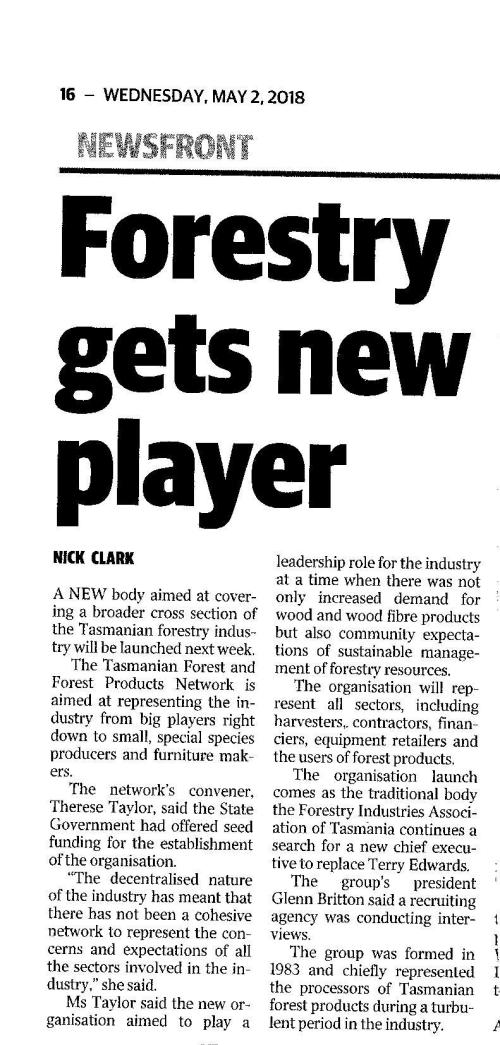
Tasmanian taxpayers have generously sponsored the creation of a new forest industry representative body (goodness knows the forest industry can’t afford to fund such luxuries themselves).

Not only do we have FIAT (Forest Industry Association of Tasmania) as the sawmillers representative, but we now have the Tasmanian Forest and Forest Products Network (TFFPN).

Tasmania now as not one but TWO forest industry representative bodies. That should work well! NOT!!

Two bands of thieves to plunder our forests and the State Treasury.

Check out their website:

https://www.tffpn.com.au/

This new body exists to represent everyone; everyone that is except real forest growers. No one is representing forest growers. Not even the TFGA.

One of the reasons forest industry reform has been so difficult in Tasmania is because there are too many forest industry people with their hands in the taxpayer’s pocket. With the creation of the TFFPN that list of people has grown substantially longer. Forest industry reform will henceforth be nigh impossible.

The TFFPN will be launched in Hobart next week.

It will be interesting to see who signs up to the TFFPN to join the war games and get their hands on the money.

No doubt the Government will describe it as a major achievement.

What a joke!

The Government will use the TFFPN to wedge the community by promoting bitterness and division. No doubt the TFFPN will be more than happy to play this game.

FIAT is obviously not disappearing anytime soon.

FIAT no longer has the support of the Government because they had the temerity to go and talk to The Greens and negotiate the Tasmanian Forest Agreement, which has since been rescinded.

The forest industry in Tasmania is a complete mess.

Stand by for another 4 years of forest industry chaos and waste.

This article was in Wednesday’s Mercury newspaper:

MercuryTFFPN

Softwood growers seek sector review

SWANpine

https://www.bdtimes.com.au/?news%2Fbusselton-dunsborough-times%2Fsoftwood-growers-seek-sector-review-ng-b88817681z

WOW!!

This must be the first time in my 40 year career as a forester that I’ve heard farm foresters openly complaining about Government control of forestry markets in Australia.

This is a unique event.

Hopefully this is the beginning of the major reform of the forest industry that is so desperately needed in Australia.

We really need to keep this discussion going.

And it’s not just about softwood prices.

It’s also about native forest log prices, and markets, transparency and competition.

It’s also about Government forest policy which is firmly focused on subsidising sawmills, and not about profitable tree growers.

This is true right around Australia!

I wish the WA farmers luck in their discussions with the State Government.

Even if you don’t succeed initially, keep the discussion going. Keep the campaign alive.

The fact that here we have farmers wanting to grow trees for wood production and yet we have Government policy directly hindering their efforts is beyond madness.

GOOD LUCK!

The Australian International Timber and Woodworking Festival

Otherwise known as Wood Dust.

wooddust

https://www.wooddustaustralia.com/

Now this is ambition.

I wrote recently how I thought New Zealand needed a national wood festival to take their already successful forest industry to the next level.

Well it seems Australia is looking to go one better with an international wood festival, which is extraordinary given the parlous state of our forest industry.

I’ve also written recently about wood-based festivals in the 21st century that fail to recognise where the wood comes from and who grows it:

https://blackwoodgrowers.com.au/2018/02/13/all-about-the-wood-nothing-about-the-growers/

And finally I wrote recently about the Maleny Wood Expo in Queensland that is a much better example of what a 21st century wood festival should be like:

https://blackwoodgrowers.com.au/2018/02/19/maleny-wood-expo/

Every single wood-based festival in the 21st century should:

  • Demonstrate concern for where the wood comes from (is it sustainable and not just certified); and
  • Encourage and support profitable private tree growers.

The Maleny Wood Expo does this by having clearly defined mission and objectives.

The Expo aims to promote the whole ‘timber’ story – from seed collection through planting forests, harvesting and milling to the end product, the furniture.

The Maleny Wood Expo comes from a landcare base, whilst Wood Dust comes from a wood craft base, and the difference in attitude is immediately apparent.

Don’t get me wrong.

I think Australia desperately needs a major wood festival to help rebuild our battered forest industry, but on a proper basis. Encourage profitable private tree growing. No wood from public native forests.

Wood Dust is on October 17 – 21, 2018 in Bungendore and Queanbeyan, NSW, Australia.

Tickets are available online.

So whilst this year’s Wood Dust Festival falls well short of what I regard a modern wood festival should be I hope it is a great success and can grow to include the “whole timber story”.


Tasmanian Regional Forest Agreement (RFA) delivers $1.3bn losses in ‘giant fraud’ on taxpayers

logging2

This is an excellent rewrite of John Lawrence’s article from last December now published in The Guardian.

https://www.theguardian.com/environment/2018/mar/29/tasmanian-forest-agreement-delivers-13bn-losses-in-giant-on-taxpayers

Giant Fraud is an understatement!

Tasmanian’s have been completely swindled!!

That’s a $billion dollars that should have gone to our struggling schools and hospitals, not the forest industry.

So now the RFA has been renewed and Tasmanian’s will be swindled for another 20 years.

Veteran journalist Gregg Borschmann has been writing a veritable broadside of scathing articles about public native forestry in Australia. They are all worth reading:

https://www.theguardian.com/profile/gregg-borschmann

Greenpeace leaves the Forest Stewardship Council (FSC)

rainforest3

It’s a grim day for the world’s forests.

On Monday 26th March Greenpeace International announced it was leaving the FSC.

Greenpeace said that the FSC has become a “tool for forestry and timber extraction” and it wouldn’t renew its membership.

Greenpeace International to not renew FSC membership

Here’s how the Washington Post reported the story:

https://www.washingtonpost.com/world/asia_pacific/greenpeace-leaves-sustainable-wood-certification-group/2018/03/27/aa6c0a4e-3184-11e8-b6bd-0084a1666987_story.html?utm_term=.1993de3f7510

The FSC’s response to the Greenpeace announcement clearly shows no interest in rebuilding the relationship. Is this an indication that vested interests have indeed successfully taken control of the FSC?

FSC Statement about Greenpeace International

Is this the end of third party forest certification?

Reflections on New Zealand

MWE

I finally made it to the Shakey Isles after all these years, or at least the North Island; and thankfully they didn’t shake or erupt while we were there.

Here is a collection of thoughts on New Zealand forestry from a visiting forester from Tasmania.

If I think about the farm forest industry as a jigsaw puzzle then the New Zealanders seem to have most of the pieces in place, unlike here in Australia where we haven’t even found the puzzle box yet.

Potential

Despite its already huge forest industry New Zealand still has enormous potential to expand its industry further. There are huge areas of cleared farm land whose best long-term and most profitable use would be forestry.

This land is mostly marginal cattle and sheep grazing country, but I was amazed to see dairy farmers happily incorporating tree-growing into their businesses – harvesting timber whilst milking the cows! Brilliant!!

Whether the country’s road, rail, and port infrastructure could handle the increase is a different question.

There are also huge areas of cleared farm land whose best long-term use would be planted back to native forest – but that’s another story. Grazing cows on 70 degree slopes? Really?

With it’s potential for growing a wide range of quality timber species New Zealand could easily become the quality timber capital of the world.

Tree Growing Culture

For someone from Australia one of the things that stands out in NZ is the abundance of planted trees on farms. NZ farmers have an obvious passion for growing trees. This is not surprising in the North Island as everything grows with such rampant abundance. Trees are planted for aesthetic and utility purposes, sometimes for environmental purposes and occasionally for wood production. Most of the planted trees will eventually become liabilities that need to be cleared and burnt, instead of assets to be harvested and sold.

This tree-growing culture is a real advantage for New Zealand.

The question is – how do you progress that culture to be one of passionate profitable wood growing?

Wood Festival

One of the ways to build a culture of passionate profitable wood growing is with a wood festival.

For all its forest heritage I was surprised to learn that New Zealand does not have a Wood Festival. In order to build a focus around farm grown quality wood and farm foresters, New Zealand needs a Wood Festival. Whether it is a National Festival or a separate one for each island the future can determine. My recommendation would be to begin with a Wood Festival in the North Island, since this has the advantage in being able to grow a wider range of quality timbers.

I think the Maleny Wood Expo would be a good model for the New Zealanders to start with and develop further.

http://www.malenywoodexpo.com/

The Wood Festival should include a wide range of people from tree growers, tree nurseries, harvesting contractors, sawmillers, craft people, cabinet and furniture makers, architects, builders, etc.

The Maori community and its wood carving heritage definitely need to be part of the Festival.

The purpose of the festival is to build a community of proud tree growers and wood users, and to build links between growers and the market.

Eventually the world will come to the New Zealand Wood Festival. Major companies like Ikea will come to NZ and establish connections. I have absolutely no doubt the Festival will become an international event.

Building markets

New Zealand farmers have ready access to markets if they grow meat, vegetables, fruit, flowers, wool, wine, etc. But access to forestry markets is more difficult. Markets are well established if you grow radiata pine, douglas fir or cypress. But many farmers are growing a host of other tree species, including Tasmanian blackwood, in the hope of breaking into higher value timber markets.

But these higher value markets are yet to understand that they can no longer rely on the plunder of the worlds native forests. They have yet to understand that if they want wood today and tomorrow they need to ensure there is tree planting today and tomorrow.

Just going to the hardware or the timber merchant to buy timber is a dead end road, unless the hardware chains and timber merchants are actively supporting local tree growers.

A wood festival would help resolve this market dysfunction.

Architects

Coming from Tasmania one of the immediate impressions of New Zealand is of a go-ahead prosperous country. The NZ economy is going very well right now. There is construction and building happening everywhere.

One of the ways for NZ tree growers to establish market presence is through the architecture profession.

I strongly recommend that the New Zealand Farm Forestry Association establish a close working relationship with the New Zealand Institute of Architects (NZIA). Perhaps even a partnership!

http://www.nzffa.org.nz

https://www.nzia.co.nz/

The NZIA should be supporting local wood growers and the use of locally grow quality timber. A policy around this would a good start.

Having the NZIA onboard promoting and supporting local wood growers would be a major boost to local growers – definitely one of the missing pieces of puzzle!

Blackwood

During my trip I caught up with NZ blackwood growers Malcolm Mackenzie and Ian Brown. It was a breath of fresh air! Thanks guys!! ….and thanks also to Alison.

I saw a lot of blackwood planted around the North Island. Most of it is unmanaged aesthetic plantings, with scraggly blackwood trees being the result. I saw only a few blackwood plantations, including Malcolm and Ian’s. No one has ever said blackwood is easy to grow, even in NZ. But with care, commitment and a focus on the Three Principles it can be done. Tasmanian blackwood obviously loves growing in the north island of NZ. It’s the perfect climate and soils.

The main challenge now is not the growing of blackwood but creating and building markets. The hope is that as markets develop more trees will be planted.

Ian Brown has approximately 4,000 cubic metres of high quality blackwood sawlogs available for sale over the next 5-10 years and he needs to find a buyer. The buyer needs to pay a good price but also share a commitment to the future of the New Zealand blackwood industry. Is there anybody out there?

New Zealand is a very inspiring place for a battle-weary forester.