Greenpeace leaves the Forest Stewardship Council (FSC)

rainforest3

It’s a grim day for the world’s forests.

On Monday 26th March Greenpeace International announced it was leaving the FSC.

Greenpeace said that the FSC has become a “tool for forestry and timber extraction” and it wouldn’t renew its membership.

Greenpeace International to not renew FSC membership

Here’s how the Washington Post reported the story:

https://www.washingtonpost.com/world/asia_pacific/greenpeace-leaves-sustainable-wood-certification-group/2018/03/27/aa6c0a4e-3184-11e8-b6bd-0084a1666987_story.html?utm_term=.1993de3f7510

The FSC’s response to the Greenpeace announcement clearly shows no interest in rebuilding the relationship. Is this an indication that vested interests have indeed successfully taken control of the FSC?

FSC Statement about Greenpeace International

Is this the end of third party forest certification?

Reflections on New Zealand

MWE

I finally made it to the Shakey Isles after all these years, or at least the North Island; and thankfully they didn’t shake or erupt while we were there.

Here is a collection of thoughts on New Zealand forestry from a visiting forester from Tasmania.

If I think about the farm forest industry as a jigsaw puzzle then the New Zealanders seem to have most of the pieces in place, unlike here in Australia where we haven’t even found the puzzle box yet.

Potential

Despite its already huge forest industry New Zealand still has enormous potential to expand its industry further. There are huge areas of cleared farm land whose best long-term and most profitable use would be forestry.

This land is mostly marginal cattle and sheep grazing country, but I was amazed to see dairy farmers happily incorporating tree-growing into their businesses – harvesting timber whilst milking the cows! Brilliant!!

Whether the country’s road, rail, and port infrastructure could handle the increase is a different question.

There are also huge areas of cleared farm land whose best long-term use would be planted back to native forest – but that’s another story. Grazing cows on 70 degree slopes? Really?

With it’s potential for growing a wide range of quality timber species New Zealand could easily become the quality timber capital of the world.

Tree Growing Culture

For someone from Australia one of the things that stands out in NZ is the abundance of planted trees on farms. NZ farmers have an obvious passion for growing trees. This is not surprising in the North Island as everything grows with such rampant abundance. Trees are planted for aesthetic and utility purposes, sometimes for environmental purposes and occasionally for wood production. Most of the planted trees will eventually become liabilities that need to be cleared and burnt, instead of assets to be harvested and sold.

This tree-growing culture is a real advantage for New Zealand.

The question is – how do you progress that culture to be one of passionate profitable wood growing?

Wood Festival

One of the ways to build a culture of passionate profitable wood growing is with a wood festival.

For all its forest heritage I was surprised to learn that New Zealand does not have a Wood Festival. In order to build a focus around farm grown quality wood and farm foresters, New Zealand needs a Wood Festival. Whether it is a National Festival or a separate one for each island the future can determine. My recommendation would be to begin with a Wood Festival in the North Island, since this has the advantage in being able to grow a wider range of quality timbers.

I think the Maleny Wood Expo would be a good model for the New Zealanders to start with and develop further.

http://www.malenywoodexpo.com/

The Wood Festival should include a wide range of people from tree growers, tree nurseries, harvesting contractors, sawmillers, craft people, cabinet and furniture makers, architects, builders, etc.

The Maori community and its wood carving heritage definitely need to be part of the Festival.

The purpose of the festival is to build a community of proud tree growers and wood users, and to build links between growers and the market.

Eventually the world will come to the New Zealand Wood Festival. Major companies like Ikea will come to NZ and establish connections. I have absolutely no doubt the Festival will become an international event.

Building markets

New Zealand farmers have ready access to markets if they grow meat, vegetables, fruit, flowers, wool, wine, etc. But access to forestry markets is more difficult. Markets are well established if you grow radiata pine, douglas fir or cypress. But many farmers are growing a host of other tree species, including Tasmanian blackwood, in the hope of breaking into higher value timber markets.

But these higher value markets are yet to understand that they can no longer rely on the plunder of the worlds native forests. They have yet to understand that if they want wood today and tomorrow they need to ensure there is tree planting today and tomorrow.

Just going to the hardware or the timber merchant to buy timber is a dead end road, unless the hardware chains and timber merchants are actively supporting local tree growers.

A wood festival would help resolve this market dysfunction.

Architects

Coming from Tasmania one of the immediate impressions of New Zealand is of a go-ahead prosperous country. The NZ economy is going very well right now. There is construction and building happening everywhere.

One of the ways for NZ tree growers to establish market presence is through the architecture profession.

I strongly recommend that the New Zealand Farm Forestry Association establish a close working relationship with the New Zealand Institute of Architects (NZIA). Perhaps even a partnership!

http://www.nzffa.org.nz

https://www.nzia.co.nz/

The NZIA should be supporting local wood growers and the use of locally grow quality timber. A policy around this would a good start.

Having the NZIA onboard promoting and supporting local wood growers would be a major boost to local growers – definitely one of the missing pieces of puzzle!

Blackwood

During my trip I caught up with NZ blackwood growers Malcolm Mackenzie and Ian Brown. It was a breath of fresh air! Thanks guys!! ….and thanks also to Alison.

I saw a lot of blackwood planted around the North Island. Most of it is unmanaged aesthetic plantings, with scraggly blackwood trees being the result. I saw only a few blackwood plantations, including Malcolm and Ian’s. No one has ever said blackwood is easy to grow, even in NZ. But with care, commitment and a focus on the Three Principles it can be done. Tasmanian blackwood obviously loves growing in the north island of NZ. It’s the perfect climate and soils.

The main challenge now is not the growing of blackwood but creating and building markets. The hope is that as markets develop more trees will be planted.

Ian Brown has approximately 4,000 cubic metres of high quality blackwood sawlogs available for sale over the next 5-10 years and he needs to find a buyer. The buyer needs to pay a good price but also share a commitment to the future of the New Zealand blackwood industry. Is there anybody out there?

New Zealand is a very inspiring place for a battle-weary forester.

Forestry is the issue that dare not speak its name

PFN

This is an excellent article in The Guardian yesterday about the Tasmanian State election campaign. Compared to the last election in 2014, forestry has been completely off the agenda by all parties in 2018. The elephant in the room waiting to reek havoc on the Tasmanian community once more.

https://www.theguardian.com/australia-news/2018/mar/02/tasmanian-election-on-all-sides-forestry-is-the-issue-that-dare-not-speak-its-name

We are on track to waste even more $100 millions of taxpayer dollars over the next Government term on the bankrupt forest industry, because of our failed political system.

Well worth reading!

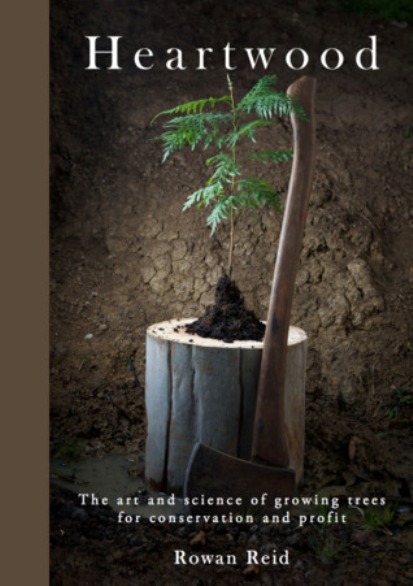
Heartwood: The art and science of growing trees for conservation and profit

Heartwood

http://www.agroforestry.net.au/main.asp?_=heartwood%20book

Fellow forester Rowan Reid recently wrote this book which has been getting a lot of media coverage. I thought I’d write a review.

Rowan is passionate about trees and farm forestry. And like me he’s pretty critical of the policies and practices of State and Federal Governments and the forest industry. As such Heartwood says very little about past and current industry and Government policies and practices to thwart or encourage farm forestry.

In one respect I can see why he has avoided discussing the current Government, industry and market context. Rowan obviously wants to keep the book positive. The problem is when it comes time to sell your cherished sawlogs you have to deal with that context, and it’s often not a positive experience.

One of the first things I do with a new book is look at the contents page to get an overview of the books structure.

Here’s the Contents page from Heartwood:

HeartwoodTOC

With Heartwood that didn’t work. I quickly discovered there was content not shown in the Contents page. So I’ve made a list of the other Contents:

Quartersawn, backwsawn and shrinkage 34
The components of a tree trunk 52
Basic tree felling 53
How to grow tall trees 70
How much space does a tree need to grow? 88
Geotropic and phototropic growth in trees 108
Attracting wildlife to your farm 124
Measuring moisture content and wood density 144
Wood density and tree age 145
Reaction wood: tension wood and compression wood 162
Hardwood sawing patterns for a horizontal bandsaw 178
Tree foliage for supplementary fodder 200
Pruning trees for sawlogs 220
Durability of timber 240
Growing shitake mushrooms on logs 258
Shelterbelt design 276
How to plant a tree 294

Heartwood contains a wealth of information and knowledge about trees and farm forestry written in a personal and engaging style. Rowan’s view of farm forestry extends beyond commercial wood production (although that is clearly his main focus, as you can see from the other Contents page). His vision is to reintegrate trees back into the rural landscape to achieve multiple benefits.

If you want a head start in how to grow these trees this is a good place to begin.

The question remains – what are the commercial risks associated with planting these species? After all, the book’s title does include the word PROFIT!

And here’s where I start to have problems with the book.

How do we start a conversation in Australia about profitable tree growing?

Certainly Governments and the forest industry take great efforts in avoiding discussing profitable tree growing. To them it is anathema. Such discussion would inevitably put the spotlight on the failings of public native forestry, and they are at pains to avoid that.

Heartwood avoids any serious discussion about end uses, markets, costs and prices, so it’s hard to see where the profits come from. There’s also no discussion about laws and regulations pertaining to farm forestry. Rowan’s desire to avoid the current “context” and remain positive starts to feel awkward.

Some of the species in the book are quality appearance-grade timber species. In theory they are high value. Appearance grade timbers in Australia have historically either been imported or have come from public native forests. With public native forestry in Australia traditionally run as a community service rather than a business, proper commercial markets for quality timber have never developed.

One example of weak/non-existent markets is the steady stream of phone calls I get from people who have stashes of Australian Red Cedar timber hidden in back sheds for decades. They now want to sell, but can’t find buyers. At the time these sheds full of Red Cedar were seen as a guaranteed investment. But after 100 years the market for Red Cedar has moved on leaving these “stranded assets”.

And yet there are people today planting and growing Red Cedar hoping to revive this long dormant market. Will they succeed?

Heartwood is full of optimism and hope. The forest industry has a long history of unrealised optimism.

Most of the appearance grade species in Heartwood would be destined for the furniture, flooring and cabinetry markets (office and shop fit-outs, etc.); or for the export market. The Australian furniture industry is well aware that it faces a looming timber supply crisis as evident in this recent media article:

http://www.abc.net.au/news/2018-02-16/victoria-ash-timber-facing-fresh-crisis-supply-issues/9424290?smid=Page:%20ABC%20News-Facebook_Organic&WT.tsrc=Facebook_Organic&sf182264054=1

But the furniture industry has no plans to address this crisis besides appeals to Governments. The furniture industry could be supporting and encouraging private tree growers, but so far there is no evidence of this.

Rowan has been working hard for decades promoting farm forestry in Australia but governments, industry, markets and farmer groups have pretty much ignored his efforts.

Heartwood will fundamentally change the way people think about the future of forestry and in doing so it will encourage more landholders to grow more trees for the benefit of their land and all that depend on it.

I’m not sure that statement is true because most of the change/reform that is needed has to happen in the marketplace and with Government policy as much as with landowners.

I see no indication that the marketplace or Governments understand what reform is needed to realise Rowan’s dream; his Third Wave!

By all means get yourself a copy of Heartwood. It is an enjoyable read.

The book is as relevant to furniture and cabinet makers as it is to farmers/landowners. Maybe a few policy makers and forest industry leaders could learn a thing or two.

Thanks Rowan!

Maleny Wood Expo

MWE

The more I read about the Maleny Wood Expo (MWE) the more I like.

http://www.malenywoodexpo.com

The town of Maleny is in south east Queensland up in the hills behind the Sunshine Coast.

The MWE has been going for 22 years and is clearly a major community event!

The MWE comes from a landcare background. This seems to be what makes the difference with other “festivals”.

One of the great initiatives of the MWE is their Sustainable Timber Policy:

http://www.malenywoodexpo.com/maleny-wood-expo-sustainable-timber-policy/

The fact that the MWE cares about where the timber comes from is a unique initiative.

Sustainable Timber Policy

The Maleny Wood Expo has a strong focus on ecological sustainability and sustainable use of local timbers. The first Maleny Wood Expo in 1996 was born from Barung Landcare’s recognition of the need to raise awareness about sustainable use of native hardwood and rainforest cabinet timbers. If our beautiful native timbers are to be available in the future, we must protect our resources.

[we must protect our resources…..and promote and support private tree growers].

The Expo aims to promote the whole ‘timber’ story – from seed collection through planting forests, harvesting and milling to the end product, the furniture.

[I like this sentence very much. The one thing missing from the “whole timber story” is the “Who”. Who grows the wood? Who manages the forest? Who collects and plants the seeds? If this was a dairy expo the dairy farmer would be the centre of attention. The same needs to happen with timber. Where is the Grower? Timber needs to be humanised].

The main point of difference between the Maleny Wood Expo and other wood shows is that our wood artisans are required to work in sustainably harvested native, weed or recycled timbers.

[MWE are keen to deliberately differentiate themselves from other “Festivals”. As I wrote in a previous blog, most wood festivals don’t care at all where the wood comes from. MWE care very much! This is the 21st century. This is a great positive initiative].

https://blackwoodgrowers.com.au/2018/02/13/all-about-the-wood-nothing-about-the-growers/

To achieve this we require all exhibitors to respect our ethic. All timber must be sourced from:

  • Primarily from SE Queensland or northern NSW region (minimum 80%);
  • Hardwood or softwood timber from managed plantations on private or public land;
  • Exotic (non native) hardwood and softwood timbers (e.g. Slash Pine, Camphor Laurel and Privet) that can be removed with minimal disturbance to native bushland. Many species have weed potential and their removal will benefit the environment;
  • Salvage timber from native forest logging operations i.e. timber that isn’t the primary target of the operation but rather a by-product that would otherwise be bulldozed or burnt (e.g. Blackwood Acacia melanoxylon);
  • Timber collected where it presents a danger to people e.g. trees that have fallen or are likely to fall across roads, powerlines, houses (recognise that timber left to rot on the ground provides important nutrients and wildlife habitat);
  • Dead standing trees from partially-cleared farmland – of less than 20cm diameter at waste height;
  • Recycled timbers from demolition of buildings and other constructions, and waste transfer stations; or
  • Other – if timber is not from the above sources, exhibitors must indicate where it came from prior to exhibiting at Expo.

Products made from timber burls cut from live trees (from Regional Ecosystem Guidelines, Qld Dept of Environment and Heritage Protection) are not permitted at Maleny Wood Expo.

Abiding by these guidelines will assist our community in sustainably managing our local timber resources.

It’s a pretty good policy.

What I would like to see is the policy actual focus more on promoting and supporting profitable private tree growers; actually build and grow the future supply of quality timber for both commercial and environmental objectives.  There could be a range of initiatives to support this.

Why not use the power and momentum of the MWE to get more trees in the ground; grow the future!

Private Tree Growers

Besides the Sustainable Timber Policy the only other reference on the MWE website to tree growers is this statement:

Tree Farming for The Planet

We must more and more use timber from privately-owned forests as our appreciation of old growth forests leads to cessation of logging. Private forests provide not only timber – they’re an important farm asset and income stream. They repair and protect our land and provide biodiversity and habitat, shelter and support for agricultural and grazing enterprises, landscape aesthetics, bushfoods and much more. The Barung Nursery supplies quality tree stock for boutique and larger plantations.

The Barung Landcare Group hosts the MWE which is clearly a very good thing.

http://www.barunglandcare.org.au/

It’s curious that their website doesn’t have much of a focus on growing timber.

Is there a local specialty timber growers group that the Barung Landcare Group supports?

There are significant opportunities still to be realised in this Barung Landcare/MWE team.

Keep up the great work!

Now why can’t other wood festivals be more like the MWE?

All about the wood, nothing about the growers

TBG

It’s a funny old world!

I look around and see lots of events and festivals that have a strong wood focus, events such as:

All of these events either feature wood or have a strong link to wood.

But none of these events show any interest whatsoever in where their wood comes from, or who grows it!!

It’s as if they think the wood magically falls from the sky!

Do they not care?

I understand the history behind this attitude and thinking. In Australia we have had 200+ years of abundant public native forests to plunder. Why worry about tomorrow when there is a tree to cut down today!

But those days are clearly behind us. The treeless/woodless tomorrow is rapidly approaching. I read about it every day!

Or perhaps they believe there are hundreds of private tree growers out there happily and profitably growing so much quality wood that they don’t need to worry. I don’t see much evidence of that. Yes there are a few private tree growers around Australia but they are rare.

Or a third possibility is that these organisations believe it is NOT their responsibility to support and encourage private tree growing. If it isn’t the responsibility of markets to do this then I’m not sure who is responsible.

And still the festivals continue.

Even woodcraft galleries (and Australia has some world class woodcraft galleries) behave as if there is an endless abundance of wood.

It doesn’t make sense to me.

The idea of having a wood festival in the 21st century without any reference to where the wood comes from or who grows it is just extraordinary!

These events and businesses should think about how they can encourage and support private tree growers as part of their event/business program.

In encouraging and supporting private tree growers they ensure the future of their event.

It’s not just about existing tree growers, it’s about building a strong positive culture of tree growing in the rural community.

Some of these events and festivals are huge. They could make an enormous impact in rural communities, helping build a culture of tree and timber growing.

And including existing and potential tree growers into the program would bring a whole new audience to these events.

If anyone wants ideas or to start a discussion about how to include existing and potential private tree growers into their event program I’d be happy to help. Give me a call; send me an email…

PS. And knock me down with a feather!

Here we have a woodcraft festival that does acknowledge the importance of tree growers:

Maleny Wood Expo

We must more and more use timber from privately-owned forests as our appreciation of old growth forests leads to cessation of logging. Private forests provide not only timber – they’re an important farm asset and income stream. They repair and protect our land and provide biodiversity and habitat, shelter and support for agricultural and grazing enterprises, landscape aesthetics, bushfoods and much more. The Barung Nursery supplies quality tree stock for boutique and larger plantations.

They could do a lot more to encourage and support private tree growers but its a start.

Hey the world is changing!!

The Future of Wood

Future of Wood

The latest Martin Journal (Vol 8. p. 58) has an interesting article called The Future of Wood.

https://www.martinguitar.com/about/martin-journal/

It’s a soft-message article about sustainable forest management and sustainable tonewoods.

It’s such a soft message I’m not sure what the take home message is supposed to be.

I wonder how many guitar company stalls at the recent NAMM show had the word “sustainable” on display?

From my watching on social media the NAMM message was the same as usual – “come and see my new exotic, glamorous guitars!”

I didn’t see any presentation or review that mentioned “sustainable”.

Martin’s sentiments are similar—the company has a lot riding on the hope that the tonewoods they’ve built their business around [ebony, rosewood, mahogany] will still be around in another 185 years and that consumers will embrace alternative woods as well.

“We are a six-generation family business,” Davis-Wallen says. “We are going to try to do everything that we can to continue to go on, but we need help from consumers.”

So far I think the message has been so soft it isn’t even getting on the radar let alone getting any response from consumers.

The message needs to be laser sharp and LOUD…..to the point of being irritating.

Message to CF Martin – keep up the good work……BUT TURN UP THE VOLUME!!

Happy reading!

Farmers and forestry

Plantation

Yet another recently discovered private blackwood plantation.

It’s a common mantra in the forest industry in Australia that Australian farmers are reluctant to plant trees as a commercial crop.

For many years I believed this mantra and attributed it to the lack of support from the forest industry, markets and governments. Many government and industry reports have made similar findings.

The fact that the forest industry believes that transparent competitive markets, log prices and a level playing field are irrelevant to its future, doesn’t help.

However I recently had a revelation that undermines this mantra.

Driving around southern Tasmania I am always discovering new blackwood plantations on private farmland, and it suddenly dawned on me – Tasmanian farmers want to grow commercial blackwood, the evidence is everywhere!

I know of dozens of private blackwood plantations in southern Tasmania alone. In northern Tasmania there must be hundreds.

Virtually all of these plantations are small and have failed.

They have failed for a range of reasons:

  • Poor site selection;
  • Poor establishment;
  • Lack of timely management and commitment;
  • Stock and wildlife damage;

But I believe the major reason for the failure of these hundreds of private plantations is the lack of support and engagement (and demonstrably commercial behaviour) by the forest industry and the State government.

The government agency Private Forests Tasmania offers extension services to Tasmanian farmers, but clearly, after 45 years, this isn’t enough.

http://pft.tas.gov.au/

Private Forests Tasmania by itself cannot provide enough support, encouragement and motivation to turn this demonstrable passion for commercial blackwood into a success story.

And especially right now we have State government policy deliberately undermining any hopes of private commercial blackwood growers with the anti-commercial Special Timbers Management Plan:

https://www.stategrowth.tas.gov.au/energy_and_resources/forestry/special_species_timber_management_plan

Tasmanian farmers clearly demonstrate a passion for growing commercial blackwood, even within the context of decades of toxic, destructive forest politics and policy.

If only we could turn this passion into a success story.

Election Wishlist

Hodgman White

Another day, another list of new election promises in the media.

It’s very tedious!!

With another State election a few weeks away I thought I’d throw some thoughts together for a Forestry Election Wishlist.

The 2014 Tasmanian State election is still vivid in my memory as one of the most toxic and divisive forestry elections in recent history (and we have had 35 years of them!). The last 4 years have been some of the most damaging and divisive in the history of the Tasmanian forest industry.

Wishlist:-

  1. Tasmania to have a fully commercial profitable forest industry like New Zealand, based on thousands of profitable private tree growers. We need Government policy and action to make this happen;
  2. The evidence is overwhelming! Public native forestry is a disaster commercially, socially and environmentally. It needs to be shut down.
  3. In term of regulations, forest plantations are just like other primary industries. Do we have an Onion Practices Authority, or a Diary Practices Authority? Do we have Apple Practices Plans or Chicken Practices Plans? No we do not! Forest plantations should not be excessively burdened by regulation.
  4. Private Forests Tasmania should be the dominant government forest agency. It needs to be in partnership with the TFGA to develop a vision for the future of the forest industry based on profitable private tree growers.
  5. I could go on but I’d start to feel like a politician on the campaign trail.

None of the political parties are showing any interest in resolving Tasmania’s forestry crisis so this wishlist is just “pie in the sky”.

For further wishes read my previous wishlist here:

https://blackwoodgrowers.com.au/2016/12/05/wish-list-revisited/

When will Tasmania get a real forest industry?

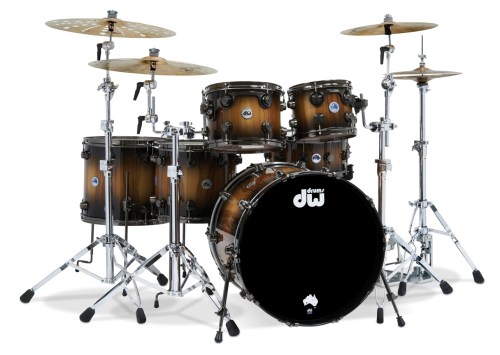
DW Drums Debuts Pure Tasmanian Timber at NAMM 2018

DW_Tasmania Kit20

Here is an update on the previous story.

Drum Workshop Inc. has announced the debut of their limited edition DW Collector’s Series® Pure Tasmanian Timber drumsets. Handcrafted in DW’s California Custom Shop located in Oxnard, CA, these exceptional drums feature a core of incredibly resonant Australian Blackwood with an outer layer of highly figured Blackheart Sassafras. Finished in a Quick Candy Black Burst to Natural Lacquer which is perfectly complemented by DW black nickel hardware, these distinctive drums are completed with a specialty “Limited Edition DW Pure Tasmanian Timber” badge.

https://www.namm.org/thenammshow/2018/exhibitor-news/dw-drums-debuts-pure-tasmanian-timber