
Here’s an email I recently received from a client that raises a number of important issues.
There’s no point growing trees for timber production if there’s no market for the timber. It appears that in NZ and Tasmania there are a number of places that farm forestry growers could sell blackwood as log or possibly sawn. What’s available in Victoria? I asked this question recently of one Victorian agroforestry consultancy. They didn’t have an answer. There are some furniture manufacturers in Victoria who use blackwood so they might be interested in taking timber but I’m guessing only if it has been sawn and seasoned. Perhaps some of the timber sellers will buy from growers but again I suspect if it has been sawn and seasoned. There are markets such as the craft/hobby/specialists such as luthiers which will take small volumes. I guess they could be supplied directly, through WWW fora or by selling to distributors.
This lack of clearly defined sales opportunities for species beyond E. globulus and Pinus radiata (and some niche opportunities such as several species that the Yarram sawmill actively pursues) is IMO a serious impediment for farm forestry in Victoria generally. I raised this issue in a submission to the Vic farm forestry strategy initiative a year or so ago. Perhaps that initiative will lead to some clarity of what can be sold where in Vic. There was an excellent guide published in Qld some years ago, for example, that details what timber is required for what markets and what prices may be expected.
There’s a great deal I could say in reply to this.
There are various reasons why farm forestry has never taken off in Australia despite the AFG having being around since the late 1960’s when the industry was much bigger than it is today. To me the main reason has been poor forest policy and management, and above all a lack of commercial process and management. The forest industry until recently has been run as a sheltered workshop for a select few, centred around a public native forest and plantation resource. So no transparent, competitive markets have ever developed for wood products in Australia. Farmers have never been encouraged to become commercial tree growers through proper market processes and competitive, transparent prices.
With the steady decline in the industry over the last 40 years, and especially since the GFC, the few remaining markets are rapidly disappearing. Sawmillers have traditionally played “rent seeker” with State Governments, rather than behave in a rational commercial manner and engage all landowners (public and private) to grow and supply them with sawlogs. Remarkably they are still behaving as rent seekers even as they now face almost certain extinction. The political games will keep them alive but it will be a long slow painful death; much like a cat playing with a mouse.
We are fast approaching the point where the hardwood sawmilling industry in Australia will collapse and disappear, and will have to be rebuilt from scratch, as they are attempting to do in New Zealand. In this new environment, portable sawmills will play a major role. Here are two examples of what the future may look like:
http://www.northcoasttimbers.net/ based in north-coast NSW, and
http://mobilesawmilling.com/ based in SE Queensland.
I can’t imagine why similar businesses are not operating in Victoria, such as one in Gippsland, another in the north east, perhaps another working the Otway/Ballarat area. Farmers who have small volumes of logs to saw for their own use or to sell would readily make use of such a service. And the portable sawmill owners could develop a network of contacts in the market to on-sell sawn timber. Being small, portable and efficient seems to be the key to success.
I suspect that most of our eucalypt hardwoods will never be valuable enough to support investment beyond this basic level, supplying small local niche markets. Even where high-value species are concerned, such as blackwood, the future will be difficult, unless those species already have significant local and international market profile (such as blackwood). The timber volumes required by the local market will be small even if the prices might potentially be high. Unless enough of a species is grown to allow access to export markets, then it will just be local niche craft markets. It’s a “chicken and egg” situation. Scale of planting and log value against local and/or export markets. One can’t happen without the other.
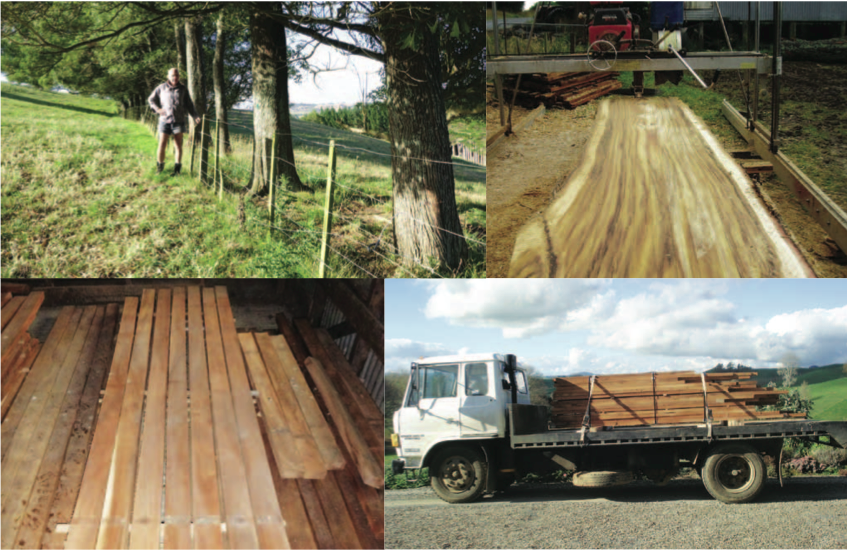
It will be interesting to watch how NZ blackwood farmers develop towards a collective marketing model for their trees that are now reaching commercial maturity. They have enough potential volume to begin accessing export markets so the rewards could be very good if they succeed.
Selling small parcels of logs and single logs will always be difficult, even if they are excellent quality logs of premium timber.
The fact that our sawmillers aren’t in the marketplace aggressively looking to buy sawlogs from wherever they can source them is a great curiosity to me. I can only interpret this behaviour as meaning that the logs are just not worth buying. The value of the timber is just not worth the effort. There are plenty of sawmiller websites around but I have yet to find one that has a “Wanted to buy” sign out the front. They are all about what they have to sell. Despite the collapsing industry the remaining sawmillers think their future supply is 100% secure. Very curious!
People like Jon Lambert at Heartwood Plantations have a much more commercial focus and a different business model, but I think even they don’t push the market hard enough. I’d love to know what they think of the current situation.
While the forest industry in Australia avoids becoming hard-nosed commercial and remains bogged down in politics and ideology, then farm forestry will continue to be a hard road. You mention the new Victorian farm forestry strategy. I’ve seen so many strategies come and go over the years with no impact at all, I’m afraid I’ve little faith in political support anymore.
So coming back to a farmer/growers viewpoint, you need to think carefully about what you are trying to achieve, and that means understanding the factors that will help or hinder you selling your wood in the future. Planting a lot of different species might be fun and interesting, but when it comes time to sell, you will find very few buyers unless you have done your homework.
What are the main local markets for premium timber? Cabinetry, flooring, furniture, panelling??? I don’t think structural solid hardwood has any future. What little structural hardwood that the market wants will all come from reconstructed wood such as LVL. So what species can you grow to supply the flooring and panelling market? Etc., etc…
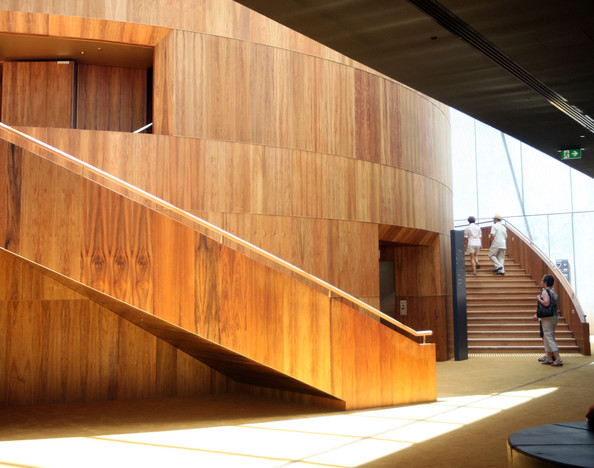
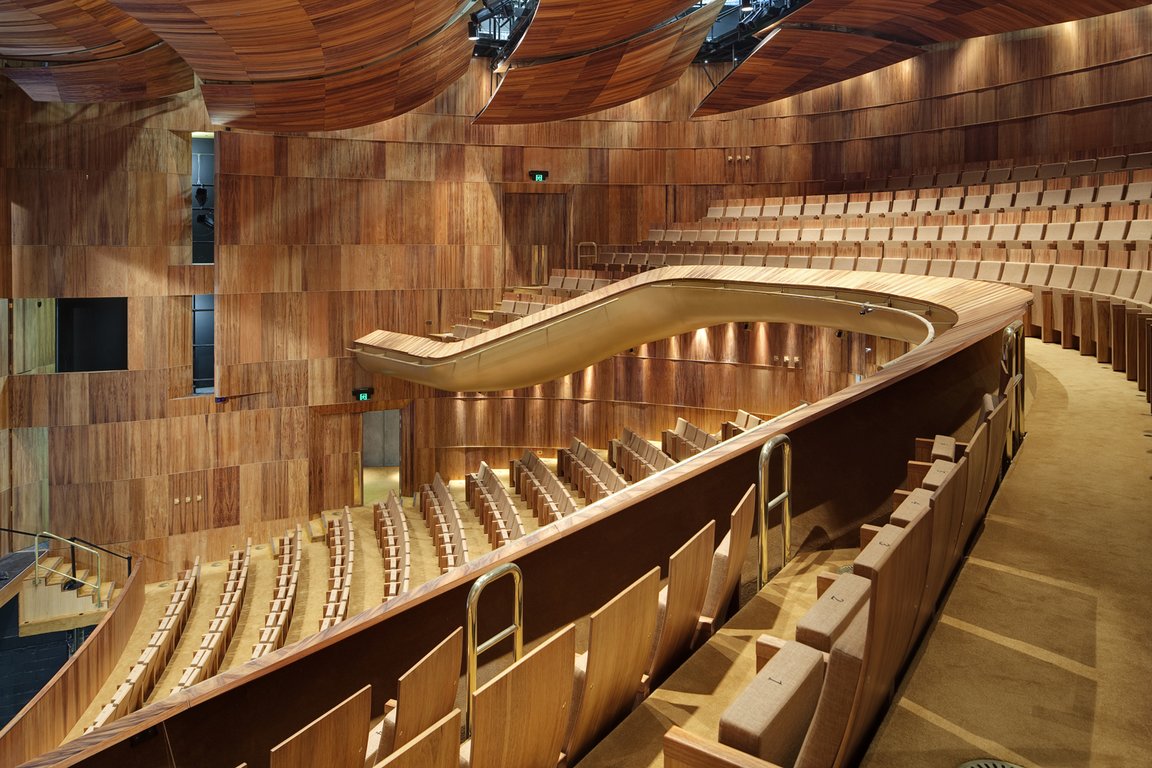
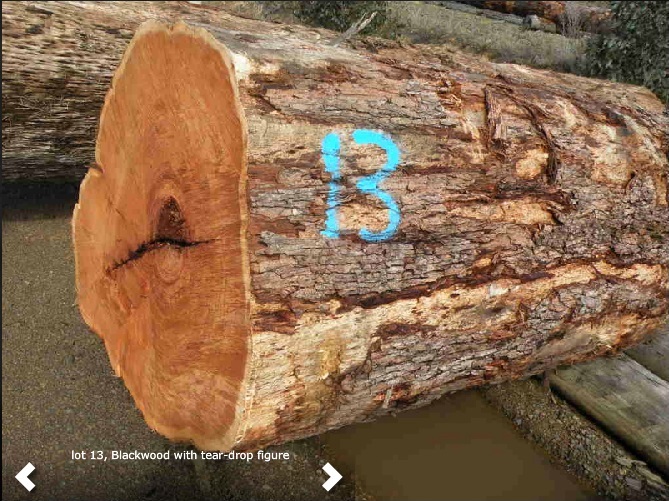
I’m comfortable promoting blackwood because it has a well established local market profile and a growing international profile. But I realise my time is limited. If the remaining forest industry crashes and burns, as seems likely, then getting a growers cooperative going will be that much harder. Blackwood has a great future, but for the foreseeable future the Kiwis will be the drivers and dominant players in the blackwood market.






More concerns for the public blackwood resource
Here’s an extract from an email I recently received from another forest industry employee.
My guess is that Forestry Tasmania will cease to exist within a few years. I ……… know something of the [public] resource that is left in the North West and it’s not much. Available mature [eucalypt] resource has been largely logged and most of what is left is either not economic or has been locked up. High quality [eucalypt] regrowth sawlog resource has mostly been logged. What FT has available is mostly younger regrowth that is too young for sawlog, most of which is earmarked for Ta Ann. The blackwood resource is limited and I suspect has 5 years left at current harvest rates.
That’s 5 years of public blackwood sawlog resource remaining to be harvested before it’s all over. This certainly correlates with my own expectations of the available public resource.
The end of the blackwood industry as we know it.
AFS and FSC Certification will count for nothing under the current scenario.
As part of the Tasmanian Forestry Agreement Forestry Tasmania is currently undertaking a special timbers resource review which is due for release later this year. It is not known whether this review will include blackwood. Given the increasing uncertainty about the public blackwood resource, the resource review report will have to be very convincing in its detail and analysis. The last blackwood resource review in 1999 was anything but convincing and detailed. The fact that Forestry Tasmania has been harvesting blackwood well above the sustainable yield since the last review is just one of many points of concern.
As I’ve said before the transparent process of regularly planning, executing, managing, reviewing and reporting the sustainable blackwood sawlog production from public native forest is clearly not up to scratch, and is certainly not worthy of FSC certification.
The growing uncertainty about the sustainability of the Tasmania’s blackwood industry is cause for concern. But questions about the sustainability of the resource may be over-shadowed by more immediate issues such as the State election in March, and now the dire state of the State Government budget. Post-election the new incoming Government will have no option but to make major cuts to Government spending. Schools and hospitals will be obvious targets. But there will be no more hand-outs for the forest industry. Non-performing assets like Forestry Tasmania will be told in no uncertain terms to ship-up or shape-out. Forestry Tasmania may be forced to abandon its “non-profit, non-commercial” special timbers activities even before the resource review is finished!
It’s going to be another very hard year for the forest industry.
The only future for the blackwood industry is to focus on private growers. There is a small existing resource that can be utilised, but the focus must turn to rebuilding the resource base on private land with a dedicated growers cooperative. Engage private land owners to learn to manage and grow more blackwood. A key part of this strategy must be greater market and price transparency.
The only other option is that we all disappear into the dusty pages of history, and let the New Zealand farmers take our blackwood heritage and industry.
PS. Meanwhile the forest industry in New Zealand just keeps going from strength to strength – absolutely unstoppable!
http://www.scoop.co.nz/stories/BU1402/S00316/stars-align-for-nz-foresters-as-wall-of-wood-comes-on.htm
Leave a comment
Posted in Commentary, Forestry Tasmania, Markets, Politics