
The latest Wood and Steel magazine produced by Taylor Guitars just arrived in my mail box. Here’s a letter in the “Ask Bob [Taylor]” column (p.6) that just “ticked all my boxes”. I couldn’t resist posting it here. The Ask Bob column lists a selection of letters sent in by Taylor guitar owners which are then answered by Bob Taylor.
Here’s the letter:
I picked up a used [Grand Symphony] 426 with Tasmanian blackwood back, sides and top. After playing it a few weeks, it seemed to meld with my playing style (I got used to how to fingerpick it), and I’m one of those people who believes that good guitars will adjust themselves to a player’s sound. It sounds absolutely stunning with the kinds of blues I play. I think it sounds better than any all-koa, mahogany or walnut guitar I’ve heard. I’d bet you could find a pretty good market for this model with acoustic blues players looking for that really old-fashioned sound that can be elusive. Have you considered making this a regular model?
Jim Sabatke
And here’s the reply from Bob Taylor:
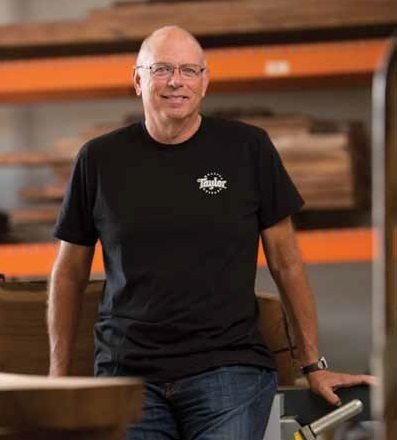
Actually, Jim, in some ways we prefer the sound quality of Tasmanian blackwood to koa. Both are acacia trees and are nearly identical, or as close as cousins can be to one another, but blackwood has a very nice sound. We have been considering using blackwood on a regular basis for many years, but the challenge is getting a regular supply of guitar-grade wood. We have spent considerable time and energy in the country, working and developing relationships. We want to obtain wood in the most ethical and environmentally sound manner, so we’ve backed away from the traditional logging supply in favor of more sustainable methods that benefit local people. Tasmania has so much going for it with the species available there, and the added plus is that it’s a well-developed country rather than a poverty-stricken country. This condition puts many wonderful rules in place, and we are now working on some wonderful possibilities for obtaining blackwood. Currently we have a great relationship with a man who gets blackwood in the most ideal way. You can expect to see at least limited runs of guitars with this wood for years to come. Someday it may also become a standard model, but it’s too soon to tell at this point.
Bob Taylor
I’ve been learning the guitar the last 4 years and like Mr Sabatke my inspiration are the old pre-war blues players; people like Skip James, Son House, Furry Lewis and Scrapper Blackwell. Just a man (or woman), their voice and an acoustic guitar. To me it’s the perfect combination. I would love an all-blackwood Taylor 426 like the one Mr Sabatke picked up (and featured in my December 2011 blog). The perfect country blues axe!
I think Bob Taylor’s reply contains many interesting points. Remember Bob Taylor is President of Taylor Guitars, one of the biggest guitar makers in the USA. So these comments should be of interest to many Tasmanians, especially Tasmanian farmers.
Bob Taylor’s response can be summarised as follows:
- We like Tasmanian blackwood a lot;
- We want to buy Tasmanian blackwood from private growers;
- We want more growers to help establish a regular supply;
- If we get a regular supply going then blackwood will become one of our standard timbers.
This is a clear signal of support for Tasmanian farmers to sit up and take notice.
Do Tasmanian farmers want to grow quality sustainable blackwood timber to supply Taylor Guitars?
Do Tasmanian farmers want to use their existing blackwood resource to build a sustainable supply for Bob Taylor right now?
There is a significant existing blackwood resource on private land in Tasmania that has the potential to supply the guitar industry. All we need to do is work together on this. This is a long term project. Utilise the existing resource and grow more blackwood.
Taylor’s “man” in Tasmania is Robert MacMillan of Tasmanian Tonewoods.
”Someday it may also become a standard model, but it’s too soon to tell at this point.”
I don’t think it’s too soon at all. I believe there is enough existing private “guitar-grade” blackwood on Tasmanian farms right now to make Bob Taylor’s wish a reality. With improved management and new plantations we can build this opportunity further.
So how can we make this opportunity happen?
Promotion
To date Bob Taylor has been pretty quiet about his support for blackwood. No doubt running a major company keeps him busy. No doubt he’s also cautious about wading into the war zone that is the forest industry in Tasmania.
But the war zone shows no sign of disappearing anytime soon, so if Bob Taylor wants to get his wish then wade in he must. A visit to Tasmania with some discussion, promotion and media coverage will go a long way to getting this opportunity started. The local media could show more interest as well, and not just peddle the old forest war clichés.
Quality, Price and Supply
Travelling around Tasmania picking up small volumes of blackwood from dozens if not hundreds of farms will be a challenging business. Keeping costs low so that everyone gets their fair share of the rewards will be important. Having the right equipment for the business will be essential. Maintaining and building strong long-term relationships and trust will be critical.
Establishing clear simple pricing structures and clear simple sales contracts will be vital. I hear many stories of farmers who have very optimistic expectations whenever someone enquires about buying their blackwood. Certainly high quality figured blackwood is worth good money, but plain grain blackwood is another matter. Often the quality of the timber isn’t known until the tree is “on the ground”. Given the general lack of experience in the timber market and poor market transparency it may take some time before farmers become familiar with the blackwood timber market. And it does take time to build trust and good relationships.
Harvesting guitar-grade blackwood from Tasmanian farms will also generate volumes of blackwood not suitable for guitars but suitable for other uses. Markets will need to be found for this timber.
Hopefully all of this extra activity will encourage Tasmanian farmers to want to learn to grow commercial blackwood and help build a growers cooperative. That’s my wish!
So if you are a Tasmanian farmer/landowner and want to be a part of Bob Taylor’s wish then please contact me or Robert MacMillan.
Thanks to Bob Taylor for his continuing support and belief in Tasmanian blackwood. Congratulations on the 40th anniversary of the Taylor Guitar company. And please come to Tasmania and promote you dream.






More Stringfest Thoughts
In the review of my experiences and thoughts on the inaugural Deloraine Stringfest I said the major element missing were the proud, passionate and profitable tree-growing farmers – the first link in the chain from tree to instrument, farmer to artist. I was the only one exhibiting at Stringfest representing existing and future growers of blackwood and other special timbers.
From a business/market process point of view the Stringfest exhibitors (luthiers and tonewood merchants) were all pushing in the one direction. The luthiers were promoting and selling their instruments to players and performers, while tonewood merchants were promoting and selling their timbers to the luthiers – links in a chain. But there was little action in the opposite direction.
Why do we need action in the opposite direction? What action?
Markets work by an interplay/tension between supply and demand. The push and pull of the marketplace. If we are to encourage farmers to grow our special timbers for us then we need to provide as much incentive and information as possible. Trees are a challenging investment at the best of times so Stringfest provides an ideal forum for providing market, price and demand information in BOTH directions back to the farmer/tree grower all the way to the consumer/artist. All that passion, dedication and commitment can help drive some significant market activity.
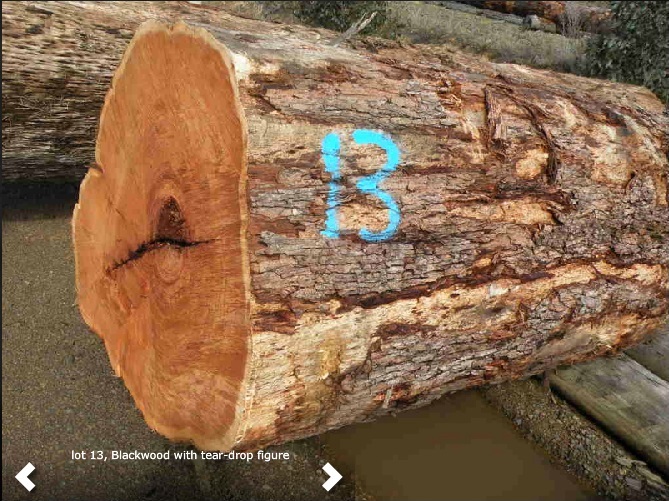
At Stringfest the tonewood merchants should be looking to both sell their tonewood timbers to luthiers AND buy suitable trees/logs from farmers, and establish long-term relationships with tree-growing farmers. It would have been great to see some “LOGS WANTED” signs showing at Stringfest. Even some information telling people about what goes to making a good tonewood log, species, sizes, indicative prices, etc. The average farmer has absolutely no idea about the tonewood market. This needs to change and change quickly, so the more information the better.
Similarly Stringfest provides an ideal opportunity for luthiers to talk to tonewood merchants about their wood requirements and indicative prices. I saw plenty of this happening at the weekend, hopefully with some positive outcomes.
At Stringfest I spoke to a number of people who had trees they were interested in selling and I pointed them towards the tonewood merchants. I heard of a number of follow-ups being arranged which was great. At the moment the Blackwood Growers Coop remains more a dream than a reality. As the Coop develops then building relationships and markets with sawmillers and tonewood merchants will be an important goal. Hopefully in the future I will have “LOGS FOR SALE” as part of my Stringfest display.
Stringfest was not really marketed at the farming community but the farming community needs to be brought into the audience in future.
The question of the future supply of our special timbers was definitely the “elephant in the room” at Stringfest, especially given the extraordinary political events on the Friday. Stringfest provides a brilliant focus and opportunity to help resolve that question and remove the elephant once and for all. I’m already thinking about next years festival.
Cheers!
1 Comment
Posted in Commentary, Markets, Stringfest, Tonewood