Category Archives: Markets

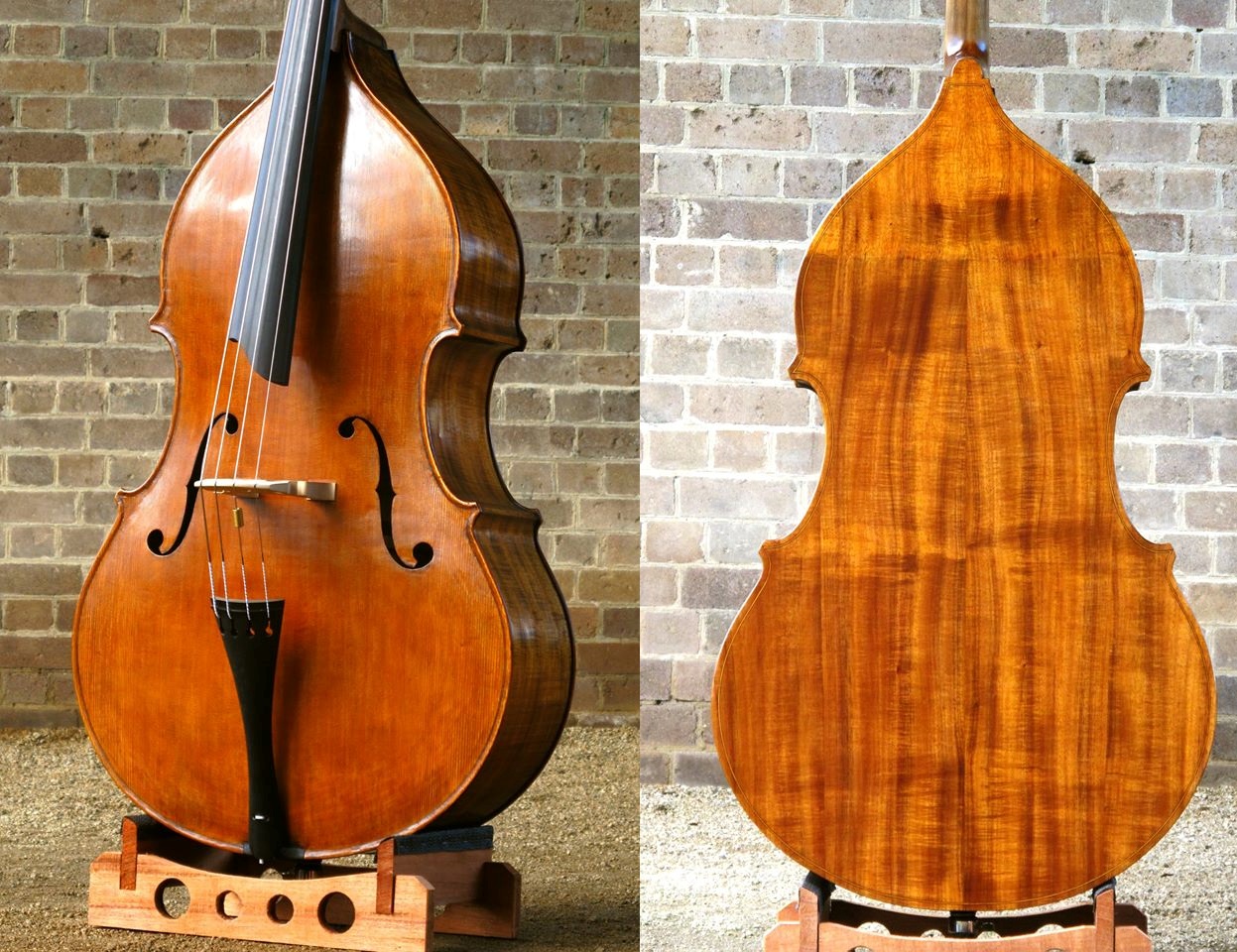
Award winning Tasmanian blackwood double bass

BresqueBass

Sydney-based double bass luthier Matthew Tucker has recently won the Silver Medal for Tone at the 2015 International Society of Bassists (you didn’t know such a group existed did you??) Convention in Fort Collins, Colorado.

http://bresque.studio205.net.au/

http://www.isbworldoffice.com/convention.asp

As the website says double bass judging consists of two quite different but very important factors: workmanship and tone. Certificates and Silver Medals are awarded in each class.

For an instrument to receive the coveted Gold Medal, it must have been recommended by all judges for a Silver Medal in both the workmanship and tone categories. In the history of the ISB Makers Competition there have been only four Gold Medals awarded.

So a silver medal in Tone is a huge vote of support for Matthew Tucker and for Tasmanian blackwood as a quality bass tonewood.

I took the bass over in June and entered it into the international makers competition, in a field of 25 makers. The Silver Medal is the highest award given in that category.


Here’s what the Judges said:


“Very easy to play. Lovely upper register G string, with a refined sound, excellent projection and good balance overall across the strings … the solo quality is striking. Although delicate, the sound has wonderful bottom to reinforce it.” – John Clayton


“Beautiful, clear and compelling tone, good consistent dynamic range and seamless response. Truly exceptional ergonomics … too easy to play! A fantastic, versatile bass” – Or Baraket


“This is a wonderful, easy to play travel bass especially for solo, jazz and chamber group.” – Nick Scales

 The bass is now on sale and can be played at AES Fine Instruments in New York.

Congratulations Matthew! Fantastic result.

Some more pics of this beautiful instrument:

Sunday morning eye candy

Here are some beautiful photos of a top-of-the-range Maton acoustic guitar from the Guitar Factory in Parramatta, Sydney, featuring some stunning fiddleback blackwood.

http://www.guitarfactory.com.au/CatalogueRetrieve.aspx?ProductID=9576579&A=SearchResult&SearchID=8509977&ObjectID=9576579&ObjectType=27

http://maton.com.au/product/w.a.-may-custom

Designed as a tribute to our founder, Bill May and to bring the best of our heritage and our guitar making skills together, the W.A May is a guitar for the connoisseur.

Victorian Blackwood (in our opinion the best tone wood available) back and sides combine with blackwood neck and AAA spruce face to produce a huge sounding dreadnought guitar. Add to that our unique Custom Shop voicing and craftsmanship, you have a guitar worthy of the name W.A May

That it features Victorian blackwood is fine by me.

It’s almost too good to play!

Enjoy!

Cole Clark ‘Australian Eco’ series

Some good news for a change from the usual political/forest industry dramas.

Cole Clark FL2EC-BLBL-AE

Melbourne-based Cole Clark guitars have just announced their all-Australian Eco series.

These new models feature 100% sustainable timbers by replacing endangered timbers with sustainable Australian substitutes“.

Farm-grown Tasmanian blackwood features prominently in the series.

For those wanting to avoid rainforest timbers these are a great alternative.

The idea of an all-Australian commercial guitar has finally become reality.

Now the next step is to get farmers to actually start to plant and manage these timbers. I suspect most of these timbers are salvage logged rather than the result of active management.

But one step at a time.

Congratulations Cole Clark!


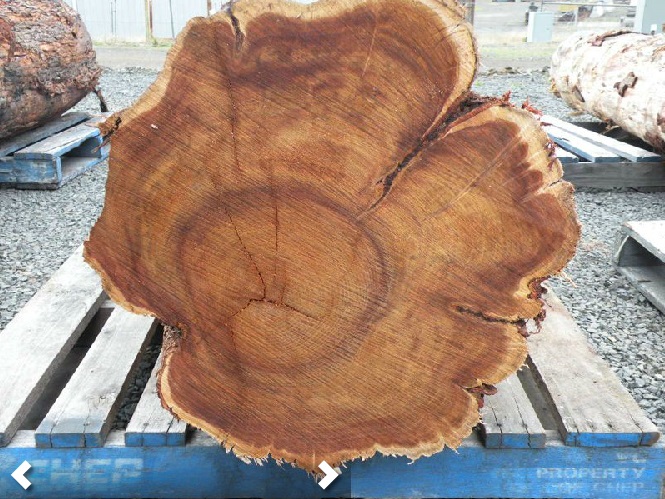
IST Blackwood Sawlog Tender Results 2014-15

IST 0515 log 16

Here is a summary of blackwood sawlog tender results from Island Specialty Timbers (IST) for the 2014-15 financial year.

http://www.islandspecialtytimbers.com.au

This follows my inaugural report last year:

http://blackwoodgrowers.com.au/2014/06/14/blackwood-sawlog-tender-results-2013-14/

During the year 14 lots of blackwood logs were put to tender by IST. These were individual logs except for two parcels of small logs in the October 2014 and January 2015 tenders. Only one log was unsold for the year from the August 2014 tender.

Total volume of blackwood logs sold was 31.06 cubic metres (or approximately 0.3% of the total volume of blackwood logs sold by Forestry Tasmania for the year) for a total value of $20,660.

Plain grain logs in 3 lots totalling 18.7 cubic metres sold for an average volume-weighted price of $227 per cubic metre.

Feature grain logs totalling 12.4 cubic metres sold for an average volume-weighted price of $1,325 per cubic metre.

These good prices were achieved despite many of the lots having quality issues (spiral grain, flutes, branch stubs, small diameter). Some of the lots could best be described as craft logs.

This compares with the special timbers average mill door log value of $134 per cubic metre that Forestry Tasmania received in 2013/14.

There was such a variety of log grades and qualities in these 14 lots that for analysis and summary I’ve grouped the logs into just plain and feature grain, as these seem to be the main determinants of price.

In general logs sold by IST are smaller and with more defects compared to logs sold under long-term contract to favoured customers. They do not represent average “run-of-the-bush” quality logs.

Table 1 summarises the tender results.

  Lot count Average of SED (cm) Average of Len (m) Average of Vol (m3) Sum of Vol (m3) Average of Unit Price ($/m3) Total Price ($)
Plain 3 44 5.9 1.0 18.67 $302 $4,244
Figured 10 60 3.9 1.2 12.39 $1,280 $16,420
Sold 13 57 4.3 1.1 31.06 $1,054 $20,664
Plain 1 69 2.4 1.2 1.20
Unsold 1 69 2.4 1.2 1.20

The highlights for the year were:

  • One small feature-grain log that sold for a unit value of $2,400 per cubic metre in the January 2015 tender, and
  • A log (1.6 cubic metres) that sold for $3,260 ($2,000 per cubic metre) in the February 2015 tender, which contained some feature grain but also had significant quality issues (sweep and spiral grain).

The lowest unit price for the year was achieved by the parcel of 13 small plain-grain logs in the October 2014 tender. This parcel totalled 10.1 cubic metres in volume, with average dimensions SED 42cm, LED 47cm, Len 5.0m, vol 0.78 cubic metres. This parcel sold for $200 per cubic metre.

Only one of the logs tendered approximated in size and quality what might be grown in a well managed blackwood plantation. This was Lot 20 in the March 2015 tender that sold for $620 or a unit price of $485 per cubic metre. This is a very good price and puts the value of a blackwood plantation at harvest at well over $100,000 per hectare!

Are any Tasmanian farmers interested?

In 2013/14 IST sold a total of 1,531 cubic metres of product including 136 cubic metres sold through the tender process “to ensure that the best possible prices were obtained” (Forestry Tasmania 2013/14 Annual Report). Only 16.1 of the 136 cubic metres (12%) was blackwood, despite the fact that blackwood comprises 80% of the special timbers harvest annually. I wonder how much of the 1,531 cubic metres of product was blackwood? We will never know. Frustratingly Forestry Tasmania don’t tell us how much the 1,531 or the 136 cubic metres sold for.

These tender results represent the only publically available competitive market prices for blackwood sawlogs. Given that blackwood is the only Tasmanian specialty timber that has the potential to have a commercial future these prices are important in alerting Tasmanian farmers and the wider community to the commercial opportunity that is available.

One thing that is clear from watching the regular IST tender results, the special timbers market is capable of paying extremely high prices for quality special timber logs as evidenced by the massive $5,900 per cubic metre paid for a tiger myrtle log at the April tender.

Caveats:

  1. Island Specialty Timbers (IST) is an enterprise of Forestry Tasmania established in 1992 to increase the recovery, availability and value of specialty timbers from harvesting activities in State forests.
  2. Forestry Tasmania manages its special timbers operations (including IST) as a taxpayer-funded, non-commercial, non-profit, community service.
  3. Note that all logs and wood sold by IST comes from the harvesting of public native old-growth forest and rainforest certified under AFS (PEFC).
  4. It is unlikely that this tiny set of market-based blackwood log prices is representative of the broader blackwood market.
  5. The dataset is too small to allow any analysis or correlations to be made between price and log quality apart from the obvious result that feature-grain logs attract a significant price premium over plain-grain.
  6. Remember also these tender prices are effectively mill door prices that already include harvesting and transport costs. They are not stumpage prices.

It would improve market transparency and stimulate greater investor interest if IST would tender more blackwood logs and demonstrate real commercial focus. Increasing the blackwood volume tendered to even 100 cubic metres per year would be a good start.

But whilst Forestry Tasmania, the State government and the State parliament all regard the special timbers industry as a community service and political play-thing rather than any commercial opportunity, then blackwood’s commercial future remains difficult.

When will Tasmania get a fully commercial, profitable forest industry, based on profitable tree-growing?

Taylor Custom GA 12-fret Blackwood / Red Cedar

There hasn’t been much in the way of new guitars featuring Tasmanian blackwood lately, but here is a one-off custom from Taylor Guitars via The Acoustic Letter.

A lovely little guitar, very nicely presented by the people at Taylor for a straight-grained (as distinct from feature-grained) blackwood guitar; and a great review from Tony Polecastro (& his amazing fly-catching pooch).

This one-off custom guitar is only available at The Acoustic Letter.

http://acousticletter.com/shop/taylor-custom-ga-12-fret-blackwood-red-cedar/

Happy viewing!

Eye fillet, sausages and guitars

cow

I’ve recently been engaged in an email discussion with the supply chain manager of a major guitar maker that has opened my eyes to some of the wood resource and marketing issues facing the industry.

The conversation started when I enquired whether the company would be interested in buying farm-grown Tasmanian blackwood to use in their guitars. The unequivocal answer came back that to date the company has found it difficult to sell guitars made from Tasmanian blackwood and hence would be reluctant to purchase more timber.

This and a few other comments they made got me thinking.

For the past 100 years and more the guitar industry has been able to access the very best cuts of wood available from around the world with which to build guitars. Rosewood, mahogany, ebony, quilted koa and maple, etc. All of these premium cuts have been accessible largely due to the plundering of the worlds old-growth and rainforest that is now coming to an end.

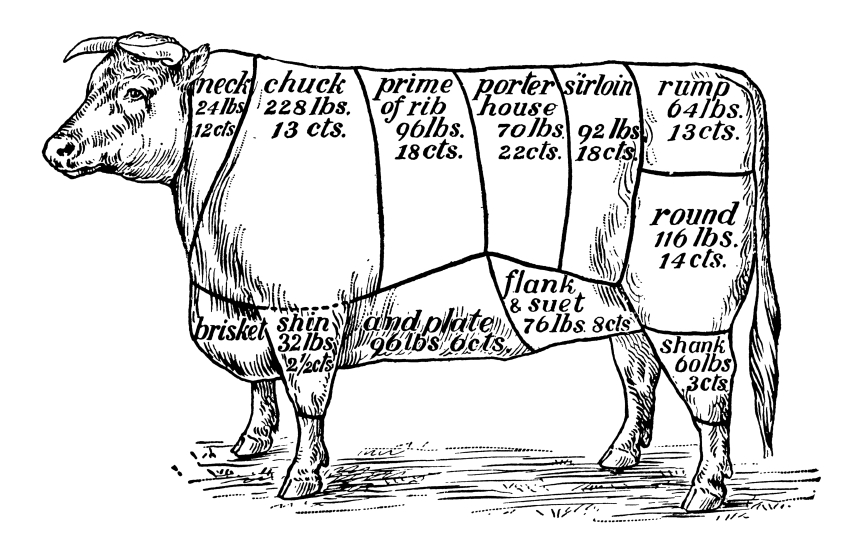
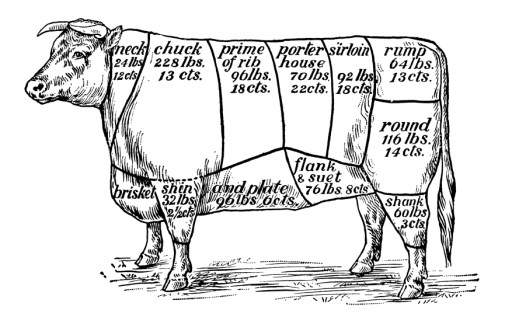
The guitar industry was like a butcher shop that only sold eye fillet steak. No mince, no sausages. Just premium quality meat. The fact that the rest of the forest products went to other markets helped the guitar industry enormously.

But the wild herds of bison, like the old growth and rainforests, have nearly all gone. Now the butcher shop has to start stocking rump steak, as well as the mince and sausages in order to stay in business, but after 100+ years the customers are finding it hard adjust to this change in diet.

So too the guitar makers are finding it difficult to identify and source sausages and mince that customers might want to buy. Many guitar makers appear to still be peddling nothing but premium cuts.

The words “alternative woods”, “sustainable” and “certified” are slowly becoming part of the daily life for guitar makers, and less so for consumers.

But the butcher shop analogy does have its limitations.

Many of these alternative woods are perfectly good for making quality guitars. In no way do they reflect a move to mince or sausage grade timber, but they do reflect the changes being forced upon guitar makers and reluctant consumers by a changing wood resource. But to the ordinary guitar buyer it feels like an eye fillet vs sausages decision.

What’s worse, the eye fillet, mince and sausages are often all priced the same. So given the choice the consumer is reluctant to try the alternative woods. I think this has been one of the problems with introducing Tasmanian blackwood onto the international tonewood market. Customers often need some incentives to try a new product.

And it’s not just new species of timber that is challenging guitar makers and buyers.

In some cases the eye fillet steak has simply been wood that is highly figured like maple and koa, with plain, straight-grain maple and koa having never featured in the guitar market to any extent. So the above major guitar maker has excess quantities of straight-grain koa and maple wood that they cannot sell to the guitar-buying public. Beautiful timber and great for making quality guitars but it’s just not eye fillet steak!

This is curious because straight grain rosewood and mahogany are perfectly acceptable to the guitar buying public. Years of being fed eye fillet steak has clearly made the market resistant to change.

Now from a forester and commercial blackwood grower’s view point all of this is a bit of a disaster.

Going back to the butcher shop again, a cattle farmer would quickly go out of business if they could only sell eye fillet steak. To be viable the farmer has to sell the whole animal with the various cuts of meat priced according to the supply and the demand. Basic economics 101.

Ditto for tree growers. Highly figured wood is rare. Straight-grain wood is more common. But the guitar market doesn’t reflect this supply situation, either in price or in marketing.

If guitar makers want to help tree growers, then they need to adjust their product development, marketing and sales to better reflect the supply situation regarding plain vs feature grain timber. Plain grain koa, maple and Tasmanian blackwood are great quality tonewoods just like plain grain mahogany and rosewood. Feature grain wood of any species should attract a premium price that is clearly over and above plain grain guitars.

Some guitar makers are better at product design than others. Putting a clear finish on a plain grain guitar especially if the wood is new or alternative may not meet with much buyer enthusiasm. Staining, edge-shading,  a bit of bling, and a price to encourage buyer interest will go a long way to help overcome the conservative guitar buyer.

But for the moment it seems that this major guitar maker won’t be encouraging Tasmanian farmers into the commercial blackwood tonewood market anytime soon.

Comments and ideas?

Leonardo Guitar Research Project

LGRP

I recently became aware of this great research project that is happening in Europe in response to the deforestation and the rapidly diminishing supply of traditional quality tonewoods from the world’s tropical rainforests.

http://www.leonardo-guitar-research.com/

This project should benefit Tasmanian blackwood growers as the global momentum to find/develop sustainable and profitable quality tonewood supplies increases.

Goal

The main goal of the Leonardo Guitar Research Project is to study, demonstrate and communicate the possibilities of building acoustic and classical guitars from non-tropical woods. We want to improve global expertise in the craft and adapt it to economic and ecological needs.

The first results from their research were recently published.

Results

All blind tests show that guitars made from non-tropical wood species were equally preferred for sound quality as those made from tropical wood. Non-blind tests show a strong fallback in sound appreciation experienced by non tropical wood guitars.

Conclusions

The need for the use of tropical wood in acoustic and classical guitar building seems to be a myth because blind tests have clearly proven that non-tropical woods can be used to make guitars whose tonal quality is fully equal to that of their tropical counterparts.

The fallback in sound appreciation experienced by non-tropical wood guitars in the non-blind tests, strongly suggests that preference is heavily influenced by preconceptions about what guitars should look like and about what exactly constitutes a tonewood.

All of which is great news. We don’t need to buy rosewood, mahogany or cocobolo guitars thinking that they make the best sounding guitars.

But we do already know that Tasmanian blackwood is an internationally recognised quality, sustainable, profitable non-tropical tonewood. We are just waiting for the market to come to Tasmania!

Having shown that these alternative non-tropical woods can make great guitars the next steps in this project should be:

  • Make the guitars more visually appealing to make the consumer choice easier;
  • Determine which woods are available in sustainable, commercial quantities. FSC certified sources would be even better. Surely the aim is to get the large manufacturers to start using these timbers;
  • Marketing! I would imagine a range of 100% FSC Certified, non-tropical guitars on display at NAMM and Musikmesse would attract significant attention.
  • Investigate sustainable non-tropical woods from other regions such as Tasmanian blackwood!!!

One of the objectives of the LGRP is to develop a network/database linking customers with luthiers, with growers and suppliers of sustainable, non-tropical tonewoods. While the current focus of the project is on common European woods there is every opportunity to expand this to other temperate zones.

Watch this space!

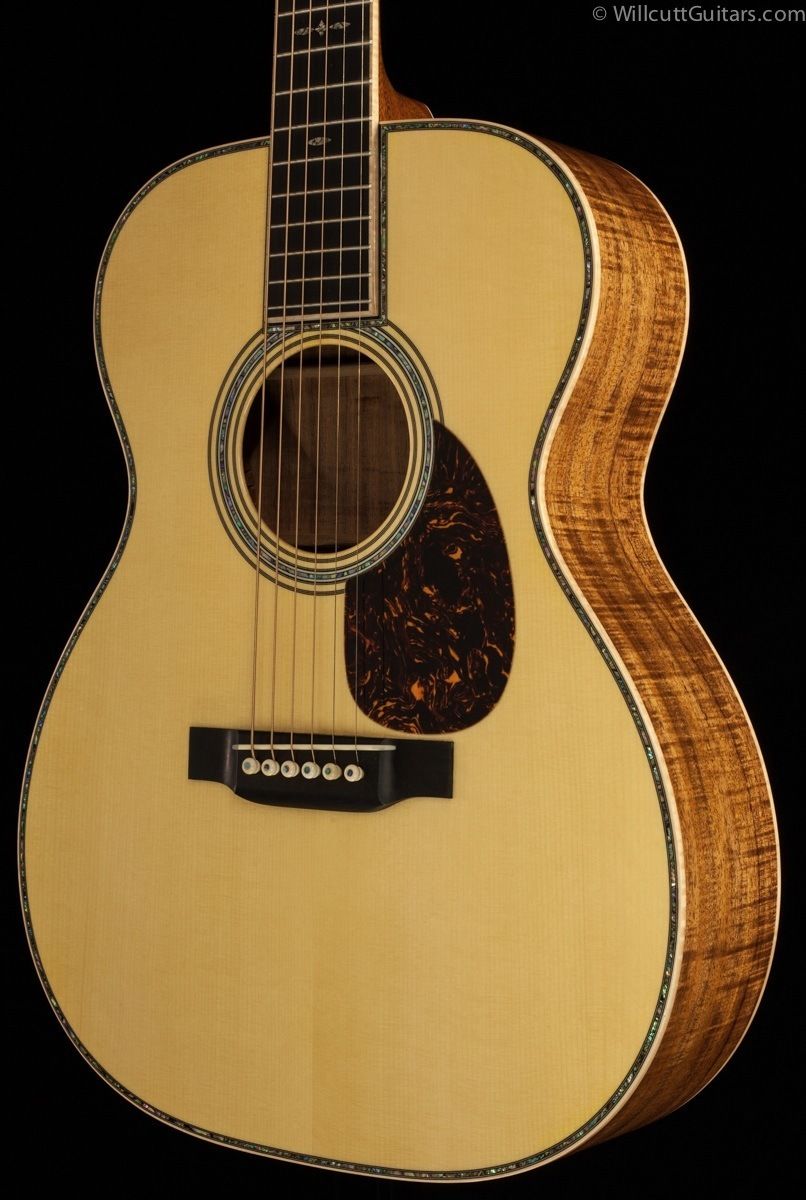
For Sale – Martin OM-42 AND OM45 Tasmanian Blackwood Limited Edition

Martin OM42

http://www.ebay.com.au/itm/Martin-OM-42-Tasmanian-Blackwood-Limited-Edition-Prototype-482/231537909882?_trksid=p2045573.c100033.m2042&_trkparms=aid%3D111001%26algo%3DREC.SEED%26ao%3D1%26asc%3D20131017132637%26meid%3D56d8e873a8044dbdbbd4d9451b8adf05%26pid%3D100033%26rk%3D1%26rkt%3D4%26sd%3D231537909882

I wouldn’t normally put something like this on the website but this is a Tasmanian blackwood icon. This is currently for sale on Ebay. A very rare, prized guitar!

Or direct from the seller Willcutt Guitars, Lexington Kentucky, USA:

http://willcuttguitars.com/CatalogueRetrieve.aspx?ProductID=9561514&A=SearchResult&SearchID=8743311&ObjectID=9561514&ObjectType=27

Somewhere between 8 and 15 of these were built by CF Martin in 2011 depending upon which website you believe. This is how one respected website describes this guitar:

A fine sounding clear guitar, balanced, and the nice figured Tasmanian blackwood, heavier than Koa provides the best projection ever.

An absolute Tasmanian treasure!

I wish CF Martin would consider using Tasmanian blackwood again!

http://www.martinguitar.com/

And now I find this other Tasmanian blackwood Martin guitar currently for sale:

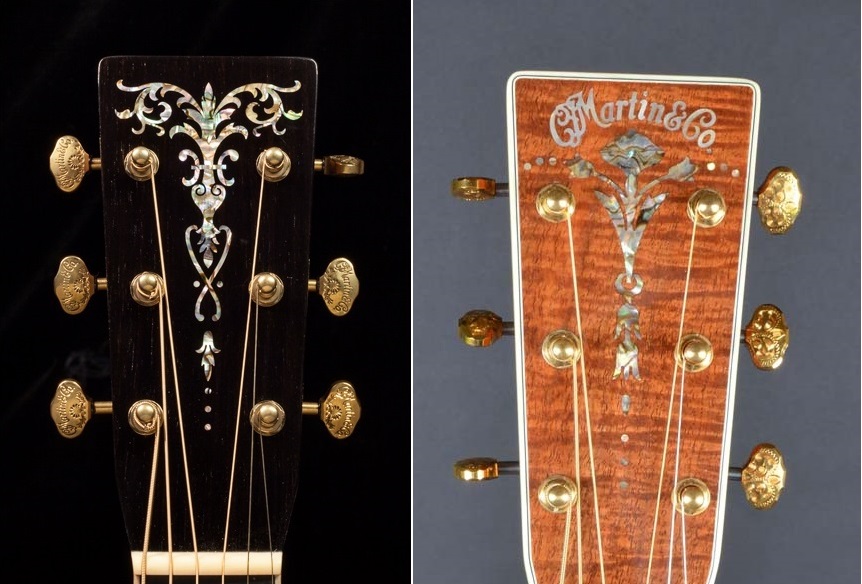
A Martin OM-45 Tasmanian Blackwood from 2005. A stunning creation with highly figured Tasmanian blackwood (a relative of Hawaiian koa) and extensive abalone pearl trim; tasteful torch inlay on the headstock; engraved gold-plated tuner buttons; label signed by C.F. Martin IV.

This is essentially the same model as the above but with more bling for your buck.

Again another super premium guitar from CF Martin. Only 29 of these were made.

http://www.cartervintage.com/acguitar/martins/martinguitars.html#om45tas

Two incredible rare Tasmanian icons currently on the market.

om42_45tas-h

OM42 Tasmanian blackwood headstock (L) compared to OM45 Tasmanian blackwood headstock (R)

Apart from the odd custom order (such as this Martin O-18 http://blackwoodgrowers.com.au/2013/07/27/a-stunning-new-martin-blackwood-guitar-please-mr-santa/) the only other Martin guitars that feature Tasmanian blackwood that I’m aware of were 10 D-42’s built in 2010, as shown on this website:

http://www.elderly.com/new_instruments/items/D42TB.htm

I’m not sure why Martin guitars don’t use Tasmanian blackwood more often. These guitars seem to get a lot of praise and attention in the marketplace.

Cole Clark Fat Lady 2 – all Tasmanian blackwood

Cole Clark is the “outsider” of the Australian commercial guitar world.

http://www.coleclarkguitars.com/

They are new(-ish), innovative and untraditional.

In this age when the acoustic guitar market seems to go from strength to strength, makers are exploring everything new and everything old in order to supply the ever-growing market. All-mahogany and all-koa guitars were popular in the 20’s and 30’s, and they have recently made a big comeback.

So the idea of an all-blackwood guitar seems pretty straight forward to me. It should become an Aussie classic model!

But until recently they have been one-off custom makes.

Now Cole Clark of Melbourne is offering a range of all-blackwood models.

This is farm-grown Tasmanian blackwood!

They are quite understated in appearance, which to my mind fails to capitalize on blackwoods natural beauty. But it’s a great beginning. I hope they sell well.

Here’s a recent review by Cranbourne Music.


I hope one day to write a story that begins at the farm and finishes with the performer/artist. That would be a great story!

Forestry Tasmania fate in balance

Annells

http://www.examiner.com.au/story/2926663/forestry-tasmania-fate-in-balance/?cs=95

[The fate of] Forestry Tasmania hangs in the balance, with its chairman telling staff the company’s immediate future is entirely in the government’s hand.

In an email sent to Forestry Tasmania staff yesterday, chairman Bob Annells [pictured above] responded to mounting concerns that the cash-strapped company may be dissolved and folded into a government department.

[“folded into a government department” What an absolutely terrible idea! What Government department would it fit into? And what would be the point? It would fix none of the existing problems, and create even more new problems. A classic case of duck shoving!]

This article in today’s The Examiner tells us that things are pretty grim at the Government forest management agency.

While no official announcement has been made it now seems clear that FTs application for FSC Certification has been rejected. FSC auditors SCS Global were due to deliver their report last month.

And yet another review into Forestry Tasmania is currently being written. I’ve lost count of how many of those we’ve had. Far too many. And none of them have been at all useful, at least in terms of their implementation.

But enough is already known to understand that FT has absolutely no commercial future.

The Tasmanian Government is no doubt finding it increasingly difficult continuing to sack teachers and nurses whilst propping up the forest industry.

It is now just a matter of how best to clean up the decades of mess and close the organisation down.

It will be a bitter pill for many Tasmanians.

Decades of mismanagement may finally be coming to an end. Or it may drag on for a few more painful, bitter years. History tells me that the latter is more likely eg. the “fold” option.

The shutting down of FT will see the supply of blackwood to the market drop dramatically, with a corresponding rise in price very likely. Will Tasmanian farmers finally reap the rewards of a more competitive blackwood market?

UPDATE:

Seems like the FSC outcome is indeed correct judging by the article in today’s The Examiner. No medal for FT.

http://www.examiner.com.au/story/2929002/demands-on-forestry/?cs=95

So FT will “keep trying”. They don’t have the time nor the money to keep trying.

The longer FT stays in business the longer it will take for private tree growers and private investment to rebuild the forest industry. It just wont happen whilst FT continues to play zombie corporation.