Category Archives: Markets

For Sale – Martin OM-42 AND OM45 Tasmanian Blackwood Limited Edition

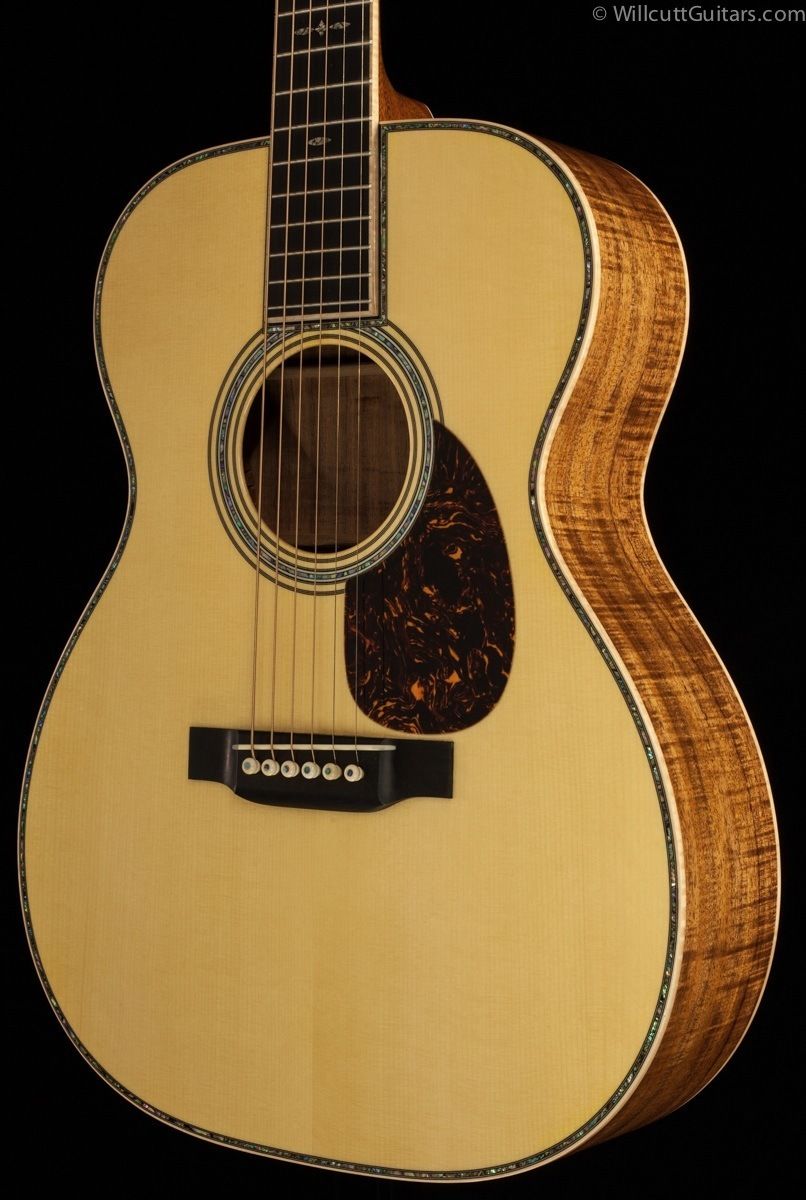
Martin OM42

http://www.ebay.com.au/itm/Martin-OM-42-Tasmanian-Blackwood-Limited-Edition-Prototype-482/231537909882?_trksid=p2045573.c100033.m2042&_trkparms=aid%3D111001%26algo%3DREC.SEED%26ao%3D1%26asc%3D20131017132637%26meid%3D56d8e873a8044dbdbbd4d9451b8adf05%26pid%3D100033%26rk%3D1%26rkt%3D4%26sd%3D231537909882

I wouldn’t normally put something like this on the website but this is a Tasmanian blackwood icon. This is currently for sale on Ebay. A very rare, prized guitar!

Or direct from the seller Willcutt Guitars, Lexington Kentucky, USA:

http://willcuttguitars.com/CatalogueRetrieve.aspx?ProductID=9561514&A=SearchResult&SearchID=8743311&ObjectID=9561514&ObjectType=27

Somewhere between 8 and 15 of these were built by CF Martin in 2011 depending upon which website you believe. This is how one respected website describes this guitar:

A fine sounding clear guitar, balanced, and the nice figured Tasmanian blackwood, heavier than Koa provides the best projection ever.

An absolute Tasmanian treasure!

I wish CF Martin would consider using Tasmanian blackwood again!

http://www.martinguitar.com/

And now I find this other Tasmanian blackwood Martin guitar currently for sale:

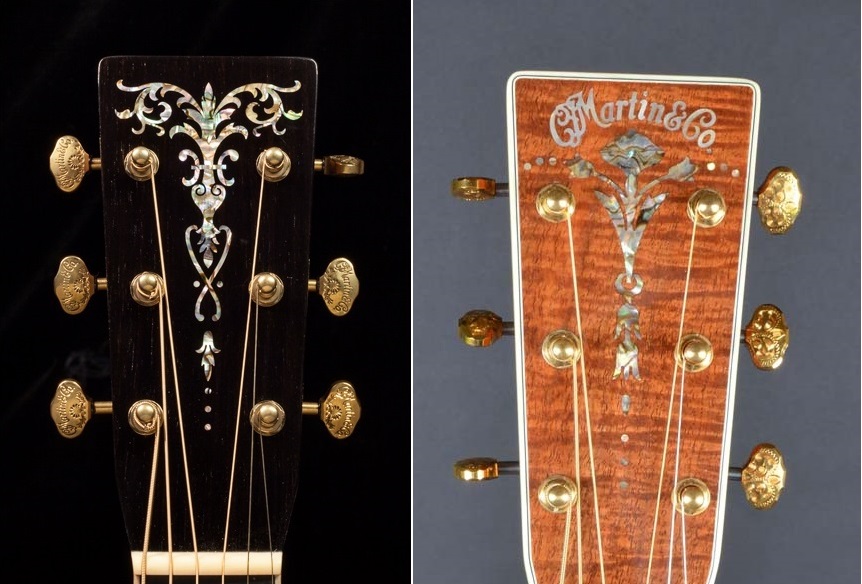
A Martin OM-45 Tasmanian Blackwood from 2005. A stunning creation with highly figured Tasmanian blackwood (a relative of Hawaiian koa) and extensive abalone pearl trim; tasteful torch inlay on the headstock; engraved gold-plated tuner buttons; label signed by C.F. Martin IV.

This is essentially the same model as the above but with more bling for your buck.

Again another super premium guitar from CF Martin. Only 29 of these were made.

http://www.cartervintage.com/acguitar/martins/martinguitars.html#om45tas

Two incredible rare Tasmanian icons currently on the market.

om42_45tas-h

OM42 Tasmanian blackwood headstock (L) compared to OM45 Tasmanian blackwood headstock (R)

Apart from the odd custom order (such as this Martin O-18 http://blackwoodgrowers.com.au/2013/07/27/a-stunning-new-martin-blackwood-guitar-please-mr-santa/) the only other Martin guitars that feature Tasmanian blackwood that I’m aware of were 10 D-42’s built in 2010, as shown on this website:

http://www.elderly.com/new_instruments/items/D42TB.htm

I’m not sure why Martin guitars don’t use Tasmanian blackwood more often. These guitars seem to get a lot of praise and attention in the marketplace.

Cole Clark Fat Lady 2 – all Tasmanian blackwood

Cole Clark is the “outsider” of the Australian commercial guitar world.

http://www.coleclarkguitars.com/

They are new(-ish), innovative and untraditional.

In this age when the acoustic guitar market seems to go from strength to strength, makers are exploring everything new and everything old in order to supply the ever-growing market. All-mahogany and all-koa guitars were popular in the 20’s and 30’s, and they have recently made a big comeback.

So the idea of an all-blackwood guitar seems pretty straight forward to me. It should become an Aussie classic model!

But until recently they have been one-off custom makes.

Now Cole Clark of Melbourne is offering a range of all-blackwood models.

This is farm-grown Tasmanian blackwood!

They are quite understated in appearance, which to my mind fails to capitalize on blackwoods natural beauty. But it’s a great beginning. I hope they sell well.

Here’s a recent review by Cranbourne Music.


I hope one day to write a story that begins at the farm and finishes with the performer/artist. That would be a great story!

Forestry Tasmania fate in balance

Annells

http://www.examiner.com.au/story/2926663/forestry-tasmania-fate-in-balance/?cs=95

[The fate of] Forestry Tasmania hangs in the balance, with its chairman telling staff the company’s immediate future is entirely in the government’s hand.

In an email sent to Forestry Tasmania staff yesterday, chairman Bob Annells [pictured above] responded to mounting concerns that the cash-strapped company may be dissolved and folded into a government department.

[“folded into a government department” What an absolutely terrible idea! What Government department would it fit into? And what would be the point? It would fix none of the existing problems, and create even more new problems. A classic case of duck shoving!]

This article in today’s The Examiner tells us that things are pretty grim at the Government forest management agency.

While no official announcement has been made it now seems clear that FTs application for FSC Certification has been rejected. FSC auditors SCS Global were due to deliver their report last month.

And yet another review into Forestry Tasmania is currently being written. I’ve lost count of how many of those we’ve had. Far too many. And none of them have been at all useful, at least in terms of their implementation.

But enough is already known to understand that FT has absolutely no commercial future.

The Tasmanian Government is no doubt finding it increasingly difficult continuing to sack teachers and nurses whilst propping up the forest industry.

It is now just a matter of how best to clean up the decades of mess and close the organisation down.

It will be a bitter pill for many Tasmanians.

Decades of mismanagement may finally be coming to an end. Or it may drag on for a few more painful, bitter years. History tells me that the latter is more likely eg. the “fold” option.

The shutting down of FT will see the supply of blackwood to the market drop dramatically, with a corresponding rise in price very likely. Will Tasmanian farmers finally reap the rewards of a more competitive blackwood market?

UPDATE:

Seems like the FSC outcome is indeed correct judging by the article in today’s The Examiner. No medal for FT.

http://www.examiner.com.au/story/2929002/demands-on-forestry/?cs=95

So FT will “keep trying”. They don’t have the time nor the money to keep trying.

The longer FT stays in business the longer it will take for private tree growers and private investment to rebuild the forest industry. It just wont happen whilst FT continues to play zombie corporation.

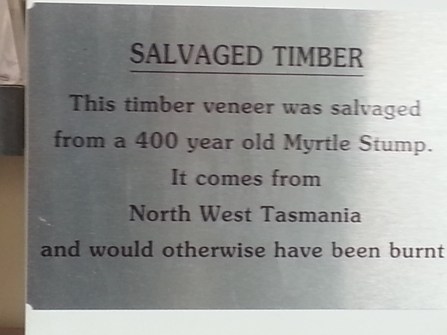
Salvaged Timber?

Salvaged Timber Sign_s

I discovered this small inconspicuous sign in a business I recently visited in Hobart. I found the sign rather curious. Other customers also found the sign curious.

The sign says a great deal about the mixed, confused emotions and morals, and acute sensitivity that surround the special timbers industry in Tasmania.

The business, like many in Tasmania, features Tasmanian timber in the shop fittings.

So is the sign an explanation or an apology?

I’m not sure.

Or perhaps it is a statement of pride.

If so it leaves me confused.

Here’s what I think the sign is saying:

A patch of old growth native forest in North West Tasmania was clearfelled to feed the industrial forestry business model that dominates Tasmania. After the industrial clearfelling operation was completed, a second smaller operation recovered some craftwood from the site including the 400-year-old Myrtle stump. The logging coupe was then burnt and resown to native forest. Or perhaps the coupe was converted to plantation. The harvesting duo (industrial and craft) then moved on to the next old growth forest logging coupe to repeat the cycle of sin and redemption.

Is that what the sign is about? Sin and redemption!

It’s a pretty standard story about the fate of Tasmanian old growth forest.

Most people regard the clearfelling of Tasmanian old growth forest as unacceptable practice in the 21st century.

But somehow the idea of “salvaging” after the industrial clearfelling has finished attracts some crumb of virtue.

Why? Where is the virtue?

For the past 40 years the Tasmanian special timbers industry only existed because it was a minor subset of the industrial forestry business model. It needed the industrial harvesting to continue for its own existence.

But to improve its status and product differentiation from those industrial loggers the special timbers industry adopted the word “salvage”.

“Are’t we good people! We help save all that good special timber that would have been wasted.”

No that’s not quite true now is it?

Yes there has been plenty of waste. That’s to be expected when dealing with a low value commodity. But to call the special timbers craftwood operation a virtuous salvage is specious indeed.

No virtue attached at all.

Just a marketing con.

The old growth forest in North West Tasmania is gone. Where is the virtue in that?

But the market now believes the virtuous salvage story and continues to buy these special timbers.

So perhaps the sign could just as well read:

This timber veneer was harvested from a 400 year old Myrtle stump as part of an old growth forest clearfelling operation. It comes from North West Tasmania. The site was subsequently burnt, cleared and converted to eucalypt pulp plantation.

It would be just as informative and a lot more honest!

By the way what did happen to the 400-year-old Myrtle tree that sat upon the stump? Where did it end up?

A second point is that the word salvage should automatically imply to the reader there is no notion of sustainability. It’s a cleanup operation, that’s all! But in the forest industry you will sometimes see the phrase sustainable salvage being used. I don’t think so. Another marketing con job.

Now is there such a thing as genuine virtuous timber salvage?

Absolutely!

The Hydrowood operation on the west coast comes close. Unfortunately it is wrapped up in the wrong marketing spin.

http://www.abc.net.au/landline/content/2014/s4129593.htm

Dead, dying and storm-damaged trees can also be honestly salvaged. They do this under strict Government supervision and competitive tender on Crown Land in New Zealand:

http://www.nzherald.co.nz/nz/news/article.cfm?c_id=1&objectid=11278973

And private property in Tasmania:

http://tasmaniantonewoods.com/salvaging-old-growth-standing-dead-blackwood/

But a craftwood harvest that is part of regular industrial old growth forest clearfelling operations does not classify as salvage in my books. And certainly has no virtue!

Finally now that Gunns has gone industrial forestry in our native forests is looking pretty sick. But never mind, the mouse has now become the lion. The (public native forest dependent) special timbers industry now dominates and controls old growth forest policy in Tasmania, with the Tasmanian Wilderness World Heritage Area firmly in its sights. It will be wrapped up in a glossy “strategy” and the language of virtue, but don’t be fooled.

Customers need to understand the consequences of their purchase decisions.

Ask for special timbers that are grown on private property. Let’s give Tasmanian farmers the clear message that they can grow and supply the profitable, sustainable special timbers market.

What do you think?

Post your comments.

Kids in the Candy Store

Indeed!

Some people may ask why I promote Taylor Guitars so much.

The answer is very simple!

They clearly love Tasmanian blackwood and are keen to promote it.

And so am I.

They are one of the few manufacturers in the blackwood market who heavily promote Tasmanian blackwood. It’s a very positive message and I’m more than happy to piggyback on their efforts.

(Plus I’m a guitar play and I love guitars. What could be more perfect than that?)

I only wish I could find some commercial or custom furniture makers who had a similar attitude and approach. Is there anyone out there??

Anyway on with the story…

Here’s a great interview between Acoustic Letter’s Tony Polecastro and Andy Powers from Taylor Guitars. The video is titled How to Build Expensive Guitars with Tony Polecastro & Andy Powers and is part of a 3 part series of interviews between Polecastro and Powers. The video is about Tony and Andy starting from scratch to design and build 2 custom guitars. The whole video is interesting but if you want to cut to the chase where the Tasmanian blackwood comes in then scroll to the 4.10 minute mark of the video.

Polecastro asks Powers what he would do to build his perfect guitar. So Powers walks off ……. and comes back with Tasmanian blackwood.

Jackpot!!

You do know that this blackwood was supplied to Taylors by Bob MacMillan at Tasmanian Tonewoods don’t you?

Watch and enjoy!

Now here’s the review of the Custom Brazilian Rosewood GS (Grand Symphony) guitar from the first half of the above interview:

And now here’s Tony Polecastro’s  review of the Custom Tasmanian blackwood GC (Grand Concert) 12-fret guitar from the interview:

All up it’s a great little story (and a beautiful guitar).

A very positive message about Tasmanian blackwood moving onto the international stage as a premium timber.

Now for the bigger challenge.

How do we get the blackwood industry up and running and away from the politics and conflict that has all but smothered the forest industry here in Tasmania?

I need help with this! Anyone??

Destructive anti-commercial policies continue at FT

After an absence of a year the Forestry Tasmania 2013/14 Annual Report belatedly includes data on the mill door log value (MDLV) of the various product classes sold including special timbers (Appendix 2 – Supplement to table 3.1). This together with other data in the annual report has allowed me to update a chart I originally published in this blog in June 2013.

http://blackwoodgrowers.com.au/2013/06/13/pricing-blackwood-out-of-the-market/

As most readers will know Forestry Tasmania places a very low priority on commercial matters like getting the best possible price, and making a profit. It is difficult to understand FT’s approach to issues such as sales processes, pricing, markets, costs, supply and demand. None of these issues are discussed in their annual reports. What little information is available shows that good commercial management is absent at Melville St. By behaving in this reckless manner Forestry Tasmania is undermining the profitability and livelihood of all existing and potential future private tree growers and destroying the very industry it is supposed to be supporting. Such is the inevitable outcome of crony capitalism.

Of course Forestry Tasmania is aided and abetted in this behaviour by legislation and politicians that support crony capitalism.

Remember that Forestry Tasmania is by far the largest grower/supplier of premium quality special timbers logs in Tasmania/Australia. But it is not the only existing or potential future grower!

FT_MDLV_chart

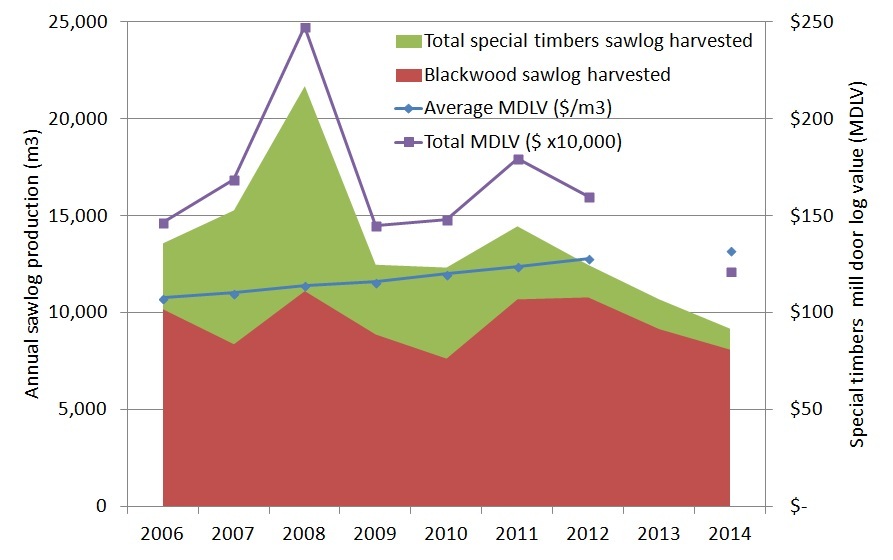
The updated chart shows total special timbers and blackwood sawlog harvest for the past 9 years. 2006 was the first year that Forestry Tasmania published Mill Door Log Value data. For some reason no MDLV data were published in 2013.

As can be seen, blackwood makes up the majority of the special timbers harvest from public native forests in Tasmania. The chart also shows the total special timbers mill door log value (effectively what the sawmillers paid for the logs delivered to their mill). I have then calculated the average MDLV ($/m3) by dividing the total value by the total volume, effectively the per cubic metre royalty paid.

As can be seen the average MDLV is effectively a straight line with a gradient of 3.1%. In other words the price paid by sawmillers for these premium timbers is fixed in line with long term inflation. In other words their value does not increase in real terms – exactly the same real price today as 9+ years ago. That’s what I call a great deal!

In 2013/14 the average special timbers MDLV was $132 per cubic metre. That value includes all the administration and overhead costs, plus the costs of harvesting and transport to the mill. One can only guess what the effective stumpage price was, maybe $40 per cubic metre!! What a joke!!

The other obvious trend in the chart is that special timbers log prices are not affected in any way by market conditions – supply, demand, costs of production, etc. For example the Global Financial Crisis of 2007 had absolutely no impact on prices.

And finally the trend in special timbers revenue over the last few years suggests that 2014/15 will see revenue drop below $1 million. We have no idea what the costs are in special timbers management and harvesting because Forestry Tasmania does not provide separate accounts for these “non-profit” activities.

But it doesn’t matter because Forestry Tasmania sends the special timbers bill to the Tasmanian taxpayer! 10,000 cubic metres (or 500 truck loads) of some of the world’s best timbers sold for a song, AND teachers and nurses lose their jobs. Does anyone care? Apparently not!

Is it any wonder that many Tasmanians regard Forestry Tasmania as an albatross around the neck of the community?

Despite the fact that Forestry Tasmania deliberately operates its special timbers operations at a loss, it:

  • Fails to provide separate financial statements for these operations;
  • Fails to provide any commercial management model and objectives that might identify limits to costs and losses;

The Tasmanian community is left with an unmanaged out-of-control special timbers liability. And the situation is going to get worse with the proposed logging inside the World Heritage Area!

Interview with Bob Taylor

For a bit of great holiday entertainment here’s a recent interview with Bob Taylor by Tony Polecastro of Acoustic Letter. The interview is in three parts.

Much of the discussion is about sustainability and what Taylor Guitars are doing to secure their wood supply for the future. Basically Bob Taylor is expanding into the tree-growing business.

Like Martin Guitars, Taylors are increasing the focus on home-grown North American hardwoods (The USA has the largest hardwood resource outside of the tropics). The discussion about Maple is particularly interesting.  Unfortunately there’s no mention of farm-grown Tasmanian blackwood.

Enjoy!

Tasmanian forest turkeys

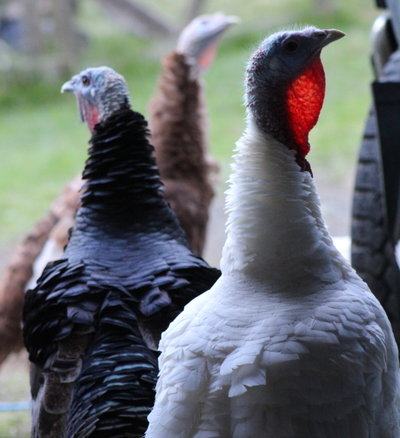
In response to a comment I received on my earlier blog on the Canadian-US lumber dispute I can’t help but post a link to this excellent article from the British Columbia Private Forest Landowners Association.

http://www.pfla.bc.ca/log-export/what-turkeys-can-teach-us-about-b-c-timber-supply-complaints/

rsz_turkeys

Just so much of the comments and observations on forest policy and practice in British Columbia ring true here in Tasmania.

One major difference is that at least in BC the private forest owners understand that they are being screwed by the Government and its forest industry servants.

Thanks to Rod Bealing, Executive Director of the BC PFLA for the comment and link.

Canada–United States softwood lumber dispute

softwood-lumber

Isn’t it amazing.

Here’s a forest industry story that has strong echoes here in Tasmania.

It seems the forest industry has the same problems around the world.

http://business.financialpost.com/2014/10/31/the-granddaddy-of-all-canadian-u-s-trade-disputes-is-about-to-rear-its-ugly-head-again/

and even a Wikipedia entry about this trade dispute:

http://en.wikipedia.org/wiki/Canada%E2%80%93United_States_softwood_lumber_dispute

So what’s the issue?

Well the Canadian lumber industry is unfairly subsidized by federal and provincial governments (just like here in Tassie), as most timber in Canada is owned by the provincial governments (just like here in Tassie). The prices charged to harvest the timber (stumpage fee) are set administratively (just like here in Tassie), rather than through the competitive marketplace, the norm in the United States.

And why are forest product prices in the US set through the competitive marketplace? Because most forests in the US are privately owned and private owners do not want to be competing against stupid anti-trust Governments. They want to get the best price possible for their trees.

And the National and Provincial Governments in Canada refuse to reform their forest industry and open it up to competitive pricing, just like the Tasmanian Government.

And don’t the American’s hate that!

Hence the massive trade dispute!

Here in Tasmania private tree growing is still a bit of a novelty. Until 20 years ago most farmers regarded trees is a liability not an asset. Governments did forestry, not farmers. After the disaster of the failed MIS schemes of the last 20 years we have returned to that same situation – trees as liabilities. And we still have Tasmanian Government policy deliberately discriminating against existing and potential future private tree growers through taxpayer subsidised Administered log pricing. Echoes of failed Government bureaucracy from around the world.

Now I’m not sure what defines “unfair” subsidies? Sounds like an oxymoron to me.

I just hope the Americans give the Canadians a lesson in economics 101.

Now I wonder how many of those subsidised, anti-trust Canadian forest operations have FSC certification?

And here we are in Tasmania with exactly the same problem, but we don’t have a trade partner like the USA to kick our stupid butt!

A shame really!!


United Forestry Group NZ

UFG

Notice was given of the formation of this New Zealand organisation in my story back in August.

http://blackwoodgrowers.com.au/2014/08/23/new-group-looks-to-become-fonterra-of-forestry/

So here they are up and running with their own website.

http://www.unitedforestrygroup.co.nz/

And here’s a collection of “cut and paste” from that website to give you an idea of what they have to offer the small forest owner in New Zealand.

United Forestry Group | UFG

A strong new company, United Forestry Group Ltd (UFG), has been formed in New Zealand to help the owners of some 14,000 small plantation forests, totalling more than half a million hectares, with the challenge of marketing a  “wall of wood” coming to maturity  over the next two decades.

Mission Statement

To unite the interests of forest owners to provide innovative and attractive harvesting options incorporating world class logistics and marketing resources delivering excellent commercial and community benefits.

Our approach will assist small forest owners to compete with the owners of larger forests who currently enjoy the advantages of economies of scale and greater expertise.

About Us

Joining with United Forestry Group (UFG) will enable small forest owners to compete more successfully and achieve better returns than by trying to go it alone.

United Forestry Group (UFG) shareholders bring local forestry management expertise and contacts together with considerable financial resources, long established contacts in the Asian and local markets, and shipping and supply chain expertise.

Joint Venture Superpen Limited, a NZ company, is a cornerstone investor in the new company. Partners in the joint venture are major players in timber exporting – international timber marketer Pentarch of Australia and Chinese conglomerate Xiamen Xiangyu, which has considerable logistics, shipping and and supply chain assets.

The Superpen joint venture will deliver expertise, contacts with timber buyers, shipping services and financial strength to United Forestry Group (UFG).

Financial Strength

Our financial strength, our expertise and contacts, and a strategy devised to improve the return from small forests whether by marketing to local processors or overseas buyers, are the key.

Our size and resources will enable us to buy and consolidate existing forests and co-ordinate orderly harvesting, marketing and shipping. Our approach enables small foresters to join with us and extract the maximum possible return – the lowest possible cost and and the best possible price. At the same time we offer forest owners investment opportunities if they wish to participate in the wider forestry industry.

Asset Protection and Security

We believe that union is strength and that owners of a single small forest are vulnerable because of their limited bargaining power and marketing ability.

Consolidating forests through UFG (United Forestry Group) will enable you to enjoy the benefits of economies of scale, greater bargaining power and greater expertise. It will be possible to manage a consolidated forest resource sustainably to produce better outcomes and to time the market better.

Consolidation will protect your asset and give you greater security.


I doubt we will see anything like this in Tasmania anytime soon but it sure sounds like a great idea.

It will be interesting to see whether they can attract the support of small forest growers and become a major player in the New Zealand forest industry.

Those New Zealand farm foresters are lucky to have such an option.

Go to the website and check them out.