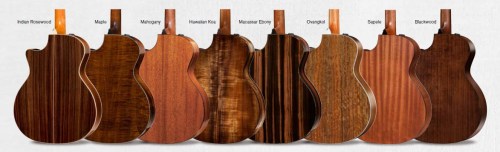
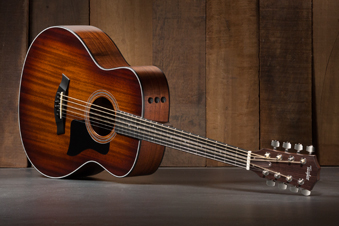
The latest Wood & Steel magazine (Winter 2016) from Taylor Guitars offers yet another big promotion of Tasmanian blackwood, featuring in three of the articles in the magazine:
- New 12-String Voices
- 12-Fret Revival
- The 300 Series Branches Out
https://www.taylorguitars.com/wood-and-steel
Here’s the main Tasmanian blackwood promotion found on page 15:
Blackwood’s Broadening Appeal
“Blackwood is one of my all-time favorite tonewoods,” declares Taylor’s master guitar designer Andy Powers, reflecting on the Tasmanian timber’s addition to the series. “I‘ve enjoyed its characteristics in every guitar I’ve built with it. It always sounds good.”
A lot of us at Taylor, in fact, are fans of the tonewood. Our product development team has crafted several series of limited edition blackwood guitars in recent years (including our 2014 500 Series Fall Limiteds) in the hope of broadening the appreciation among guitar players who haven’t been exposed to it. While blackwood has been a staple among guitar makers in and around its native region of Australia, its usage has been more limited in North America due in part to its lack of geographic proximity.
“That’s one of the factors blackwood had going against it,” Andy says. “It’s a long way to America from Australia. Historically, in the formative years of the steel-string guitar, it was a lot easier to get mahogany and rosewood here because they were already being imported for furniture.”
Despite its more limited usage in this hemisphere, blackwood has earned a loyal following across the industry.
“Martin has built some nice guitars with heavily figured blackwood, and they sound great,” Andy says. “And I know a number of small builders who work with it and live in the same camp as me; we all feel it’s amazing.”
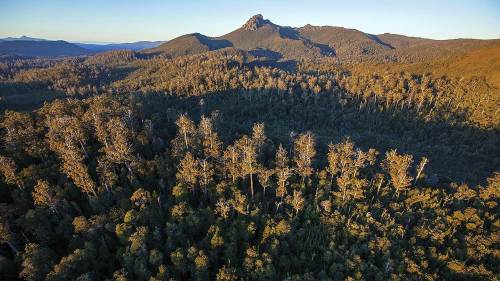
The supply is also sustainable, with a healthy sourcing outlook for the future. From a guitar-making point of view, blackwood’s relatively rapid growth cycle can often yield guitar quality wood in under 40 years, and the abundant supply of older, bigger trees produces a lot of straight-grained wood that is easy for guitar makers to work with. We purchased our blackwood from Tasmanian wood supplier Bob Mac Millan (profiled in our Fall 2014 issue), who also sourced the much rarer blackheart sassafras we recently used for limited edition models.
http://tasmaniantonewoods.com/
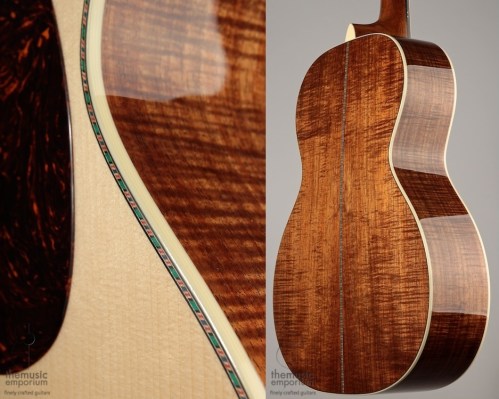
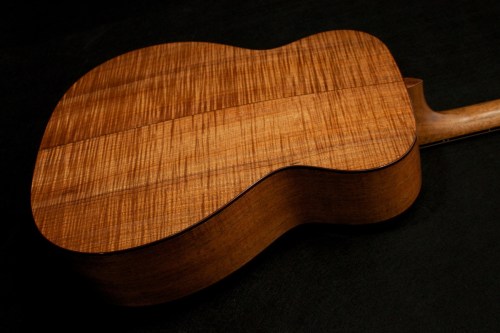
As an acacia wood species, blackwood sometimes draws comparisons to Hawaiian koa, another member of the acacia family, although, in reality, Andy says, the two species are unique.
“People sometimes refer to blackwood as the old cousin of koa, a more prehistoric version,” he explains. “While that may be so, blackwood has some distinct working characteristics, color, and grain structure, which distinguish it from koa.”
While blackwood will occasionally display exotic figure, Andy says our grading specifications for the sets used with the 300 Series call for more of a classic, straight-grained structure.
“We wanted a staple wood we could count on,” he says. “It’s a high quality guitar wood, clean, clear and straight-grained. In terms of color and overall appearance, it’s not a dramatic change from the classic mahogany or sapele aesthetic. It has a similar look a lot of times, especially paired with the mahogany tops and with a nice shaded edgeburst. Frankly, a lot of players may not even visually notice the difference unless they’re really looking for it.”
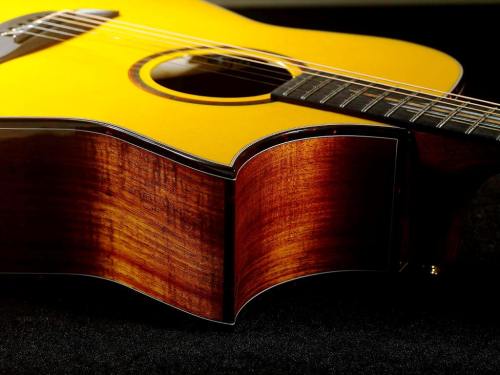
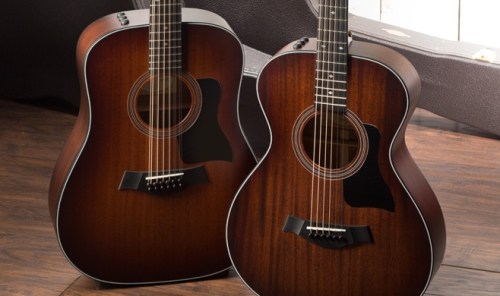
A color-matched stain for the blackwood back and sides and mahogany top and neck brings a seamless visual cohesion to the guitars, adding a rich undertone to the natural cinnamon-brown hues and highlighting the similar grain structure of both woods. Tonally, blackwood yields a strong midrange focus — dry and clear yet also warm, like mahogany and koa — with a splash of top-end shimmer and richness similar to rosewood. Its musicality, Andy says, suits a variety of body sizes and musical styles. Paired with a mahogany top, players can expect plenty of dynamic range.
Phew!
There’s a lot of promise, hope and opportunity in all those excellent words. Can they be matched by some clever product development and marketing, and finally by market acceptance and appreciation?
On top of the blackwood promotion there is other good news including the fact that Taylor Guitars has been the top-selling acoustic guitar brand in the USA for 26 straight months, with total (acoustic and electric) production in 2015 of 165,000 guitars and employ over 1,000 people! Even then they still can’t keep up with the demand.
Also the article Forestry for the Future on page 5 by Bob Taylor makes for interesting reading. Mr Taylor says “A word that has now become part of my daily vocabulary is “forestry.” He goes on…” The foresters I’ve met are mostly very good and brimming with concern, ideas and skills to help us all. And they’re frustrated because they work in a structure that often doesn’t allow them to work. Their work takes committed clients, and it also takes time.”
And as we have seen in Tasmania over the past 40 years, good intentions can so easily become corrupted and distorted to the point where the forest industry struggles to operate effectively because of the domination of ego, ideology and politics.
Bob Taylor says that forestry is the answer. I would say that good leadership is the answer. And I’m happy to say that Bob Taylor fits the leadership role pretty well!
I certainly sympathise with the expression of frustration! Being a forester in Tasmania means living with permanent dose of frustration.
Taylor Guitars and Bob Mac Millan at Tasmanian Tonewoods are doing their bit to bring Tasmanian blackwood to the world stage.
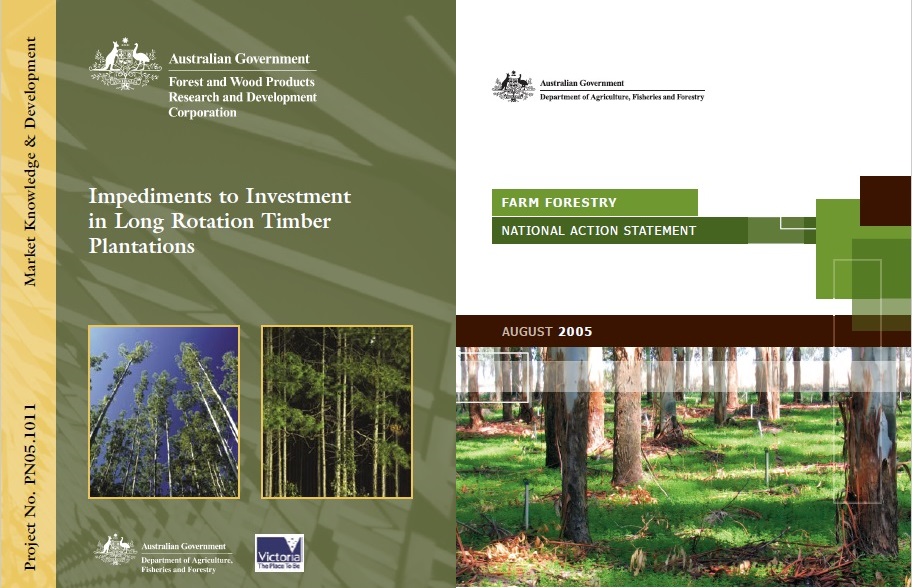
Now what can we in Tasmania do to support Taylor Guitars promotion of profitable, sustainable Tasmanian blackwood tonewood?
This is a commercial opportunity going begging.
Are Tasmanian farmers interested?
Are our politicians interested?
Is the TFGA interested?
We need leadership!
We need cooperation!




 Tasmanian Blackwood Growers Cooperative
Taylor Guitars latest Tasmanian blackwood promotion
The latest Wood & Steel magazine (Winter 2016) from Taylor Guitars offers yet another big promotion of Tasmanian blackwood, featuring in three of the articles in the magazine:
https://www.taylorguitars.com/wood-and-steel
Here’s the main Tasmanian blackwood promotion found on page 15:
Blackwood’s Broadening Appeal
“Blackwood is one of my all-time favorite tonewoods,” declares Taylor’s master guitar designer Andy Powers, reflecting on the Tasmanian timber’s addition to the series. “I‘ve enjoyed its characteristics in every guitar I’ve built with it. It always sounds good.”
A lot of us at Taylor, in fact, are fans of the tonewood. Our product development team has crafted several series of limited edition blackwood guitars in recent years (including our 2014 500 Series Fall Limiteds) in the hope of broadening the appreciation among guitar players who haven’t been exposed to it. While blackwood has been a staple among guitar makers in and around its native region of Australia, its usage has been more limited in North America due in part to its lack of geographic proximity.
“That’s one of the factors blackwood had going against it,” Andy says. “It’s a long way to America from Australia. Historically, in the formative years of the steel-string guitar, it was a lot easier to get mahogany and rosewood here because they were already being imported for furniture.”
Despite its more limited usage in this hemisphere, blackwood has earned a loyal following across the industry.
“Martin has built some nice guitars with heavily figured blackwood, and they sound great,” Andy says. “And I know a number of small builders who work with it and live in the same camp as me; we all feel it’s amazing.”
The supply is also sustainable, with a healthy sourcing outlook for the future. From a guitar-making point of view, blackwood’s relatively rapid growth cycle can often yield guitar quality wood in under 40 years, and the abundant supply of older, bigger trees produces a lot of straight-grained wood that is easy for guitar makers to work with. We purchased our blackwood from Tasmanian wood supplier Bob Mac Millan (profiled in our Fall 2014 issue), who also sourced the much rarer blackheart sassafras we recently used for limited edition models.
http://tasmaniantonewoods.com/
As an acacia wood species, blackwood sometimes draws comparisons to Hawaiian koa, another member of the acacia family, although, in reality, Andy says, the two species are unique.
“People sometimes refer to blackwood as the old cousin of koa, a more prehistoric version,” he explains. “While that may be so, blackwood has some distinct working characteristics, color, and grain structure, which distinguish it from koa.”
While blackwood will occasionally display exotic figure, Andy says our grading specifications for the sets used with the 300 Series call for more of a classic, straight-grained structure.
“We wanted a staple wood we could count on,” he says. “It’s a high quality guitar wood, clean, clear and straight-grained. In terms of color and overall appearance, it’s not a dramatic change from the classic mahogany or sapele aesthetic. It has a similar look a lot of times, especially paired with the mahogany tops and with a nice shaded edgeburst. Frankly, a lot of players may not even visually notice the difference unless they’re really looking for it.”
A color-matched stain for the blackwood back and sides and mahogany top and neck brings a seamless visual cohesion to the guitars, adding a rich undertone to the natural cinnamon-brown hues and highlighting the similar grain structure of both woods. Tonally, blackwood yields a strong midrange focus — dry and clear yet also warm, like mahogany and koa — with a splash of top-end shimmer and richness similar to rosewood. Its musicality, Andy says, suits a variety of body sizes and musical styles. Paired with a mahogany top, players can expect plenty of dynamic range.
Phew!
There’s a lot of promise, hope and opportunity in all those excellent words. Can they be matched by some clever product development and marketing, and finally by market acceptance and appreciation?
On top of the blackwood promotion there is other good news including the fact that Taylor Guitars has been the top-selling acoustic guitar brand in the USA for 26 straight months, with total (acoustic and electric) production in 2015 of 165,000 guitars and employ over 1,000 people! Even then they still can’t keep up with the demand.
Also the article Forestry for the Future on page 5 by Bob Taylor makes for interesting reading. Mr Taylor says “A word that has now become part of my daily vocabulary is “forestry.” He goes on…” The foresters I’ve met are mostly very good and brimming with concern, ideas and skills to help us all. And they’re frustrated because they work in a structure that often doesn’t allow them to work. Their work takes committed clients, and it also takes time.”
And as we have seen in Tasmania over the past 40 years, good intentions can so easily become corrupted and distorted to the point where the forest industry struggles to operate effectively because of the domination of ego, ideology and politics.
Bob Taylor says that forestry is the answer. I would say that good leadership is the answer. And I’m happy to say that Bob Taylor fits the leadership role pretty well!
I certainly sympathise with the expression of frustration! Being a forester in Tasmania means living with permanent dose of frustration.
Taylor Guitars and Bob Mac Millan at Tasmanian Tonewoods are doing their bit to bring Tasmanian blackwood to the world stage.
Now what can we in Tasmania do to support Taylor Guitars promotion of profitable, sustainable Tasmanian blackwood tonewood?
This is a commercial opportunity going begging.
Are Tasmanian farmers interested?
Are our politicians interested?
Is the TFGA interested?
We need leadership!
We need cooperation!
6 Comments
Posted in Commentary, Markets, Taylor Guitars, Tonewood
Tagged Tasmanian Tonewoods