-
Join 148 other subscribers
-
Recent Posts
- 2026 Tasmanian oak prices at Bunnings Hardware January 24, 2026
- Blackwood grower in New Zealand looking for markets August 23, 2025
- An open letter to Kirsha Kaechele February 13, 2025
- Tasmanian oak prices at Bunnings Hardware January 9, 2025
- Australian hardwood timber prices double one year on from native forestry ban November 13, 2024
- IST Tender Results 2023-24 July 10, 2024
- Import substitution June 12, 2024
- More post-MONA Economic Forestry Congress media coverage December 13, 2023
Categories
- 2018 State Election
- Australian Wooden Boat Festival
- Bunnings
- CF Martin Guitars
- Cole Clark Guitars
- Commentary
- Cooperatives
- Cort Guitars
- Drums
- Events
- For sale
- Forest Stewardship Council (FSC)
- Forestry Tasmania
- Funding
- Furniture
- Hydrowood
- Island Specialty Timbers
- Maleny Wood Expo
- Management
- Management Plan
- Markets
- Maton Guitars
- MONA Forest Economics Congress
- National Farm Forestry Strategy
- New Zealand
- Plantations
- Politics
- Price Lists
- Prices
- Private Forests Tasmania
- Public Native Forestry
- Stringfest
- Support
- Sustainable Timbers Tasmania
- Tasmanian Forest Products Association
- Taylor Guitars
- Tonewood
- Uncategorized
- Wanted
Recent Comments
gordonjbradbury on 2026 Tasmanian oak prices at B… Bruce on 2026 Tasmanian oak prices at B… John Hill on 2026 Tasmanian oak prices at B… Brett Waring on An open letter to Kirsha … Bruce Gibbs on Tasmanian oak prices at Bunnin… Archives
- January 2026
- August 2025
- February 2025
- January 2025
- November 2024
- July 2024
- June 2024
- December 2023
- November 2023
- October 2023
- August 2023
- July 2023
- June 2023
- May 2023
- March 2023
- February 2023
- August 2022
- June 2022
- February 2022
- December 2021
- November 2021
- October 2021
- September 2021
- August 2021
- July 2021
- May 2021
- April 2021
- March 2021
- November 2020
- October 2020
- September 2020
- August 2020
- July 2020
- June 2020
- May 2020
- April 2020
- January 2020
- December 2019
- November 2019
- August 2019
- July 2019
- May 2019
- April 2019
- February 2019
- January 2019
- October 2018
- September 2018
- August 2018
- July 2018
- June 2018
- May 2018
- April 2018
- March 2018
- February 2018
- January 2018
- December 2017
- November 2017
- October 2017
- September 2017
- August 2017
- July 2017
- June 2017
- May 2017
- April 2017
- March 2017
- February 2017
- January 2017
- December 2016
- November 2016
- October 2016
- September 2016
- August 2016
- July 2016
- June 2016
- May 2016
- April 2016
- March 2016
- February 2016
- January 2016
- December 2015
- November 2015
- October 2015
- September 2015
- August 2015
- July 2015
- June 2015
- May 2015
- April 2015
- March 2015
- February 2015
- January 2015
- December 2014
- November 2014
- October 2014
- September 2014
- August 2014
- July 2014
- June 2014
- May 2014
- April 2014
- March 2014
- February 2014
- January 2014
- December 2013
- November 2013
- October 2013
- September 2013
- August 2013
- July 2013
- June 2013
- May 2013
- April 2013
- February 2013
- November 2012
- October 2012
- August 2012
- July 2012
- June 2012
- May 2012
- April 2012
- March 2012
- February 2012
- January 2012
- December 2011
- November 2011
- October 2011
Meta
August trip to the north
I had another successful and enjoyable trip around the north west last week, visiting farmers/landowners and attending the Australian Forest Grower (Tas branch) AGM and annual dinner.
I will post a few property reports here in the next few days with experiences and insights learnt from a couple of farms I visited, including a few surprises.
The AFG AGM and dinner gave me some exposure to the private farm forestry community. It seems to me that many in the industry are still in a state of denial, still hoping that the old days will come back; or hoping that having someone to blame will somehow solve the problems of the industry. There was a big turnout at the annual dinner in Launceston with three very interesting presentations, but the elephant in the room was deliberately ignored.
I will soon be posting an update on a very important opportunity that will shortly be knocking on Tasmanias door, that directly affects the future of blackwood and the Blackwood Growers Coop proposal. So stay tuned!
Posted in Uncategorized
Forestry talks: no one wants to be first to walk
This article in The Australian newspaper today paints a bleak picture for an IGA agreement being successfully negotiated.
It seems after two years of negotiations the parties just can’t get there; and no IGA = no blackwood growers cooperative.
My advice would be to call in a professional facilitator. When everyone around the table has an agenda it is difficult for new ideas and new approaches to be heard. That is where a professional facilitator comes in very handy. They are experts at freeing up discussion and challenging fixed positions, which is exactly what the IGA parties need.
More than likely after 2 years they are all physically and mentally exhausted, and absolutely dread the idea of more discussions. That’s how they looked on the TV the other night – like zombies. It is time for a radical change of approach. Hop on a bus guys and take a field trip – go and walk in the forests together and go visit a sawmill. Go and visit Lifestyle Furniture in Salamanca and talk to the owner. Then you might get some new ideas.
I tend to agree with Jonathon West who predicted that the failure to reach an agreement would see both the destruction of the remaining old-growth forests AND the destruction of what remains of the forest industry. And the damage and division inflicted upon the Tasmanian community would have no resolution. The anger will linger for decades and likely be transferred to a new context.
As Tasmanians we need to demonstrate some maturity and ability to resolve our own problems. Otherwise our future will look very bleak indeed.
Coop Update:
I continue to get 2-3 enquiries per week from farmers and landowners interested in being part of a blackwood growers cooperative. This is very encouraging. I only wish some of this positive energy and enthusiasm for the future could be transferred to the IGA members.
Cheers!
Posted in Uncategorized
Treegrowers’ Co-operatives: The Key To The Future Of Farm Forestry
Here is a very informative article I found that discusses farm forestry cooperatives in Australia.
http://www.coopdevelopment.org.au/treecoops.html
Overall the article is positive about farm-forest cooperatives, but many of the industry and policy issues that existed in Australia in 1997 when the article was written still persist today.
Of particular interest and relevance is the discussion on the situation in Tasmania, and the factors that have undermined and continue to undermine the commercial viability of the industry here.
http://www.coopdevelopment.org.au/treecoops.html#effect
I have contacted Tony Gill, the author of the article, to seek his help with the blackwood growers coop.
Happy reading.
Posted in Uncategorized
Market development with NZ’s specialty timbers
Those clever Kiwi farmers are at it again.
Here’s a news story of interest to special species growers everywhere, but especially in New Zealand.
http://www.fridayoffcuts.com/#12
And if you visit the NZ Farm Forestry Specialty Timber Market website as directed in the article you will find plenty of information about New Zealand farm-grown blackwood.
Check it out.
Posted in Uncategorized
Another successful trip north
I spent three enjoyable days this past week touring the north.
Property visits
The two farms I visited turned out to be ideal for growing plantation blackwood. They also have good native farm blackwood that could be managed for commercial, genetic and other benefits.
One farm was a typical north east dairy farm with well managed paddocks, interspersed with short steep slopes, gutters and difficult corners that will make ideal sites for growing commercial blackwood. In total these areas added to about 10 ha. There was plenty of existing native blackwood some of excellent quality. The owner is keen to get started and believes the Coop is a great idea.
The second farm was a mixed business (including farm forestry) located in the north west. The farm is in a sheltered valley at 400m altitude on basalt soils. I had previously regarded 400m as being marginal for growing plantation blackwood due to the increased frost risk, which would result in reduced growth rates and poor tree form. Instead what I found was some of the most magnificent native farm blackwood I have ever seem. In addition, the landowner had recently felled some trees so we could check the annual rings for growth rates. These clearly showed that at these altitudes on good sites blackwood can grow at 2cm diameter increment per year over an extended period.
What this means is that there is potentially more suitable land than I had originally anticipated. Shelter is still important especially at these higher altitudes, but I am now more confident in recommending planting on good sites at these higher altitudes, especially if it produces trees like those I saw on this north west property.
Like the NE dairy farmer, this farmer also appreciates the commercial potential of blackwood but is cautious to invest further in farm forestry given his experience with MIS schemes, and the current uncertainty surrounding the forest industry. I’m hoping he will come on board and establish his own blackwood plantation. His land certainly has great potential.
Strong interest from the rural community
As a result of my promotion of a blackwood growers cooperative there are now over 30 ha of farmland either planted or committed to being established to blackwood plantation over the next 12 months. All of this land is ideally suited for growing commercial blackwood. This has been achieved with limited advertising and promotion. This is just based on farmers passion and belief in the commercial future of blackwood, no financial incentives, no existing coop.
I am now confident there is plenty of suitable land and strong interest from landowners. This is a significant milestone in getting a cooperative going.
However this progress and momentum won’t last long unless we get more political support and funding under the IGA. To date I’ve been running all of this off my own savings. I have no income. I am passionate about using my expertise and knowledge, and the passion and interest in the Tasmanian community, to get a blackwood growers cooperative established. I will assist existing plantation owners in establishing and managing their plantations through to the point where they are fully pruned and ready to be left to grow to final harvest. But if I can’t get funding then I will have to abandon this dream and find another source of income.
ABC Local Radio
A few weeks ago I received a phone call from ABC rural reporter Rosemary Grant. She was interested in the coop proposal and wanted to find out more. My trip north provided an opportunity to catch up with Rosemary. We recorded a spontaneous interview which I wasn’t expecting to happen. Like so many Tasmanians Rosemary has plenty of her own blackwood stories, so she appreciates its social and cultural importance. Hopefully there will be a blackwood coop story on the ABC Rural Report soon. Thanks for your interest Rosemary.
http://www.abc.net.au/rural/regions/northerntas
Carrabin plantation update
Finally I had a free afternoon so I caught up with Gilles Carrabin where we spent two hours marking trees to begin the thinning process for this great blackwood plantation. Read my last update to find out more.
http://www.blackwoodgrowers.com.au/carrabin-blackwood-plantation-continued
I hope we can get the first phase of this thinning done this winter and allow this plantation to continue growing.
Cheers!
Posted in Uncategorized
Acacia koa, acoustics and guitars
Check out the first six and a half minutes of this video from Acoustic Addicts where they talk about Acacia koa and its acoustic qualities as a tonewood. Very interesting and entertaining.
The rise of blackwood as a quality tonewood is largely due to the heritage of Koa and the Hawaiian music craze of the 1920’s.
As the supply of Koa timber from Hawaii continues to decline so the fortunes of blackwood as a quality tonewood continue to rise.
Cheers!
Posted in Tonewood
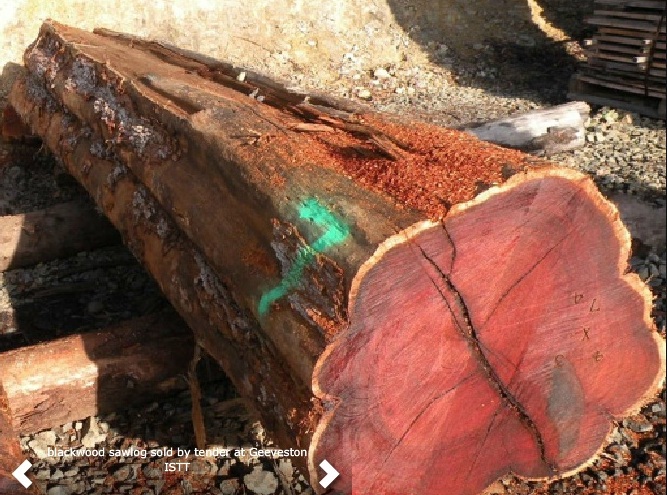
Blackwood sawlogs achieve record price at auction
(Blackwood Market Report #1)
If only!! Headlines like this should have been appearing regularly in our newspapers over the past 20 years or more.
Competition!
OK! Here is some homework for readers of this blog. Please write me an essay of 250 words or less (dot points are fine) on the following:
Q. Why would publicity like the headline above be important to the forest industry, and what would be the benefits to the Tasmanian community and particularly to the rural community?
The winning entry will be posted on this blog and will receive a free bottle of Tasmanian wine. YES I’M SERIOUS ABOUT THIS!
However instead of this kind of major market profile one of the great disincentives to investing in forestry in Australia is the lack of proper market processes that provide information on price, demand, quality, and markets. Without this basic fundamental information it is very difficult to justify long-term investments in planting trees for wood production. There are other benefits to both the forest industry and the community that I hope readers will help to expand on in the coming weeks (see above competition).
So when was the last time anyone saw a forest products market report in Tasmanian Country? No I didn’t think so!
The Blackwood Growers Cooperative appreciates that issues of market competition, transparency, product differentiation and segregation are critical in achieving the best financial outcomes from our forests and plantations. They are also vital in stimulating investment in forestry, especially given the long investment periods involved.
One of the key objectives of the Blackwood Growers Cooperative, as part of its strong commercial focus, will be to increase market information to allow farmers to make better informed investment decisions and improve the profitability of blackwood plantations.
As Australia’s premium appearance-grade timber species the market for blackwood logs should be as transparent and competitive as possible to help stimulate value-adding and investment. Instead the opposite situation prevails. Nevertheless there are enough snippets of information available to provide some comfort that blackwood plantations will be a profitable investment.
Island Specialty Timbers
Island Specialty Timbers (IST) (islandspecialtytimbers.com.au), run by Forestry Tasmania, is one of only two forestry organisations to provide publically available competitive log price data in Australia. IST holds regular public tenders for small parcels of specialty timber logs including blackwood, and publishes the results. These are not stumpage prices but could be regarded as indicative “mill door” prices. The Tender Prices provides information by species and broad quality classes on logs that have been sold by public tender.
Here are general historical prices posted on their web site at June 2012:
· Blackwood log shorts, plain grain, $275 / m3
· Blackwood logs with birds-eye figure – from $550 / m3
· Blackwood stump sections with fiddle-back grain – $500 – $800 / m3
· Blackwood logs with fiddle-back grain – up to $1900 / m3
And here are the results for the May 2012 auction for individual blackwood logs:
· log 8, Blackwood log, good size and quality, $480 / m3
· log 9, Blackwood log, average quality, $390 / m3
IST “generally only offers material for sale by tender whose quality is very good or better”. However there are no real log quality specifications (eg. Heartwood colour, density, figured grain, log diameter, length) so the relationship between price and log quality is pretty vague. It is expected that plantation-grown blackwood timber would generally be equivalent to “plain grain” quality.
So good size and quality “plain grain” blackwood logs are currently selling for ~$500 / m3 mill door.
Unfortunately IST does not present any time series price data to track changes in the market over time. Is the price for blackwood increasing or decreasing? Is it seasonal and subject to availability? These questions are important to potential growers.
How applicable are IST prices to plantation-grown blackwood?
The answer to this question is both technical and market driven:
Research has shown that blackwood timber from native forests is very variable in quality, ranging from very poor to very high quality. This is due to both environmental and genetic factors. The same is also true of plantation blackwood timber at the moment, because there is not yet a blackwood breeding program. Research has shown that blackwood can be grown in plantations without any negative impact on wood quality, so it comes down to genetics and the site.
As for markets it becomes a matter of matching expectations with reality and price. Is plantation blackwood timber fit-for-purpose? There are indications that New Zealand farmers are having no trouble selling good quality, plantation-grown blackwood timber into their domestic market. However the volumes being harvested are still too small to establish a market price.
Given the tiny volumes sold by tender by IST how indicative are they of general market prices?
A very important question and one that seems impossible to answer. Some time series data from IST on blackwood log prices would help shed some light on the problem. If real prices have been increasing over time that would be a positive indication. Another aspect affecting blackwood price is future supply. The Forestry Tasmania 2010 Special Species Strategy estimates 10,000 m3 per year of blackwood sawlog supply from public native forest until 2019. After that year no figures are available. Most of this blackwood will come from harvesting of mature eucalypt forest. Regrowth eucalypt forest has little or no blackwood sawlog. So regardless of the outcome of the forestry IGA the production of blackwood sawlog from public native forest will decline. This will have a positive impact on prices.
New Zealand farmers are expecting to harvest approximately 300 cubic metres of premium plantation blackwood sawlog per hectare after a 35 to 40 year rotation. Using the IST indicative price of $500 / m3 for quality plain-grain blackwood that equates to $150,000 per hectare mill door value. Subtract harvesting and transport costs to get an approximate price at stump. Imagine what the value per hectare would be if we can clone and grow fiddleback blackwood (see further discussion below).
New Zealand
I expect that once significant volumes of plantation blackwood timber start to appear in New Zealand in the next few years that a transparent competitive market price will become established. This will help us to understand the blackwood market and encourage investment in blackwood plantations in Tasmania. The New Zealand Farm Forestry Association is gearing up to help farmers market the growing volumes of minor species including blackwood, that are expected to become available in the next few years.
Demand
As a consequence of promoting the Blackwood Cooperative I am starting to get regular enquiries from sawmillers, furniture makers and other customers looking for sources of blackwood timber from private landowners. These people understand that current and future supplies of blackwood timber from public native forest are limited and precarious. Some of them also want to reduce their exposure to the perpetual political risk inherent in the public native forest industry.
While this is not my current focus, I am certainly happy to help connect blackwood growers with potential customers. Plenty of Tasmania farmers already have blackwood trees and stands on their properties. Some of these will have immediate commercial value. If you are a farmer wanting to understand the commercial value of your existing blackwood and how it can be realised/improved please contact me (mob. 0428 754 233).
“Tell him he’s dreaming”
The highly variable nature of blackwood in terms of tree growth and form, and wood quality is a major challenge in the development of commercial blackwood plantations. One of the objectives of the Cooperative therefore, will be to establish a blackwood selection and breeding program. This could be done in cooperation with the New Zealand blackwood growers (AMIGO), and possibly also the Chilean blackwood community. The objectives of the breeding program will be:
1. To improve the growth and form of plantation blackwood trees, in order to reduce rotation times and reduce silvicultural (pruning) costs;
2. To improve the quality and consistency of plantation blackwood timber;
3. To identify and select a range of premium blackwood genetic material for possible commercial development, including:
· trees of outstanding growth potential;
· trees with outstanding wood quality based on wood colour, wood density or figured grain (eg. fiddleback and birdseye);
· trees that have wood qualities that meet particular high-value niche markets (eg. the tonewood market).
All of these objectives are aimed at improving the profitability of commercial blackwood plantations. One example is that of fiddleback blackwood. Over the years I have known people who have made attempts at cloning fiddleback blackwood. I believe this can be done, and with the very high prices paid for fiddleback logs, the commercial potential is obvious. The Blackwood Cooperative would form the natural focus for this kind of commercial research.
Another example is the tonewood market. A huge amount of research has been done and continues, into the relationship between wood quality and its impact on the sound quality of stringed instruments. The acoustic guitar market is the main market for blackwood tonewood. Guitar makers worldwide are facing declining supplies of quality tonewoods and are looking for sustainable supplies. Prices for quality tonewoods are increasing. Blackwood is one of the few established quality tonewoods that can be grown in commercial plantations. The opportunities to supply this market and to cooperate to develop selected genetic lines to meet tonewood market requirements seem obvious.
Apologies for such a long blog. I hope you found it interesting. And please enter the competition for that great prize.
Cheers!

Posted in Markets
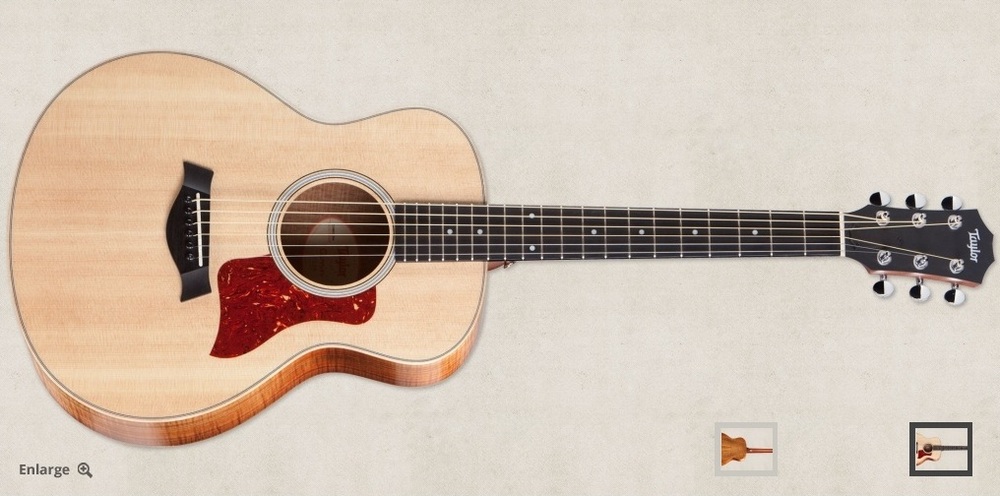
Taylor GS mini blackwood guitar
Taylor Guitars based in San Diego, California, are one of the major American makers of acoustic guitars.
Here is their latest model guitar featuring Tasmanian blackwood.
Blackwood tonewood timber retails for >$50,000 per cubic metre sawn, compared with normal furniture grade blackwood that retails for ~$4,000 per cubic metre.
At these prices the tonewood market has the potential to have a significant impact on the commercial future of blackwood.
All we need to do is realise that opportunity.
Help us to realise that future by supporting the Blackwood Growers Cooperative.
Posted in Markets, Taylor Guitars, Tonewood
Blackwood – An overview
Although this article is now 6 years old it is still a good summary of blackwood growing in New Zealand.
Ian Brown is coauthor of the New Zealand blackwood growers handbook. As a farmer his research has helped define the current success of blackwood in NZ.
His comment about blackwood growth rates in NZ compared vs Tasmania should not be taken too seriously.
Undoubtedly NZ has some very good sites for growing blackwood. But we have yet to really test the potential here in Tasmania.
Happy reading.
Posted in Management
May update
Churchill Trust
I have received notice that my application for funding from the Churchill Trust for a four-week overseas tour to study blackwood cultivation, research and farmer experiences in New Zealand and Chile has not been successful. I failed to make the shortlist of Tasmanian applications that went to Canberra for final assessment.
May trip north
I was up north again last week visiting people. It was great meeting people who are interested in planting blackwood or who are keen to become involved in other ways. I saw some sites that will be very suitable for growing blackwood. Hopefully we will soon see some new blackwood plantations being established. Not all sites are suitable however. Some sites are clearly unsuitable, while others I currently class as marginal. As our experience and confidence grows in the future, some of these marginal sites may become suitable. But for now I want to recommend and concentrate on sites I have a high degree of confidence of success.
I had great conversations about various issues of plantation establishment. For example the size and type of planting stock to use, and how this affects protection strategies and costs. Site cultivation was also discussed. Where planting rates are so low (200 trees per hectare), spot cultivation seems to be the way to go. What is the most economical way to achieve this? www.wilco.co.nz, www.rotree.com.au.
New blackwood plantation
Here is the start of what will become a new 3 hectare blackwood plantation at Nubeena. Tree guards were cheaper than fencing for protection from wallabies and possums. The site has deep sandy loam soils, excellent shelter and rainfall. The weeds have been sprayed. With good spring rainfall I expect these trees to be well above the tree guards in 12 months time. There is native blackwood forest nearby that shows the site has reasonable blackwood potential which will improve with fertiliser and TLC. Watch this space!
IGA
The other day Professor Jonathon West made the dire prediction to a Legislative Council inquiry that the IGA would not be achieved, that the parties would fail to reach a negotiated settlement (Forestry peace goes: West). That would indeed be a sad outcome for the proposed blackwood growers cooperative. It totally boggles my mind that anyone can imagine that a return to the forestry wars will provide a better outcome, than the small beginning to a new future that the IGA represents.
Many people seem to have unrealistic expectations about the IGA. For my logic the IGA needs to be successfully negotiated within the context of further ongoing discussion and negotiations between the parties. After all, it is the establishment of ongoing trust and communication between the parties that is at the very heart of the IGA. The details are just a “means to an end”.
Cheers!
Posted in Uncategorized