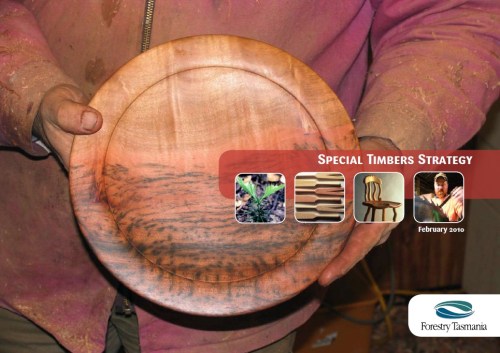
After the embarrassing back down by the Tasmanian State Government over the proposal to log the World Heritage Area, two important reports were quietly released last week with no fanfare from our politicians or forest industry leaders. These reports relate to the forthcoming 2017 Special Timbers Management Plan.
http://www.stategrowth.tas.gov.au/forestry/special_species_timber_management_plan
You can read my previous blogs on the very long drawn-out process to create yet another special timbers management plan here:
http://blackwoodgrowers.com.au/category/management-plan/
Special Timbers Resource Assessment
The first report is a special timbers resource review produced by Forestry Tasmania of the 812,000 ha of the Permanent Timber Production Zone Land (PTPL).
The report does not include forests on private land, or forests on public land that are managed by other agencies (including Future Potential Production Forest).
The report does not speculate about any potential for helicopter harvesting or underwater salvage, nor make any assessment about the commercial viability or costs associated with [management,] harvesting and/or extraction operations.
Given that in 2010 Forestry Tasmania determined that its special timbers operations were no longer commercially viable one must presume that this situation remains unchanged. In other words how much taxpayers money is to be wasted harvesting this wood is not considered important in determining the resource that is available!
As always with State forest policy and practice it is about the volumes of wood to be given away never about the profitability of the forest asset.
One suspects that if commercial viability was considered in the report, then little if any of this public native forest special timbers resource would be available for harvesting!
Centrelink Timbers is a thriving industry in Tasmania.
The blackwood resource figures in this report are from the 2013 Blackwood sawlog resource review. No additional work has been done in this assessment for the north west blackwood production zone.
The significant reduction from the targets set in the 2010 Special Timbers Strategy reflects the smaller landbase that is now available, longer rotations required for some species and more accurate volume estimates resulting from the rainforest modelling work using LiDAR.
So two of the three issues [longer rotation age estimates and more accurate inventory ]that have driven down the estimate of available special timbers resource, have nothing whatsoever to do with any forest industry agreement, but are the result of changes in methodology.
Now to blackwood…
The headline figure which this report uses is not the “millable sawlog” figure that the RFA and the 2010 Special Timbers Strategy used, but now includes outspec wood including craftwood. This outspec wood makes up 55% of the headline blackwood volume. Forestry Tasmania does not have any sales obligations or commitments for outspec wood!!
So in addition to the 3,000 cubic metres per year of millable sawlog from the north-west blackwood production zone as outlined in 2013, there will be another 1,275 cubic metres of millable sawlog per year from the rest of the State up until 2027, when the blackwood resource in the rest of the State will be exhausted.
So much for guarantees! So much for sustainability!
In 1991 with the FFIS, again in 1996 with the RFA, and again in 2010 with the Special Timbers Strategy, Forestry Tasmania guaranteed an annual supply of 10,000 cubic metres of millable blackwood sawlog to industry.
And here we are at the end of the blackwood industry!
These volumes of blackwood sawlog will not be enough to sustain a commercially viable industry. There will not be enough resource to sustain our commercial furniture makers. These volumes will barely be enough for our custom furniture makers.
The Tasmanian blackwood industry now has only two clear choices:
- Close down due to the exhaustion of the public native blackwood resource; or
- Look to Tasmanian farmers as the future of the blackwood sawlog resource.
Salvage blackwood sawlog from the Hydrowood project may keep the industry going for a few more years, but it too will end. The Hydrowood resource can either be seen as a last gasp for the backwood industry, or as a useful stop-gap whilst relationships with Tasmanian farmers are established.
So what’s it going to be? Extinction or a new future?
Market Demand Analysis
The second report is a market demand analysis for Tasmanian special timbers conducted by Indufor. You may remember I was invited to participate in this market survey:
http://blackwoodgrowers.com.au/2015/04/23/special-species-timber-management-plan-update-1/
Despite my being interviewed by the author of the report, the report contains no mention at all of private commercially-grown blackwood, and no mention of opportunities for private investment and private growers. The reports entire focus is on the Forestry (Rebuilding the Forest Industry) Act 2014 and the public native forest resource!
Clearly the consultant had to appease a very narrow-minded client!
This observation on political bias is further strengthened by the fact that Appendix 1 of the report describes in detail the various sub-sectors of the industry, but Appendix 1 begins with sawmillers. Apparently growers are not a sub-sector of the special timbers industry! Not even harvesting and transport is mentioned as a sub-sector!!
This is yet another failed report into Tasmania’s iconic special timbers industry.
The report contains no mention of blackwoods unique position as the only Tasmanian special species that has the potential to be grown commercially due to its fast growth rate and wide natural distribution. Given the unique and dominant position that blackwood occupies within the special timbers market it should have been given an entire chapter to itself.
The only basis for a successful forest industry is profitable tree growers, and profitable tree growers are conspicuous by their absence in this industry report. In fact discussing special timbers market demand without discussing the economics of tree growing and forest management is completely stupid. Imagine a report that discussed market demand for dairy products whilst ignoring the economics of dairy farming. Anyone would regard such a report as a waste of time.
When I was talking to the author of the report during my interview last year I specifically suggested that the report needed to have a strong focus on the economics of tree growing and forest management. And guess what the report specifically and completely ignores?
For example the report fails to discuss the existing special timbers industry community service business model and the significant taxpayer subsidy that guarantees the survival of the industry. Discussing prices, markets and demand whilst ignoring the business model and taxpayer subsidy is completely fallacious.
From a blackwood growers point of view the parts of the report most worth reading are:
Resource Supply on Page 4.
It’s a carefully selected view of the historical blackwood production from public native forest. Certainly no comparison of production with sustainable yield. In fact no mention of blackwood sustainable yield at all!
Blackwood Markets on Page 14.
Throughout the Report and especially in this section there is a lot of veiled criticism of the forest industry’s lack of market competition and transparency. The fact that most blackwood is “sold” outside normal competitive market processes is particularly relevant, ie. log prices are NOT market-based.
Anyway the report notes that of all the special species, Tasmanian blackwood is sold into the widest range of high value markets.
Resource supply and substitution
According to the report survey the biggest constraint on the industry is the uncertainty of log supply. Section 4.8 (p. 38) talks about survey responses to possible falling supply from public native forest. The option of “shifting to alternative growers” (ie. Tasmanian farmers) is not mentioned. And yet Table 4-5 on page 41 analyses the market’s willingness to pay for the various timber grades of the various species. Blackwood comes out extremely well in this analysis. The market says it is prepared to pay good prices for access to quality blackwood.
So given the dire situation of the public native forest blackwood supply why isn’t the industry asking Tasmanian farmers to grow quality blackwood timber? What is preventing this fundamental market process from being realised? In every other primary industry the combination of high prices and willingness to pay would lead to investment. Why does this NOT happen with the forest industry? The report fails to address this fundamental question!!
This situation provides the perfect opportunity for the TFGA to step up and demonstrate leadership. The TFGA needs to organise a forum between farmers and blackwood industry representatives and let’s start rebuilding the blackwood industry.
The report makes no mention of New Zealand farmers and what they are doing regarding blackwood and other special species. No mention in the report of the handful of Tasmanian farmers who are actively growing commercial blackwood.
One thing is perfectly clear in the report – the Tasmanian Government does not want Tasmanian farmers to grow commercial blackwood!!
The Special Timbers Market Demand report is fundamentally flawed. It certainly cannot be used to help justify the continued logging of our public native oldgrowth and rainforests in Tasmania.
Commentary
Neither of these reports offers much hope to the special timbers industry. Both reports show that the public native forest special timbers industry – including the iconic Tasmanian blackwood industry – is on the verge of collapse due to overcutting and mismanagement of the resource.
So much for declarations sustainability!
The major positive is that the market demand report confirms the continuing demand for premium timbers at good prices.
What is perfectly clear is that these two reports are especially designed to keep the forestry wars at the forefront of Tasmanian politics. The reports avoid discussing alternatives outside the public native forest resource and the taxpayer-funded community service business model.
That Tasmania cannot work positively towards realising the commercial opportunities around Tasmanian blackwood remains a fundamental continuing failure of our political and business leaders.




 Tasmanian Blackwood Growers Cooperative
Blackwood Plantation Financial Model
This is a financial model that calculates the Internal Rate of Return (IRR) from an investment in one hectare of commercial blackwood plantation. The model is setup in an Excel spreadsheet:
Blackwood financial model.xlsx
Here’s the link to find out more about the IRR function in Excel:
https://support.office.com/en-us/article/IRR-function-64925eaa-9988-495b-b290-3ad0c163c1bc
This model is a work in progress and is designed to encourage feedback, comment and updating.
You can download the model and use your own numbers if you wish.
Contact me if you want help modifying the model to your personal requirements.
To begin with I went back to the New Zealand Blackwood Growers Handbook that contains an financial model on page 77. I set this model up in a spreadsheet and came up with the same values as shown in the handbook.
http://www.nzffa.org.nz/farm-forestry-model/species/blackwood/#Blackwood handbook
I then modified the model according to my own recommended simplified plantation regime. This simplified plantation regime reduces the initial establishment and management costs, and reduces the workload required in the first 10 years.
I also changed some of the values in the model to better reflect what I consider are current costs.
Assumptions
http://blackwoodgrowers.com.au/2015/12/11/tasmanian-blackwood-sawlogs-at-625-per-cubic-metre/
Results
The model shows an internal rate of return on Tasmanian blackwood plantation investment of around 10% over 35 years.
For a 35 year investment that is a decent return. Fixed term deposits are currently offering around 3.00% over 4 years (updated Feb 2016).
http://www.infochoice.com.au/banking/savings-account/term-deposit-interest-rates.aspx
If a very good site is planted and hence the rotation shortened to 30 years the return on investment increases to 12%. Alternatively if the value of the plantation after 35 years is only $100,000 per hectare the rate of return is still 9%.
In other words the investment is quite robust to changes in conditions and markets.
Commercial blackwood plantations are a profitable investment under current market conditions.
I wouldn’t recommend buying land just to grow commercial blackwood. Blackwood is not a broad-acre crop but requires certain site characteristics to grow successfully.
Many Tasmanian farms have areas that are currently underperforming or neglected; covered in weeds, bracken and blackberries. These areas are not contributing to farm income, but many of these areas are suitable for growing commercial blackwood.
If a farm has a number of these areas, the investment and the workload can be spaced over time, for example by planting an area every 5 years. After 35 years a set of periodic incomes is achieved from regular harvesting and replanting of plantation blackwood.
Now the one major feature missing in the forest industry is greater market and price transparency to help encourage this investment.
14 Comments
Posted in Commentary, Plantations