Category Archives: Plantations

Milling blackwood in the Marlborough Sounds, New Zealand

The latest edition of New Zealand Tree Grower produced by the New Zealand Farm Forestry Association, contains a nice article by blackwood grower and sawmiller Paul Millen (NZTG 38(1) p. 7-8).

http://www.nzffa.org.nz/

Paul runs a business called Marlborough Timbers.

http://www.marlboroughtimbers.co.nz/

Here’s the story in summary:

  • 8 plantation blackwood trees milled
  • Tree age: 30 years
  • Tree dbh: 30 – 60cm
  • Pruned height: 4 – 6m
  • Total log volume: 10 cubic metres
  • Total sawn recovery: 4.0 cubic metres
  • Total sawn recovery: 40%
  • Three to four logs per tree were milled, at lengths between 2.4 metres and 3.6 metres, including unpruned logs from above the pruning lift that were targeted to produce decorative knotty flooring.
  • Knotty boards were rough sawn 157 x 27mm and sold green at $NZ1800 per cubic metre. In future they hope to sell this grade of knotty blackwood for $NZ2,500 green or $NZ3,000 kiln dried.
  • They hope to sell kiln dried clear (select) grade blackwood for $NZ4,000 per cubic metre, which equates with what Malcolm Mackenzie is selling select grade blackwood into the NZ market:
  • https://blackwoodgrowers.com.au/2016/11/21/new-zealand-blackwood-market-report/

Here’s a link to the article (pdf file):

Milling blackwood in the Marlborough Sounds NZTG 38-1

I got the extra information from Paul to help fill out the story.

Blackwood is a niche timber that I suggest is like the pinot noir variety of New Zealand exotic timbers. The timber has some incredible colour and diversity, and it is a relatively easy hardwood to saw and season. There is a lot of satisfaction in producing a really top notch product. I know there is some excellent mature well-managed farm forestry stands and these growers deserve to receive a high return given the demanding silviculture required to manage these early plantations.

Maybe the New Zealanders should market blackwood as Noirwood!!

As more of the New Zealand farm-grown blackwood resource matures we will be seeing more of these success stories.

Thanks to Paul Millen for the story and further information.

Bold plan to breathe new life into SW timber industry

ffl

SW? As in south west Western Australia!

Just like the rest of Australia the logging of public native forests in south west Western Australia has been a battle ground for decades, with the forest industry now on its last legs needing continuous Government support.

The local forest conservation group the Western Australian Forest Alliance has come up with a plan to rebuild the forest industry and create jobs. The Plan is called Forests for Life.

http://forestsforlife.org.au/the-plan/

Normally I would be a bit sceptical of any industry plan developed by environmentalists, and from my reading the FFL plan certainly has some weaknesses.

What I do like though is that the broader community are getting behind the Plan, including the local Augusta/Margaret River Council.

http://www.amrshire.wa.gov.au/news/media-releases/1005/bold-plan-to-breathe-new-life-into-sw-timber-industry/

Here at last is the community taking the lead, showing initiative, adopting a positive attitude and working together.

This I like!!

The question now is will the forest industry and the WA State government get behind and support the Plan. The Western Australian Farmers Federation also needs to be brought on board to help give the Plan some economic credibility and community support.

I’ve already seen the potential for growing Tasmanian blackwood in SW Western Australia:

https://blackwoodgrowers.com.au/2015/11/11/blackwood-in-western-australia/

Imagine this happening here in Tasmania?

Carrabin first inventory

IMG_0482.jpeg

A few months back I had the opportunity to do the first inventory measurement of the Carrabin blackwood plantation.

You can read about this plantation in my previous blogs including the major thinning in 2013:

https://blackwoodgrowers.com.au/2013/11/13/carrabin-first-thinning/

The plantation is now 16 years old and 3 years since its major thinning.

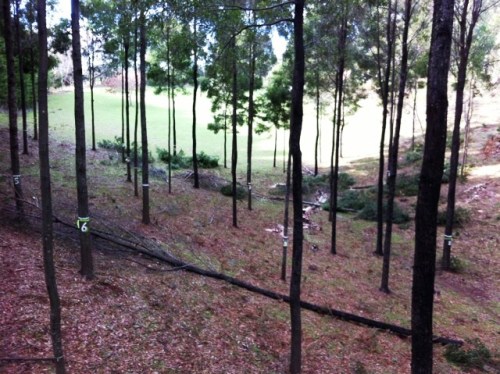
There are still about 20 trees to be removed before the plantation reaches its final stocking of approximately 36 trees. The above picture shows recent thinning in progress.

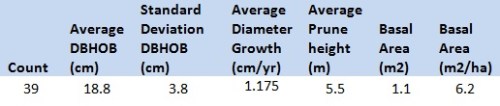
In all 39 trees were marked and measured. Here are the results:

Carrabin Table

Note that the objective is to grow blackwood trees that have single straight stems pruned to at least 6.0 metres, and a breast height diametre (DBHOB) of 60cm when harvested.

Because of the close initial planting (2x2m) and the delayed thinning, the remaining trees do not have the diameter I would expect for this age. The largest trees are 27 cm diameter.

As these trees rebuild their crowns following the 2013 thinning I expect the diameter growth rate to increase. Another inventory in 5 years will tell us whether this has happened.

This blackwood plantation is a real credit to the commitment and dedication of the owner.

This is how the special timbers industry should be in Tasmania. Not a politically motivated taxpayer-funded junket into our last remaining public old growth forests.


Plantation blackwood resonator guitar

Burgin_resonator.jpg

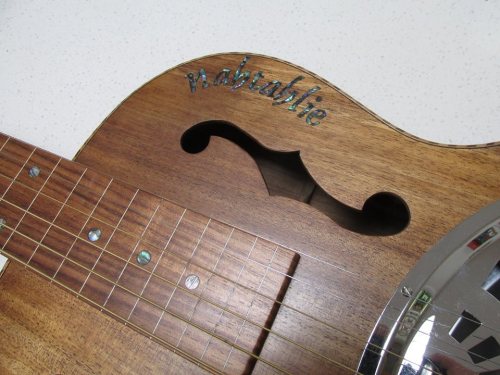
Wellington, New Zealand-based luthier Paddy Burgin has created another beautiful musical instrument using plantation-grown blackwood.

http://www.burginguitars.co.nz/

Made for a local (NZ) steel player who wanted an instrument made totally from NZ grown woods. Paddy’s plantation-grown blackwood comes from Golden Bay at the northern tip of New Zealand’s south island. The tree was about 35 years old when harvested.

https://www.facebook.com/paddy.burgin/media_set?set=a.10154096475482429.1073741829.692202428&type=3

I only wish more instrument buyers and luthiers would take the plantation tonewood challenge and try plantation grown blackwood.

Great work Paddy!

Blackwood Plantation Financial Model

Plantation

This is a financial model that calculates the Internal Rate of Return (IRR) from an investment in one hectare of commercial blackwood plantation. The model is setup in an Excel spreadsheet:

Blackwood financial model.xlsx

Here’s the link to find out more about the IRR function in Excel:

https://support.office.com/en-us/article/IRR-function-64925eaa-9988-495b-b290-3ad0c163c1bc

This model is a work in progress and is designed to encourage feedback, comment and updating.

You can download the model and use your own numbers if you wish.

Contact me if you want help modifying the model to your personal requirements.

To begin with I went back to the New Zealand Blackwood Growers Handbook that contains an financial model on page 77. I set this model up in a spreadsheet and came up with the same values as shown in the handbook.

http://www.nzffa.org.nz/farm-forestry-model/species/blackwood/#Blackwood handbook

I then modified the model according to my own recommended simplified plantation regime. This simplified plantation regime reduces the initial establishment and management costs, and reduces the workload required in the first 10 years.

I also changed some of the values in the model to better reflect what I consider are current costs.

Assumptions

  • A 35 year rotation length;
  • In 35 years time there will still be a high demand for quality appearance-grade timbers. Technology is rapidly changing many timber markets, including construction-grade timbers, but I think there will always be a demand for premium solid appearance-grade timbers;
  • The objective is to grow the plantation to an average stem dbh of 60 cm, with all trees pruned to 6.2 metres. This should produce approx 300 cubic metres of premium blackwood sawlog;
  • The plantation is established on a site suitable for growing commercial blackwood;
  • The land is already owned (ie. no land purchase costs are included). But go right ahead and add land costs and see what it does to the investment;
  • The simplified plantation regime is used planting 200 blackwoods per hectare;
  • One of the largest costs in blackwood plantations is protection/fencing to protect the trees whilst they are young. Blackwoods are highly palatable to a wide range of domestic and wild herbivores, so good protection is essential. Protection costs will vary considerably according to plantation size, shape and location/terrain.
  • Annual weed control (spot spraying) is essential whilst the trees are becoming established. Blackwoods do not like competing against heavy grass/weed cover. After 5 years I have included a general weed control (slashing) every 5 years for general maintenance. By about age 20 years the blackwoods should have the site under control with little need for ongoing weed management.
  • Actual costs will vary according to individual circumstances. Most of the costs are my best guesses. If anyone has some real data to contribute that would be appreciated;
  • No harvesting or transport costs are included;
  • Other costs can be included fairly readily, such as rates and other overheads, and management costs;
  • The sawlog price is my current best guess at a competitive market price for a large parcel of quality blackwood sawlogs. For example the December 2015 Hydrowood log tender had 14 quality blackwood logs sell for an average of $625 per cubic metre.

http://blackwoodgrowers.com.au/2015/12/11/tasmanian-blackwood-sawlogs-at-625-per-cubic-metre/

Results

The model shows an internal rate of return on Tasmanian blackwood plantation investment of around 10% over 35 years.

For a 35 year investment that is a decent return. Fixed term deposits are currently offering around 3.00% over 4 years (updated Feb 2016).

http://www.infochoice.com.au/banking/savings-account/term-deposit-interest-rates.aspx

If a very good site is planted and hence the rotation shortened to 30 years the return on investment increases to 12%. Alternatively if the value of the plantation after 35 years is only $100,000 per hectare the rate of return is still 9%.

In other words the investment is quite robust to changes in conditions and markets.

Commercial blackwood plantations are a profitable investment under current market conditions.

I wouldn’t recommend buying land just to grow commercial blackwood. Blackwood is not a broad-acre crop but requires certain site characteristics to grow successfully.

Many Tasmanian farms have areas that are currently underperforming or neglected; covered in weeds, bracken and blackberries. These areas are not contributing to farm income, but many of these areas are suitable for growing commercial blackwood.

If a farm has a number of these areas, the investment and the workload can be spaced over time, for example by planting an area every 5 years. After 35 years a set of periodic incomes is achieved from regular harvesting and replanting of plantation blackwood.

Now the one major feature missing in the forest industry is greater market and price transparency to help encourage this investment.

Two significant forest industry reports that went nowhere

Combined

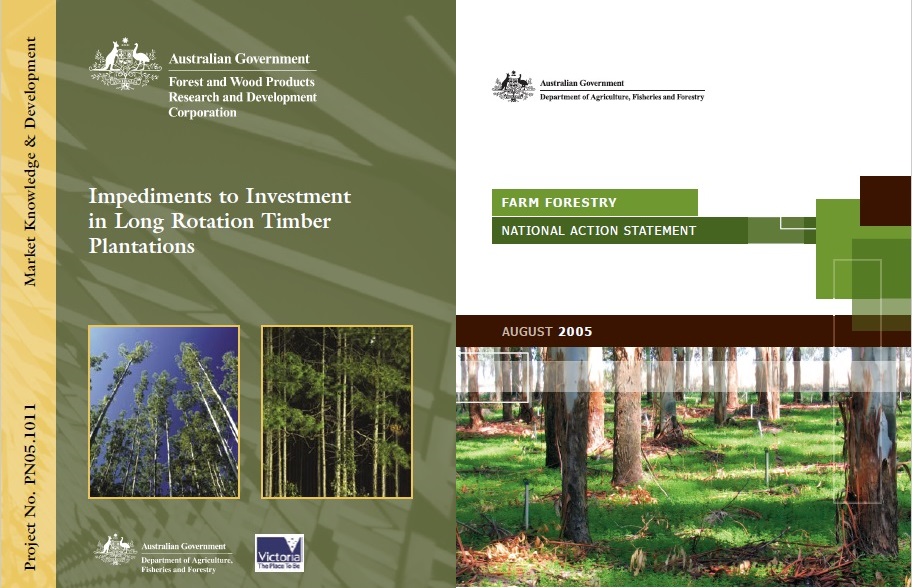
Both of these reports were published in 2005.

Both of these reports have (had??) significant potential impact upon the future of the Tasmanian blackwood industry.

Both of these reports contain important information and recommendations about reforms to the forest industry.

From what I have seen nothing from either of these reports has ever been implemented!!!

Ten years after these reports were published both are still available on Government websites as if they form the basis of current Government policy, but from what I can see neither of them are currently active.

The information and recommendations in these two reports has not been taken up and included in any forest industry policy documents (eg. FIAT), political party policies, nor in any farm lobby group policies (eg. the TFGA). Why not??

Tasmanian Government forest policy does not include any of the recommendations from these reports.

If only half of the recommendations from these two reports had been implemented the forest industry would be in a much better position today, and investment in the future of the blackwood industry would be a whole lot easier.

Here are the links to these two reports:

http://www.planningplantations.com.au/assets/content/plantations_sustainability/economic/ownership.html

(the link to the pdf report is at the bottom of the page)

http://www.agriculture.gov.au/forestry/australias-forests/plantation-farm-forestry/publications/farm_forestry_national_action_statement

Personally I think the future of long rotation plantations is looking more uncertain except in markets where high value appearance-grade timber is needed. Construction-grade timber is increasingly made from engineered wood products rather than solid wood; engineered from short-rotation plantation-grown wood.

But the market for long rotation appearance-grade timber is relatively small, especially if we are just talking about the domestic Australian market. The international market for quality appearance-grade timber is significant but is still dominated by the illegal trade in rainforest timbers.

The opportunity for supplying profitable, quality, farm-grown plantation grown Tasmanian blackwood into the export market is significant.

And this is where the Farm Forestry National (In)Action Statement (NAS) becomes important.

To achieve the vision, the Australian, State and Territory governments and the forest and wood products industry need to progress 16 actions, grouped under four action imperatives:

  1. Develop appropriate, integrated and consistent Australian, State, Territory and local government policies for farm forestry;
  2. Coordinate actions and build relationships to support farm forestry;
  3. Recognise and, where possible, quantify farm forestry’s economic, environmental and social benefits and costs;
  4. Promote the development of markets for farm forestry products and services.

The 16 actions are broken down into 33 measurable outcomes, listing deadlines and who is responsible for implementing the outcomes.

None of it has been implemented!!

The Federal and all State Governments and the forest industry all signed up to do this.

So much for commitment!

So much for leadership!

Perhaps the Tasmanian Government and the Tasmanian forest industry should revisit the NAS and recommit to implementing its recommendations.

Two blackwood growers

TBG

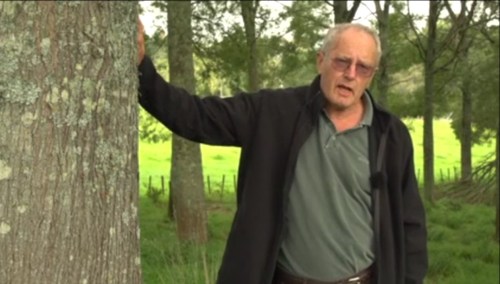
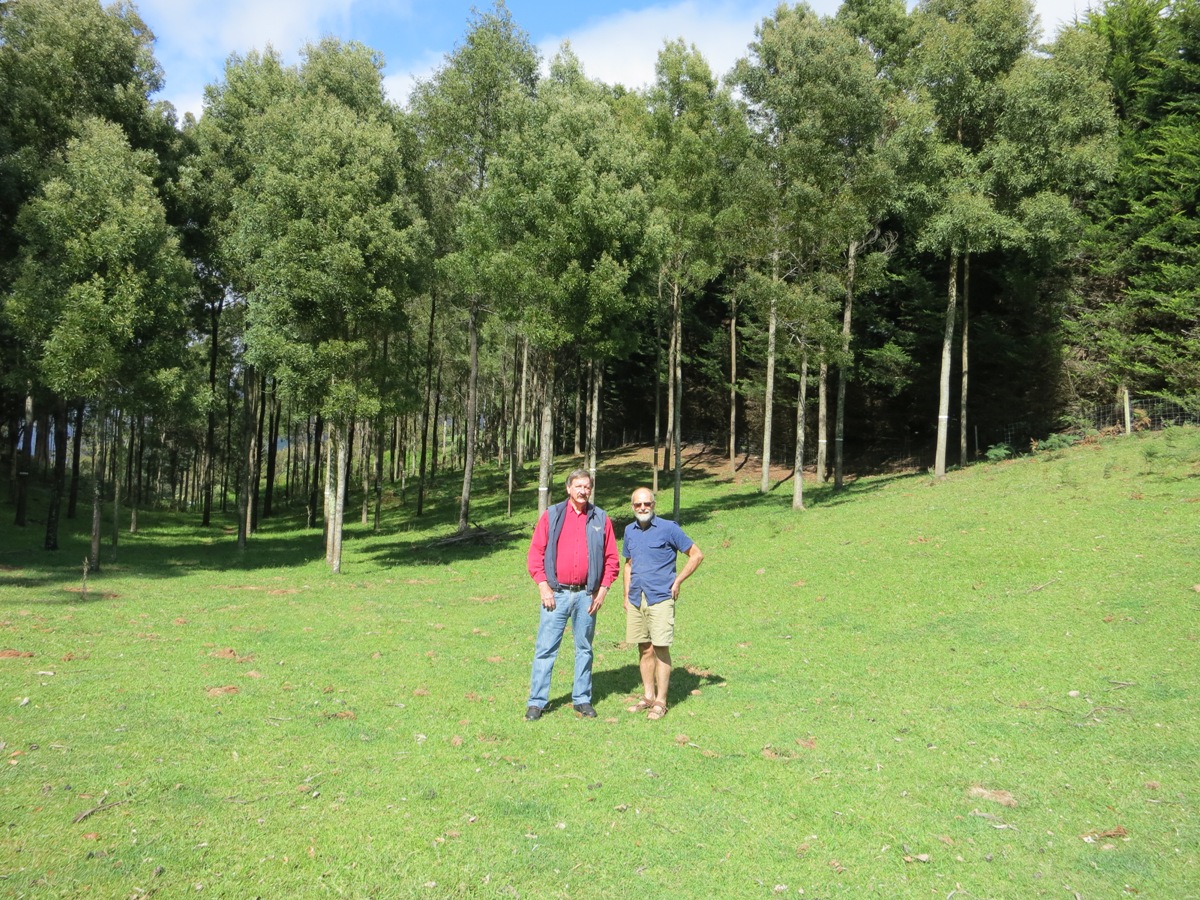
Two blackwood growers discussing the finer points of blackwood silviculture and markets.

Look at those magnificent blackwoods behind. Thanks guys!!

6LM

And 6 long metres of well managed premium Tasmanian blackwood sawlog.

The work is done and now it’s time to sit back and watch the quality and the money grow.

Blackwood in Western Australia!

It was one of those surprise phone calls.

Hi! I’m calling from Margaret River in Western Australia. I’ve got a blackwood plantation.

Now I’ve been to WA a few times and through Margaret River (MR) a few times. I thought I knew the country pretty well and I never dreamed of blackwood growing there. Other parts of the South West perhaps but not around MR. It’s mostly dry scrubby Jarrah/Marri country with a bit of taller Karri scattered about.

But as the phone conversation developed it became clear that something unique was happening. I certainly couldn’t believe what I was hearing.

Can you send me some photos? I asked.

A few days later the photos arrived in the email.

Astonishing!

Blackwood (Acacia melanoxylon) is not native to Western Australia.

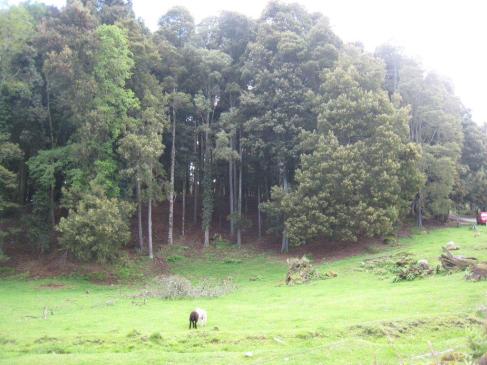
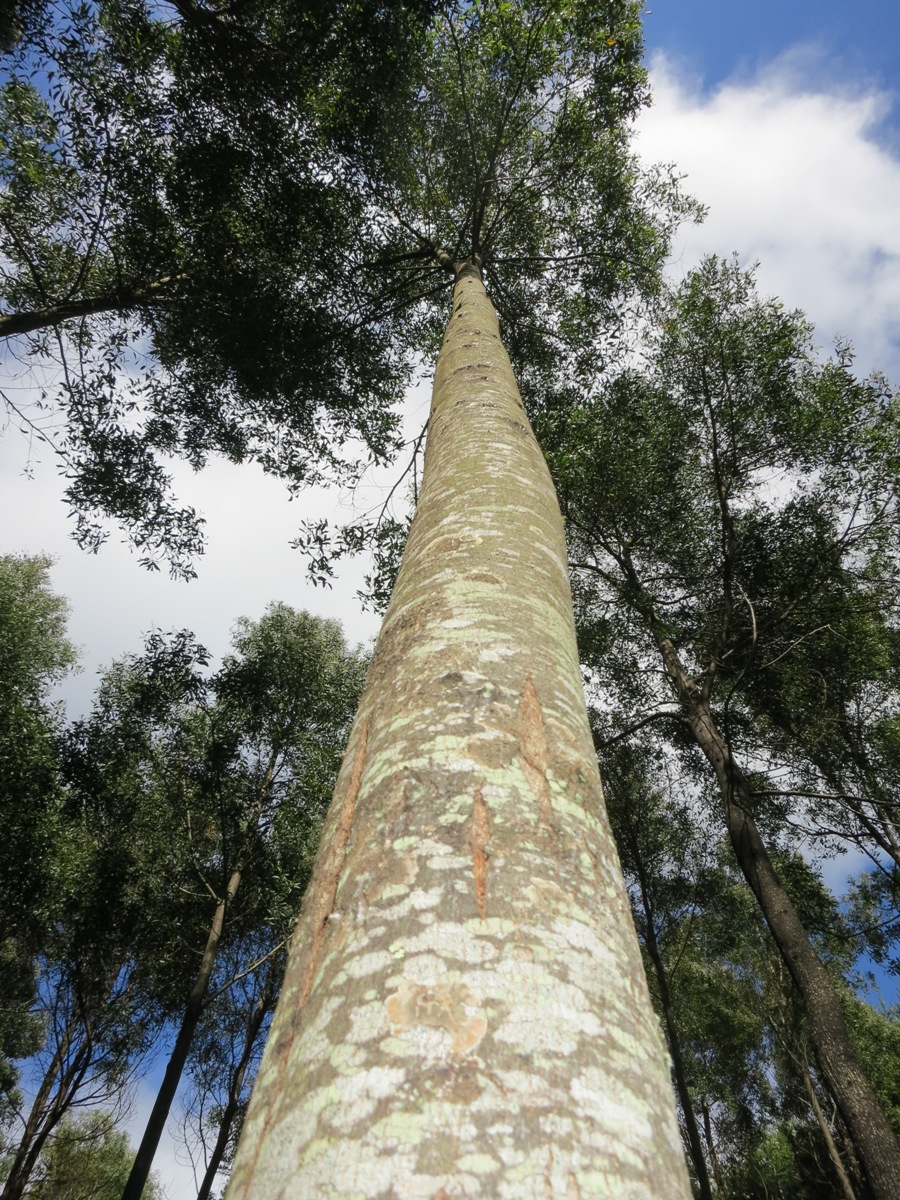
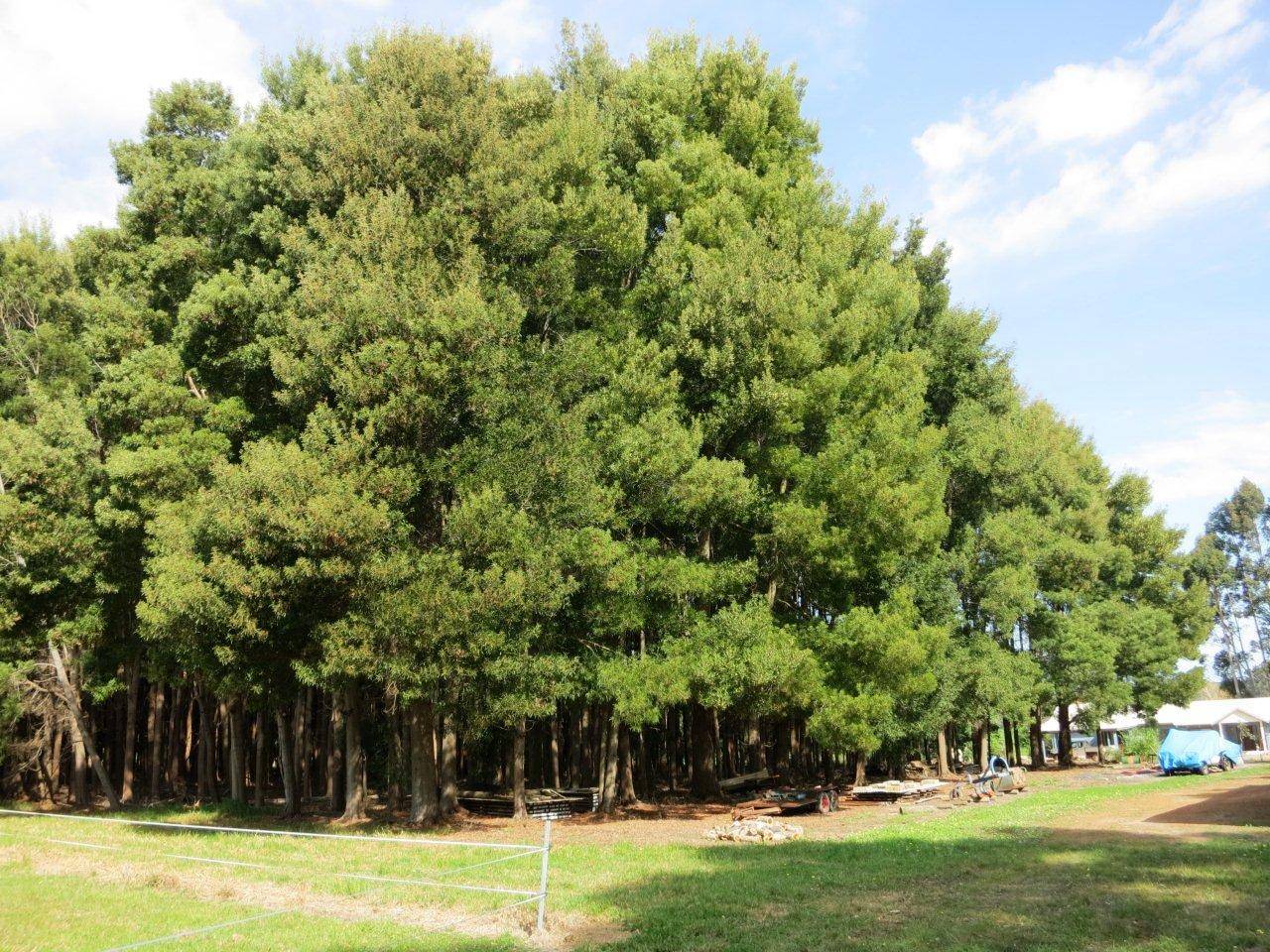
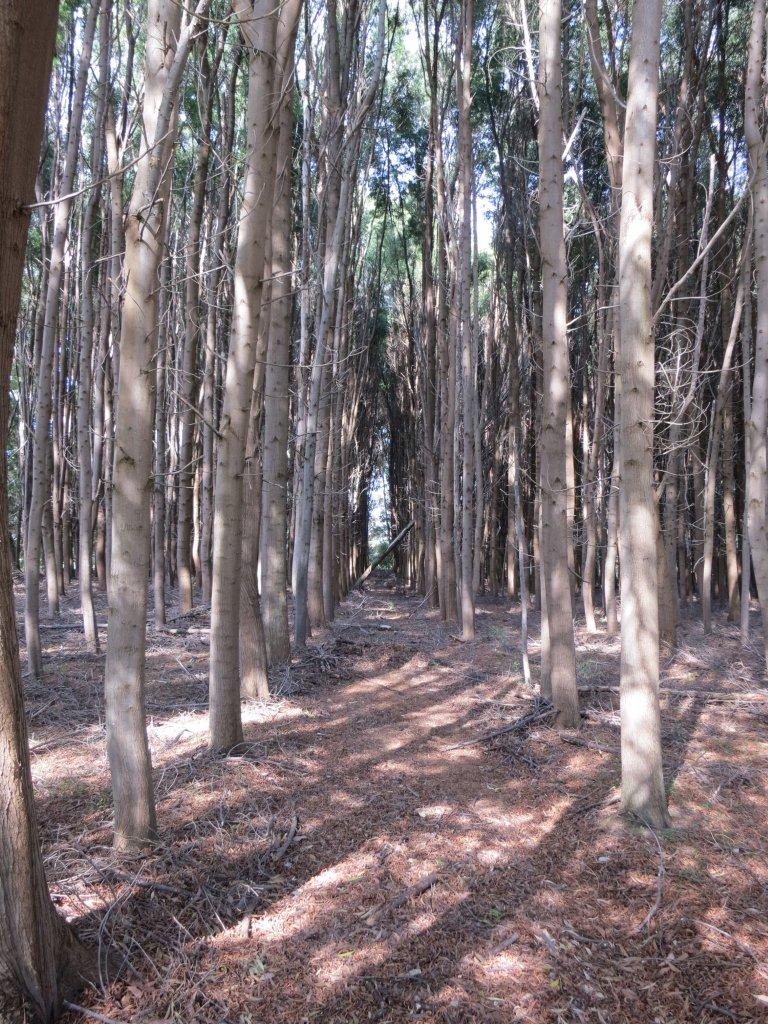
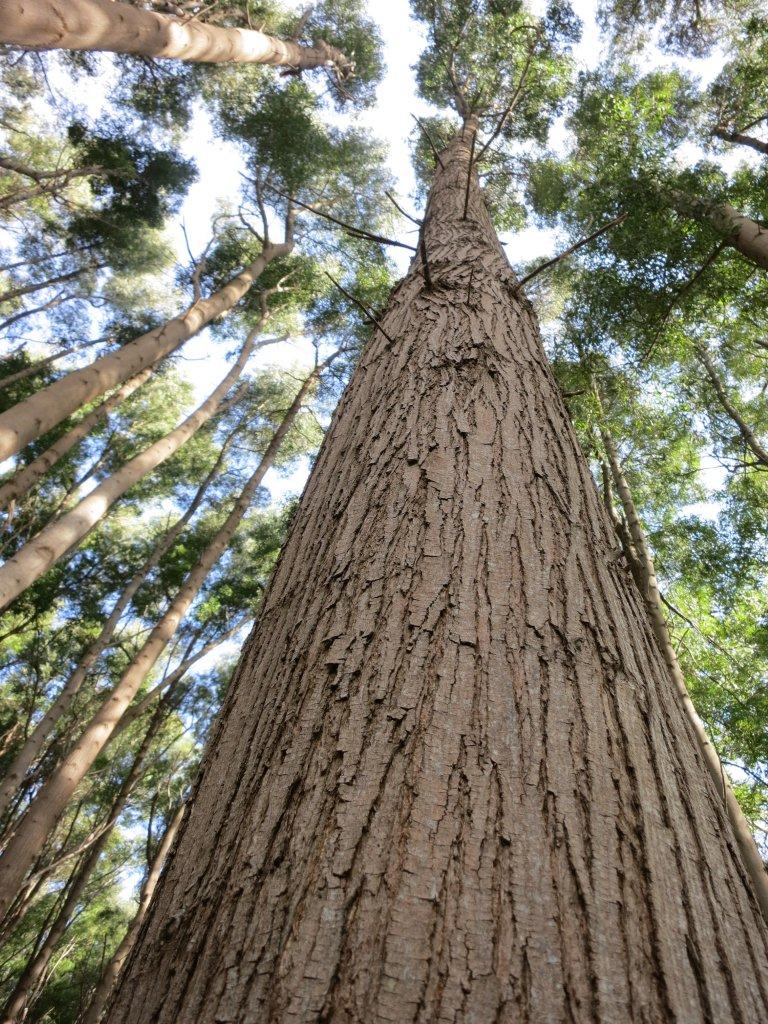
Here is a 0.7 ha blackwood plantation containing 900 trees, unthinned and pruned to just 1.8 metres. But the great form and the growth rate of these blackwoods shows there is potential for growing commercial blackwood at MR. The plantation is about 20 years old. The largest tree is 60cm diameter with 26% of the trees greater than 30 cm. The arithmetic mean diameter is 25.6, whilst the quadratic mean diameter is 26.6cm.

What’s more, the current basal area is 45 square metres (67 square metres per ha equivalent)!! This is a very productive site for blackwood.

If this plantation had been thinned and pruned on time it would now contain 140 trees well on the way to commercial maturity. That’s equates to about 210 cubic metres of premium blackwood sawlog at harvest.

So what can be done with this plantation in its current state?

I don’t regard this plantation as a failure. Quite the opposite. This is a brilliant first step on the way to success.

Having clearly demonstrated the potential of the site for growing commercial blackwood, a way needs to be found to salvage what value we can from the current crop of trees and gradually convert the plantation into a well managed profitable commercial blackwood plantation. There is even the opportunity for expansion.

Those dead branches in the photo potentially represent compromised wood quality. Some of these trees will need to be cut open so we can see what’s inside.

Luckily MR has a thriving wood craft industry so some of this wood will hopefully make its way to the craft market. MR also has a healthy firewood market so the thinnings from the plantation can be readily sold.

Stay tuned as we follow the progress of this extraordinary blackwood plantation in Western Australia.

WA1

WA2

WA3

For a 20 year-old unmanaged blackwood plantation that is an amazing sight!

PS. I need to emphasize that the extraordinary form of these blackwoods is not due to the close spacing of the trees in this plantation. That is a common belief that is not supported by science. Whatever the cause of this example of consistent good form (genetics, environment or GxE) it is very unusual. The usual recommendation to achieve good form in commercial blackwood is i) good site selection, and ii) pruning!! Tree spacing has only a small impact on blackwood stem form.

Growing Tasmanian blackwood in Chile

Here’s an interesting article in the latest AMIGO Newsletter from New Zealand by New Zealand blackwood grower Ian Brown based on a trip to Chile in 2012.

In 2012 Chile had 2,000 ha of private blackwood plantation, much of it a work in progress, with the objective to reach 4,000 ha in the near future. 4,000 ha of well managed fully productive blackwood plantation could be producing around 40,000 cubic metres of sawlog per year.

That is a lot of blackwood!

But they aren’t there yet!

The Chileans have their own unique view on growing Tasmanian blackwood, with the current emphasis on maximising volume rather than value. Hence the very high stocking, small tree sizes and the long rotations.

But at least they are doing active research with the objective of encouraging private investment in blackwood planting. How different to the Tasmanian approach where politics, waste, community service and a squandered public blackwood resource are the objectives.

A lot of Ian Brown’s comments on the Chilean approach to blackwood reflect the more successful New Zealand experience, where the focus is on maximising value not volume.

Hopefully the Chileans will eventually get the blackwood management sorted out.

We will then be importing Tasmanian blackwood from Chile when the local industry collapses.

Acacias in Chile – Report from a visit made in 2012

Ian Brown

September 2015 AMIGO Newsletter

In 2012 a small group of us spent a week in Chile at the invitation of INFOR (Institutio Forestal), the Chilean forest research institute. We were hosted by Juan-Carlos Pinilla, whose responsibilities include research into acacia species. Juan-Carlos is a delightful guy, well informed, and great company. He was a good friend of Ian Nicholas, who led our group, and fulfilled a long term wish to look at acacias in Chile. Tragically this was Ian’s last trip, and on the day of his return he experienced the first symptoms of the illness that took his life three months later.

Acacias were introduced into the Lake District in Southern Chile in the 1950s. The Lake District is a very scenic landscape in the central valley, between the coastal ranges and the Andes. It is good forestry country: the soils are deep, fertile, and free-draining, with average temperature 12.5 degrees, annual rainfall over 2000mm, and little wind.

Exotic forestry in Chile has been based on radiata pine and eucalypt species, following NZ and Australian models. Acacias were introduced to provide some diversity in forest products, A. melanoxylon for decorative timber, A.dealbata for pulp, and A. mearnsii for tannin.

Acacia melanoxylon

About 2000 Ha of blackwood have been planted in Chile, and this is expected to increase to 4000 Ha. Sample plots have been established on at least 14 locations. In addition there are sites with natural regeneration, mixed plantings, and shelterbelts.

The current silvicultural regime recommended by INFOR involves close planting at up to 2600 per Ha. The trees are gradually thinned by extraction of 250 trees ( hopefully for pulp) every 7 years, down to a final crop of 350 per Ha. at age 40. Harvest is anticipated at 41 years, with a predicted mean DBH of about 40 cm. Two clearwood prunings will be carried out at age 11 and 16.

Futrono: Blackwood plantation

Our first exposure to plantation blackwood was at Futrono, on a privately owned woodlot of 6 Ha., one of the 3 best performing sites for blackwood measured among the trial plots in Chile. We expected to see some very good trees, and the best of these were spectacular. There were about 6 to 8 exceptional trees, at age 42, 30 metres tall, and pruned to half their height, DBH in the mid-50s, and perfect form. If Chile can produce trees like this, we have a serious competitor.

The trees had been planted at high density, about 2600 per Ha. , lightly thinned, and had no form pruning. If the best trees were so good, what of the rest of them? Well, these were much less impressive. At age 40 they were highly stocked at 900 per Ha., with a mean height of 27.5 m., and DBH of just 31.3 cm., and the form was variable. There is a lot of wood in the stand , but I would expect the output of quality sawlogs would be disappointing.

I have a problem with the regime, and will comment on this:

  • the aim in close planting is to give a high selection ratio, and to encourage straight growth through competition for light. However it is an expensive option when the stocking is to be reduced in the course of the rotation to a much lower level. Most would regard as the optimal final stocking to be about 200 trees per Ha. The stocking in this stand is far too high, and as a consequence diameter growth will be very slow.
  • experience with pure and mixed stands has shown that form pruning is required to limit stem malformation to a minor proportion of trees.
  • when thinning is delayed, the live crowns compete for light and retreat, and this has an adverse effect on diameter growth. To prevent this, thinning should be completed early in the rotation ( in my view, within the first 10 years)
  • it is expected that the thinned trees will be extracted for pulp. I think the economics of this are very questionable.
  • a large volume of data has been collected from the trial plots, and I would question the need for much of this. The sites have been intensively monitored, with measurements of diameter, tree height, and total wood volume. These are appropriate data when assessing most of our exotic plantation species, and even A.dealbata when grown for pulp. However they are unnecessary and even misleading when assessing blackwood, where the value of the tree is likely to be confined to the pruned stem. All we need to know is its height( usually 4 to 6 metres), straightness, and diameter. Above this the crown has no commercial value, and is likely to end up as firewood.
  • However the crown has real physiological value, in that it determines the volume of wood in the butt log. In blackwood, a tall tree is not a cause for celebration but a sign of trouble. It is an indication of late thinning in the stand, and is linked to slow diameter growth and a very long rotation. In Chile it has been noted, as we have found here, that there is an inverse relationship between the height and diameter of the trees in a blackwood plantation. To prevent this, INFOR have suggested that clearwood pruning should be delayed in support of diameter growth. It seems to me that all this would achieve would be to increase the defect core, and would have no effect on diameter. I think the correct interpretation of the relationship between height and diameter is that it is a consequence of delayed thinning, This causes the crown to retreat, and when this has occurred, it is irreversible.

Other plots

Data were provided for other sites, and ignoring the height and stand volume, three of the better ones are as follows:

Chiloe – at 20 years , mean DBH24 cm.

Arauco – at 28 years, mean DBH 22.5 cm.

Central valley – at 30 years, mean DBH 31 cm.

These figures are not as good as they could be, and I am sure there is a simple explanation. All of these stands are what we would consider to be grossly overstocked. This seems to be due to a misplaced emphasis on total wood volume, at the cost of what really matters, the size and quality of the butt log. However the trip to Futrono showed the real potential for blackwood in Chile.

Lanco: Provenance trial

A trial incorporating 14 provenances was established in 1999 at Lanco, on a property owned by an expatriate Austrian count. It contained 30 random blocks, at 84 plants per block, at 3 by 2 metre spacing. The provenances were from Tasmania, Victoria, South Australia, and Queensland.

When measured in 2008, the Queensland provenances had very high mortality, and the South Australian trees had poor growth. The best performers were from Tasmania (King Island, Queenstown, the North-East), and the Otways in Victoria. Interestingly, the provenance from NW Tasmania, where most of our blackwoods were sourced, came further down in the order.

The location appears similar to the sites in northern New Zealand in which blackwoods grow well, so the trial probably has some relevance for us, bearing in mind some limitations: the limited number of provenances, and the lack of data on form, and on wood quality. It matches the data from a 65 provenance trial on my property at Pirongia in the Waikato, which suggests that the provenances best suited to our conditions are in Northern Tasmania, although not necessarily in the North-West.

Quepe: Seed collection

This is a 2.5 Ha. site, in which blackwoods had been interplanted with eucalypts 24 years ago. The eucalypts were felled on one Ha. at 16 years, and the blackwoods that remained were graded for form and vigour, and thinned to 110 per Ha. The best of them were then selected for seed collection as part of a breeding program.

What is now apparent is that many of the trees that were performing less well at age 16 have now caught up with the plus trees. This has been attributed to the need to trim branches in the plus trees for seed collection, but I have some reservations about this. To have this effect, the pruning would have to be very severe. A study in Tasmania has shown that up to 30% of the foliage can be removed from blackwood at one hit without any impact on diameter or height. At 50% there is some effect on diameter. It may be that the “plus trees “had been favoured by a microsite advantage in the original mixture, and now they are on a more level playing field after removing the eucalypts, this effect has been cancelled out.

Another reservation is that the form of the trees, which is generally very good, has been strongly influenced by the adjacent eucalypts, and has had little genetic influence. An assumption that underlies breeding programs that have been carried out in the past for blackwood is that the basic attributes of vigour and form are likely to be inherited. That is certainly true for radiata pine, redwoods, and cypress. However in blackwood , environmental influences, on form in particular, are strongly expressed. Wood colour may be a different matter.

Conclusion

Before our visit to Chile we had heard stories suggesting that we would see some exceptional blackwoods. After more than a week visiting plantations and viewing trees from the roadside we were left in no doubt that the Lake District in Southern Chile is highly suited for blackwood forestry. It has ideal climate and soils.

Because of its geographical separation from Australia, Chile is also free from acacia psyllids. These pests have been shown to reduce the height growth in young blackwoods by up to 40%. They also contribute to malformation. (they are not primarily responsible for multi-leadering in blackwood : this is a consequence of growth periodicity, in which the shoots terminate their growth periods by aborting and then replacing the growth tips. The absence of psyllids will make life easier for the grower, but will not eliminate the need for form pruning).

I am sure the full potential for blackwood could be realised with some adjustments in silvicultural practice. This has been influenced by practices derived from other plantation species, and by a wish to utilise the whole tree. Blackwoods are different. To grow them well we need to abandon the techniques and assumptions that underlie the silviculture of other commercial species. The commercial value of blackwood is likely to be confined to the butt log, and the silvicultural focus should be to grow this as straight and as wide as possible . This requires form pruning, and early and aggressive thinning in the stand. We know from studies in both New Zealand and Tasmania that fast growth in blackwood has no adverse effect on wood quality.

It will be interesting to follow the tree breeding program in Chile. I think this will be challenging because of the strong impact of the environment on several attributes of blackwood, in particular form, and to a lesser degree vigour. However I am prepared to be proved wrong.

Reproduced with kind permission of the author.

The Futrono plantation. Photo 1 the best tree benefiting from attention and some space, Photo 2 effects of delayed pruning, and Photo 3 general view of Futrono plantation.
IMG_4725

IMG_4730 IMG_4720

Record price for blackwood sawlog at tender!!!

The results of the August 2015 tender at Island Specialty Timbers have just been posted.

http://www.islandspecialtytimbers.com.au

Two small blackwood logs were included amongst the 27 lots tendered.

One of the logs (Lot 23) was a plain-grain Utility Grade (NOT Cat 4) blackwood log. The description read:

A good straight log, several bumps, attractive dark stripes in growth rings at butt end. Length 2.7 metres, large end diameter 64 cm, small end diameter 50 cm, volume 0.68 cubic metres.

IST 0815 log23double

This small log sold for the incredible price of $850 per cubic metre!

This is by far the greatest price ever paid for a plain grain blackwood log.

Remember that a commercial blackwood plantation aims to grow sawlogs that are 6.0 metres in length and an average volume of 1.5 cubic metres. The above tendered log would represent the lower half of such a plantation-grown blackwood log.

In other words at this price a single plantation blackwood log could be worth $1,275!

At 300 cubic metres sawlog per hectare that equates to $250,000 per hectare at harvest for a blackwood plantation.

Remember these prices are equivalent to mill-door delivered prices, so harvesting and transport costs need to be deducted to approximate stumpage paid to the grower.

And this is only one small, low quality log sold at tender in Smithton, north west Tasmania.

The other Cat 4 blackwood log sold for $550 per cubic metre.

This is an extraordinary price for a small plain-grain blackwood sawlog and again demonstrates the commercial potential of farm-grown commercial blackwood.

Is anyone interested?