
http://www.musicradar.com/news/how-cites-is-changing-the-future-of-rosewood-in-guitars
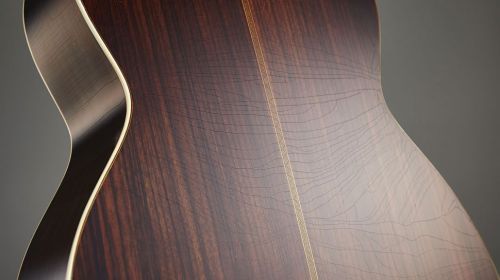
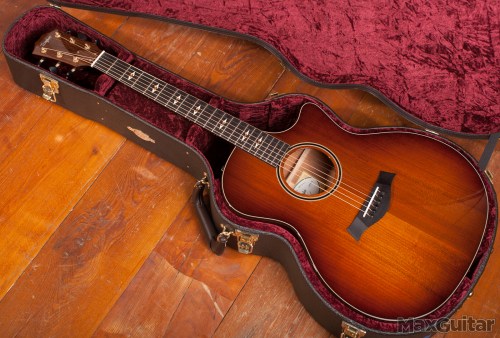
It’s interesting trying to keep up with how guitar companies and the tonewood market are dealing with the new CITES restrictions on rosewood.
It’s pretty clear that most guitar companies have been caught sleeping on the job when it comes to tonewood supply.
Here’s a recent article that puts a spotlight on the difficult times ahead for the industry.
It’s a long read but worth the effort. Here are some of the more relevant sections from a tonewood growers viewpoint:
The specific timing and impact of the latest restrictions on commercial rosewood usage is indeed a headache for the guitar industry, but it comes amid a much longer contextual setting of ecological concern and environmental politics. Which is to say that you don’t have to be Nostradamus to work out what’s coming next. We’re discussing rosewood here, but ebony and mahogany are glowing bright on the radar for more stringent protection.
Despite the best efforts of Martin, Taylor and Gibson in pushing the likes of Richlite and HPL for more than two decades now, many guitar enthusiasts – particularly fans of premium instruments – remain uninterested in anything but traditional timbers.
Sustainable wood species such as maple, sycamore, cherry and so on may provide some form of halfway house, but it still leaves the big guitar brands labouring with a stark contradiction. By their own admission, they’ve been telling us for decades that the ‘best’ guitars use the ‘best’ rosewood, mahogany and ebony. Their survival as businesses, however, requires much more widespread use of more sustainable materials.
“By their own admission…” indeed. And it still continues. Efforts by most guitar companies to “shift the market” have been pretty mild to say the least.
And we hear that most mahoganies and ebony are next on the list.
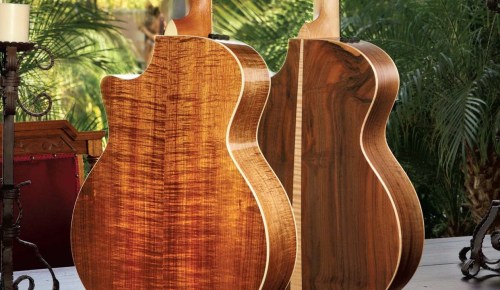
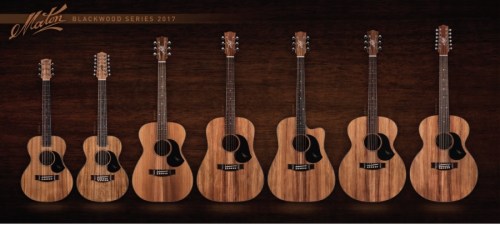
New Zealand blackwood growers are looking at a significant opportunity here.
With their plantation resource now maturing just as the global tonewood supply is coming under pressure, it’s the perfect time to be a blackwood grower.
New Zealand blackwood growers need to start making connections into the tonewood market, promoting New Zealand plantation-grown blackwood as a profitable, sustainable quality tonewood.
The opportunity is right now!
As for Tasmania, well we seem to have missed the boat.
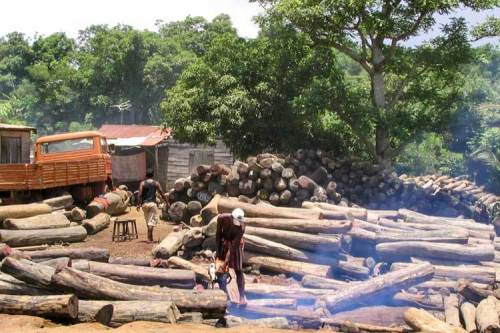
No guitar company is coming to Tasmania to buy blackwood or other tonewoods plundered from our conservation reserves at taxpayers expense.
https://blackwoodgrowers.com.au/2017/10/23/tasmanian-rainforest-plunder/
The next 5-10 years will see the global tonewood market completely transformed. Who will be the beneficiaries of this change?
One of the major challenges is that the tonewood market does not know how to engage with the farming community to support and encourage them to grow tonewoods. Getting farmers to make a 30+ year investment planting trees takes a lot of support and encouragement.
Enjoy!




The Radical Sawmill
Sawlogs take a long time to grow! Decades long!!
So if you are a sawmiller looking to secure your resource/business beyond next week or next year, you need to be aggressive in the market place.
Selling sawn timber is fine but if there are no sawlogs coming in, then its game over.
Under the unique resource conditions of the forest industry it could be argued that for a sawmiller, buying sawlogs is actually more important than selling timber!
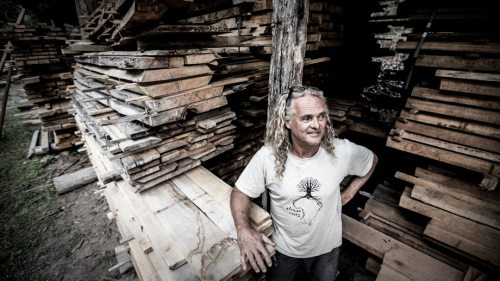
So here is one sawmiller from Ashville, North Carolina, USA who is very aggressive and up front about securing their future.
http://sunrisesawmill.com/
This sawmill provides a current table of prices they are prepared to pay forest growers for logs delivered to their mill, by species and log grade.
I have never seen a sawmiller in Australia who actively seeks to buy sawlogs in the open market like this.
This is one Radical Sawmiller!
http://sunrisesawmill.com/log-prices/
Converting these prices into something that Australian/New Zealand readers can understand is problematic because:
The use of a log scaling factor makes the job of the forest grower even more difficult than it already is!
The job of the forest grower should be to grow quality and size/volume. It should be the responsibility of the log buyer to then recover the best value from the logs via markets and/or technology.
The Doyle Log scaling factor uses the log small end diameter (under bark) and log length. There is no allowance for log taper.
So I took the Doyle Table provided by Sunrise Sawmills and did a bit of maths to produce the following chart. As a straight forward conversion there are 424 board feet (BF) in a cubic metre (CUM). With the Doyle Log Scaling factor the number of board feet per cubic metre in a log increases as the diameter increases as the chart shows. This is to account for the fact that sawn recovery increases as log diameter increases. So in the USA log buyers only buy based on a notional “recovery”. The grower pays for wastage. In Australia and New Zealand logs are traded based on total log volume, with the buyers then responsible for maximising the value from the log.
I also did some calculations to see what effect a 2% log taper would have. Obvious it means that the grower is paying for even more waste (less recovery).
On the positive side you could say that using the Doyle Scaling factor encourages/rewards growers for growing bigger trees, with larger logs getting three times the price of smaller logs.
But my feeling is that using this method for trading logs just confuses the issues.
With this chart in mind it is interesting to note the price difference at Sunrise between the veneer vs the prime sawlog. With veneer logs it is possible to get over 95% recovery. So in terms of volume recovered, the veneer and prime sawlogs are essentially the same price! But appearance grade veneer sells for much more by volume than sawn timber. These prices don’t quite add up.
These guys even have their own Facebook page:
https://www.facebook.com/Sunrise-Sawmill-193257651998/
It is good to see a sawmiller who understands the importance of aggressive transparent marketing in buying sawlogs and securing their future.
The question remains outstanding; does this aggressive marketing and log prices translate into a prosperous community of forest growers in North Carolina?
For Australian readers it needs to be understood that the eastern USA forest industry is entirely dominated by private forest owners. There is no logging of public native forest in the eastern USA. No subsidised sawlogs. If you are a sawmiller in the eastern USA you need to be low cost, efficient and aggressive in the marketplace. It’s all business; no politics! Just like in New Zealand there is no such thing as “resource security” in the forest industry in the USA. Such a concept doesn’t exist!
Oh how I wish this would happen in Australia.
The only basis for a successful forest industry is profitable tree growing (and radical sawmillers).
PS. A target blackwood plantation sawlog (60cm dbh pruned 6m) has approx 360 board feet by the Doyle Scaling factor. At $US1,000 per 1000 MF (Sunrise price for Black Walnut) that equates to $US360 per log. At the current exchange rate of $AU0.80 to $US1.00 that equates to $AU450 per log mill door. In my books that is a pretty acceptable price…….for a premium sawlog. For a premium veneer log I’d be expecting much, much more.
8 Comments
Posted in Commentary, Markets
Tagged Sunrise Sawmill