Category Archives: Markets

Blackwood supply set to plummet, prices to skyrocket

With the pending implementation of the Tasmanian Forests Agreement and the unsustainable management of the public blackwood resource over the past 17 years, the supply of blackwood sawlog from State forest is set to plummet. Read the Certification and Supply page (above) for further background on how we came to this unfortunate situation. Following the planned resource review sustainable annual sawlog supply could go as low as 4,000 cubic metres, down from the current approximate annual harvest of 10,000 cubic metres.

This will have a dramatic and positive impact on sawlog prices and provide a significant commercial opportunity for existing and potential private blackwood growers.

The key question in all of this is:

Will the forest industry open itself up to allow greater competition and market transparency so that these changes in supply can be allowed to transparently affect sawlog prices and hence stimulate supply from private growers?

No doubt some market substitution will occur in response to this change in blackwood supply (Economics 101). We will start importing blackwood timber from New Zealand farmers, while some buyers will seek alternative species from mainland and overseas suppliers. Yes even the New Zealand farmers will benefit from the Tasmanian Forests Agreement.

There is insufficient information publically available to get a clear picture, but what parts of the jigsaw puzzle are available suggest that the blackwood market is set for a major disruption. Will market forces be allowed to respond accordingly?

So what do you think?

  1. What changes in forest market behaviour would you want to see happen before you considered the blackwood market “open for business”? Regular market reports in Tasmanian Country? Sawmillers regularly advertising for growers/suppliers? Regular auctions by Forestry Tasmania of blackwood sawlog parcels to gauge current markets and provide greater price transparency?
  2. If you are a farmer/landowner, at what sawlog price would you start considering investing in blackwood plantations? $200, $400, $600, or $1000 per cubic metre? At what sawlog price would you consider better managing your existing farm blackwood to improve its commercial value?
  3. If you are a blackwood buyer/processor what changes would you like to see happen to see the blackwood industry put on a more commercial, sustainable future?
  4. Do you think a Blackwood Growers Cooperative would provide the blackwood industry with the basis for a secure, commercial, sustainable future? What support should the coop receive to help become established?

Give us your thoughts and comments.

Here come the Americans!

(and a challenge for my readers)

As I’ve written previously (1,2,3,4) blackwood is a recognised quality tonewood and international customers are scrambling to find sustainable sources as the traditional supplies (mostly from tropical rainforests) become exhausted. One of the key players in this movement is Taylor Guitars from California. They publish an impressive quarterly owners newsletter “Wood & Steel”.

So here’s the challenge – download a copy of the 2013 Winter edition of “Wood & Steel” below (7.5 MB pdf file) and see if you can discover how many times the word “Tasmania” appears, and I mean do more than just a quick word search. Read the articles. Especially read the article by Taylor’s President Bob Taylor on page 5. Bob Taylor is one switched-on, passionate executive.

http://www.taylorguitars.com/sites/default/files/Wood-Steel-Winter-2013-English.pdf

There is enough potential demand in the international tonewood market to make a significant difference to the blackwood industry in Tasmania. And the advantage is this market can utilise shorter log lengths that traditional sawmillers don’t want; the kind of material that is currently growing unmanaged and unappreciated on hundreds of farms around Tasmania. This demand, coupled with this existing resource could kick-start a blackwood growers cooperative. Four steps to a profitable, sustainable blackwood future:

1. Realise the commercial potential of the existing farm blackwood resource and put money into farmers pockets now;

2. Build the industry by helping farmers grow more quality blackwood in plantations for the future;

3. Gain FSC Certification for farm-grown Tasmanian blackwood;

4. Build another iconic Tasmanian industry.

With the TFA legislation now passed in the Tasmanian Parliament and the associated $400 million of Federal money soon to become available, now is the time for the industry and the community to demonstrate support for the future of the blackwood industry. Please post you comments of support.

Tasmanian timber businesses chart new future (ABC Rural Report)

Check out this recent story on the ABC Radio Rural Report, especially the second part about Tasmanian Tonewoods Bob MacMillan. Read the story and listen to the podcast interview with ABC reporter Rosemary Grant.

http://www.abc.net.au/rural/content/2013/s3739938.htm

Taking Tasmanian timbers to the end of the iconic, value adding chain. Most of the tonewood Bob ships is blackwood. What a great story!

But I do take exception to the final comment by Tasmanian shipping agent Brett Charlton about the product just “sitting in our forests”. Products that just “sit in the forests” are not sustainable and have no future. This just reflects such old 19th century thinking and attitudes.

Our commercially valuable blackwood should no longer be “just sitting in the forest”. We should be promoting it and encouraging farmers to better manage their existing blackwood, and learning how to grow more.

Gilbert and MacMillan

Bob MacMillan and US guitarist Paul Gilbert.

Fender Guitars now using Tasmanian blackwood

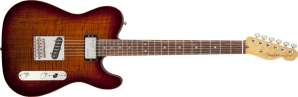
The international profile of Tasmanian blackwood as a premium tonewood just keeps on growing. American guitar makers Fender are now producing a limited release Blackwood Telecaster guitar as part of their Fender Select range.

The Fender Telecaster was originally developed by electric guitar pioneer Leo Fender in 1950, and was the design that finally put the solid-body guitar on the map.

http://www.fender.com/en-AU/series/fender-select/fender-select-carved-blackwood-top-telecaster-sh

Tasmania’s musical ambassador to the world. A thing of real beauty! An icon.

Now all we need is for a major artist to adopt this Tele as their axe of choice. Any suggestions?

Blackwood Fender

Of course this story brilliantly highlights one of the major challenges that prevents a blackwood growers coop from becoming established. Here we have blackwood being harvested in Tasmania and going to the end of the line, the top of the tree in terms of iconic value-adding, and not a single Tasmanian farmer has been stimulated or motivated to grow more blackwood as a result.

Does anyone else besides me find this situation bizarre?

If we sell cherries to China, apples to Japan or truffles to France it is front page news. But put blackwood on the world stage – literally – and barely a whisper.

Blackwood is Australia’s premier forest product and has been making its way to the very top-end of the value-adding chain for over 100 years. If things had worked out better, farmers would have worked out how to grow blackwood for wood production long ago, and every farm in Tasmania that could, would now have a grove of blackwood managed for quality blackwood timber.

Instead the Government took control and we now have the forest industry on its death bed. It’s time to put the blackwood industry in the hands of the farming community.

Until players in the forest industry (and that includes manufacturers like Fender) come to understand that greater market transparency is essential for its future, then the industry will continue its current freefall. We need to develop regular strong public feedback from all industry players, particularly directed towards current and potential growers.

Major customer interest in the Blackwood Growers Cooperative!

American-flag-2a

I have established direct communication with one of the major US guitar makers who have recently visited Tasmania and initiated a commercial relationship with a supplier. The company wishes to remain anonymous for the time being. However they have been at the forefront of the sustainable tonewoods movement over the past 10+ years, having established commercial relationships with sustainable tonewood ventures in a number of countries. Here are some extracts from their emails:

“You seem to have a very well laid out [blackwood grower cooperative] plan, one we may discuss publicly supporting in the future. At this point we aren’t ready to do that, since we have yet to really do business on a long term (or short term) basis in Tasmania.”

“I will probably be taking a trip to Tasmania in the next 5 months and would like to meet with you at that time, we can see how we stand and how to move forward.”

While the local forest industry remains deeply divided and political, we have an important commercial opportunity in the making.

If we can get 2, 3 or even 4 major international guitar manufacturers buying farm-grown Tasmanian blackwood it might generate enough business to at least partly fund a cooperative, and certainly create plenty of market profile and momentum.

For the coop to be fully self-funding however there needs to be enough blackwood volume/value leaving farm gates to generate sufficient harvest levy. We don’t have any information about the existing private blackwood resource in terms of commercial volume/value/sustainable yield, but I doubt the resource is enough to fully fund a coop. Can the commercial potential of this existing resource be improved and realised? Absolutely! Can this resource be better managed to improve its future value? Absolutely! But we also need to plant more blackwood to create a new resource that will provide more volume/value out the farm gates of the future. Plantation blackwood will provide the necessary volume and value to help fully fund the coop. The tonewood market is the catalyst that will allow this process to begin.

The tonewood market is a premium market that can utilise short logs that are common in the existing unmanaged farm blackwood resource. Because it is a high-value market more of this low-volume, widely-dispersed resource can be profitably accessed. With enough support more information can be provided to landowners about their blackwood resource in terms of log specifications, prices, demand, etc. which should provide farmers with greater assurance that the forestry market is functioning more like a proper commercial market. Also many of these major guitar companies are looking for opportunities to promote their environmentally sustainable sources and practices once solid commercial relationships have been established. Tasmania could be next on the list as the home of premium quality sustainable tonewoods.

I’m looking forward to meeting with the guitar company representative when he is next in Tasmania and discussing how we might build the Blackwood Cooperative as a successful commercial business.

Native timbers lure big guitar makers

ABC Radio

Tasmanian Country Hour

Friday, 25 January 2013

http://www.abc.net.au/rural/tas/content/2013/01/s3676869.htm

My friend Robert MacMillan (Tasmanian Tonewoods) was recently interviewed by Rose Grant on the ABC Radio Country Hour, providing a small window into what is currently happening in Tasmania regarding the tonewood market. Read the story and listen to the podcast.

As I’ve said previously, the international tonewood market has the potential to completely change the future of blackwood in Tasmania. Major buyers are looking for new sustainable supplies, and blackwood is already regarded as a premium tonewood. There is a large existing blackwood resource on private land that can supply current tonewood demand.

It’s great and so rare to get some real market information about blackwood. If this information was more regular and transparent, we would know much more about prices and product specifications. This would then help generate interest in growing blackwood and hence help build a growers cooperative.

In this interview Robert provides some indications of current demand (20 truck loads per year), product specs (almost –dead trees?) and pricing (fiddleback more valuable than plain grain), but it is really just a teaser. I don’t think it provides enough detail to get farmers to take notice in harvesting their existing trees, let alone consider planting more blackwood. But it is a start.

It would be even better if some of these major US guitar builders would come here and do some media and promotion in support of growing blackwood. If they think that sustainable farm-grown blackwood is going to happen with no transparency and promotion then they will be sadly disappointed.

Also checkout Roberts recent interview with Barratts Music in Launceston. Great work Bob!!

Recently I was contacted by a very well known Tasmanian custom furniture builder. I’ll call him M. We had a long conversation on the phone about forestry, blackwood, and future possiblilities. M prefers to source most of his timber from private land as he doesn’t support current forest industry policy and practices on public land. M is very interested in the growers coop proposal. Particularly the prospect it offers in the future for selecting and breeding premium blackwood cultivars such as fiddleback. I certainly value having M’s support, as things have been a bit quite lately.

I hope everyone had a great summer break, and are refreshed and ready for another year. And I hope the Legislative Council Committee see the light and approve the TFA Legislation.

Cheers!

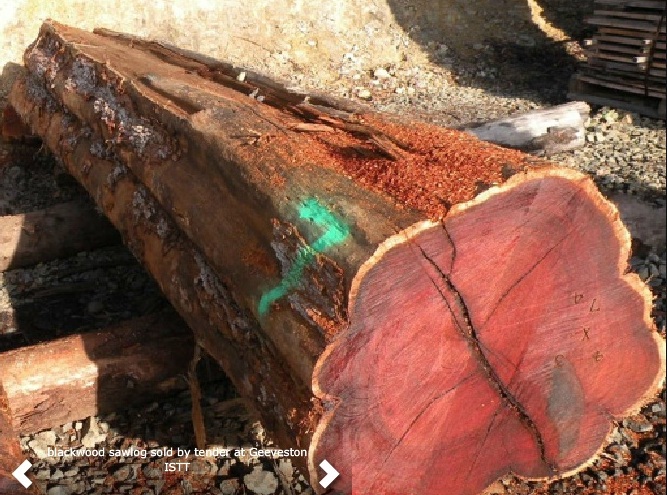
Blackwood sawlogs achieve record price at auction

Ist_log

(Blackwood Market Report #1)

If only!! Headlines like this should have been appearing regularly in our newspapers over the past 20 years or more.

Competition!

OK! Here is some homework for readers of this blog. Please write me an essay of 250 words or less (dot points are fine) on the following:

Q. Why would publicity like the headline above be important to the forest industry, and what would be the benefits to the Tasmanian community and particularly to the rural community?

The winning entry will be posted on this blog and will receive a free bottle of Tasmanian wine. YES I’M SERIOUS ABOUT THIS!


However instead of this kind of major market profile one of the great disincentives to investing in forestry in Australia is the lack of proper market processes that provide information on price, demand, quality, and markets. Without this basic fundamental information it is very difficult to justify long-term investments in planting trees for wood production. There are other benefits to both the forest industry and the community that I hope readers will help to expand on in the coming weeks (see above competition).

So when was the last time anyone saw a forest products market report in Tasmanian Country? No I didn’t think so!

The Blackwood Growers Cooperative appreciates that issues of market competition, transparency, product differentiation and segregation are critical in achieving the best financial outcomes from our forests and plantations. They are also vital in stimulating investment in forestry, especially given the long investment periods involved.

One of the key objectives of the Blackwood Growers Cooperative, as part of its strong commercial focus, will be to increase market information to allow farmers to make better informed investment decisions and improve the profitability of blackwood plantations.

As Australia’s premium appearance-grade timber species the market for blackwood logs should be as transparent and competitive as possible to help stimulate value-adding and investment. Instead the opposite situation prevails. Nevertheless there are enough snippets of information available to provide some comfort that blackwood plantations will be a profitable investment.

Island Specialty Timbers

Island Specialty Timbers (IST) (islandspecialtytimbers.com.au), run by Forestry Tasmania, is one of only two forestry organisations to provide publically available competitive log price data in Australia. IST holds regular public tenders for small parcels of specialty timber logs including blackwood, and publishes the results. These are not stumpage prices but could be regarded as indicative “mill door” prices. The Tender Prices provides information by species and broad quality classes on logs that have been sold by public tender.

Here are general historical prices posted on their web site at June 2012:

·         Blackwood log shorts, plain grain, $275 / m3

·         Blackwood logs with birds-eye figure – from $550 / m3

·         Blackwood stump sections with fiddle-back grain – $500 – $800 / m3

·         Blackwood logs with fiddle-back grain – up to $1900 / m3

And here are the results for the May 2012 auction for individual blackwood logs:

·         log 8, Blackwood log, good size and quality, $480 / m3

·         log 9, Blackwood log, average quality, $390 / m3

IST “generally only offers material for sale by tender whose quality is very good or better”. However there are no real log quality specifications (eg. Heartwood colour, density, figured grain, log diameter, length) so the relationship between price and log quality is pretty vague. It is expected that plantation-grown blackwood timber would generally be equivalent to “plain grain” quality.

So good size and quality “plain grain” blackwood logs are currently selling for ~$500 / m3 mill door.

Unfortunately IST does not present any time series price data to track changes in the market over time. Is the price for blackwood increasing or decreasing? Is it seasonal and subject to availability? These questions are important to potential growers.

How applicable are IST prices to plantation-grown blackwood?

The answer to this question is both technical and market driven:

Research has shown that blackwood timber from native forests is very variable in quality, ranging from very poor to very high quality. This is due to both environmental and genetic factors. The same is also true of plantation blackwood timber at the moment, because there is not yet a blackwood breeding program. Research has shown that blackwood can be grown in plantations without any negative impact on wood quality, so it comes down to genetics and the site.

As for markets it becomes a matter of matching expectations with reality and price. Is plantation blackwood timber fit-for-purpose? There are indications that New Zealand farmers are having no trouble selling good quality, plantation-grown blackwood timber into their domestic market. However the volumes being harvested are still too small to establish a market price.

Given the tiny volumes sold by tender by IST how indicative are they of general market prices? 

A very important question and one that seems impossible to answer. Some time series data from IST on blackwood log prices would help shed some light on the problem. If real prices have been increasing over time that would be a positive indication. Another aspect affecting blackwood price is future supply. The Forestry Tasmania 2010 Special Species Strategy estimates 10,000 m3 per year of blackwood sawlog supply from public native forest until 2019. After that year no figures are available. Most of this blackwood will come from harvesting of mature eucalypt forest. Regrowth eucalypt forest has little or no blackwood sawlog. So regardless of the outcome of the forestry IGA the production of blackwood sawlog from public native forest will decline. This will have a positive impact on prices.

New Zealand farmers are expecting to harvest approximately 300 cubic metres of premium plantation blackwood sawlog per hectare after a 35 to 40 year rotation. Using the IST indicative price of $500 / m3 for quality plain-grain blackwood that equates to $150,000 per hectare mill door value. Subtract harvesting and transport costs to get an approximate price at stump. Imagine what the value per hectare would be if we can clone and grow fiddleback blackwood (see further discussion below).

New Zealand

I expect that once significant volumes of plantation blackwood timber start to appear in New Zealand in the next few years that a transparent competitive market price will become established. This will help us to understand the blackwood market and encourage investment in blackwood plantations in Tasmania. The New Zealand Farm Forestry Association is gearing up to help farmers market the growing volumes of minor species including blackwood, that are expected to become available in the next few years.

Demand

As a consequence of promoting the Blackwood Cooperative I am starting to get regular enquiries from sawmillers, furniture makers and other customers looking for sources of blackwood timber from private landowners. These people understand that current and future supplies of blackwood timber from public native forest are limited and precarious. Some of them also want to reduce their exposure to the perpetual political risk inherent in the public native forest industry.

While this is not my current focus, I am certainly happy to help connect blackwood growers with potential customers. Plenty of Tasmania farmers already have blackwood trees and stands on their properties. Some of these will have immediate commercial value. If you are a farmer wanting to understand the commercial value of your existing blackwood and how it can be realised/improved please contact me (mob. 0428 754 233).

“Tell him he’s dreaming”

The highly variable nature of blackwood in terms of tree growth and form, and wood quality is a major challenge in the development of commercial blackwood plantations. One of the objectives of the Cooperative therefore, will be to establish a blackwood selection and breeding program. This could be done in cooperation with the New Zealand blackwood growers (AMIGO), and possibly also the Chilean blackwood community. The objectives of the breeding program will be:

1.    To improve the growth and form of plantation blackwood trees, in order to reduce rotation times and reduce silvicultural (pruning) costs;

2.    To improve the quality and consistency of plantation blackwood timber;

3.    To identify and select a range of premium blackwood genetic material for possible commercial development, including:

·         trees of outstanding growth potential;

·         trees with outstanding wood quality based on wood colour, wood density or figured grain (eg. fiddleback and birdseye);

·         trees that have wood qualities that meet particular high-value niche markets (eg. the tonewood market).

All of these objectives are aimed at improving the profitability of commercial blackwood plantations. One example is that of fiddleback blackwood. Over the years I have known people who have made attempts at cloning fiddleback blackwood. I believe this can be done, and with the very high prices paid for fiddleback logs, the commercial potential is obvious. The Blackwood Cooperative would form the natural focus for this kind of commercial research.

Another example is the tonewood market. A huge amount of research has been done and continues, into the relationship between wood quality and its impact on the sound quality of stringed instruments. The acoustic guitar market is the main market for blackwood tonewood. Guitar makers worldwide are facing declining supplies of quality tonewoods and are looking for sustainable supplies. Prices for quality tonewoods are increasing. Blackwood is one of the few established quality tonewoods that can be grown in commercial plantations. The opportunities to supply this market and to cooperate to develop selected genetic lines to meet tonewood market requirements seem obvious.

Apologies for such a long blog. I hope you found it interesting. And please enter the competition for that great prize.

Cheers!

Taylor GS mini blackwood guitar

Taylor_mini_gs_blackwood_2012
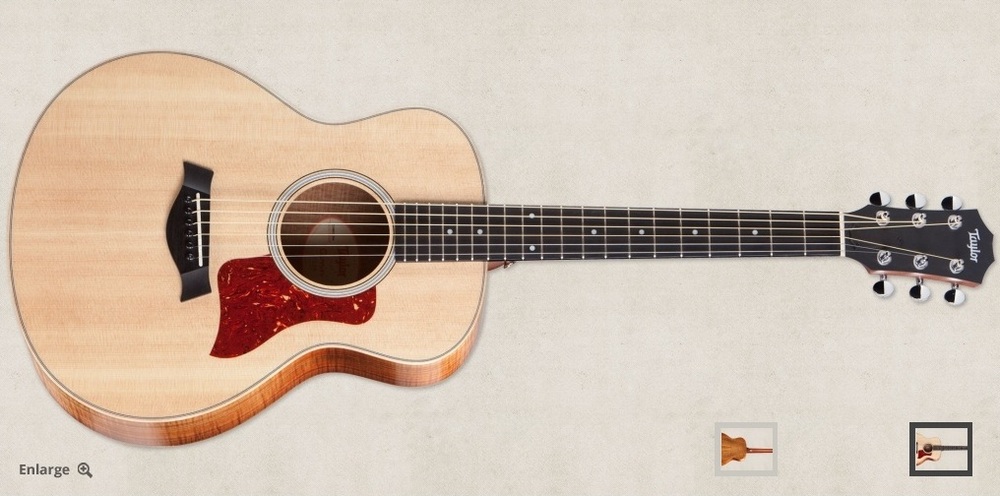
Taylor Guitars based in San Diego, California, are one of the major American makers of acoustic guitars.
Here is their latest model guitar featuring Tasmanian blackwood.
Blackwood tonewood timber retails for >$50,000 per cubic metre sawn, compared with normal furniture grade blackwood that retails for ~$4,000 per cubic metre.
At these prices the tonewood market has the potential to have a significant impact on the commercial future of blackwood.
All we need to do is realise that opportunity.
Help us to realise that future by supporting the Blackwood Growers Cooperative.

Award Winning House has Blackwood Floor

Glenroy_rmbhoy2011

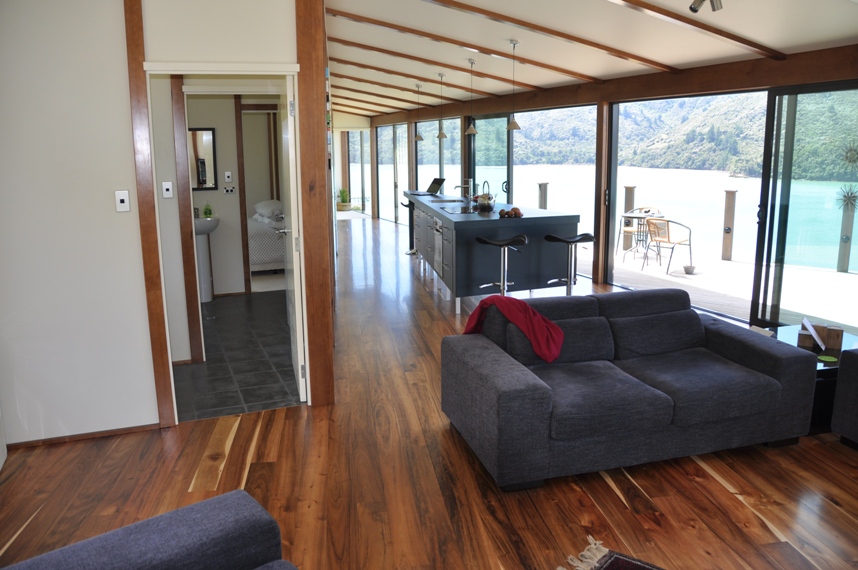
Last year the New Zealand Registered Master Builders 2011 House of the Year featured a stunning blackwood floor. But this was no blackwood imported blackwood from Tasmania, this was New Zealand plantation-grown blackwood.

http://www.houseoftheyear.co.nz/index.asp?id=83

The following is an article from the latest New Zealand Tree Grower journal (Feb 2012) written by Ian Nicholas and Paul Millen. Ian Nicholas is Chairman of AMIGO (the NZ blackwood growers group) and Paul Millen is a director of Marlborough Timbers

In November last year, a Marlborough Sounds house built by Glenroy Housing of Blenheim won the New Homes category $350,000 to $450,000 house of the year Registered Master Builders award. The house went on to claim the Supreme House of the Year award fighting off one and two million dollar houses. The house has been built for Marcus and Alex Myring who see their home as very special.

The Master Builders promotional description of the house states that locally milled blackwood has been laid in a distinctive pattern in the main living room, achieving a blend of warmth and sophistication and complementing the natural timber used extensively inside and out.

The judges in the new home category noted that the authentic blackwood timber flooring, locally milled and conditioned on site, has been laid to perfection with an innovative border trim, just one example of the complex detailing executed to perfection.

The timber for the floor was locally grown by Paul and Ash Millen of Marlborough Timbers at their forest, Tai Tane located nearby in Linkwater. They started sawing 18 to 20-year-old blackwood thinnings in 2004 when they first supplied timber for the floor of another Marlborough house.

Here is the builder’s website with lots more stunning images of the feature floor:

http://www.glenroyhousing.co.nz/awards.html

Examples like this clearly show that New Zealand farmers are well on track to producing high-quality, valuable, plantation-grown blackwood timber. Where are the Tasmanian farmers who will follow their New Zealand peers?

Cheers!

Blackwood: the sustainable tonewood

Taylor_426ce-ltds

An American made Taylor 426CE-LTD, a premium guitar using Tasmanian blackwood top, back and sides.

One of the important drivers in the future of plantation blackwood I believe will be the demand for sustainable tonewoods. Tonewoods are woods used in the manufacture of musical instruments. Blackwood is most commonly used in the manufacture of acoustic guitars. While the volumes required may be relatively small, and the log specifications may be restrictive, the high value and prestige associated with this market will help drive the development of blackwood as a premium plantation species.

Like most music instruments the history and development of the guitar has been a struggle between tradition and innovation. In the case of the violin tradition reigns supreme, with the Cremonese era (17th – 18th century) being regarded as the pinnacle of violin manufacture. With the steel-string acoustic guitar, the pre-war (WW2) American guitars are today regarded as the pinnacle, but innovation and adaptation continue to drive the development of the guitar. One factor driving innovation is the supply of quality wood. Brazilian rosewood (Dalbergia nigra) is regarded as the holy grail of guitar tonewoods, but it is now subject to a CITES restrictions that severely limits availability. Like Brazilian rosewood, many traditional tonewoods come from the logging of rainforest, with very few coming from sustainable sources. This is where blackwood has a distinct advantage.

Blackwood entered the tonewood market due to the success of its American cousin Acacia koa. Hawaiian music was extremely popular in America in the 1920’s, with many guitars being made using Koa which is only found in Hawaii. As a result Koa quickly established itself as a quality tonewood. Koa wood comes from the logging of Hawaii’s very limited native forests, and with supplies dwindling, guitar makers are looking for a substitute. In Australia, Melbourne-based guitar makers Maton have pioneered the use of Australian timbers for many years, including blackwood.  

Blackwood tonewood currently enjoys retail prices ranging from $70,000 for relatively plain sets, to $150,000+ per cubic metre for highly figured and decorative examples. I don’t have any figures that convert these prices back to stumpages (price at stump), but they must be considerably higher than standard sawlog stumpages.

With most blackwood timber currently coming from the logging of public forest in Tasmania, and with the ongoing uncertainty about the future management of these forests, the opportunity to establish a sustainable plantation resource to supply this market is great.

Major guitar manufacturers are becoming increasing involved in the supply side of their tonewoods, to ensure they come from quality, sustainable sources. Examples of this include the Musicwood Coalition (www.musicwood.org). One of my objectives with the blackwood growers cooperative would be to establish relationships with some of these major manufacturers such as Taylor, Martin and Gibson, so that their requirements for tonewood would help drive the development of the coop.

There is plenty of evidence to show that international demand for blackwood tonewood has increased dramatically over the last 10 years. We just need to get the supply side of the business working.

Cheers!


References

Ellis A, Saufley C, Gerken T (2008) The future of tonewood. Acoustic Guitar 18(8):80-86.

Evans P (2007) The use of blackwood in the Australian guitar-making industry. In: Beadle C. L. and Brown A. G. (eds) Acacia Utilisation and Management: Adding Value – 3rd Blackwood Industry Group (BIG) workshop. 26-29 April 2006, Marysville, Victoria, RIRDC Publication No. 07/095, Canberra, Australia. pp. 45-46.

Morrow A (2007) Evaluation of Australian timbers for use in musical instruments. J. W. Gottstein Memorial Trust Fund, Clayton South, Vic., Aust.

(http://www.gottsteintrust.org/html/reports/catalog.htm#AMorrow).