Category Archives: Markets

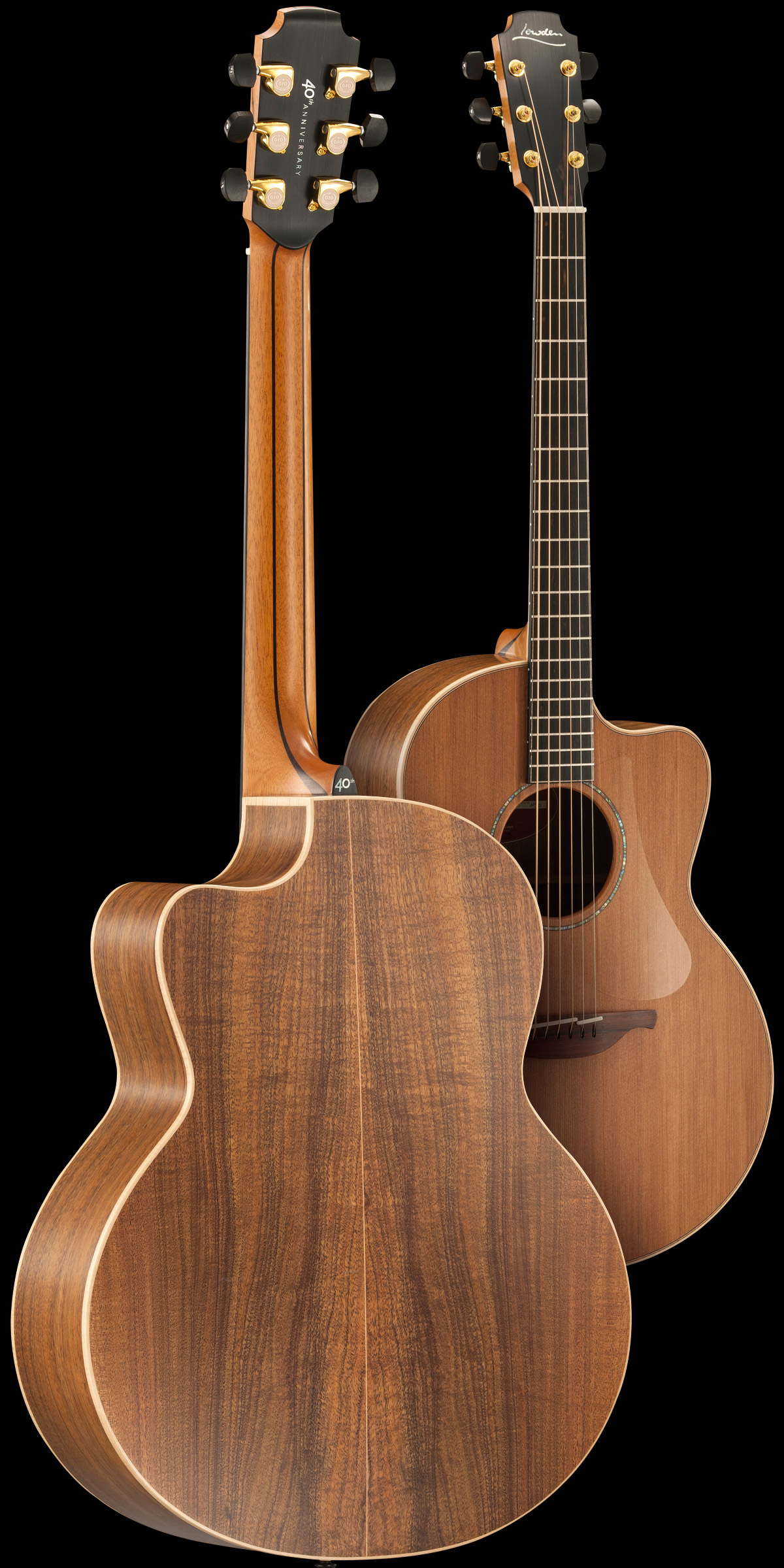
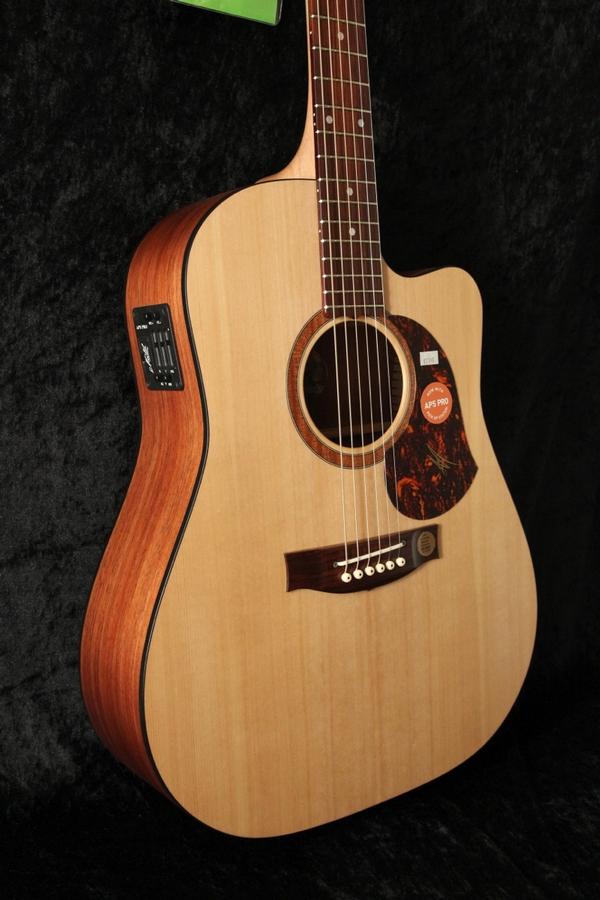
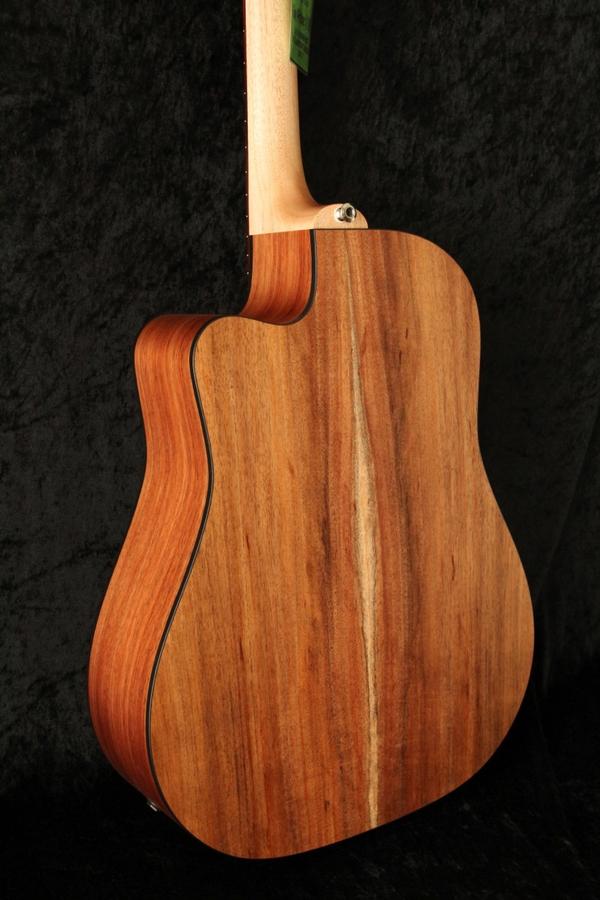
Lowden 35 Series 40th Anniversary Tasmanian Blackwood Guitar

Lowden-guitar-35-tb-40th-back

Lowden are an Irish guitar maker of premium quality acoustic guitars. 2014 marks the 40th anniversary of George Lowden as a commercial luthier.

Doing some Sunday morning web browsing and came upon this absolute beauty.

http://www.lowdenguitars.com/guitar-spec-35-tb

and

http://www.lowdenguitars.com/guitar-spec-40th

Here’s what Lowden have to say about Tasmanian blackwood:

Tasmanian Blackwood has gained a reputation as one of the most highly prized tone woods in the world, with good reason. Always highly figured and with a warm, responsive tone, this guitar sounds beautiful with either Cedar for clarity or Californian Redwood for even more warmth and response.

And here’s a review of the guitar:

Lowden also offer Tasmanian blackwood as an option in their 50 Series guitars.

http://www.lowdenguitars.com/guitar-spec-50

Tasmanian blackwood just keeps making waves in the international tonewood market.

Now who is going to tell Tasmanian farmers? When will we start taking this high-value, niche market opportunity seriously?

Blackwood sawmillers

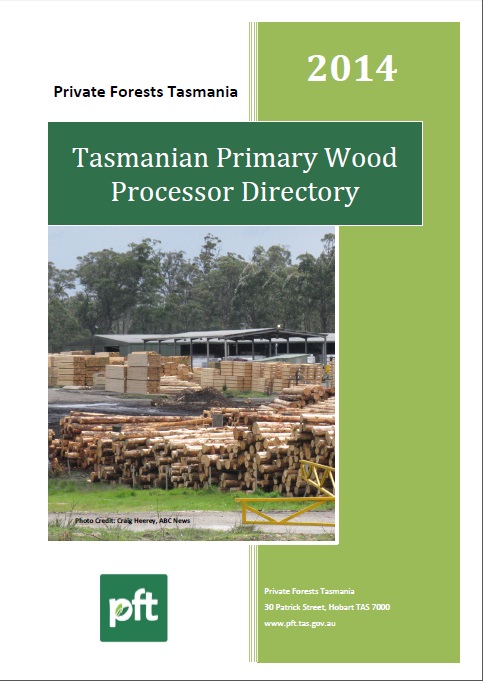
PFT_TPWPD2014

Private Forests Tasmania (PFT) has just released an updated Tasmanian Primary Wood Processor Directory.

http://www.pft.tas.gov.au/index.php/publications/market-information

The directory is a listing of 45 of the estimated 57 primary wood processing businesses believed to be operating within the State of Tasmania at the time of publication.

The directory has been primarily developed to help private forest owners with logs for sale to identify potential buyers. As well as enabling the forest owner to more easily locate and contact primary wood processors, it also identifies the log types purchased by them.

The directory also helps the listed primary wood processors to source logs from the Tasmanian private forest estate.

It isn’t at all clear to me how the directory helps the listed primary wood processors to source logs from the Tasmanian private forest estate, but anyway….

18 of the 45 listed processors indicate that they want to buy blackwood logs from private landowners. To find these processors simply download and open the document in Adobe Reader. Once the document is open press the Ctrl+Shift+F keys together on your computer. In the search box type “blackwood” and hit the Search button. All 18 instances of the word “blackwood” will now be shown.

ERRATUM: My apologies! I have just realised that three of the primary processors in the Directory list “special species” without listing blackwood separately. I assume these three processors include blackwood in their definition of special species. So that makes a total of 21 of the 45 listed processors are looking to buy blackwood logs from private growers/farmers. That is a very crowded market!!

That there are so many sawmillers around Tasmania looking to buy blackwood logs from private landowners I find very encouraging.

Clearly there is good demand for blackwood timber.

But what size and quality logs, and at what price? What markets are these processors accessing? These are critical questions that need answers.

If blackwood is Australia’s premier appearance-grade timber species then how do we build this industry into something proud and profitable?

How do we get greater transparency and tradability into the blackwood market?

How do we put the blackwood market on steroids?

I don’t mean artificially inflate the demand. I mean create much greater transparency and tradability into the blackwood market so landowners start to see some realtime market activity. Only then will landowners begin to think about investing in the future of blackwood.

How do we get farmers to make a 30-40 year investment commitment to grow more blackwood for the future as both remnant blackwood forest and in plantations?

ANSWER: By giving farmers as much incentive and positive market sentiment and feedback as we possibly can. Once farmers begin to see the blackwood market operating like other rural commodity markets then we might have some hope.

Every day we see blackwood timber making its way to the very highest of the wood value-adding markets both in Australia and increasingly overseas. Markets such as premium furniture, veneers, and musical instruments. So why isn’t this market demand stimulating grower interest? Why doesn’t Tasmania have a thriving blackwood grower community? Is growing blackwood a profitable investment for a landowner?

These 18 sawmillers can help answer these fundamental questions.

How many of these 18 processors are thinking about the future of the blackwood industry as anything other than a clean-up salvage operation?

Are they waiting for the Government to solve the problems of the forest industry, or are they prepared to take responsibility themselves and take some action?

These blackwood sawmillers are fundamental to the future success of Tasmania’s blackwood industry. But things need to change and change radically.

At the moment the blackwood market is completely obscure, which inhibits growth and investment in the industry.

The day that I can write my first Blackwood Market Report for Tasmanian Country will be a significant day for the blackwood industry.

There is plenty of potential and many opportunities with blackwood provided Tasmanians are prepared to help see them happen.

What’s in it for these sawmillers?

  • Access to more blackwood resource as more farmers participate in the market;
  • Collective marketing with access to more diverse, larger, more profitable markets;
  • Stronger links and relationships to both suppliers and buyers;
  • Being part of an expanding, high-value, niche market.

Or are we going to surrender our blackwood heritage to the New Zealand farmers?

I would like to hear some thoughts and ideas from these blackwood sawmillers. Reply to this blog, or phone or email me so we can have a discussion.

Cheers!

Maton Guitars update

It’s been a while since I’ve done a story on Melbourne-based guitar maker Maton, renown for it’s blackwood guitars. Here are two good stories.

Firstly some eye candy.

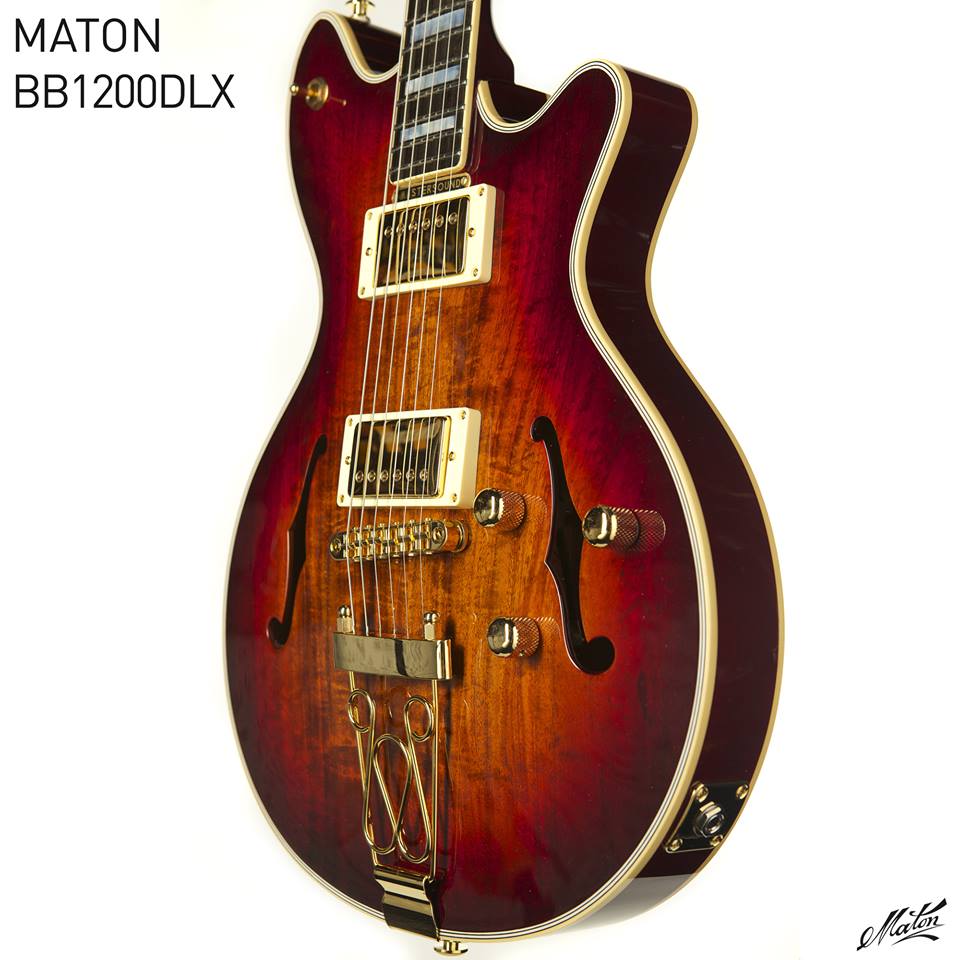
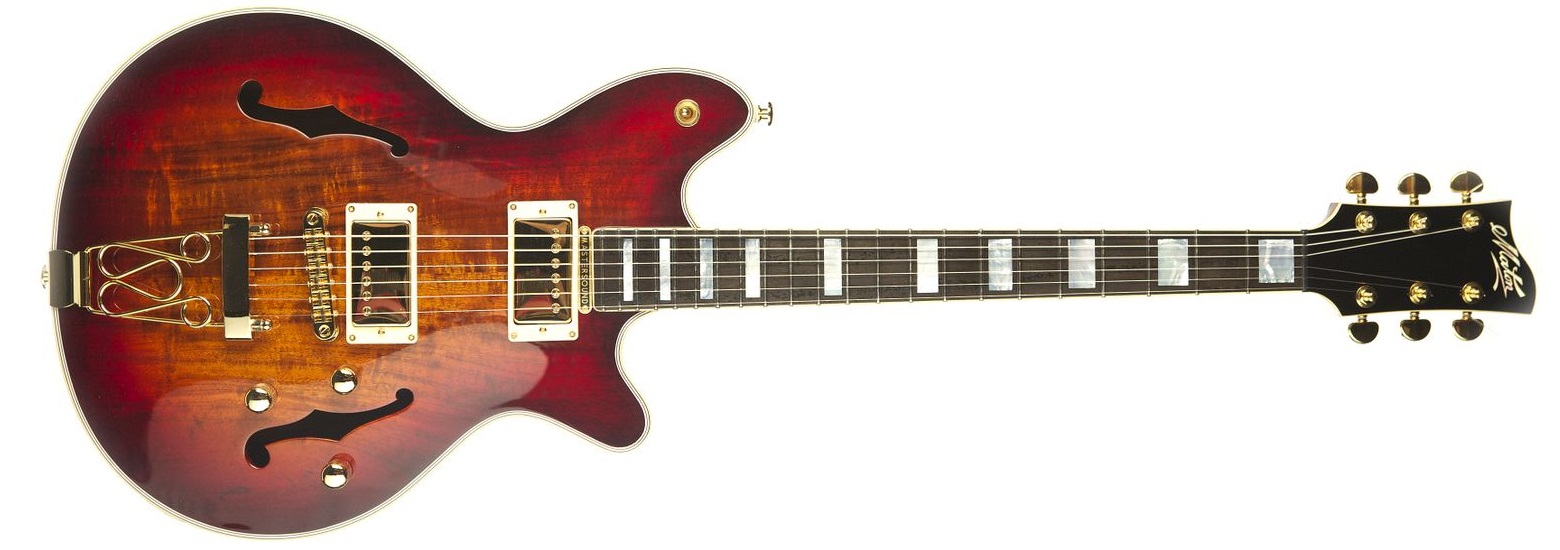
The recently (?) released Maton BB1200 DLX is an absolute beauty.

http://maton.com.au/product/bb1200-dlx

Check these out –

Maton BB1200DLX

And

Maton BB1200DLX 2

[Click on this image to see the larger view and appreciate the real blackwood beauty!]

This guitar just screams the beauty of blackwood. Yes it’s Victorian Otways blackwood but blackwood nevertheless. Here’s a video review.

Imagine your farm-grown blackwood ending up here, looking this good! Something to be proud of!

Secondly Maton Guitars are now also using Tasmanian as well as their traditional Otways blackwood. The new Maton SRS 70 acoustic guitar is an example.

http://maton.com.au/product/srs70

Some images:

Maton SRS70 1 Maton SRS70 2

And a video review:

Do Maton’s want to help secure their future supply of blackwood? Now how do we transmit this blatant market passion for blackwood on to Tasmanian farmers?

Any ideas?

Deloraine Stringfest is for farmers

Stringfest Logo

The 2015 Deloraine Stringfest will be on the 20-22 March.

The new Deloraine Stringfest website is now online.

http://www.stringfest.com.au/

This website will be updated as the program for the 2015 festival develops over the coming months. Check it out!

Stringfest is for sawmillers, foresters, luthiers, wood merchants, retailers, artists and people who just appreciate beauty, craft and music; and that’s a mighty big audience!

But I believe it will be Tasmanian farmers who eventually become the real heroes of the Deloraine Stringfest.

The men and women who make the 30+ year commitment and investment, who have the interest and passion, to plant and grow the trees that eventually become the tonewoods and the instruments.

Without these people Stringfest (and the tonewood/luthier industry) has an uncertain future.

Sell your existing trees

At this year’s Stringfest there were tonewood merchants displaying and selling their timber. But they were also buying! They were getting offers of trees and logs from quite a few people.

So if you have trees that you think may have value as tonewood come along to Stringfest and talk to the tonewood merchants. Even some planted exotic trees may be of value. For example the tonewood industry is looking for redwoods and any of the true (Atlas/Lebanon/Deodara) cedars. Good quality blackwood is always in demand.

Learn how to grow blackwood

Blackwood is Australia’s premier tonewood. Come to Stringfest and find out how to grow blackwood in plantation, or turn that patch of degraded remnant blackwood forest into something of real commercial value.

There is great potential for growing commercial blackwood in northern Tasmania. Help secure Stringfest’s future. Plant a tree (or 2)!

Come to Stringfest and find out more.

I’ll be there to answer questions about growing commercial blackwood.

There will be a portable sawmilling demonstration on how to identify/select a tonewood log, and the issues involved with sawing these logs into tonewood billets.

There will also be a ½ day field visit to a successful private blackwood plantation. Places for this field visit are limited so contact me soon to reserve you place.

See you at the 2015 Deloraine Stringfest!

Island Roots

In Taylor Guitar’s latest customer newsletter (Wood & Steel) is a magnificent 6 page spread on the Fall (Autumn) Limited Edition guitars with a major spiel on Tasmania and Tasmanian Tonewoods Bob Mac Millan.

http://www.taylorguitars.com/wood-and-steel

http://www.taylorguitars.com/guitars/acoustic/series/2014-fall-limiteds

http://tasmaniantonewoods.com/

It’s a great read and a terrific promotion of Tasmania and our timbers.

Island Roots

The article called Island Roots runs pages 18-23. Also on page 27 is an article by Taylor’s master luthier Andy Powers. Here’s an extract:

Tasmanian blackwood is a material I first encountered at a local exotic wood dealer. It was love at first sight. The first board I picked up said with a nearly audible voice, “I want to be a guitar.” I could see its beautiful color variegation, as warm as cinnamon, its straight, even grain, and feel it’s perfect density. It came back to the shop without ever leaving my hands and turned into as wonderful a guitar as it first suggested. Blackwood and I have enjoyed a great relationship ever since. Over time, I became interested in learning where this wood came from and meeting its family. I wanted to know the condition of the forest where it grew. I soon discovered that blackwood had forest friends that also wanted to be made into guitars. My interest led me to meet Bob Mac Millan, another woodworker who had been charmed by Tasmanian woods. I learned more about his timber operation and how the wood was being harvested. In our first conversation, Bob said something like, “Ah, so you’ve fallen for the blackwood, too…. You should come down and have a walk out in the bush and take a look. I’m only on the other side of the world; it’s not far.” Spoken with typical Aussie understatement.

Well, I’ve had a look. And I like what I see as a guitar maker and a timber fanatic. I see fantastic instrument wood being collected in a selective and low-impact way, and with a mind toward a healthy future forest. Although blackwood is a relatively unknown guitar wood in comparison to the familiar faces of India’s rosewood, or central America’s mahogany, or even Hawaii’s koa, which is a cousin, this may have more to do with Tasmania’s distance from large guitar makers. The familiar woods have a long history of importation for furniture making and have been available to guitar manufacturers for decades, so naturally they were used. Although blackwood hasn’t been a regular attendee at the guitar party, it surely isn’t for lack of good sound. This wood sounds better to me now than years ago when I first worked with it. In fact, I haven’t heard a blackwood guitar yet that I didn’t like. Sure, I’m biased because I like guitars, but I’m still a fan. It’s immensely rewarding to get to know the personality of a material like blackwood, or a newcomer like sassafras. As a builder, I notice the ways the wood’s physical properties contribute to the musical values of volume, tonal color, sustain and balance of a finished instrument. There are common traits among woods to be sure, yet there are unique subtleties inherent to a particular timber. I often find myself lacking words precise enough to describe those traits, so I end up comparing them to other woods to provide a relatable reference. Yet this seems insufficient. It might also seem to imply that the wood is an inferior substitute, which is far from true. There is uniqueness that radiates musicality in many woods, both well and less known, which makes each board a unique treat that deserves to be valued and savored.

This season, we’re thrilled to be making instruments with blackwood and sassafras from Tasmania, as well as blackwood’s Hawaiian cousin, koa. We’ve been savoring the process of preparing and building these guitars with these precious woods. These instruments are a real treat for both the woodworker and the musician who can appreciate the aural and visual beauty of the wood. This treat seems to resonate even more sweetly when I know the forest is healthy and trees are harvested in a way that closely agrees with all that we as wood lovers value.

Clearly Andy Powers is a big fan of Tasmanian blackwood. Many Tasmanians will know exactly how he feels. I don’t agree with everything that’s written here but never mind. Progress is being made and we will get there eventually.

One day Tasmanian blackwood will be recognized as a sustainable premium tonewood the world over, proudly grown by Tasmanian farmers.

MacMillan Powers Cosgrove3

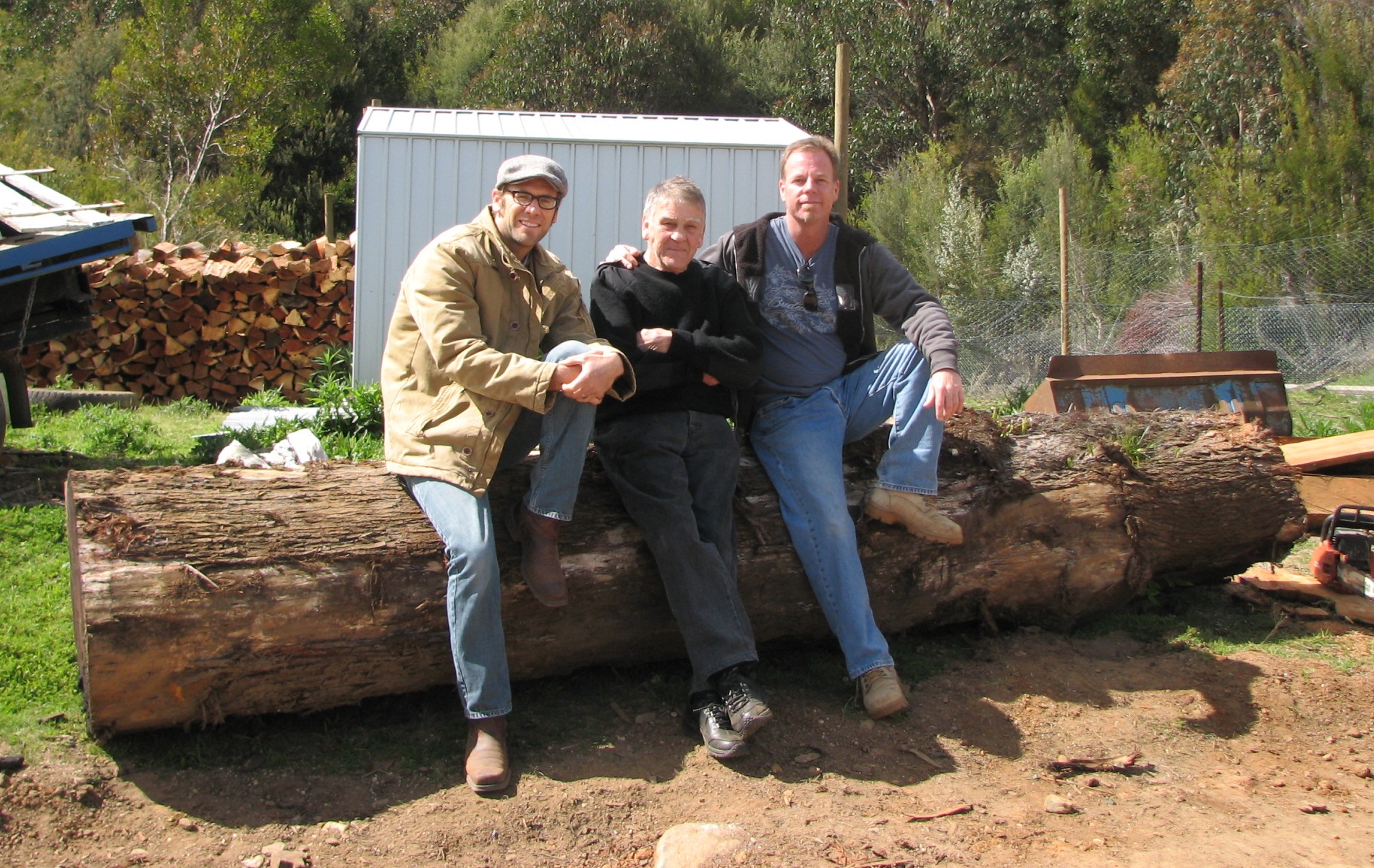
L to R: Andy Powers, Bob Mac Millan and Chris Cosgrove.

Latest IST blackwood tender results

The latest tender results have been posted by Island Specialty Timbers. These tender results provide the only publically available open, competitive prices for blackwood logs.

The September tender had 26 parcels.

24 of the 26 logs and timber lots sold at fair to very strong prices, including a record price for one black-heart sassafras log, $3800 / m3.

Great news!

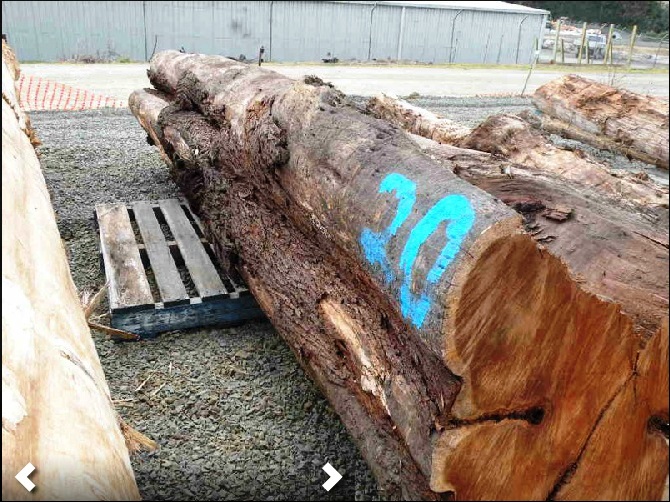
The one blackwood log in the tender was a mixed blessing. The log contained both fiddle-back and tear drop figure. But these attributes came with issues: fluting, spiral grain, severe log taper, with holes and limbs. Generally a difficult log, but [as IST described] contains excellent material for turning blanks or a low recovery of figured timber.

It looks a monster!

IST 0914 log20

Length 3.6 metres, butt diameter 95 cm, head diameter 73 cm, volume 1.99 cubic metres.

And this mixed blessing sold for $1,000 per cubic metre or just under $2,000 for the log.

A great price!

Remember this is a mill door equivalent price, not a stumpage price.

The one blackwood log tendered at the previous IST tender in August failed to sell. It too was a difficult log but with plain rather than figured grain. Clearly the market for figured blackwood timber will pay any money for any quality log whatsoever.

The last IST Geeveston tender for 2014 will open on Monday 27 October and close at 4.00 pn on Monday 10 November 2014.   A range of logs, slabs and sawn timber will be offered. 

The Fall Limited Sweepstakes

http://www.taylorguitars.com/promotions/2014-fall-ltd

sweeps-2014-fall-ltd-header

Up for grabs, this beauty from Taylor Guitars. Unfortunately this sweepstakes is only open to US and Canadian residents.

The Taylor 510e-FLTD is a limited edition Dreadnought featuring Tasmanian blackwood back and sides and a Sitka spruce top. Neo-vintage aesthetic strokes include a shaded edgeburst body and neck, plus ivoroid appointments anchored by the Century fretboard inlay. We’ve partnered with Dunlop and JamPlay.com to offer the perfect player package, which includes a personalized pick tin, a supply of Dunlop Primetone picks, and a Victor capo. The winner will also receive a one-year membership to JamPlay.com with unlimited access to thousands of guitar lessons. One (1) grand prize winner will receive:

  • One (1) Taylor 510e-FLTD
  • One (1) Year Membership to JamPlay.com
  • One (1) Year Supply of Primetone Guitar Picks
  • One (1) Dunlop Victor Capo
  • One (1) Personalized Dunlop Pick Tin.

Great prize and great promotion and support for Tasmanian blackwood from Taylor Guitars.

I wonder if I can get my sister in the US to enter the competition for me?

Review of Taylor Guitars Fall 2014 Limited Edition models featuring Tasmanian blackwood and sassafras

Here’s a great review of three of the recently released limited edition models from Taylor Guitars featuring Tasmanian blackwood and sassafras.

Beautiful guitars from Taylor Guitars with tonewoods supplied by Tasmanian Tonewoods.

http://www.taylorguitars.com/guitars/acoustic/series/2014-fall-limiteds

http://blackwoodgrowers.com.au/2014/08/02/taylor-guitars-put-tasmanian-tonewoods-on-display/

http://blackwoodgrowers.com.au/2014/08/18/more-taylor-guitars-promotion-of-tasmanian-tonewoods/

Sassafras as a tonewood will only ever be available on a limited basis due to it’s restricted distribution and slow growth rate. Blackwood however has huge potential as a sustainable, readily available tonewood due to its wide distribution and fast growth rate. Provided we can convince Tasmanian farmers to grow it.

Now how do we do that?

New group looks to become Fonterra of forestry

Here’s a great story for all those 14,000 New Zealand farm forest growers with plantations coming due for harvesting. If this is successful it will revolutionise the already very successful New Zealand forest industry. Forestry is New Zealand’s third largest export earner after dairy and meat. Last year’s total forestry exports were worth $NZ4.3 billion.

Yesterday a new forestry company, United Forestry Group, targeting owners of small forests in New Zealand was launched. Its cornerstone shareholder is a joint venture between international timber marketer Pentarch, which is headquartered in Melbourne and has been operating in New Zealand for more than 10 years, and a Chinese conglomerate, Xiangyu Group. The company’s offering small forest owners (there are around 14,000 forests under 1000 hectares which account for just over a third of New Zealand’s plantation resource) benefits similar to the pastoral sector’s co-operatives such as Fonterra in marketing and economies of scale.

It is believed production from New Zealand’s small forest growers over the next 20 years could be worth $NZ30 billion.

http://www.fridayoffcuts.com/#1

http://www.3news.co.nz/United-Forestry-Group-aims-to-fight-wall-of-wood/tabid/421/articleID/357877/Default.aspx#ixzz3B9znGRRR

I wonder if the United Forestry Group will form sub-groups to offer these services to growers of other species besides Pinus radiata, such as blackwood? New Zealand blackwood growers would really benefit from such a service.

Those New Zealanders really do understand what forestry is all about.

I will be following this story closely over the coming years to see how it develops and keep readers informed. It’s good to have a good news story.

Belligerent

Important market update

PaulHarrissMHA

Not many people would regard the Forestry (Rebuilding the Forest Industry) Bill 2014 currently before Tasmania’s Legislative Council as anything other than an act of belligerence.

http://www.abc.net.au/news/2014-08-20/vote-to-tear-up-forest-peace-deal-delayed/5684846?section=tas

http://www.themercury.com.au/news/forestry-bill-set-to-pass-as-robert-armstronng-throws-his-weight-behind-the-plan/story-fnj4f7kx-1227031161942

The Bill provides privileged treatment for the so called special timbers industry. It effectively puts the special timbers industry above the law, subject to no effective planning, regulation or control.

The Bill gives anyone (excluding Forestry Tasmania) the opportunity to harvest special timbers from reserves, conservation areas and other public forest.

The Bill gives no consideration to commercial matters, profitability, sustainability or good forest management.

This will likely produce a special timbers free-for-all as everyone scrambles to take all the special timbers accessible from the existing road network, legally or otherwise. Never mind the land tenure, have ute and chainsaw – will harvest. Tasmanian sheds will be overflowing. A belligerent Government may well turn a blind eye.

This situation is already generating a swift, negative reaction from the Tasmanian community and the broader market. A consumer boycott of Tasmanian timbers including blackwood is almost inevitable.

This just arrived in the letterbox today so the community reaction is underway.

Special Timbers Protests

Special timbers events such as the Wooden Boat Festival and the Deloraine Stringfest will be particularly hard hit by the negative reaction.

The problem for my business is the there is no way for the market to distinguish between special timbers from private growers, and that harvested from public forest under this new legislation, or simply stolen.

Everyone in the special timbers industry will be significantly impacted, from sawmillers to merchants, craftspeople, and furniture and guitar makers all the way through to retailers.

The broader forest industry runs the very real risk that this issue wont be quarantined to just the special timbers industry, but will impact on the broader forest industry market. After all:

Forestry = politics = Tasmania!

Continuing to treat the special timbers industry as a taxpayer-funded sacred cow with free-reign to the public forest resource is guaranteed to turn very ugly. This has every chance of becoming Tasmania’s next forest industry disaster.

It will discourage existing and potential private special timbers growers from investing in the future of the industry. It is difficult to understand why the Government wants to destroy the iconic special timbers industry.