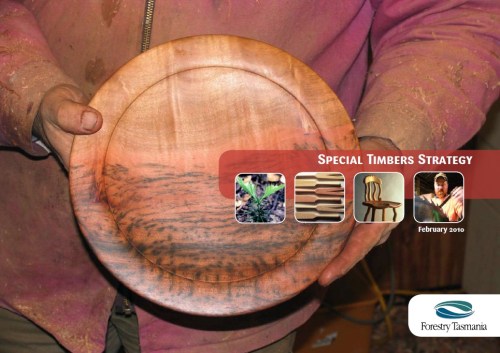
After the embarrassing back down by the Tasmanian State Government over the proposal to log the World Heritage Area, two important reports were quietly released last week with no fanfare from our politicians or forest industry leaders. These reports relate to the forthcoming 2017 Special Timbers Management Plan.
http://www.stategrowth.tas.gov.au/forestry/special_species_timber_management_plan
You can read my previous blogs on the very long drawn-out process to create yet another special timbers management plan here:
http://blackwoodgrowers.com.au/category/management-plan/
Special Timbers Resource Assessment
The first report is a special timbers resource review produced by Forestry Tasmania of the 812,000 ha of the Permanent Timber Production Zone Land (PTPL).
The report does not include forests on private land, or forests on public land that are managed by other agencies (including Future Potential Production Forest).
The report does not speculate about any potential for helicopter harvesting or underwater salvage, nor make any assessment about the commercial viability or costs associated with [management,] harvesting and/or extraction operations.
Given that in 2010 Forestry Tasmania determined that its special timbers operations were no longer commercially viable one must presume that this situation remains unchanged. In other words how much taxpayers money is to be wasted harvesting this wood is not considered important in determining the resource that is available!
As always with State forest policy and practice it is about the volumes of wood to be given away never about the profitability of the forest asset.
One suspects that if commercial viability was considered in the report, then little if any of this public native forest special timbers resource would be available for harvesting!
Centrelink Timbers is a thriving industry in Tasmania.
The blackwood resource figures in this report are from the 2013 Blackwood sawlog resource review. No additional work has been done in this assessment for the north west blackwood production zone.
The significant reduction from the targets set in the 2010 Special Timbers Strategy reflects the smaller landbase that is now available, longer rotations required for some species and more accurate volume estimates resulting from the rainforest modelling work using LiDAR.
So two of the three issues [longer rotation age estimates and more accurate inventory ]that have driven down the estimate of available special timbers resource, have nothing whatsoever to do with any forest industry agreement, but are the result of changes in methodology.
Now to blackwood…
The headline figure which this report uses is not the “millable sawlog” figure that the RFA and the 2010 Special Timbers Strategy used, but now includes outspec wood including craftwood. This outspec wood makes up 55% of the headline blackwood volume. Forestry Tasmania does not have any sales obligations or commitments for outspec wood!!
So in addition to the 3,000 cubic metres per year of millable sawlog from the north-west blackwood production zone as outlined in 2013, there will be another 1,275 cubic metres of millable sawlog per year from the rest of the State up until 2027, when the blackwood resource in the rest of the State will be exhausted.
So much for guarantees! So much for sustainability!
In 1991 with the FFIS, again in 1996 with the RFA, and again in 2010 with the Special Timbers Strategy, Forestry Tasmania guaranteed an annual supply of 10,000 cubic metres of millable blackwood sawlog to industry.
And here we are at the end of the blackwood industry!
These volumes of blackwood sawlog will not be enough to sustain a commercially viable industry. There will not be enough resource to sustain our commercial furniture makers. These volumes will barely be enough for our custom furniture makers.
The Tasmanian blackwood industry now has only two clear choices:
- Close down due to the exhaustion of the public native blackwood resource; or
- Look to Tasmanian farmers as the future of the blackwood sawlog resource.
Salvage blackwood sawlog from the Hydrowood project may keep the industry going for a few more years, but it too will end. The Hydrowood resource can either be seen as a last gasp for the backwood industry, or as a useful stop-gap whilst relationships with Tasmanian farmers are established.
So what’s it going to be? Extinction or a new future?
Market Demand Analysis
The second report is a market demand analysis for Tasmanian special timbers conducted by Indufor. You may remember I was invited to participate in this market survey:
http://blackwoodgrowers.com.au/2015/04/23/special-species-timber-management-plan-update-1/
Despite my being interviewed by the author of the report, the report contains no mention at all of private commercially-grown blackwood, and no mention of opportunities for private investment and private growers. The reports entire focus is on the Forestry (Rebuilding the Forest Industry) Act 2014 and the public native forest resource!
Clearly the consultant had to appease a very narrow-minded client!
This observation on political bias is further strengthened by the fact that Appendix 1 of the report describes in detail the various sub-sectors of the industry, but Appendix 1 begins with sawmillers. Apparently growers are not a sub-sector of the special timbers industry! Not even harvesting and transport is mentioned as a sub-sector!!
This is yet another failed report into Tasmania’s iconic special timbers industry.
The report contains no mention of blackwoods unique position as the only Tasmanian special species that has the potential to be grown commercially due to its fast growth rate and wide natural distribution. Given the unique and dominant position that blackwood occupies within the special timbers market it should have been given an entire chapter to itself.
The only basis for a successful forest industry is profitable tree growers, and profitable tree growers are conspicuous by their absence in this industry report. In fact discussing special timbers market demand without discussing the economics of tree growing and forest management is completely stupid. Imagine a report that discussed market demand for dairy products whilst ignoring the economics of dairy farming. Anyone would regard such a report as a waste of time.
When I was talking to the author of the report during my interview last year I specifically suggested that the report needed to have a strong focus on the economics of tree growing and forest management. And guess what the report specifically and completely ignores?
For example the report fails to discuss the existing special timbers industry community service business model and the significant taxpayer subsidy that guarantees the survival of the industry. Discussing prices, markets and demand whilst ignoring the business model and taxpayer subsidy is completely fallacious.
From a blackwood growers point of view the parts of the report most worth reading are:
Resource Supply on Page 4.
It’s a carefully selected view of the historical blackwood production from public native forest. Certainly no comparison of production with sustainable yield. In fact no mention of blackwood sustainable yield at all!
Blackwood Markets on Page 14.
Throughout the Report and especially in this section there is a lot of veiled criticism of the forest industry’s lack of market competition and transparency. The fact that most blackwood is “sold” outside normal competitive market processes is particularly relevant, ie. log prices are NOT market-based.
Anyway the report notes that of all the special species, Tasmanian blackwood is sold into the widest range of high value markets.
Resource supply and substitution
According to the report survey the biggest constraint on the industry is the uncertainty of log supply. Section 4.8 (p. 38) talks about survey responses to possible falling supply from public native forest. The option of “shifting to alternative growers” (ie. Tasmanian farmers) is not mentioned. And yet Table 4-5 on page 41 analyses the market’s willingness to pay for the various timber grades of the various species. Blackwood comes out extremely well in this analysis. The market says it is prepared to pay good prices for access to quality blackwood.
So given the dire situation of the public native forest blackwood supply why isn’t the industry asking Tasmanian farmers to grow quality blackwood timber? What is preventing this fundamental market process from being realised? In every other primary industry the combination of high prices and willingness to pay would lead to investment. Why does this NOT happen with the forest industry? The report fails to address this fundamental question!!
This situation provides the perfect opportunity for the TFGA to step up and demonstrate leadership. The TFGA needs to organise a forum between farmers and blackwood industry representatives and let’s start rebuilding the blackwood industry.
The report makes no mention of New Zealand farmers and what they are doing regarding blackwood and other special species. No mention in the report of the handful of Tasmanian farmers who are actively growing commercial blackwood.
One thing is perfectly clear in the report – the Tasmanian Government does not want Tasmanian farmers to grow commercial blackwood!!
The Special Timbers Market Demand report is fundamentally flawed. It certainly cannot be used to help justify the continued logging of our public native oldgrowth and rainforests in Tasmania.
Commentary
Neither of these reports offers much hope to the special timbers industry. Both reports show that the public native forest special timbers industry – including the iconic Tasmanian blackwood industry – is on the verge of collapse due to overcutting and mismanagement of the resource.
So much for declarations sustainability!
The major positive is that the market demand report confirms the continuing demand for premium timbers at good prices.
What is perfectly clear is that these two reports are especially designed to keep the forestry wars at the forefront of Tasmanian politics. The reports avoid discussing alternatives outside the public native forest resource and the taxpayer-funded community service business model.
That Tasmania cannot work positively towards realising the commercial opportunities around Tasmanian blackwood remains a fundamental continuing failure of our political and business leaders.






 Tasmanian Blackwood Growers Cooperative
Taylor Guitars latest Tasmanian blackwood promotion
The latest Wood & Steel magazine (Winter 2016) from Taylor Guitars offers yet another big promotion of Tasmanian blackwood, featuring in three of the articles in the magazine:
https://www.taylorguitars.com/wood-and-steel
Here’s the main Tasmanian blackwood promotion found on page 15:
Blackwood’s Broadening Appeal
“Blackwood is one of my all-time favorite tonewoods,” declares Taylor’s master guitar designer Andy Powers, reflecting on the Tasmanian timber’s addition to the series. “I‘ve enjoyed its characteristics in every guitar I’ve built with it. It always sounds good.”
A lot of us at Taylor, in fact, are fans of the tonewood. Our product development team has crafted several series of limited edition blackwood guitars in recent years (including our 2014 500 Series Fall Limiteds) in the hope of broadening the appreciation among guitar players who haven’t been exposed to it. While blackwood has been a staple among guitar makers in and around its native region of Australia, its usage has been more limited in North America due in part to its lack of geographic proximity.
“That’s one of the factors blackwood had going against it,” Andy says. “It’s a long way to America from Australia. Historically, in the formative years of the steel-string guitar, it was a lot easier to get mahogany and rosewood here because they were already being imported for furniture.”
Despite its more limited usage in this hemisphere, blackwood has earned a loyal following across the industry.
“Martin has built some nice guitars with heavily figured blackwood, and they sound great,” Andy says. “And I know a number of small builders who work with it and live in the same camp as me; we all feel it’s amazing.”
The supply is also sustainable, with a healthy sourcing outlook for the future. From a guitar-making point of view, blackwood’s relatively rapid growth cycle can often yield guitar quality wood in under 40 years, and the abundant supply of older, bigger trees produces a lot of straight-grained wood that is easy for guitar makers to work with. We purchased our blackwood from Tasmanian wood supplier Bob Mac Millan (profiled in our Fall 2014 issue), who also sourced the much rarer blackheart sassafras we recently used for limited edition models.
http://tasmaniantonewoods.com/
As an acacia wood species, blackwood sometimes draws comparisons to Hawaiian koa, another member of the acacia family, although, in reality, Andy says, the two species are unique.
“People sometimes refer to blackwood as the old cousin of koa, a more prehistoric version,” he explains. “While that may be so, blackwood has some distinct working characteristics, color, and grain structure, which distinguish it from koa.”
While blackwood will occasionally display exotic figure, Andy says our grading specifications for the sets used with the 300 Series call for more of a classic, straight-grained structure.
“We wanted a staple wood we could count on,” he says. “It’s a high quality guitar wood, clean, clear and straight-grained. In terms of color and overall appearance, it’s not a dramatic change from the classic mahogany or sapele aesthetic. It has a similar look a lot of times, especially paired with the mahogany tops and with a nice shaded edgeburst. Frankly, a lot of players may not even visually notice the difference unless they’re really looking for it.”
A color-matched stain for the blackwood back and sides and mahogany top and neck brings a seamless visual cohesion to the guitars, adding a rich undertone to the natural cinnamon-brown hues and highlighting the similar grain structure of both woods. Tonally, blackwood yields a strong midrange focus — dry and clear yet also warm, like mahogany and koa — with a splash of top-end shimmer and richness similar to rosewood. Its musicality, Andy says, suits a variety of body sizes and musical styles. Paired with a mahogany top, players can expect plenty of dynamic range.
Phew!
There’s a lot of promise, hope and opportunity in all those excellent words. Can they be matched by some clever product development and marketing, and finally by market acceptance and appreciation?
On top of the blackwood promotion there is other good news including the fact that Taylor Guitars has been the top-selling acoustic guitar brand in the USA for 26 straight months, with total (acoustic and electric) production in 2015 of 165,000 guitars and employ over 1,000 people! Even then they still can’t keep up with the demand.
Also the article Forestry for the Future on page 5 by Bob Taylor makes for interesting reading. Mr Taylor says “A word that has now become part of my daily vocabulary is “forestry.” He goes on…” The foresters I’ve met are mostly very good and brimming with concern, ideas and skills to help us all. And they’re frustrated because they work in a structure that often doesn’t allow them to work. Their work takes committed clients, and it also takes time.”
And as we have seen in Tasmania over the past 40 years, good intentions can so easily become corrupted and distorted to the point where the forest industry struggles to operate effectively because of the domination of ego, ideology and politics.
Bob Taylor says that forestry is the answer. I would say that good leadership is the answer. And I’m happy to say that Bob Taylor fits the leadership role pretty well!
I certainly sympathise with the expression of frustration! Being a forester in Tasmania means living with permanent dose of frustration.
Taylor Guitars and Bob Mac Millan at Tasmanian Tonewoods are doing their bit to bring Tasmanian blackwood to the world stage.
Now what can we in Tasmania do to support Taylor Guitars promotion of profitable, sustainable Tasmanian blackwood tonewood?
This is a commercial opportunity going begging.
Are Tasmanian farmers interested?
Are our politicians interested?
Is the TFGA interested?
We need leadership!
We need cooperation!
6 Comments
Posted in Commentary, Markets, Taylor Guitars, Tonewood
Tagged Tasmanian Tonewoods