Forestry Tasmania’s challenges

Being part of the forest industry in Tasmania is tough at the best of times with all the bad media, the politics, conflict, ideology, mismanagement, etc. I usually try and keep the politics off the website; politics is mostly bad for business.

But in Tasmania forestry is politics, which is its biggest problem.

So this commentary by economist/accountant and social commentator John Lawrence has my complete support, and says what needs to be said about the mismanagement and poor governance of Forestry Tasmania. Recommended reading:

http://www.tasfintalk.blogspot.com.au/2013/12/forestry-tasmanias-challenges.html

One of the major weaknesses (and there are many) of the Tas Forestry Agreement is that it continues to enshrined Forestry Tasmania as the cornerstone of the industry. And as Mr Lawrence clearly demonstrates, Forestry Tasmania is a dead, defunct, insolvent entity with no future. While it remains the cornerstone, the forest industry will continue its long, slow, painful decline.

FT SR 201213

My own response to reading the latest FT Annual Report was akin to reading a death notice in the newspaper. The Report reflects an organisation completely off track, detached from any commercial reality and devoid of vision and purpose. Forestry Tasmania has dozens of performance criteria but not one single commercial performance criteria. That’s right – NONE!! The word “productivity” only appears in the Annual Report in relation to trees growing wood – productive forests. The word “productivity” as a measure of commercial performance is completely foreign to FT.

I shudder to think they may soon have FSC Certification. What a complete joke that will be.

It is perfectly clear that the politicians and FT management fail to understand that forestry is a commercial, profit-driven business at all levels of the industry including public and private tree growers. Given that most wood now grown and sold in Australia comes from private growers the continuing failure of FT is deeply significant. FT is like an infected wound that impacts on the whole industry. Politics and mismanagement only serve to create uncertainty and discourage investment. It certainly makes getting a commercial blackwood growers cooperative established that much harder.

Australia’s largest blackwood plantation!

It’s in New South Wales! And it’s quite a story…

I’m happy to be corrected on this claim. Forestry Tasmania established a very large blackwood plantation resource 20+ years ago, but I understand these have all since failed. So this ~25 hectare plantation in Robertson, NSW must now rate as the country’s largest planting.

But let’s go back to the beginning…

Blackwood is one of the most wide ranging tree species in Australia with a natural distribution from southern Tasmania, to the Atherton tableland in far north Queensland and across into South Australia. Heading up the east coast blackwood is increasingly confined to the cooler high altitude locations along the Great Dividing Range. But blackwood as a commercial species has been confined to Victoria and Tasmania.

So it came as a surprise when I was contacted earlier this year about a blackwood plantation on the southern Tablelands of NSW. The town of Robertson sits at an altitude of 750m on the eastern edge of the southern Tablelands with a mean annual rainfall of 1600mm and a climate not unlike parts of Tasmania, but with a summer rainfall bias. The district is renowned for its rich red basalt soils. The original native forest was more closely related to that found in the mountains of central Victoria 500 km to the south, with blackwood a common tree. Remnants of warm temperate rainforest known as the Yarrawa Brush occur in the district.

Photos of the plantation showed some challenges but also plenty of potential. Survival and growth seemed to be pretty good, but as is commonly the case, pruning had not been timely or maintained, and thinning was obviously needed. The owner had made a very significant investment and I was curious to find out more. I offered my help.  Seven months later came the reply and last week I spent 2 days visiting Robertson.

Stunning!

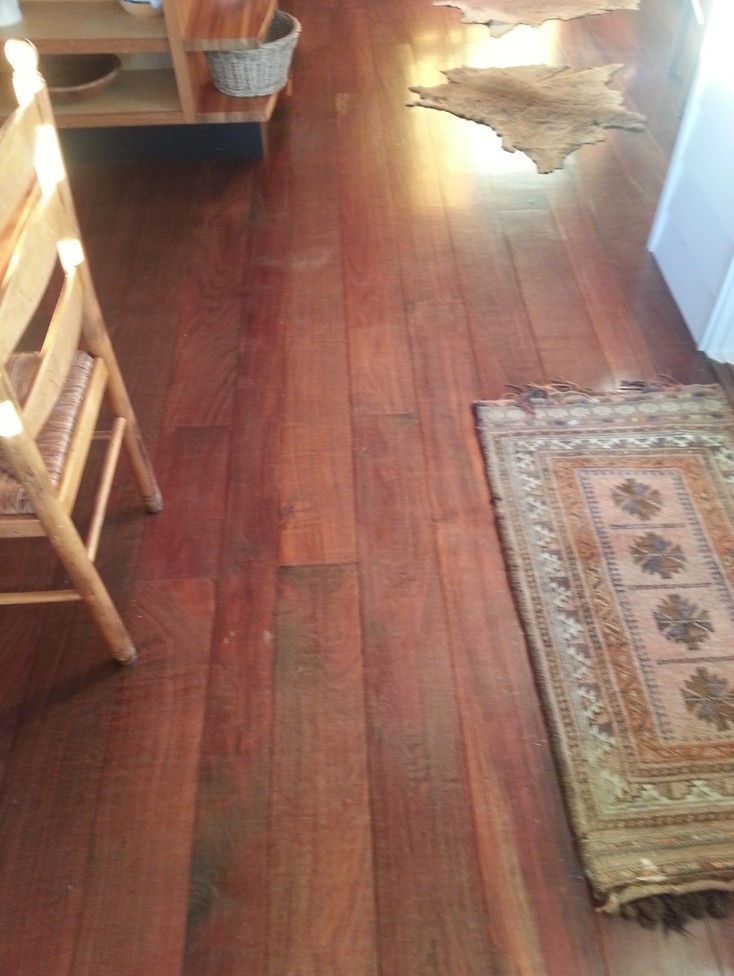
My first experience with blackwood when I arrived, apart from seeing plenty of roadside and paddock trees driving into Robertson, was walking into the owners house and seeing an absolutely stunning timber floor. I didn’t recognise the timber so I took a guess and asked the owner if the floor was forest red gum.

“No!” He replied. “That’s local blackwood milled from the property”.

I was speechless!
20131203_055930s

Stunning “Robertson Red” blackwood floor.

This looked nothing like the blackwood floors I have previously seen. The uniform rich mahogany red-brown timber, with a distinctive grain, was unique to my experience. Part of the explanation for the uniform colour was that all the timber for this very large floor came from just 2 trees! But these two trees had identical timber colour. I have seen this mahogany red-brown colour in Tasmanian blackwood but it is not common, with Tasmanian blackwood mostly having a lighter golden-brown colour.

The next 24 hours showed me that this red-brown colour is the common colour of the local Robertson blackwood. I made sure that the owner understood how unique and precious this local feature was, which needs to be preserved and managed for the future. Research has shown that blackwood wood colour is strongly genetically controlled, so in my opinion this “Robertson Red” blackwood has commercial potential.

The owner and the property

The owner Andy Kennard has a passion for timber and growing trees which he inherited from his father, despite the family having no farming or forestry background. This property is the family’s third attempt at tree farming. He bought the property 18 years ago with the objective of growing quality timber and cattle. Most of the planting occurred around 10-13 years ago. To date the focus has been on a range of eucalypts and blackwood. The property also includes remnants of native eucalypt forest and warm temperate rainforest. The rainforest includes blackwood and other timber species such as northern sassafras and coachwood. The remnant native forest is now managed for conservation values with the occasional wind thrown tree milled for timber.
20131202_151136s

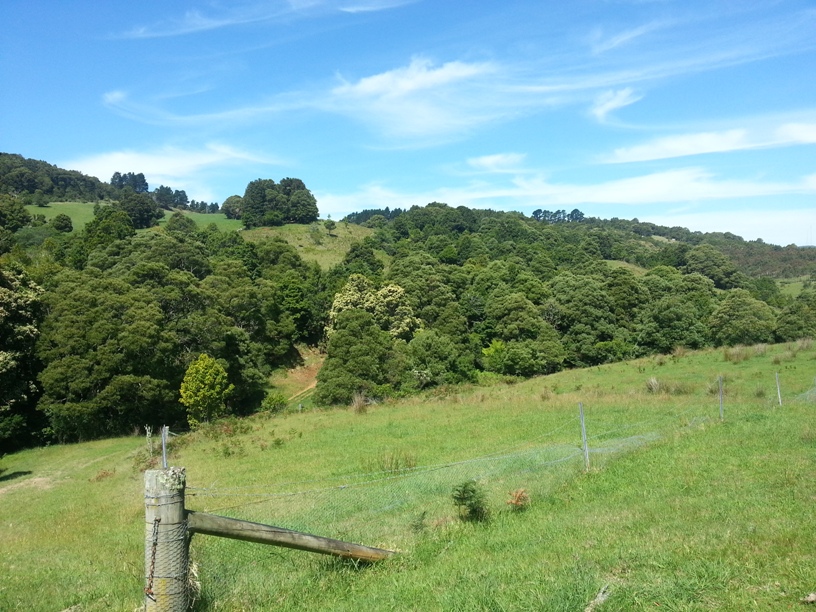
A hillside of native Robertson blackwood. The pale flowers belong to native Coachwood trees.

None of the people employed on the property have any forestry background or training so the tree-planting investment has been a big learning exercise. A point had been reached however where they didn’t know how to proceed or what to do next. And like many tree growers the thought of cutting down those precious trees was stalling any objective decision making. Beware the emotional attachment!

The Blackwood

The blackwood plantings are spread around the property in various paddocks on sites ranging from exposed ridge-top to sheltered lower slope and gully locations. The planting occurred between 2000 and 2003. All the plantings are on red basalt soils, with growth and performance varying widely even in the one paddock. A range of seedlots were used sourced from Tasmania, Victoria and NSW. No local Robertson blackwood seed was used. In a few areas eucalypt nurse crops were tried but these were a failure, due to the general poor growth of eucalypts on the property.

In the pure blackwood plantings initial stocking was 1100-1200 trees per hectare. In most locations survival was >95%. None of the blackwood paddocks have been fertilised under the current ownership. Early weed control is not known.

Early protection of the blackwood from domestic and wild animal browsers was a major issue. Standard farm fences proved sufficient to keep cattle out. But the wallaby, kangaroo and very active wombat populations have all been challenges requiring significant investment in fencing. Small amounts of ongoing deer damage is also apparent.

No thinning of the blackwood has yet occurred. Pruning has generally been OK but needed to be more timely and systematic. Most trees are pruned to at least 3 metres with pruning to six metres on the best sites. Given the lack of expertise and knowledge and the very large area to manage, the results have been very good. Cattle are grazed beneath the blackwood.

Results: poor to exceptional!

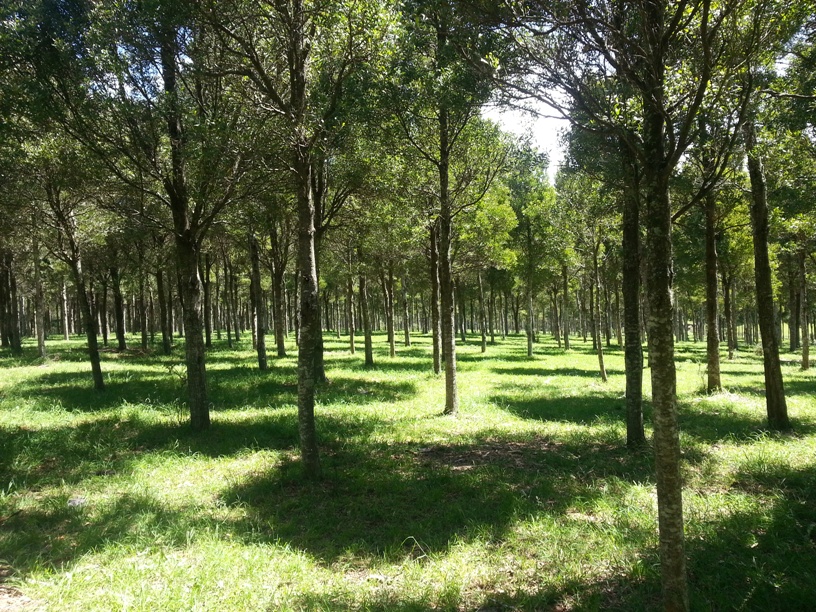
On the best sites blackwood growth and form is excellent, with 13 year old trees having diameters (dbh) ranging from 25-35 cm and heights of 12-16 metres. Some of the pruning on these trees has not been timely but nevertheless they are exceptional. At age 13 years these trees are half way to full commercial size!
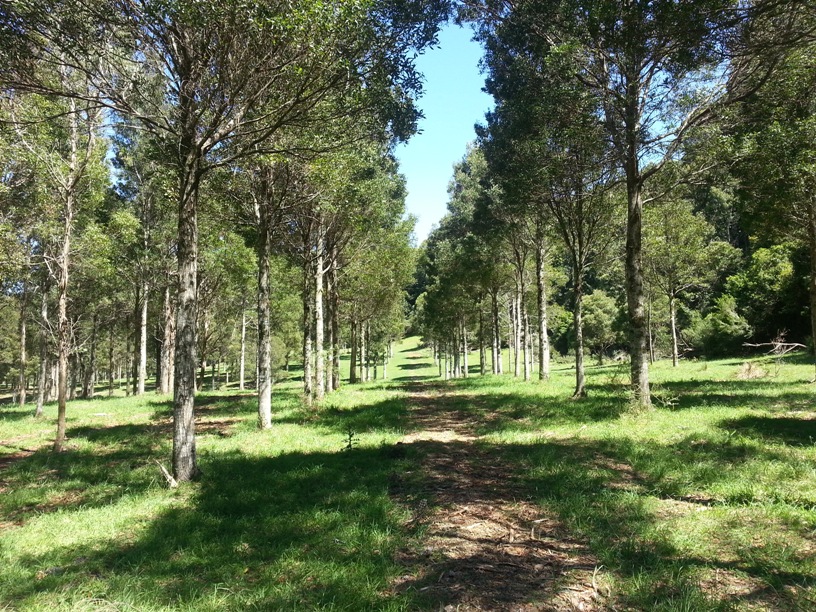
20131203_105329s

Exceptional blackwood growth and form (30 cm dbh in 13 years).

In one paddock the trees have good uniform growth and form but a serious wattle grub attack followed by the inevitable cockatoo assault a few years ago has left at least 80% of the trees worthless. The owner now needs to assess what can be salvaged from this paddock. The cause of the wattle grub attack is unknown. Wattle grub is relatively rare in the other blackwood plantings. The trees look healthy and are growing well. Anecdotal evidence suggests that wattle grubs attack when trees are stressed or are getting old. So was it genetics or soils? Or was it just natural random chance?
20131202_142624s

A vast expanse of wattle grub affected blackwood, otherwise it looks pretty good.

On the ridge-top locations growth and form varies from ok to poor. Blackwoods hate growing in exposed windy positions where height and diameter growth and stem form become compromised. Robertson is on a high exposed plateau subject to strong winds. The property has some useful windbreaks but some of the high blackwood plantings are fully exposed the winds. Shelterbelts are needed to help improve the growth and form of these blackwood.

Despite the soils being derived from red basalt there are very obviously major soil issues for the blackwoods. This may be due to Ph, nutritional or soil structural issues or a combination of these. The owner is now organising soil testing across a range of sites both good and bad to see if the soil issues can be identified.

Records of the blackwood plantings are also in need to better management. Are the differences in blackwood performance due in part to genetics (seed source)?

Alternative Species

The owner has established a small arboretum where a range of local and other native tree species are being tested. Stand out performers for me were coachwood (Ceratopetalum apetalum), northern sassafras (Doryphora sassafras), silky oak (Grevillea robusta), red cedar (Toona ciliata), hoop (Araucaria cunninghamii) and Wollemi pines (Wollemia nobilis).

I’ve only ever seen coachwood and northern sassafras in native forest situations where they can be very impressive trees and certainly have a reputation for producing premium timber. So to see them planted in the open and growing very well was encouraging. These two species would be well worth considering on a small, specialised farm forestry basis. Silky oak, Red cedar and Hoop pine are more commonly seen in parks and gardens where their issues and potential are more commonly appreciated. Again at Robertson good growth can obviously be achieved given the right sites and treatment, when grown on a small scale.
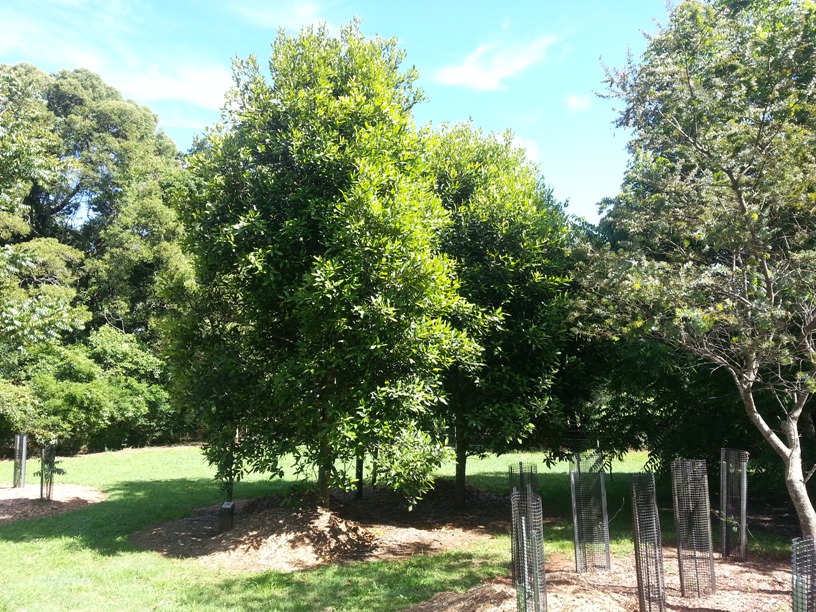
20131203_094203s

10 year-old planted Coachwood. Not bad at all!

And finally Wollemi pine at 4 metres in 4 years shows that even this unique tree has potential for producing softwood of equivalent quality to Hoop pine, but with much easier pruning.
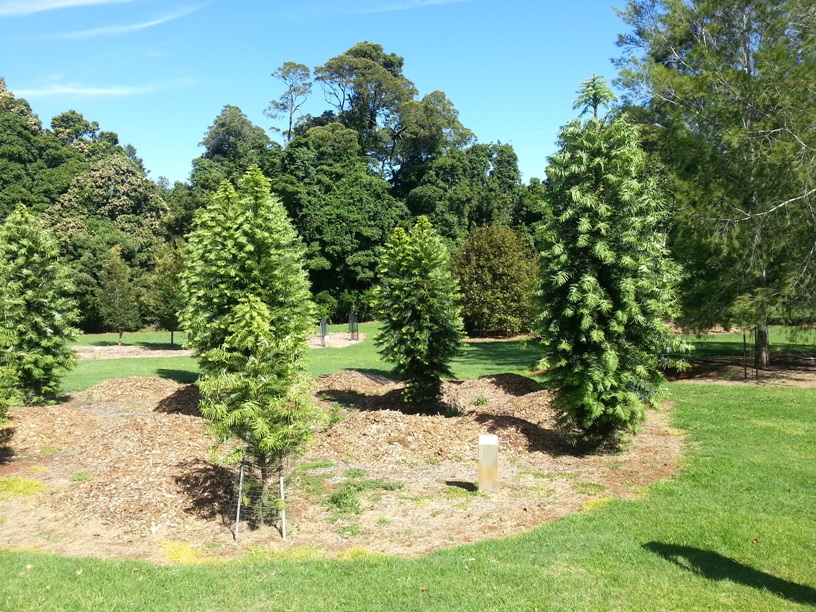
20131203_093540s

Wollemi Pine – 4 metres in 4 years!

With all of these species commercial rotations of 40-45 years might be possible if early performance is any indication, but with prices around $5,000+ per cubic metre for reasonable logs, these are still good investments.

And finally a word about eucalypts. For such a lush rich environment I saw very few outstanding eucalypts at Robertson. Amongst the species planted by the owner none seemed to be doing very well. I’m no eucalypt specialist but I can only put this down to soil problems.

Future

When these blackwoods were planted only New Zealand farmers and scientists were having any success growing commercial plantation blackwood. So for a novice enthusiast NSW landowner to plant 25 hectares was a brave venture. Despite this the results are certainly encouraging.

An action plan has now been drafted to get the blackwood management back on track. A thinning program has been sketched out, starting with the better performing stands. The scale of the thinning operation requires a mechanical approach, so research is needed to find an appropriate solution. Clearwood pruning will continue where it is still possible. Soil sampling and analysis will help identify what remediation is possible for some of the stands. Shelterbelts will be planted for the ridge top sites. An assessment of the wattle grub affected stand will determine what can be salvaged. Given that 82% of the trees need to be thinned anyway to get the stand down to 200 trees per hectare, there might still be something worth saving. Seed from the local Robertson blackwood will be collected for preservation and possible future planting. There was much discussion and a lot learnt by everyone involved including me.

So will Robertson NSW become a major centre for growing commercial blackwood?

No!

The land base is too small. Suitable areas are within about 5-10 km of the Illawarra escapement due to the terrain and steep rainfall gradient. But if enough landowners were interested there may be the potential for ~500 hectares of blackwood plantation. This could sustainably produce about 5000 cubic metres per year of premium blackwood sawlog. As a potential land use in this semi-rural landscape it is a relatively low-maintenance, high-value option. Close proximity to Sydney, and the Port of Newcastle and export markets, suggests that markets won’t be a problem.

There are still issues to be resolved including soil issues and determining the best genetics to plant, but hopefully growing Robertson blackwood should eventually be a profitable investment.

The visit to the Robertson blackwood plantation was definitely inspiring. Robertson clearly has blackwood growing potential. How the owner proceeds will determine whether that potential is realised and the challenges met. I’m looking forward to assisting and following progress here over the coming years.

Thanks to Andy and the crew for a great trip.
Insects, habitat, dead trees and blackwoods

Here is a post from a grower that may interest some readers:

As well as intentionally planted trees, our area in the Strzeleckis has a lot of blackwood growing as paddock trees, in  roadside verges and so on.

I was clearing out some thistles and blackberries from the verge yesterday. Within about 20 metres along the side of the road I noticed 3 wild bee colonies. These were all Apis mellifera or European honeybee. Although not a native these insects do sterling work in pollination.

All 3 colonies were in hollows in blackwoods. One was in the upper section of a dead blackwood that had fallen over years ago, another was only a few metres away in a hollow of a half-dead blackwood and another was in the remaining trunk segment of a blackwood that had died a while ago and lost its crown and any side branches.

Interesting that all three bee colonies were using blackwood hollows. Some agroforestry commentators suggest leaving an occasional dead tree (if a stem dies or perhaps killed as part of thinning) to form a stag for habitat.

Hi David,
It’s an interesting story, if a bit marginal to what I’m trying to achieve.
Some random responses:
What other trees around where you were have hollows? I suspect mainly blackwoods.
Also blackwoods, once they die, quickly start to rot out, so they are a natural and ready source of hollows, if only short lived before the tree falls and rots entirely.
But I definitely take your point. Leaving dead trees AND logs is important for insect habitat. We humans are too quick to tidy up and leave the forest/road verge looking like a park, rather than a forest with all its litter and chaos – and insects.
What about in a blackwood plantation?
Trees randomly die and fall over. Should we leave a few as habitat? Or will this just build up insect populations that then attack living trees? I don’t know the answer. I suspect that insects that inhabit dead trees are different to those that attack living trees. Perhaps those that live in dead trees are predators of insects that attack living trees. Ultimately the answer will vary depending upon the inclinations of each land owner. Some will give some favour to habitat while others will go for maximum tidiness and “hygiene”.
Thanks for the story.
Cheers,
Gordon

November 2013 IST blackwood tender results

The November Island Specialty Timbers (IST) tender results provided some mixed results for blackwood. There were three blackwood logs up for tender; two small and one medium size log; all plain grain with some negative quality issues.

Only the smallest log (3.5m length 0.71 m3 volume) sold, but it achieved the very good price of $500 per cubic metre despite the small size and quality issues.

The very good price for a pretty ordinary log is the good news.

The uncertainty comes from the lack of demand for the other two larger blackwood logs. These logs together with a feature-grain eucalypt log were the only logs unsold from the parcel of 22 lots.

As I said. It was a mixed result.

Recent New Zealand blackwood articles

The latest New Zealand Tree Grower November 2013 34(4) journal, published by the NZ Farm Forestry Association, contains some excellent articles and discussion about blackwood.

Two articles by tree farmer Malcolm Mackenzie are worth reading.

http://www.nzffa.org.nz/farm-forestry-model/species/blackwood/blackwood-milling/

This article reports the results of a small sawmilling study looking at factors affecting sawn timber recovery in farm-grown blackwood. The logs used came from a 27-year-old shelterbelt, and were on the small side, so the recoveries were generally not that high. But the best log gave a 66% sawn recovery, including 78% of clear blackwood timber, which sells in New Zealand for $3,000 per cubic metre!

Two log quality factors that Mr Mackenzie did not report on were sweep and taper, which can also affect sawn recovery. It would have also been useful to include sawn clear recovery for the entire study, as it is the clear, knot-free wood that has the premium price.

But as Mr Mackenzie says “my challenge to fellow farm foresters is to become more scientific in their analysis of their trees in their growing stages and in their harvest. It takes time but it is useful information. I would ask that we accept the need to share information particularly as it applies to harvest results.” I couldn’t agree more.

These results hint at the possibilities that will result once New Zealand blackwood farmers begin harvesting their well managed plantations in the near future. When this happens someone needs to organise a sawn recovery study of premium plantation grown blackwood sawlogs. I’m looking forward to reading that report.

Blackwood-milling1

http://www.nzffa.org.nz/farm-forestry-model/species/blackwood/collective-blackwood-marketing/

In the second article Malcolm Mackenzie talks about his ideas regarding collective marketing of New Zealand blackwood. His focus is the domestic New Zealand market. The article contains some excellent ideas.

However I suspect that the New Zealand farm blackwood resource will be more than enough to supply the local market, with the export market being much more significant for NZ growers, including the Australian market.

The export market will provide advantages that the NZ domestic market cannot, including:

  • markets for knotty blackwood timber that the NZ market cannot take;
  • strong price competition;
  • multiple markets and buyers looking for reliable supplies of premium grade timber;
  • access to high-value prestige markets such as the international tonewood market;
  • the well established Australian blackwood market in particular will be looking for alternative sources of blackwood timber, as supplies from Tasmania decline in the coming years.

I recently did a rough scoping study and calculated that New Zealand could be producing up to 10,000 cubic metres of premium blackwood sawlog per year within the next 5-10 years. Once markets, demand and price transparency become established, the feedback signals to farmers will quickly see the New Zealand blackwood resource expand further.

Perhaps Tasmanian farmers will then start to take notice.


NB. Thanks to the NZFFA for putting these two articles online allowing general public access.

Carrabin first thinning!

After my last visit to this plantation a few weeks ago I thought some urgent action was required so I offered to help with the thinning. My offer was accepted. So for the past two days I’ve been back up north helping to take this plantation to the next stage. See the following for previous blogs:

http://blackwoodgrowers.com.au/2013/11/02/carrabin-plantation-update-2013/

http://blackwoodgrowers.com.au/2012/03/11/carrabin-blackwood-plantation-continued/

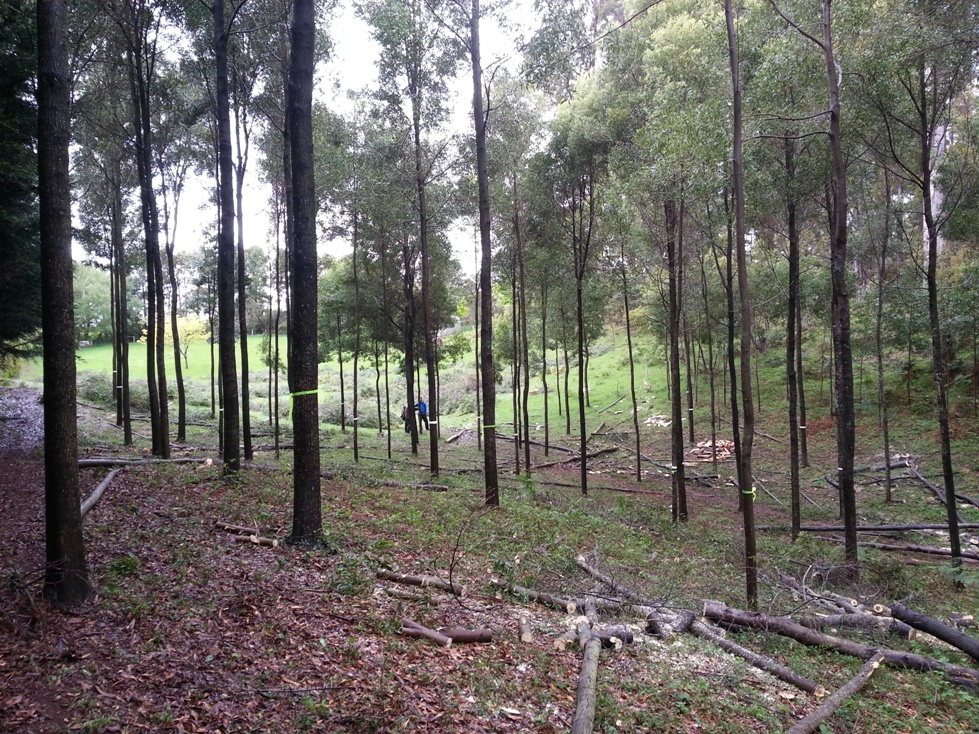
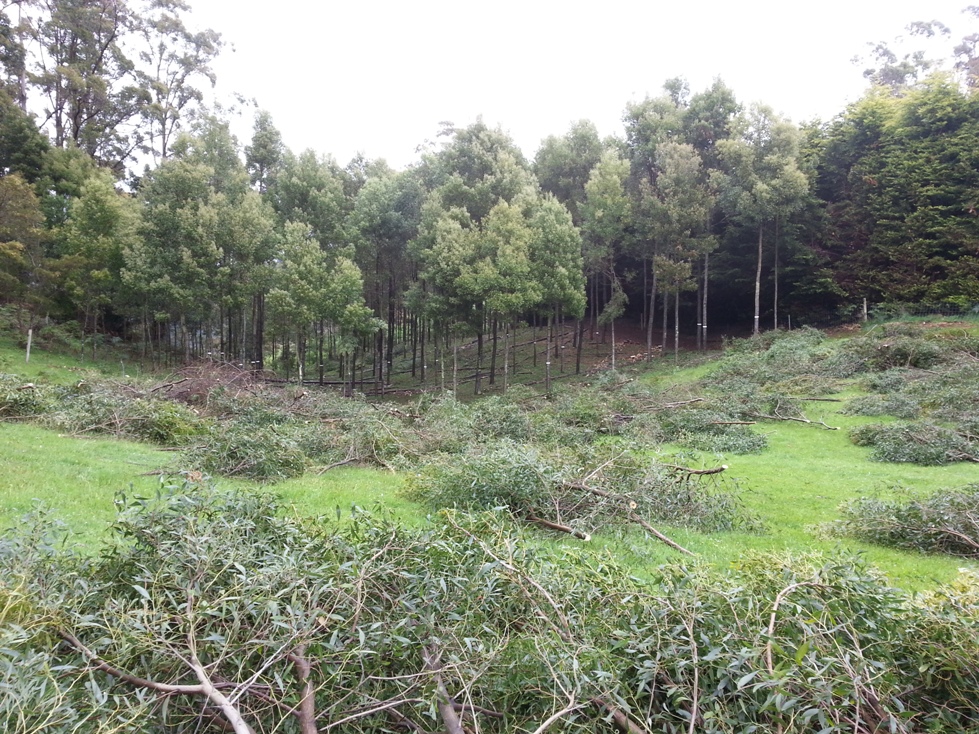
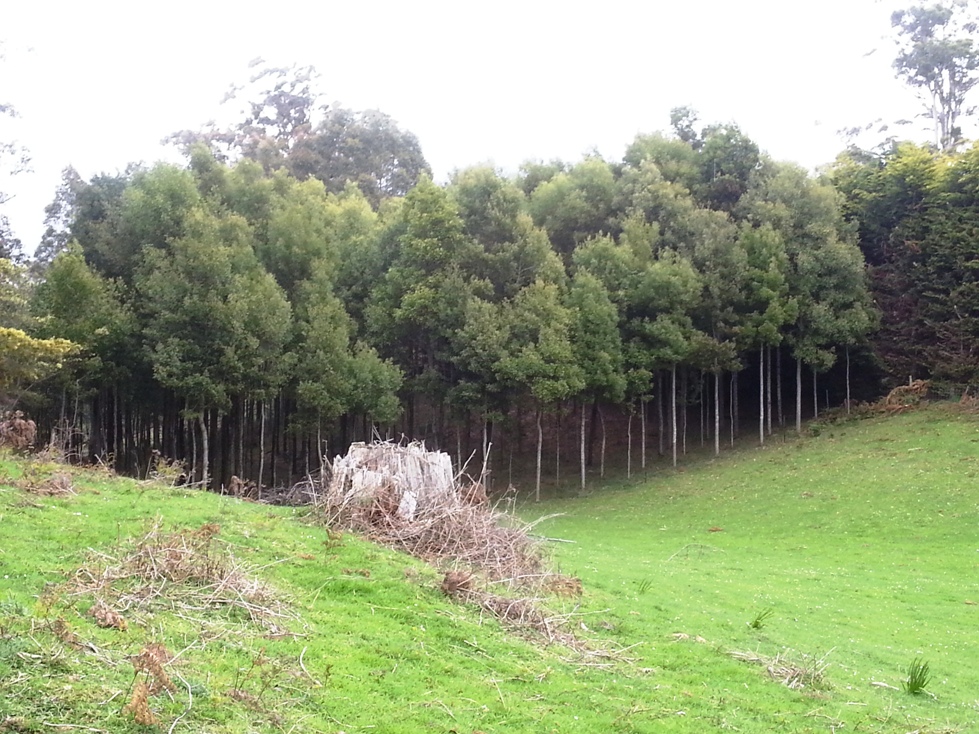
Over a day and a half we put 200 trees on the ground leaving about 100 trees still standing. A second, final thinning will be needed in 1-2 years to get the stand down to about 35 trees. The transformation over the last 2 days has been extraordinary! The plantation now looks fantastic. To the untrained eye it looks overthinnined, but in 2 years these crowns will have grown and filled in most of the gaps, and the trees will be putting on some serious wood volume.

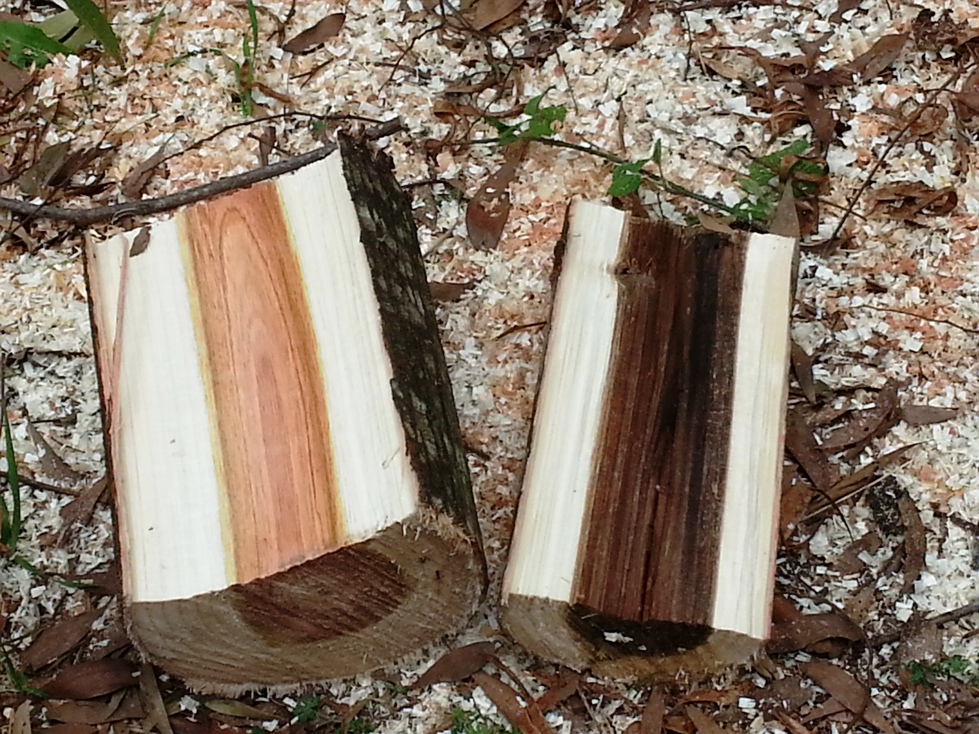
The trees are developing some excellent heartwood. This picture shows the heartwood from two adjacent trees that were thinned. Same seedlot, same age. This is an extreme example of genetic variation in blackwood heartwood colour. The sample on the left is the more common golden brown blackwood colour and was the common colour found in this plantation. The sample on the right is a rare dark chocolate brown (if only we had known before we cut the tree down!). Both absolutely beautiful colours and indicative of what this plantation will produce in 20 years time. If only we could clone both of these colours. With a growers cooperative this could become a reality!

20131112_122430s

Having a close look at the plantation over the past two days it was obvious where the management could have been improved. Both the thinning and the pruning should have happened earlier. I don’t recommend planting 2,500 trees per hectare. But if that’s the way you want to go, then follow the New Zealand recommendation and prune to retain a minimum three (3) metres of green crown, ie. start clearwood pruning when the trees are 4 metres tall. By the time half of the trees have reached 6 metres tall you should be able to begin thinning. Pruning must be done while the trees (and hence branches) are still relatively small. Maximum diameter growth must be maintained so that pruning wounds heal as rapidly as possible (preferably within 12 months). By the time the trees are 10 metres tall the clearwood pruning should be completed. This should mean that most new pruning wounds are <3cm diameter!

This plantation has had it’s first thinning when the trees are 10-15 metres tall (far too late), and we were just completing the pruning while we were thinning! The thinning should have happened at least 8 years ago, and the pruning completed 5 years ago.

But lesson learnt. And it is still a huge credit to the owner. Easily one of the best blackwood plantations in Tasmania!

So the owners have a year’s worth of firewood to keep them warm, and their three happy goats and a small herd of cows are enjoying a major feed of blackwood greens from the thinnings.

The next tasks will be to mark and number the final crop trees and do a first measurement. Then in 1-2 years it will be a return visit for the final thinning. In 5 years time this plantation will look brilliant. A real inspiration to Tasmanian farmers. Thanks to the Carrabins for an excellent time.

20131113_111101s

20131113_111328s

Questions from a grower

Hi Gordon,

I think these are the sorts of questions that would interest potential and existing blackwood tree farmers. Maybe you could use them as the basis for a post on your WWW site?

a/ We have a range of blackwoods from just planted to some that are in the range 35-60cm+ DBH. The easiest way to determine their growth rate is to measure them over a few years but what would you say we should be looking at as annual DBH increment on these larger trees assuming it’s a good site?

If you are growing sawlogs that a sawmiller can process profitably then the traditional objective is to grow trees that have a diameter at 1.3 metres above the ground (what foresters call “breast height” or DBH) of 60 cm. Obviously not every tree in a plantation will be growing at exactly the same speed, so perhaps the goal is to have >80% of the trees in a plantation >60 cm DBH. Plantations are an investment, and return on any investment starts to drop dramatically once the investment is greater than 40 years. So growing a 60 cm blackwood over 40 years means an average annual diameter increment of 1.5 cm. I would put this as the minimum diameter increment for commercial blackwood. Now it might take a tree 5 years before it is growing at this speed, which means that for a few years at least it will have to grow a bit faster to get the 40 year average. Better still is to grow the blackwoods to 60cm in 30 years which would mean an average annual diameter increment of 2.0 cm.  Trees will only grow at this rate on good sites and only if they are well managed  ie. thinned to a 7 metre spacing. Exceptional trees will grow even faster than this, and in Chile and New Zealand they can get blackwood growth rates faster still.

If you are doing periodic diameter measurements one suggestion is to mark the stems of the blackwoods with a dab of spray paint so that you are measuring diameters in the exact same spot on the trees each time.

b/ We have a large amount of seed forming on our trees that we could use for direct seeding with some best tree selection. And my sister has some nice silver wattle and blackwoods on her property. What are your thoughts on direct seeding these acacias into some disturbed soil followed by some stem selection in the first few years? Perhaps ten or so seeds into a meter x meter.

Firstly I would ask what you are hoping to achieve by direct sowing that would be better than planting? If you are growing commercial blackwood I can’t see any advantage in direct seeding. In fact it adds complexity and extra effort. Compared to the New Zealand regime of spot spraying and planting at 3.5 metre spacings, direct sowing seems so much more work. For example weed control is always tricky with direct sowing once seedlings are growing, and weed control is essential in getting blackwoods growing quickly. Then there is all that thinning. No! In my opinion it would be better to use the seed by growing it in pots or tubes and planting at regular spacing. This makes management (pruning, thinning and weed control) so much easier.

Bye for now.

Thanks for the questions. I hope my answers provide you with the necessary information. Comments or further questions always welcome.

Happy blackwood growing!

Carrabin plantation update 2013

On my way back from the north west I called in on Giles Carrabin at Paradise to see how his plantation is going. I last reported on this plantation in March 2012:

http://blackwoodgrowers.com.au/2012/03/11/carrabin-blackwood-plantation-continued/

This plantation is one of the few successfully managed blackwood plantations that I know of in Tasmania and is a real testament to the effort and dedication of it’s owner. It demonstrates a number of unique features including the successful use of shelter in a windy site. Three goats now help keep the weeds and blackberries under control (see the pictures).

The regime is not one I would recommend but full credit to Giles for making it work.

A start has now been made on thinning this plantation down to the final 30 trees (it’s only a small plantation). Already the retained trees are responding to the thinning with obvious crown growth. At least another 100 trees should be thinned from this plantation this season. With plenty of spring rainfall this will be a good growing season.

While a great success this plantation still faces two major management risks:

  • Thinning too slowly so that productive green crown is lost. Already some trees are beginning to lose their lower green crown due to increasing competition between the trees. These trees are losing their productive capacity, perhaps permanently. Thinning is critical to keep this plantation fully productive and allow the blackwood crowns to develop a stable wide structure.
  • Under thinning resulting in too many small trees that are slower growing. This is a common problem with farm plantations and Giles said he is already finding it hard. Having devoted so much physical and emotional effort to get the plantation to this stage it can be a real challenge to then have to cut down the results of so much effort. This is one reason I recommend a much simpler regime.

Having watched the Blackwood in New Zealand video, the risks of thinning too slowly and underthinning are very real. Poorly formed crowns (with the risk of future crown collapse), and permanent loss of growth potential are a high price to pay after so much effort. As farmer Ian Brown says on the video, beware of becoming too emotionally attached to your trees.

With continued good management this plantation will look fantastic in five years time and be a real inspiration to other Tasmanian farmers.

Giles is now planning to establish another plantation using a similar regime but with a wider (3x3m) planting spacing. With such a labour intensive regime I can only support this move to a lower planting rate.

20131018_133032s 20131018_134022s

Quilliam plantation update 2013

A recent phone call from Jamie Quilliam meant a return journey to Circular Head for some blackwood pruning and maintenance. I last reported on this plantation in October 2012:

http://blackwoodgrowers.com.au/2012/10/09/quilliam-plantation-update/

But compared to 12 months ago this visit was a completely different experience. A year ago, to my complete surprise, this plantation was showing plenty of potential for commercial blackwood growth despite many obvious challenges. But this year the trees looked pretty unhappy with none of the strong apical growth seen 12 months ago. Had I misjudged the site? Was all that strong early growth just a flash in the pan?

Potential issues are the rainfall (last season was a dry one so there wouldn’t have been so much growth), and weed competition (trying to control grass growth on these wet flats is a real challenge!)

The first day of pruning was under a howling westerly wind, which confirmed that at least one of the challenges here is exposure. Blackwoods don’t enjoy growing on exposed sites, not if you want them to grow tall and straight.

On the second day we had finished the pruning and Jamie offered to show me the 3 hectare remnant patch of swamp forest which is next to one of the blackwood plantings. This remnant bush had cattle grazing through it until 13 years ago when it was fenced off. Since then the forest has recovered surprisingly well. From a distance I could see some very impressive Eucalyptus brookerana. But what surprised me most was as we got closer I began to notice the magnificent swamp blackwoods, 25-30 metres tall with long straight trunks (see picture). Clearly this farm used to support some fantastic blackwood swamp forest.

20131018_102037s20131017_131925s

I suggested to Jamie that he would have more success growing commercial blackwood by actively managing the remnant bush. There is some regeneration but also opportunities for active management (eg. controlling blackberries) and blackwood planting. The lessons learnt in actively managing the remnant bush might then help solve the problems in the blackwood plantation. Jamie wasn’t sure about this idea. He hasn’t reached the stage of being passionate about growing blackwood, not yet anyway!

Obviously shelter and nursing from the surrounding vegetation is an important factor in native swamp-grown blackwood. But has conversion to pasture completely destroyed the commercial blackwood growing potential of this property? Here is the perfect opportunity to find out. Side by side, plantation blackwood and high quality native blackwood swamp forest. From the outset I realised that this property was an experiment in the making. Can we find a way to grow quality commercial blackwood in plantations on this property?

The Sound of Business

A story posted yesterday on the Business Spectator website. One of their series on Australian family businesses. Not so much a story about blackwood, but given the importance of Melbourne-based Maton Guitars in the commercial development of blackwood as a internationally recognised tonewood I think it’s a great story. Plus I always enjoy reading Alan Kohler’s articles. Thankyou Matons and Mr Kohler.

http://www.businessspectator.com.au/article/2013/10/31/family-business/sound-business