Cort Guitars

Not everyone can afford a nice custom make guitar. Cheap mass produced guitars are essential in the marketplace.

I’ve mentioned Cort Guitars previously in the blog about Victorian blackwood legend Murray Kidman. Murray supplies blackwood from the Otway Ranges to Cort Guitars. It’s not Tasmanian blackwood, but maybe……..one day.

So here’s an impressive video tour of the Cort acoustic guitar factory. They even mention blackwood at 53 seconds!

The machinery and technology you can invest in when you build >1,000,000 guitars per year! Quite amazing!

Could this one day be Tasmanian certified farm-grown blackwood? Absolutely!

Enjoy!

More concerns for the public blackwood resource

Here’s an extract from an email I recently received from another forest industry employee.

My guess is that Forestry Tasmania will cease to exist within a few years. I ……… know something of the [public] resource that is left in the North West and it’s not much. Available mature [eucalypt] resource has been largely logged and most of what is left is either not economic or has been locked up. High quality [eucalypt] regrowth sawlog resource has mostly been logged. What FT has available is mostly younger regrowth that is too young for sawlog, most of which is earmarked for Ta Ann. The blackwood resource is limited and I suspect has 5 years left at current harvest rates.

That’s 5 years of public blackwood sawlog resource remaining to be harvested before it’s all over. This certainly correlates with my own expectations of the available public resource.

The end of the blackwood industry as we know it.

AFS and FSC Certification will count for nothing under the current scenario.

As part of the Tasmanian Forestry Agreement Forestry Tasmania is currently undertaking a special timbers resource review which is due for release later this year. It is not known whether this review will include blackwood. Given the increasing uncertainty about the public blackwood resource, the resource review report will have to be very convincing in its detail and analysis. The last blackwood resource review in 1999 was anything but convincing and detailed. The fact that Forestry Tasmania has been harvesting blackwood well above the sustainable yield since the last review is just one of many points of concern.

As I’ve said before the transparent process of regularly planning, executing, managing, reviewing and reporting the sustainable blackwood sawlog production from public native forest is clearly not up to scratch, and is certainly not worthy of FSC certification.

The growing uncertainty about the sustainability of the Tasmania’s blackwood industry is cause for concern. But questions about the sustainability of the resource may be over-shadowed by more immediate issues such as the State election in March, and now the dire state of the State Government budget. Post-election the new incoming Government will have no option but to make major cuts to Government spending. Schools and hospitals will be obvious targets. But there will be no more hand-outs for the forest industry. Non-performing assets like Forestry Tasmania will be told in no uncertain terms to ship-up or shape-out. Forestry Tasmania may be forced to abandon its “non-profit, non-commercial” special timbers activities even before the resource review is finished!

It’s going to be another very hard year for the forest industry.

The only future for the blackwood industry is to focus on private growers. There is a small existing resource that can be utilised, but the focus must turn to rebuilding the resource base on private land with a dedicated growers cooperative. Engage private land owners to learn to manage and grow more blackwood. A key part of this strategy must be greater market and price transparency.

The only other option is that we all disappear into the dusty pages of history, and let the New Zealand farmers take our blackwood heritage and industry.

PS. Meanwhile the forest industry in New Zealand just keeps going from strength to strength – absolutely unstoppable!

http://www.scoop.co.nz/stories/BU1402/S00316/stars-align-for-nz-foresters-as-wall-of-wood-comes-on.htm

When I die I want to go to …… the Perth Heath Ledger Theatre??!!

Here’s a great blackwood story I just stumbled upon. And I was in Perth only a few weeks ago….. If only I had known!

http://www.statetheatrecentrewa.com.au/

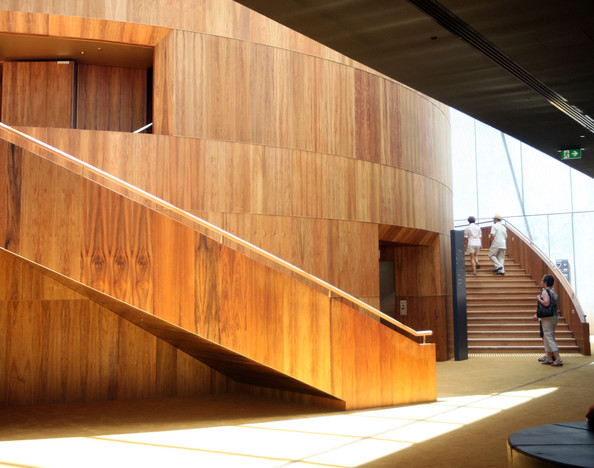
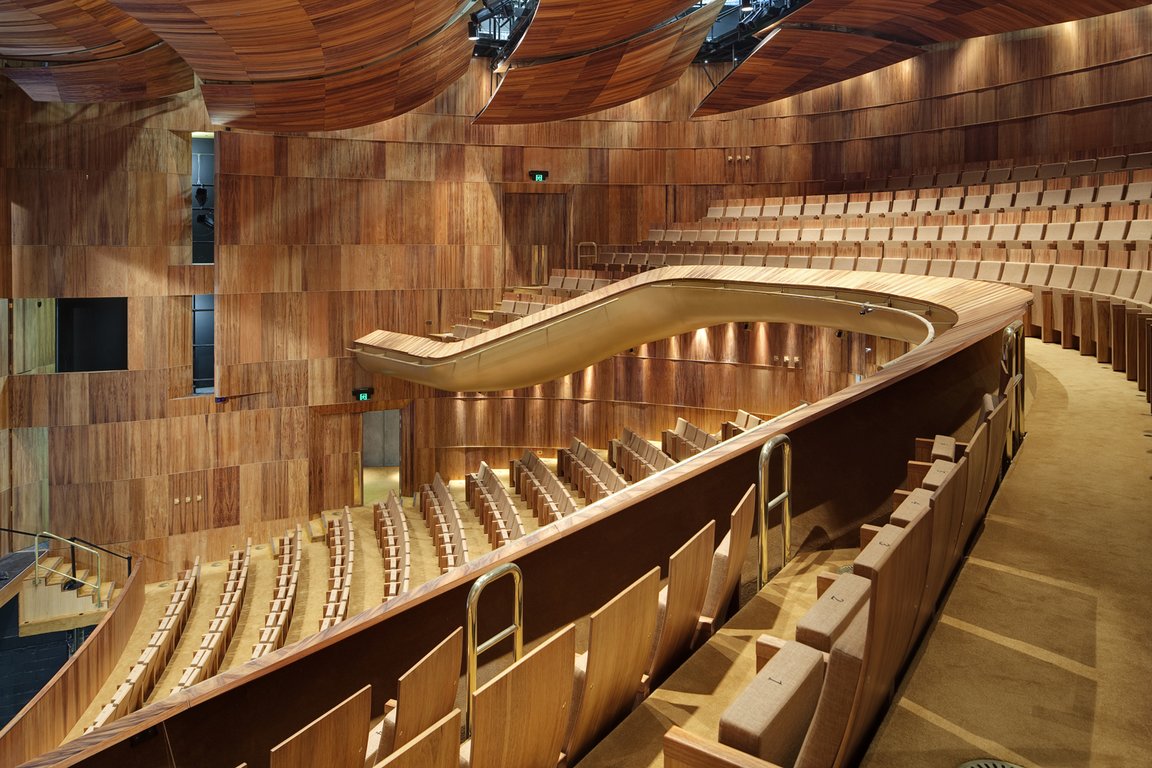
Perth, Western Australia, has a new performing theatre complex (along with an amazing range of other new facilities and infrastructure). The building was designed by Perth-born Kerry Hill architects and opened in 2011. The 575-seat main theatre is named after Perth-born Australian actor Heath Ledger and it is absolutely stunning.

HLT1

A veritable Tasmanian blackwood tsunami.

Vast surfaces of blackwood veneer overwhelm the senses, including the seating. Check out these images on Zimbio, and more here! It’s almost too much.

HLT2

A blackwood wonderland!

All of this high-value blackwood veneer could one day be farm grown. In fact in a few years time it will be – New Zealand farm-grown. What about Tasmanian farmers?

So when I die and go to blackwood heaven it may look something like the Heath Ledger Theatre. I wonder if The Joker would approve?

Markets for farm-grown timber?

money

Here’s an email I recently received from a client that raises a number of important issues.

There’s no point growing trees for timber production if there’s no market for the timber. It appears that in NZ and Tasmania there are a number of places that farm forestry growers could sell blackwood as log or possibly sawn. What’s available in Victoria? I asked this question recently of one Victorian agroforestry consultancy. They didn’t have an answer. There are some furniture manufacturers in Victoria who use blackwood so they might be interested in taking timber but I’m guessing only if it has been sawn and seasoned. Perhaps some of the timber sellers will buy from growers but again I suspect if it has been sawn and seasoned. There are markets such as the craft/hobby/specialists such as luthiers which will take small volumes. I guess they could be supplied directly, through WWW fora or by selling to distributors.

This lack of clearly defined sales opportunities for species beyond E. globulus and Pinus radiata (and some niche opportunities such as several species that the Yarram sawmill actively pursues) is IMO a serious impediment for farm forestry in Victoria generally. I raised this issue in a submission to the Vic farm forestry strategy initiative a year or so ago. Perhaps that initiative will lead to some clarity of what can be sold where in Vic. There was an excellent guide published in Qld some years ago, for example, that details what timber is required for what markets and what prices may be expected.

There’s a great deal I could say in reply to this.

There are various reasons why farm forestry has never taken off in Australia despite the AFG having being around since the late 1960’s when the industry was much bigger than it is today. To me the main reason has been poor forest policy and management, and above all a lack of commercial process and management. The forest industry until recently has been run as a sheltered workshop for a select few, centred around a public native forest and plantation resource. So no transparent, competitive markets have ever developed for wood products in Australia. Farmers have never been encouraged to become commercial tree growers through proper market processes and competitive, transparent prices.

With the steady decline in the industry over the last 40 years, and especially since the GFC, the few remaining markets are rapidly disappearing. Sawmillers have traditionally played “rent seeker” with State Governments, rather than behave in a rational commercial manner and engage all landowners (public and private) to grow and supply them with sawlogs. Remarkably they are still behaving as rent seekers even as they now face almost certain extinction. The political games will keep them alive but it will be a long slow painful death; much like a cat playing with a mouse.

We are fast approaching the point where the hardwood sawmilling industry in Australia will collapse and disappear, and will have to be rebuilt from scratch, as they are attempting to do in New Zealand. In this new environment, portable sawmills will play a major role. Here are two examples of what the future may look like:

http://www.northcoasttimbers.net/ based in north-coast NSW, and

http://mobilesawmilling.com/ based in SE Queensland.

I can’t imagine why similar businesses are not operating in Victoria, such as one in Gippsland, another in the north east, perhaps another working the Otway/Ballarat area. Farmers who have small volumes of logs to saw for their own use or to sell would readily make use of such a service. And the portable sawmill owners could develop a network of contacts in the market to on-sell sawn timber. Being small, portable and efficient seems to be the key to success.

I suspect that most of our eucalypt hardwoods will never be valuable enough to support investment beyond this basic level, supplying small local niche markets. Even where high-value species are concerned, such as blackwood, the future will be difficult, unless those species already have significant local and international market profile (such as blackwood). The timber volumes required by the local market will be small even if the prices might potentially be high. Unless enough of a species is grown to allow access to export markets, then it will just be local niche craft markets. It’s a “chicken and egg” situation. Scale of planting and log value against local and/or export markets. One can’t happen without the other.

It will be interesting to watch how NZ blackwood farmers develop towards a collective marketing model for their trees that are now reaching commercial maturity. They have enough potential volume to begin accessing export markets so the rewards could be very good if they succeed.

Selling small parcels of logs and single logs will always be difficult, even if they are excellent quality logs of premium timber.

The fact that our sawmillers aren’t in the marketplace aggressively looking to buy sawlogs from wherever they can source them is a great curiosity to me. I can only interpret this behaviour as meaning that the logs are just not worth buying. The value of the timber is just not worth the effort. There are plenty of sawmiller websites around but I have yet to find one that has a “Wanted to buy” sign out the front. They are all about what they have to sell. Despite the collapsing industry the remaining sawmillers think their future supply is 100% secure. Very curious!

People like Jon Lambert at Heartwood Plantations have a much more commercial focus and a different business model, but I think even they don’t push the market hard enough. I’d love to know what they think of the current situation.

While the forest industry in Australia avoids becoming hard-nosed commercial and remains bogged down in politics and ideology, then farm forestry will continue to be a hard road. You mention the new Victorian farm forestry strategy. I’ve seen so many strategies come and go over the years with no impact at all, I’m afraid I’ve little faith in political support anymore.

So coming back to a farmer/growers viewpoint, you need to think carefully about what you are trying to achieve, and that means understanding the factors that will help or hinder you selling your wood in the future. Planting a lot of different species might be fun and interesting, but when it comes time to sell, you will find very few buyers unless you have done your homework.

What are the main local markets for premium timber? Cabinetry, flooring, furniture, panelling??? I don’t think structural solid hardwood has any future. What little structural hardwood that the market wants will all come from reconstructed wood such as LVL. So what species can you grow to supply the flooring and panelling market? Etc., etc…

I’m comfortable promoting blackwood because it has a well established local market profile and a growing international profile. But I realise my time is limited. If the remaining forest industry crashes and burns, as seems likely, then getting a growers cooperative going will be that much harder. Blackwood has a great future, but for the foreseeable future the Kiwis will be the drivers and dominant players in the blackwood market.


DELORAINE STRINGFEST

21, 22, 23 March 2014

This will be a great event!

I’ll be there to talk about how we can turn blackwood into an internationally recognised and appreciated tonewood with a Blackwood Growers Cooperative.

Put this weekend in your diary now.

See you there!

http://www.stringfesttas.com/

Luthiers, musicians, collectors and lovers of fine instruments and great music will gather at the inaugural Deloraine StringFest Tasmania in March 2014.

Deloraine is the home of the annual Rotary Tasmanian Craft Fair in November and is recognised as a centre for the arts with many fine crafts-people and artisans living in and around the Meander Valley.

Deloraine StringFest Tasmania (StringFest) is a celebration of stringed instruments, especially those made in Tasmania or made with Tasmanian woods such as blackwood, huon pine, sassafras and macrocarpa.  Tasmania has many fine artisans who create guitars, ukuleles, violins, harps, banjos, lutes and other fine instruments. Tasmanian woods are used Australia-wide and are keenly sought by instrument makers internationally.  Australian instruments by both large manufacturers and artisans have achieved international fame, and this is an opportunity for musicians, luthiers and enthusiasts alike to gather, display, sell and discuss their craft and love of instruments.

StringFest will bring together Instrument makers, tone-wood suppliers [AND GROWERS], musicians, groups and lovers of these fine instruments for displays, jam sessions, busking, concerts and workshops.

Musicians and makers attending StringFest will hold and attend workshops on playing and making instruments. All types of string music and instrumentation will be represented played by professional and amateur musicians from all over Australia.

StringFest Aims:

  • To present a festival of stringed instruments, showcasing Tasmanian and Australian luthiers, Tasmanian tone-woods and instruments;
  • To recognise Tasmanian instrumentalists and provide a social gathering for musicians, both professional and amateur;
  • To highlight the craft of luthiers and the pre-eminence of Tasmanian timbers used world-wide to create quality crafted stringed instruments; and
  • To provide ongoing recognition of Deloraine as a centre for craft and arts excellence.

Event Management

StringFest is a non-profit community event auspiced by Arts Deloraine, a non-profit community arts organisation, with any profits being directed back into the community for future events.

StringFest Events

Over the three days of StringFest there will be a multiplicity of events, some organised by the Management Committee and others hosted by community groups and business houses.

Friday, Saturday and Sunday – Instrument EXPO   Sports Complex, Little Theatre

Displays by luthiers of Stringed Instruments, displays of collectors instruments, Displays of Tone-woods used in instrument making.  Refreshments will available at the venue. ($5 admission). (Once only charge)

Blackwood – the start of a learning curve

by Ian Brown

For over 30 years I have been on a learning curve for blackwood. I planted my first blackwoods in 1980 on a small abandoned farm property I had bought in the far north of New Zealand. It was a long way from home, but it was cheap, and the nearby coast was appealing for family holidays. It was located in an elevated valley, sheltered from prevailing winds, an adjacent range provided good rainfall, and had clay loam soils based on ancient volcanics. In response to a recent study carried out by Ian Nicholas at Forest Research, who had been working on a project to select a limited number of species to supplement our monoculture of radiata pine, my brother and I decided to trial some alternative species, including blackwood.

Blackwoods have been planted in New Zealand from the 19th century. It had been generally assumed that to produce good form they should be interplanted with another species, and many had been planted in native bush, or in mixtures with eucalypts or pines. There had been little interest in pruning blackwood for form correction.

1980 trial planting.

We planted 500 blackwoods in groups of 4 trees, 8 metres between groups, and interplanted with pines. When we visited the site in the first summer the blackwoods were growing strongly, and were about chest height, but some of them were developing double leaders and competing branches. It seemed logical to trim these back, leaving a single leading shoot. Without a clear agenda, we set to with secateurs. However competing demands for time (fishing) meant we did not finish the job. In the following summer, two things were apparent: the trees we had pruned were much better in form than the unpruned trees, and the pruning had not affected their growth rate. And the blackwoods were growing faster than the pines, which were clearly having no influence on them. Over each of the following summers we continued with form pruning, directing attention to competing shoots near the top of the trees, and from about year 4 followed through with clearwood pruning from the base. When the trees were above 6 metres we thinned them to one per group.

The pines lagged behind, and made no contribution until about year 4, and by year 6 were suppressing the blackwoods. We then felled the pines. This left a thick layer of slash, which made access difficult for further silvicultural work. The pines had clearly been more trouble than they were worth.

I have a trial plot on the site, and in 2010 at age 30 the mean diameter was 55 cm. It should be close to 60 cm by 35 years, when I hope to mill them.

The message we got from this block was that on a good site, blackwoods respond well to annual form pruning, without the need for a nurse. So we decided to try something novel.

1982. Open grown planting.

In 1982 we planted blackwoods, again in groups at 7 to 8 metre spacing between groups, in the open, and undertook annual form pruning, but without a nurse species. These are probably the first blackwoods to have had this form of intensive annual treatment. Of the systems we have tried, it proved to be the simplest and most effective, and with some modifications it has been the method I have used since then.

At the same time we planted blackwoods in holes cut in an area of regenerating native scrub. This worked well, but the trees still needed an annual visit for light form pruning and remove overhanging branches. I tended to get lost when locating the trees, and spent some time wandering about in circles. This might have been avoided by cutting lines in the scrub.

1983. Blackwoods and eucalypts.

   In 1983 we returned to orthodox management, and interplanted blackwoods in a mixture with with E. saligna. This worked well for the first few years, and we started to clearfell the eucalypts at about year 5. Half way through the program we encountered a problem familiar to growers who have tried this regime: we were seduced by the eucs, which were growing strongly, and looked too good to fell. So we kept them, in the hope of eventually milling both species. It didn’t work out. The blackwoods became badly suppressed, and the eucalypts thrived. Where we had thinned the eucs, the blackwoods grew well.

The message here was that nurse species provide some benefit for a limited period, but although improving form, they do not eliminate the need for form pruning. They add costs and complicate the management, and to avoid suppression have to be sacrificed on time.

In subsequent planting in the Waikato I have relied on form pruning on open-grown trees, planted in groups of 3 or 4 at final spacing. This has worked well, and has done so on other plantations in NZ that I have looked at, provided one essential condition is met: to grow blackwoods in the open and without a nurse you must have a good site, one that will encourage rapid growth. This means warmth, shelter, adequate moisture, and decent soils. On sites that are cold, dry or exposed, it is very difficult to control form in open grown trees. In those conditions you might get away with it by using a nurse crop. Or it might be better to simply plant another species.

153 (3)

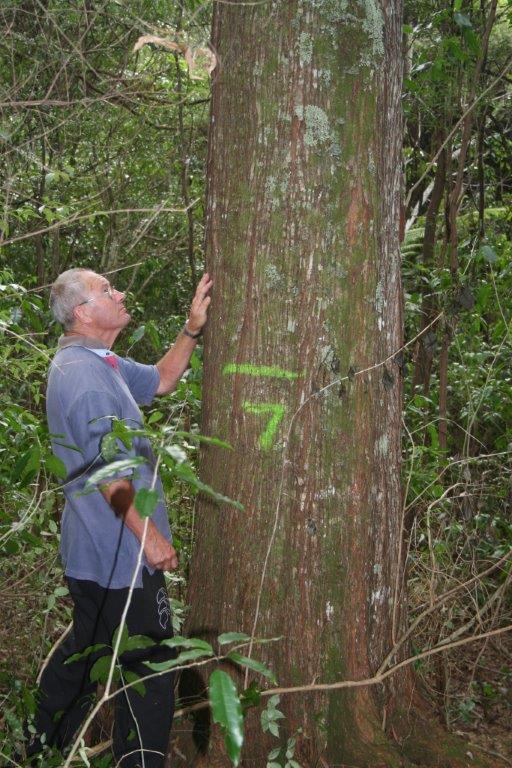
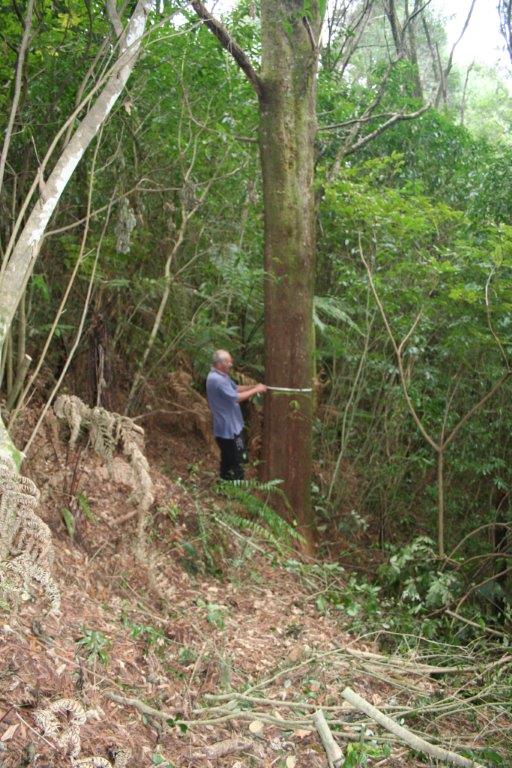
Photos are from the Northland planting, taken in April 2010. The top photo is from the 1980 planting. The scrub is natural regeneration. The tree marked 7 (below) is from the 1982 planting, open planted and annually form pruned DBH 70 cm at age 28. Naturally it is one of the bigger trees.

143 (3)

Thanks Ian for a great contribution. I hope it generates some discussion amongst readers.

Seeking Stakeholder Feedback

FT Help Us Improve

Within the chaos and conflict being generated around the up-coming State election in March, Forestry Tasmania is in the initial stages of their Forest Stewardship Council (FSC) certification process. What a complete debacle!

They have called for feedback on their initial draft FSC Objectives and Criteria, with a closing date of 31st January.

http://www.forestrytas.com.au/help-us-improve

My feedback is purely focused on commercial management and practices at Forestry Tasmania. Private companies that apply for FSC certification don’t need to demonstrate good commercial management, it is fundamental to their very existence. Not so Government agencies such as Forestry Tasmania. They traditionally have no commercial focus. Forestry Tasmania has a very poor history of commercial management and performance. Therefore the FSC process provides a rare opportunity to put pressure on FT to improve its commercial performance.

At the moment FT is directly undermining my efforts to create a blackwood growers cooperative. FT is also draining $100 millions of taxpayer dollars from the State Treasury. This is money that should be going to improve our schools, hospitals and roads, not propping up an underperforming forest industry. These issues should be of vital importance to the FSC assessors.

In fact at a general level FT are applying for FSC certification even although nothing fundamentally has changed over the last 2 years. FT is still the same organisation with the same values and modus operandi. Given the last 30 years of conflict there seems to be little basis for hope in any of this.

So here is my submission for initial feedback, which I have emailed to them and posted here for your enjoyment. It will be interesting to see where all this goes, especially within the context of the State election. FT and the forest industry are very politically exposed. No matter what happens it will be another bad year for the industry.

[insert]

Dr Gordon Bradbury

12/12 Saunders Cres.

South Hobart, 7004, TAS.


January 28, 2014

Mr. Steve Whiteley

Chief Executive Officer

Forestry Tasmania

79 Melville St.

Hobart, TAS. 7000.


Dear Mr Whiteley:


Re: Draft Forestry Tasmania Management Plan FSC Criteria and Objectives


Firstly congratulations to Forestry Tasmania for seeking to gain Forest Stewardship Council (FSC) Certification. Good luck!

I will focus my feedback on the business/commercial aspects of the draft FSC Criteria & Objectives (C&O).

Generally-

It is very clear that the draft Forestry Tasmania FSC C&O continues the culture of community service and charity that has been the heritage of Forestry Tasmania for many decades, and completely ignores the significant commercial realities facing the forest industry today. This attitude will guarantee the continuing decline and extinction of the forest industry in Tasmania. Here are some basic facts:

  1. The growing of trees for wood production in Australia is a commercial business. It has nothing at all to do with community service, industry support, charity or any other politically-driven outcomes.
  2. The vast major of wood now grown and sold in Australia is grown by commercially driven private forest growers with which Forestry Tasmania competes in the marketplace. These private tree growers seek to maximise profit within the context of good forest management. That is their primary objective, as with all businesses.
  3. For Forestry Tasmania to operate in any way other than fully commercial and profitable is anti-competitive, disrespectful to all Tasmanians and destructive of the forest industry.

I repeat!

Forestry is a business!

Forestry Tasmania has a poor history of corporate governance, commercial management and performance. All reports and indications (including the recent URS Report) show that commercial viability will remain the major challenge for Forestry Tasmania. Potentially hundreds of millions of taxpayers’ dollars will be needed to prop up Forestry Tasmania for the foreseeable future. This is money that should be going to our roads, schools and hospitals not the forest industry. From a financial reporting and commercial management viewpoint the Forestry Tasmania Annual Report is a failure (for a better example of a State forest agency annual report see the NSW Forestry Corporation here).

Examining company websites is a useful way to gauge the focus, discipline and management of a business. Looking at Forestry Tasmania’s website it is difficult to see exactly what business they are in; certainly it does not appear to be wood production!

So it worries me that the C&O contains such nonsense statements as:

•           Provide the foundation for a strong, competitive and sustainable Tasmanian forest industry and support local processing and value adding of wood products.

•           Make available an ongoing supply of forest products (including high quality sawlogs, peeler billets and special species timber) in accordance with the Forest Management Act 2013 and the Tasmanian Forest Agreement Act 2013.

•           Maximize the recovery and utilisation of wood products from forest operations.  

There is no mention at all of “commercial, efficient, competitive, profitable wood production”. No mention of regular annual dividends to be paid to the Tasmanian Treasury. Absolutely no commercial focus at all.

Forestry Tasmania continues to regard the forest industry as disabled or handicapped, in need of continuous prosthetic support. The forest industry is not disabled or handicapped. The only handicap the industry has is being too willingly dependent on Government largesse, lack of commercial focus and proper market processes.

No private tree grower would ever consider adopting these three objectives. They represent commercial suicide. For Forestry Tasmania to adopt these objectives is anti-commercial and anti-competitive. They undermine the competitiveness and profitability of the entire industry, and existing and potential future private forest growers.

For examples of sensible FSC C&O that have been developed for commercially-focused private tree growers check out:

http://www.sfmes.com.au/wp-content/uploads/2013/10/SFM-Forest-Management-Plan.pdf

and

http://www.pfolsen.com/nz_index.php?sect=fsc&inc=ogs

There is no mention in these examples of industry support or obligated wood supply, or meeting political objectives, and certainly no mention of picking up the last piece of firewood regardless of cost/profitability. That’s not what private tree growers want at all. There is no mention of competitive, efficient and profitable either because these goals are fundamentally implicit in running a private business. Not so with a government business enterprise.

The only commercial objective Forestry Tasmania needs is to be a fully commercial, competitive, efficient and profitable grower of wood.

Now to specifics-

And now to the specific reason for my critical submission. For the past 3 years I have been attempting to get a blackwood growers cooperative established in Tasmania, but with limited success. This is in part due I believe to poor State forest policy and the policies and practices of Forestry Tasmania.

Special timbers represent the very worst example of “commercial” management by Forestry Tasmania. The fact that Forestry Tasmania no longer regards special timbers as part of its commercial operations is absolute nonsense, commercial sabotage and disrespectful of the Tasmanian community. That Australia’s “most valuable” timbers are supplied to the market as a taxpayer-subsidised community service is an absolute disgrace. What a joke the forest industry has become.

The only forests that should be harvested are those that can be harvested profitably. There should be no “cost-neutral”, “non-profit” or taxpayer-subsidised harvesting of public (or private) native forests.

This Forestry Tasmania “non-commercial” policy undermines my attempts to create a blackwood growers cooperative. Blackwood has been Australia’s premier appearance-grade timber for over 100 years. Blackwood (Acacia melanoxylon) represents approximately 80% of the annual harvest of special timbers by Forestry Tasmania, with Forestry Tasmania being by far the dominant supplier. Blackwood is the only Tasmanian native timber that can be grown in commercial plantations, which New Zealand farmers have been doing for the past 30 years. Blackwood also occurs commonly on private land across northern Tasmania. Therefore any “non-profit, subsidised” blackwood harvesting by Forestry Tasmania directly undermines the ability of existing and future private land owners to grow and harvest commercial blackwood.

I will save my criticisms of the sales and marketing policies and processes used by Forestry Tasmania for a later submission.

The corporate governance, commercial management and performance of Forestry Tasmania have been the subject of much analysis and criticism for many years by many observers, including the State’s own Auditor-General. The draft FSC C&O provide no cause for optimism that this is about to change. The current commercial management at Forestry Tasmania encourages and rewards rent seeking behaviour within the forest industry that results in negative economic outcomes.  Forestry Tasmania must either be managed like a commercially-focused profit-driven private forest grower or it must be shut down.

In conclusion, these so-called commercial objectives in the draft FSC C&O are a joke. They are anti-commercial, anti-competitive, and disrespectful to the Tasmanian community at a time when the State is already financially challenged. For the forest industry to continue to be a drain on the public purse whilst discouraging new investment is unacceptable and unworthy of FSC recognition and support.


Sincerely,


Dr. Gordon Bradbury.

Blackwood Industry Award

A quick good news story to finish the year.

I’m awarding Bob MacMillan, owner of Tasmanian Tonewoods, a special award for dedication and commitment to the blackwood industry above and beyond the call of normal business.

http://tasmaniantonewoods.com/latest-news/salvaging-old-growth-standing-dead-blackwood

Check out these photos from his website of some private property blackwood salvage. An old dead stump and a half dead tree. Now that’s what I call dedication!

Blackwood%20Southern%20Midlands%203

I hope the farmer and Bob make some decent money out of those butt logs.

But it does show what is possible. There are thousands of blackwoods on farms around Tasmania just like these. Most of them end up as firewood or else just piled up and burnt. Farmers don’t appreciate their value. But they are ideal for the international tonewood market.

And hopefully they can help generate interest in the farming community about growing commercial blackwood for the future.

I’m sure Bob would like to hear from more farmers with blackwood to salvage (see his website for contact details), and I’d like to hear from farmers interested in growing more commercial blackwood.

Congratulations Bob!

Seasons Greetings

Well another year comes to a close. It’s time to wish everyone a happy and safe festive season, and a bright and prosperous new year; and to reflect on the year past and the year ahead.

2013 saw the Tasmanian Forestry Agreement Act passed through the State Parliament but with no funding support for the blackwood growers cooperative. But the TFA provides little comfort for anyone including the forest industry.

2013 also saw the sad passing in March of New Zealand blackwood scientist and advocate Ian Nicholas following a brief illness. He will be missed. But Ian managed to leave one final fantastic legacy for blackwood growers in the online video “Blackwood in New Zealand”. For existing blackwood growers or farmers wanting to find out about growing commercial blackwood this is a brilliant resource. Thankyou Ian!

2013 also saw the record-breaking prices for blackwood logs at Island Specialty Timbers tenders. Firstly at the August tender where a record price of $2,750 per cubic metre was set. This was followed by the October tender where the record was reset at $2,900 per cubic metre. Extraordinary results and indicative of what the market is prepared to pay for premium blackwood.

2014 promises to be yet another turbulent destructive year for the forest industry in Tasmania, with the State election in March looking to undermine the TFA and reignite political and community tensions. 2014 also promises progress with FSC Certification for Forestry Tasmania, to cement in place a failed business model for the forest industry and taxpayer support for years to come. It will also see progress perhaps on the public special timbers resource and even more politics and stupidity. Oh what fun!

In 12 months time the forest industry in Tasmania will be in even greater crisis than it is already. That is a very easy prediction to make.

Despite the lack of official support for the blackwood coop, modest progress continues. There continues to be a steady stream of enquiries from farmers/landowners and others. It comes as no surprise to me that more enquiries come from the mainland than Tasmania. Whenever anyone in Tasmania thinks of trees or forestry they immediately think of politics, conflict and failed MIS schemes. Mainlanders happily do not suffer from this affliction.

Progress was made during the year with a small but growing number of successful blackwood plantations. Their stories can be read here. Highlights include the successful first thinning at the Carrabin plantation, and the discovery and visit to the Robertson plantation in NSW. These plantations demonstrate the potential for commercial blackwood as a farm investment. Yes there is still much to learn, and there will be failures and disappointments as we continue to discover where and how we can and can’t grow commercial blackwood. But the number of successes will increase and the failures decrease as our knowledge and understanding continues to grow.

New Zealand blackwood farmers move gradually towards their first significant harvests in the next few years, with many of them actively coordinating to build markets, processes and infrastructure.  By 2020 New Zealand will be producing more blackwood timber than Australia. I can only hope that their success will attract interest from Tasmanian farmers.

Looking back 2013 has been a big year. 2014 promises to be another big year full of forestry chaos and hopefully progress with the blackwood coop. It would certainly help me to find a benevolent sponsor or a business model that provided me with some income. In the mean time I will soldier on.

Thanks to everyone for your support this year. See you in 2014.

Fears of Timber Shortage

The Mercury 18/12/2013

Apologies for continuing the political stuff, but as I say forestry is politics here in Tasmania. The two are unfortunately inseparable, and the damage continues.

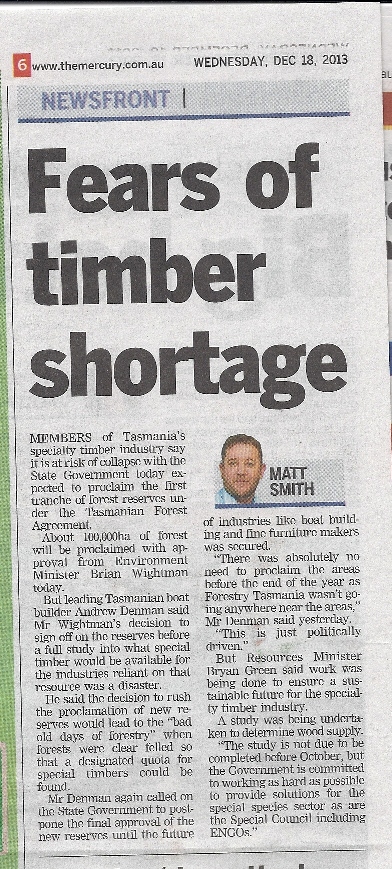
Amongst the many news stories on forestry in today’s newspaper was this one about special timbers (of which blackwood is the predominant species).

The Mercury181213s

It’s just the same predictable rhetoric, scare mongering and posturing that surrounds so much of the so called forestry “debate” in Tasmania.

Will there be a specialty timbers supply shortage in Tasmania in the near future?

Absolutely!

Does either the specialty timbers industry or the Government have a long-term, viable solution to this problem (that has been coming for decades)?

No!

Is it possible to sustainably harvest specialty timbers from our public native forests?

A very common question, and at the most basic elementary level the answer is yes (trees do grow and can theoretically be harvested). But as soon as you try and move to the next point of logic you quickly become overwhelmed by the technical, commercial, political and social challenges. Even with all the goodwill and trust in the world it would be a difficult task. But there is very little trust and goodwill in Tasmania. So the chances of this happening successfully are exactly zero! Impossible!! To try this would set Tasmania up for yet another forestry train wreck. Haven’t we had enough of those already?

Is either the specialty timbers industry or the Government interested in supporting a farmer-based blackwood growers cooperative, to build and grow the industry on a fully commercial basis?

No! Not yet at least.

And the Government is “working as hard as possible to provide solutions for the special species sector.”

I don’t think so!

So the iconic Tasmanian special timbers industry continues on its merry way towards it’s own private mini train wreck, to emulate the magnificent train wreck that has befallen the greater forest industry here in Tasmania.

For readers from outside Tasmania this must appear like some weird Hollywood script. Welcome to Tasmania folks!