Hooray for Peter Adams

The Talking Point in today’s Mercury newspaper by furniture designer/maker and artist Peter Adams is a rare and much welcome alternative opinion in the ongoing nonsense around special timbers and the prospect of logging the Tasmanian Wilderness World Heritage Area.

http://www.themercury.com.au/news/opinion/talking-point-far-more-beautiful-left-standing/story-fnj4f64i-1227474696519

Adams-bench

It is just so rare for someone within the forest industry to come out and publically challenge the current industry and policy orthodoxy.

From today forward, all timber workers, myself included, have to re-examine their use of speciality timbers.

That said, what I will never do is use any timber cut within the boundaries of a World Heritage Area. Nor should anyone.

My suggestion to Peter Adams and others (including consumers) is to:

  1. Use only farm-grown Tasmanian timbers;
  2. encourage Tasmanian farmers to grow more quality wood;
  3. pay Tasmanian farmers a price for their wood that reflects its real value and encourages more tree planting;
  4. support organisations such as mine that seek to encourage and teach farmers how to grow commercial blackwood in both plantations and remnant native forest.

Wood is not a taxpayer-subsidised community service. It is a commercial product.

Planting trees and managing plantations and forests costs real time and money.

The only way for Tasmania to have a successful forest industry, and realise the vision of Peter Adams, is for tree growing to be blatantly and transparently profitable.

Only Tasmanian farmers can make this happen; farmers who are passionate about growing a quality product.

I was up in the north west of the State this week for the first time in a while, and driving around imagining a rural landscape dotted with well managed forest remnants and plantations of blackwood. Instead I saw opportunities being wasted. Most farms have wet gullies, steep slopes and small areas too difficult to manage. Good land going to waste. These areas are just ideal for growing commercial blackwood.

One of the key things missing is the right commercial and political context to get these areas planted.

Peter Adams points the way to the future.

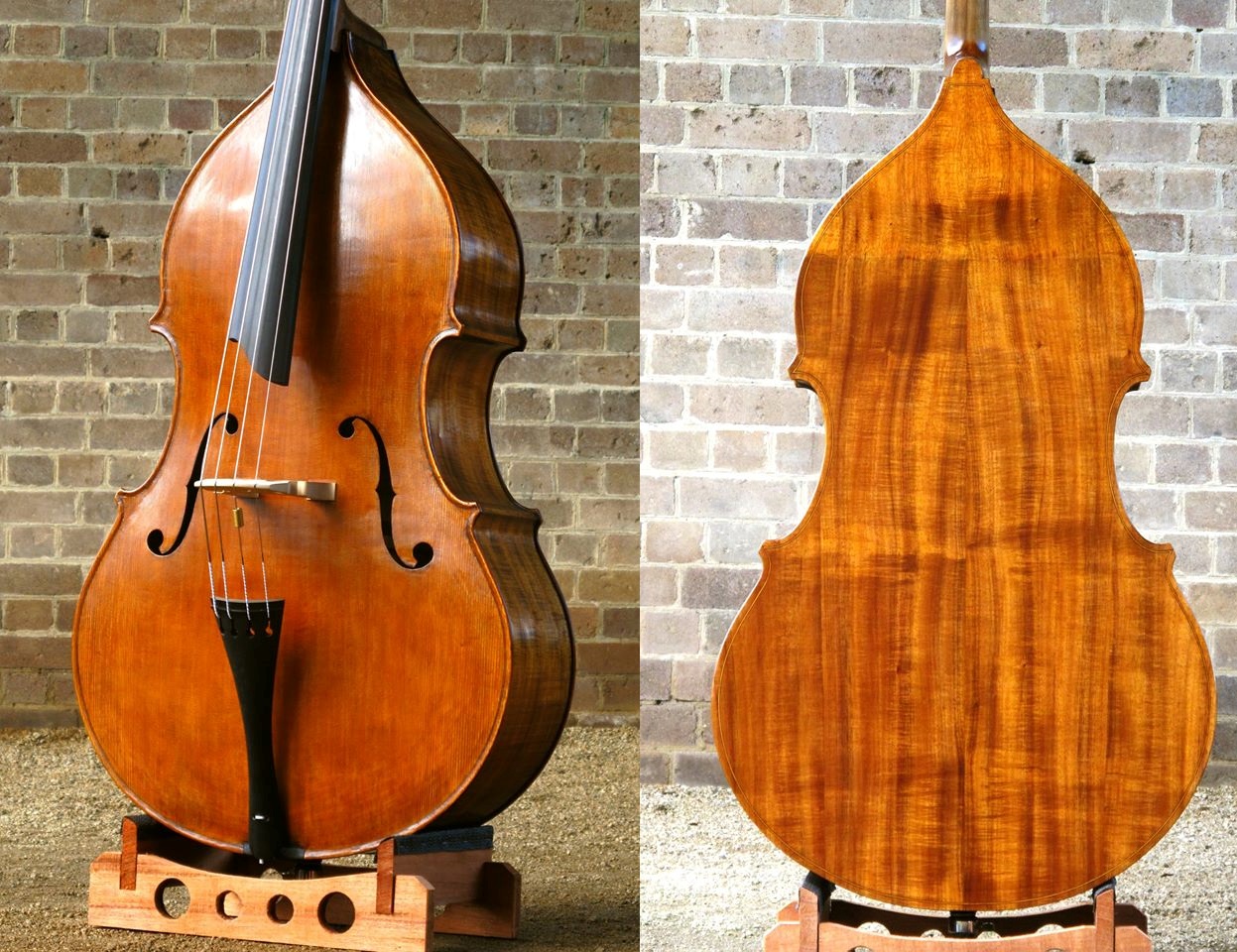
Award winning Tasmanian blackwood double bass

BresqueBass

Sydney-based double bass luthier Matthew Tucker has recently won the Silver Medal for Tone at the 2015 International Society of Bassists (you didn’t know such a group existed did you??) Convention in Fort Collins, Colorado.

http://bresque.studio205.net.au/

http://www.isbworldoffice.com/convention.asp

As the website says double bass judging consists of two quite different but very important factors: workmanship and tone. Certificates and Silver Medals are awarded in each class.

For an instrument to receive the coveted Gold Medal, it must have been recommended by all judges for a Silver Medal in both the workmanship and tone categories. In the history of the ISB Makers Competition there have been only four Gold Medals awarded.

So a silver medal in Tone is a huge vote of support for Matthew Tucker and for Tasmanian blackwood as a quality bass tonewood.

I took the bass over in June and entered it into the international makers competition, in a field of 25 makers. The Silver Medal is the highest award given in that category.


Here’s what the Judges said:


“Very easy to play. Lovely upper register G string, with a refined sound, excellent projection and good balance overall across the strings … the solo quality is striking. Although delicate, the sound has wonderful bottom to reinforce it.” – John Clayton


“Beautiful, clear and compelling tone, good consistent dynamic range and seamless response. Truly exceptional ergonomics … too easy to play! A fantastic, versatile bass” – Or Baraket


“This is a wonderful, easy to play travel bass especially for solo, jazz and chamber group.” – Nick Scales

 The bass is now on sale and can be played at AES Fine Instruments in New York.

Congratulations Matthew! Fantastic result.

Some more pics of this beautiful instrument:
Labor backs special timbers logging in the Tasmanian Wilderness World Heritage Area

http://www.themercury.com.au/news/politics/labor-releases-policy-for-tasmanias-special-timber-industry/story-fnpp9w4j-1227461792420

http://www.abc.net.au/news/2015-07-29/ltasmanian-labor-backs-specialty-timber-logging-in-wilderness/6656556

Green_Elrond

State opposition leader Bryan Green today announced a policy for Tasmania’s special timber industry, supporting logging within the Tasmanian Wilderness World Heritage Area (TWWHA).

After a brief hiatus the Labor and Liberal parties are once again in lock-step on forest industry policy in Tasmania.

Once again forest industry policy in Tasmania is driven by politics, waste and community conflict.

“tread widely, tread lightly”

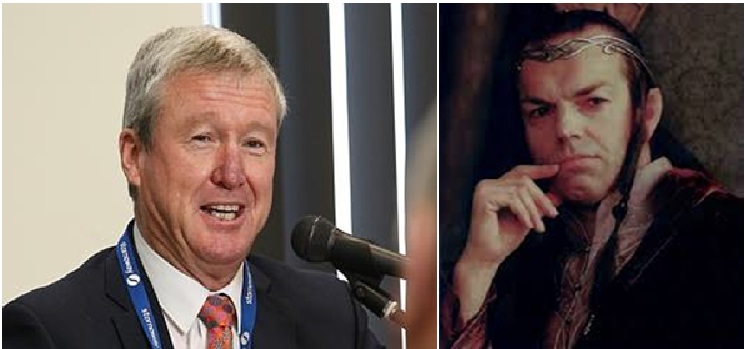
The politicians want us to believe that special timbers is only about fairy land, a magic wand and elvish forest management.

There is no mention of UNESCO, the World Heritage Committee, Forest Stewardship Council, taxpayer subsidies, sacking teachers and nurses, or the last 30 years of politics, waste and community conflict.

Nor is there mention of private blackwood growers.

Instead our politicians will wave the elvish wand and middle earth will magically appear.

It’s just rubbish and deception.

Forestry is not a taxpayer-funded community service!

Nor is this middle earth!

Last month, UNESCO’s World Heritage Committee urged the Australian and Tasmanian governments to ban commercial logging within the TWWHA.

http://blackwoodgrowers.com.au/2015/05/31/unesco-calls-for-changes-to-tasmanias-draft-world-heritage-management-plan-to-prohibit-logging-and-mining/

http://blackwoodgrowers.com.au/2015/07/06/tasmanian-wilderness-world-heritage-area-logging-proposal/

So in good old fashion style our State politicians are once again joining forces to wage war over our forests.

The Tasmanian community will once again be the losers.

With classic political vote winners like “long-term security”, “consultation” and “striking an appropriate balance” we have heard it all dozens of times before.

Absolutely nothing has changed for our pollies.

Except now a lot more Tasmanians are sick and tired of the conflict and nonsense around the forest industry. Not to mention squandering $millions of taxpayer dollars and sacking teachers and nurses, and charging electricity users to help subsidise the forest industry. A lot more Tasmanians will express extreme displeasure if this nonsense continues.

Specialty timber groups believe they were left with an extremely restricted resource after the Tasmanian Forest Agreement was finalised in 2013 and new tracts of forests were declared off-limits. The agreement was repealed by the current Tasmanian Government in 2014.

What absolute rubbish! So called specialty timber groups were left without a (public native forest) resource because of 30+ years of failed forest industry policy; a policy that tied the industry to the election cycle and gave everything to industrial woodchipping leaving nothing but platitudes and tears for the specialty timber groups.

I must say after listening to this sort of rubbish for 30+ years I’m getting pretty sick of it. The culture of entitlement within the forest industry that former Gunns CEO Greg L’Estrange mentioned recently is certainly prevalent within sections of the special timbers industry.

The forestry wars are well and truly heating up once again.

Stand by for the media/community backlash.

The special timbers industry is on a hiding to nothing.

When will Tasmanian get a fully commercial and profitable forest industry?

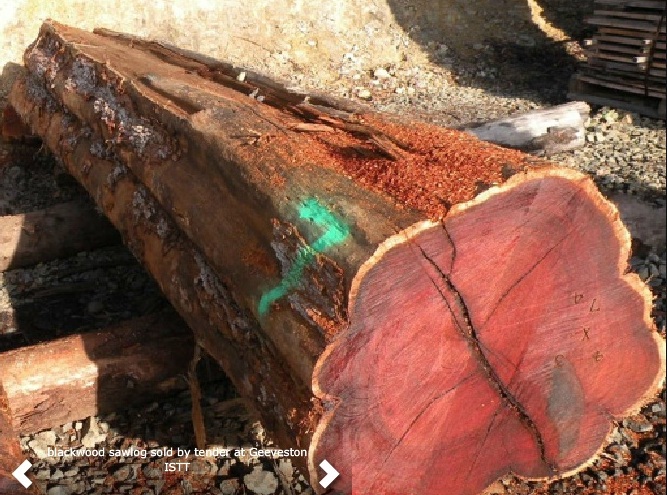
Blackwood sawlogs achieve record price at auction REVISITED

ist_log

Since it was first posted this blog has consistently been one of the most frequently visited by readers of this website.

http://blackwoodgrowers.com.au/2012/06/11/blackwood-sawlogs-achieve-record-price-at-auc/

Clearly it says something that readers find compelling.

In terms of its message and impact on the forest industry, State forest policy, the farming community or the media however there has been little response.

Profitable tree growing and transparent, competitive market processes remain completely irrelevant to State forest policy and the forest industry.

If we treated our dairy, beef and vegetable industries in such a manner Tasmania would be in serious trouble. But the forest industry remains a victim of its heritage dominated by politics, a public resource and a community service ethos.

Does Tasmania want a forest industry? If so then the price of logs and profitable tree-growing must be at the centre of policy and management.

So how can Tasmania move towards a fully commercial and profitable forest industry?

The industry does not need more behind-closed-door deals, nor more reports and strategies. The industry needs to demonstrate serious commercial muscle, and a burning desire to leave the politics and conflict behind.

So tell me readers, why is this blog of such interest to you?

PS. Here’s a thought bubble!

Imagine what the forest industry would look like today if 100 years ago we had included prizes (trophy or ribbon) in our regional agricultural shows for the best sawlogs, in the same way we have prizes for livestock, wool fleeces, fruit, veges, etc. Farmers who managed their forest or plantations would bring in their very best dressed sawlogs to get judged. All of the entries could then be auctioned off.

Imagine a rural community that took as much pride in forest/plantation management is it does in beef, sheep, wool, vegetables, etc. That of course would depend on the marketplace supporting and rewarding such a community attitude, as the marketplace does for most other primary industries.

What do you think? Comments?

Sunday morning eye candy

Here are some beautiful photos of a top-of-the-range Maton acoustic guitar from the Guitar Factory in Parramatta, Sydney, featuring some stunning fiddleback blackwood.

http://www.guitarfactory.com.au/CatalogueRetrieve.aspx?ProductID=9576579&A=SearchResult&SearchID=8509977&ObjectID=9576579&ObjectType=27

http://maton.com.au/product/w.a.-may-custom

Designed as a tribute to our founder, Bill May and to bring the best of our heritage and our guitar making skills together, the W.A May is a guitar for the connoisseur.

Victorian Blackwood (in our opinion the best tone wood available) back and sides combine with blackwood neck and AAA spruce face to produce a huge sounding dreadnought guitar. Add to that our unique Custom Shop voicing and craftsmanship, you have a guitar worthy of the name W.A May

That it features Victorian blackwood is fine by me.

It’s almost too good to play!

Enjoy!

Wish List

With the current discussion about creating a single national farming body in place of the various State-based organisations such as the TFGA (see item 5. below) , I just realised the National Farmers Federation does not regard forestry as a primary industry. Very curious! They don’t regard Australia’s wine industry as a primary industry either. Clearly the NFF has a pretty myopic view of the rural sector.

http://www.nff.org.au/commodities.html

So there’s not much hope of getting support for private forestry from the NFF. Pity!

gordonjbradbury's avatarTasmanian Blackwood Growers Cooperative

Makeawish

The forest industry in Tasmania is heading towards oblivion, at least the part of the industry dependent on the public native forest resource. Decades of poor policy, politics and conflict have reduced the industry to a smoking ruin. But we seem to have trouble learning from past mistakes and from other people’s successes. Getting people to invest in the forest industry (from planting trees to investing in sawmilling and processing equipment) just won’t happen under the current regime. So here is my one dozen wish list:

  1. We need to start thinking of forestry as a primary industry and not as a Government-run, politically-driven, employment program. Sure it has a few unique features like a long investment time lag, but forestry is about business and profits; markets, costs and prices. It is not about politics or employment! Most wood now grown and sold in Australia comes from private tree growers. It…

View original post 1,064 more words

Cole Clark ‘Australian Eco’ series

Some good news for a change from the usual political/forest industry dramas.

Cole Clark FL2EC-BLBL-AE

Melbourne-based Cole Clark guitars have just announced their all-Australian Eco series.

These new models feature 100% sustainable timbers by replacing endangered timbers with sustainable Australian substitutes“.

Farm-grown Tasmanian blackwood features prominently in the series.

For those wanting to avoid rainforest timbers these are a great alternative.

The idea of an all-Australian commercial guitar has finally become reality.

Now the next step is to get farmers to actually start to plant and manage these timbers. I suspect most of these timbers are salvage logged rather than the result of active management.

But one step at a time.

Congratulations Cole Clark!


Gagged!

Well that didn’t take long now did it?

http://www.themercury.com.au/news/tasmania/sue-smith-quits-as-deputy-chair-of-the-ministerial-advisory-council-on-forestry/story-fnj4f7k1-1227434718852

And some nice reassuring words of departure from Ms Smith.

The Forestry Advisory Council is clearly only allowed to offer “advise” within a small gamut of opinions and options. Such a waste of effort.

gordonjbradbury's avatarTasmanian Blackwood Growers Cooperative

gagged

Isn’t this just so predictable and pathetic?

Just when we start to get some real debate and transparency into the Tasmanian forestry wars along comes the Honourable Minister and slams the door.

It was so newsworthy that it made both the major State news media.

http://www.abc.net.au/news/2015-06-19/forests-minister-tells-advisory-council-to-keep-opinions-private/6559572?section=tas

and

http://www.themercury.com.au/news/politics/resources-minister-paul-harriss-puts-clamp-on-forestry-tasmania-talk/story-fnpp9w4j-1227406689089

What is the purpose of an advisory council if “everyone is on the same page”? That’s not an advisory council. That’s a political smokescreen, a whitewash!

The whole purpose of an advisory council, as Sue Smith said, is to promote and foster vigorous, open discussion and canvas as wide a range of opinions and options as possible.

The Tasmanian forest industry is going absolutely nowhere until the future of Forestry Tasmania is resolved. And after 21 years we know that the GBE business model has been a total failure. Forestry Tasmania remains the “albatross around the neck” of the forest industry.

So…

View original post 127 more words

Tasmanian Wilderness World Heritage Area logging proposal

Tasmania’s forestry wars are well and truly back with a vengeance.


2000

Groundhog Day.

The media has been buzzing the last week with the to and fro of political banter, bluster, vilification and hypocrisy over the outcome from the UNESCO World Heritage Committee meeting last week.

It really does beggar belief.

The proposal to log specialty species timber in the Tasmanian Wilderness World Heritage Area is policy madness. Such a move would set Tasmania back another 10 years. The damage to the economy and the community would be significant. There is just so much community opposition to this proposal.

The State Government is clearly out to antagonize as many “green” thinking people as it possibly can with the sabre rattling and chest thumping. What better way to foster a social, cultural and economic boycott of the State. Wedge and polarise the community in order to win the next election.

Politics pure and simple.

Given the legacy of the last 30 years and the continuing political and community heat around this issue there is no way UNESCO will accept logging in the TWWHA. But elements of the special timbers industry and our politicians will push this regardless of the risk and damage.

The tourism industry understands that this conflict is not just about the forest industry. It impacts the entire economy making Tasmania a less attractive place for investors and business.

There is absolutely no notion of communication, negotiation, understanding respect or tolerance in any of this. The TFA and the last State election demonstrated beyond any doubt that any attempts at dialogue and negotiation will be quickly sabotaged and undermined. Once again we are facing another crash through or crash situation, and based on past performance the only outcome will be the latter.

Just how dysfunctional can Tasmania become?

http://www.abc.net.au/news/2015-07-02/un-environment-committee-criticises-tasmania-forests-plan/6588452?section=tas

http://www.abc.net.au/news/2015-07-02/mining-ruled-out-in-tasmanias-world-heritage-area/6590214?section=tas

http://www.abc.net.au/news/2015-07-03/specialty-timber-workers-want-unesco-tick-for-tasmanian-logging/6594506?section=tas

http://www.themercury.com.au/news/tasmania/tasmanias-wha-draft-plan-rejected-by-world-heritage-committee/story-fnj4f7k1-1227424700964

http://www.theguardian.com/australia-news/2015/jul/02/un-calls-for-ban-on-logging-and-mining-in-tasmanias-world-heritage-area

http://www.themercury.com.au/talking-point-money-talks-and-its-saying-hodgman-has-lost-the-world-heritage-area-fight/story-fnj3twbb-1227429396506

World Heritage Committee delegates will visit Tasmania before the State submits an updated report [Management Plan] to UNESCO by 1 February next year.

Tasmania and the forest industry remain embroiled in the continuing conflict and going nowhere.

Trying to encourage farmers to grow profitable commercial blackwood while the special timbers industry is run as a taxpayer-funded community service is a tough challenge.

Here’s some of my previous blogs on this issue:

http://blackwoodgrowers.com.au/2015/05/31/unesco-calls-for-changes-to-tasmanias-draft-world-heritage-management-plan-to-prohibit-logging-and-mining/

http://blackwoodgrowers.com.au/2015/02/10/draft-twwha-management-plan-representation/

Wish List

Makeawish

The forest industry in Tasmania is heading towards oblivion, at least the part of the industry dependent on the public native forest resource. Decades of poor policy, politics and conflict have reduced the industry to a smoking ruin. But we seem to have trouble learning from past mistakes and from other people’s successes. Getting people to invest in the forest industry (from planting trees to investing in sawmilling and processing equipment) just won’t happen under the current regime. So here is my one dozen wish list:

  1. We need to start thinking of forestry as a primary industry and not as a Government-run, politically-driven, employment program. Sure it has a few unique features like a long investment time lag, but forestry is about business and profits; markets, costs and prices. It is not about politics or employment! Most wood now grown and sold in Australia comes from private tree growers. It is time to put the policy focus on private growers.One example of this change in focus would be to move Private Forests Tasmania (PFT) from the Department of State Growth Tasmania to the Department of Primary Industries, Parks, Water and Environment (DPIPWE). At the moment this DPIPWE website contains no mention of forestry at all:http://dpipwe.tas.gov.au/agricultureWhy isn’t forestry regarded as a primary industry in Tasmania?

    Also the Government Minister responsible for PFT/DPIPWE should also be responsible for Forestry Tasmania, so that all commercial forest policy and practice is aligned with primary industry policy. Does that sound logical or what?

  2. And like all primary industries the only basis for a successful forest industry is for tree growing (public and private) to be transparently profitable.That’s the golden rule! It’s that simple!Commercially focused, profitable tree growers are the foundation of a successful forest industry. The forest industry is not about subsidizing the sawmillers, papermakers, or woodchippers, or the furniture makers, craftsmen, luthiers or boatbuilders. These people are important, but without profitable tree growers they are irrelevant. Forest industry policy should be focused on profitable tree growers.
  3. We need to get the politics and conflict out of the industry. That means either a) completely transforming Forestry Tasmania into an independent, fully commercial, profitable business, or b) shutting down public native forest logging. There are no other options!
  4. Public and private tree growers must be able to compete in the marketplace on a level playing field. This means no more subsidies or political protection for public tree growers. Forestry Tasmania must be structured and managed just like a private tree grower – independent, fully commercial and profitable. Anything else is anti-competitive.
  5. The Tasmanian Farmers and Graziers Association (TFGA) needs to become a genuine independent, vigorous advocate for private forest growers. The interests of private forest growers are not the same as those of sawmillers, or Forestry Tasmania nor the Government of the day. A thriving commercially competitive, profitable forest industry can only exist when private tree growers have a strong, fearless, independent voice.
  6. It’s time for the forest industry (and I’m talking about everyone here from tree growers to wood processors and log exporters) to publically demonstrate some real commercial muscle. Where are the profits? Where are the prices? Where are the markets? Where is the transparency and market feedback? For far too long the industry has focused on political muscle. It’s time to “put the rubber to the road” and lead by commercial example.
  7. Unlike many other primary industry markets, Australia’s forestry markets have historically been opaque to near invisible, and continue to be that way. Hidden markets do not encourage investment in planting and infrastructure. The forest industry in New Zealand issues regular monthly market reports. This helps everyone better understand the marketplace. We desperately need similar transparency in forestry markets here in Australia.
  8. To help overcome the natural reluctance of many people to make the long-time investment in forestry (the time between planting and harvesting), the industry needs to be incredibly (aggressively??) transparent in the marketplace. This means lots of market reports and updates, lots of price and demand information, etc. We need significant market stimulation to help landowners get past the big time factor!!
  9. Farmers need to have greater understanding and confidence in forestry markets. Again this requires forestry markets to be much more transparent and commercially focused; just like other rural commodities. Investing in forestry is not easy. There’s the technical stuff and the long investment period, and just the switch to thinking “long term”. When we start getting forestry market updates in the rural media then I will know that the forest industry has come of age.
  10. The forest industry needs a new Forest Practices Code, or rather it doesn’t. Let me explain.The forest industry in New Zealand is huge (bigger than Australia’s) and very successful, but New Zealand does not have a Forest Practices Code. Imagine that! In New Zealand they regard the forest industry as just another primary industry, which must abide by the same code of environmental practice as all the other primary industries. It’s called a level playing field.The code is called the Resource Management Act 1991, and it applies to most primary industries. It is designed to protect environmental values regardless of land use. So growing trees for wood production has the same regulatory framework as other primary land uses. A brilliant idea!Here in Tasmania the forest industry is far and away the most (over?) regulated primary industry in the State. This creates market distortions and discourages sensible land use and investment decisions.Forest plantations on already cleared land should be no more or less regulated that any other agricultural crop. For many Tasmanians that will be a very difficult thing to imagine after the MIS hardwood plantation disaster.

    (And whilst on the subject of New Zealand, the forest industry there survives without any resource security. That’s right! Whatever trees the private forest growers have to sell is the only resource available to industry. That’s all. If a sawmiller wants “resource security” then they need to pay a competitive price to stay in business. The issue of “resource security” is a furphy!)

  11. And following on from the previous item, why do we have Private Timber Reserves in Tasmania?http://www.pft.tas.gov.au/index.php/services/services/1-website-articleWhy not Private Onion Reserves, Private Poppy Reserves, Private Cow Reserves or Private Apple Reserves? In fact why not make all primary industries subject to a single Statewide planning system? Wouldn’t that be fairer? We could even call it the Resource Management Act!
  12. And finally I’d like to see Tasmanian farmers incorporate commercial blackwood growing into their business models (either plantation or native bush), developing the skills, passion and expertise in growing this iconic quality Tasmanian product. But this won’t happen to any extent unless change occurs within the forest industry and Government policy.

When you compare my wish list with the current forest industry you can see an enormous abyss. Current forest policy is focused on a public native forest resource, a bankrupt, non-commercial public forest manager, a handful of taxpayer-subsidised sawmillers and processors, and enormous amounts of politics and community conflict. It has been this way for decades!

It seems that none of this will change unless the TFGA (on behalf of private forest growers) start demanding reform. And based on recent events I can’t see this happening any time soon.

What do you think? Comments? Continue reading