Category Archives: Tonewood

Deloraine Stringfest is for farmers

Stringfest Logo

The 2015 Deloraine Stringfest will be on the 20-22 March.

The new Deloraine Stringfest website is now online.

http://www.stringfest.com.au/

This website will be updated as the program for the 2015 festival develops over the coming months. Check it out!

Stringfest is for sawmillers, foresters, luthiers, wood merchants, retailers, artists and people who just appreciate beauty, craft and music; and that’s a mighty big audience!

But I believe it will be Tasmanian farmers who eventually become the real heroes of the Deloraine Stringfest.

The men and women who make the 30+ year commitment and investment, who have the interest and passion, to plant and grow the trees that eventually become the tonewoods and the instruments.

Without these people Stringfest (and the tonewood/luthier industry) has an uncertain future.

Sell your existing trees

At this year’s Stringfest there were tonewood merchants displaying and selling their timber. But they were also buying! They were getting offers of trees and logs from quite a few people.

So if you have trees that you think may have value as tonewood come along to Stringfest and talk to the tonewood merchants. Even some planted exotic trees may be of value. For example the tonewood industry is looking for redwoods and any of the true (Atlas/Lebanon/Deodara) cedars. Good quality blackwood is always in demand.

Learn how to grow blackwood

Blackwood is Australia’s premier tonewood. Come to Stringfest and find out how to grow blackwood in plantation, or turn that patch of degraded remnant blackwood forest into something of real commercial value.

There is great potential for growing commercial blackwood in northern Tasmania. Help secure Stringfest’s future. Plant a tree (or 2)!

Come to Stringfest and find out more.

I’ll be there to answer questions about growing commercial blackwood.

There will be a portable sawmilling demonstration on how to identify/select a tonewood log, and the issues involved with sawing these logs into tonewood billets.

There will also be a ½ day field visit to a successful private blackwood plantation. Places for this field visit are limited so contact me soon to reserve you place.

See you at the 2015 Deloraine Stringfest!

Island Roots

In Taylor Guitar’s latest customer newsletter (Wood & Steel) is a magnificent 6 page spread on the Fall (Autumn) Limited Edition guitars with a major spiel on Tasmania and Tasmanian Tonewoods Bob Mac Millan.

http://www.taylorguitars.com/wood-and-steel

http://www.taylorguitars.com/guitars/acoustic/series/2014-fall-limiteds

http://tasmaniantonewoods.com/

It’s a great read and a terrific promotion of Tasmania and our timbers.

Island Roots

The article called Island Roots runs pages 18-23. Also on page 27 is an article by Taylor’s master luthier Andy Powers. Here’s an extract:

Tasmanian blackwood is a material I first encountered at a local exotic wood dealer. It was love at first sight. The first board I picked up said with a nearly audible voice, “I want to be a guitar.” I could see its beautiful color variegation, as warm as cinnamon, its straight, even grain, and feel it’s perfect density. It came back to the shop without ever leaving my hands and turned into as wonderful a guitar as it first suggested. Blackwood and I have enjoyed a great relationship ever since. Over time, I became interested in learning where this wood came from and meeting its family. I wanted to know the condition of the forest where it grew. I soon discovered that blackwood had forest friends that also wanted to be made into guitars. My interest led me to meet Bob Mac Millan, another woodworker who had been charmed by Tasmanian woods. I learned more about his timber operation and how the wood was being harvested. In our first conversation, Bob said something like, “Ah, so you’ve fallen for the blackwood, too…. You should come down and have a walk out in the bush and take a look. I’m only on the other side of the world; it’s not far.” Spoken with typical Aussie understatement.

Well, I’ve had a look. And I like what I see as a guitar maker and a timber fanatic. I see fantastic instrument wood being collected in a selective and low-impact way, and with a mind toward a healthy future forest. Although blackwood is a relatively unknown guitar wood in comparison to the familiar faces of India’s rosewood, or central America’s mahogany, or even Hawaii’s koa, which is a cousin, this may have more to do with Tasmania’s distance from large guitar makers. The familiar woods have a long history of importation for furniture making and have been available to guitar manufacturers for decades, so naturally they were used. Although blackwood hasn’t been a regular attendee at the guitar party, it surely isn’t for lack of good sound. This wood sounds better to me now than years ago when I first worked with it. In fact, I haven’t heard a blackwood guitar yet that I didn’t like. Sure, I’m biased because I like guitars, but I’m still a fan. It’s immensely rewarding to get to know the personality of a material like blackwood, or a newcomer like sassafras. As a builder, I notice the ways the wood’s physical properties contribute to the musical values of volume, tonal color, sustain and balance of a finished instrument. There are common traits among woods to be sure, yet there are unique subtleties inherent to a particular timber. I often find myself lacking words precise enough to describe those traits, so I end up comparing them to other woods to provide a relatable reference. Yet this seems insufficient. It might also seem to imply that the wood is an inferior substitute, which is far from true. There is uniqueness that radiates musicality in many woods, both well and less known, which makes each board a unique treat that deserves to be valued and savored.

This season, we’re thrilled to be making instruments with blackwood and sassafras from Tasmania, as well as blackwood’s Hawaiian cousin, koa. We’ve been savoring the process of preparing and building these guitars with these precious woods. These instruments are a real treat for both the woodworker and the musician who can appreciate the aural and visual beauty of the wood. This treat seems to resonate even more sweetly when I know the forest is healthy and trees are harvested in a way that closely agrees with all that we as wood lovers value.

Clearly Andy Powers is a big fan of Tasmanian blackwood. Many Tasmanians will know exactly how he feels. I don’t agree with everything that’s written here but never mind. Progress is being made and we will get there eventually.

One day Tasmanian blackwood will be recognized as a sustainable premium tonewood the world over, proudly grown by Tasmanian farmers.

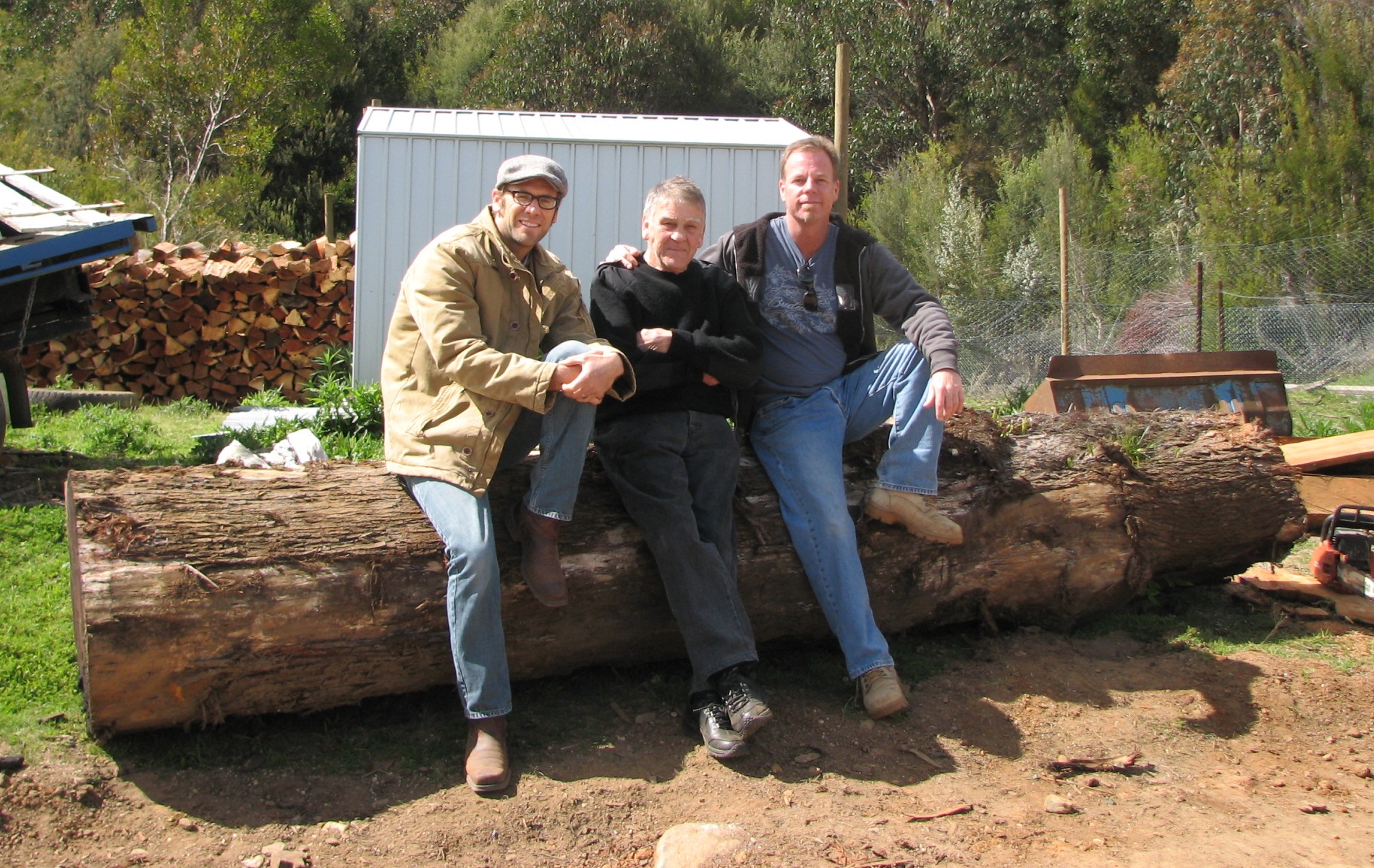
MacMillan Powers Cosgrove3

L to R: Andy Powers, Bob Mac Millan and Chris Cosgrove.

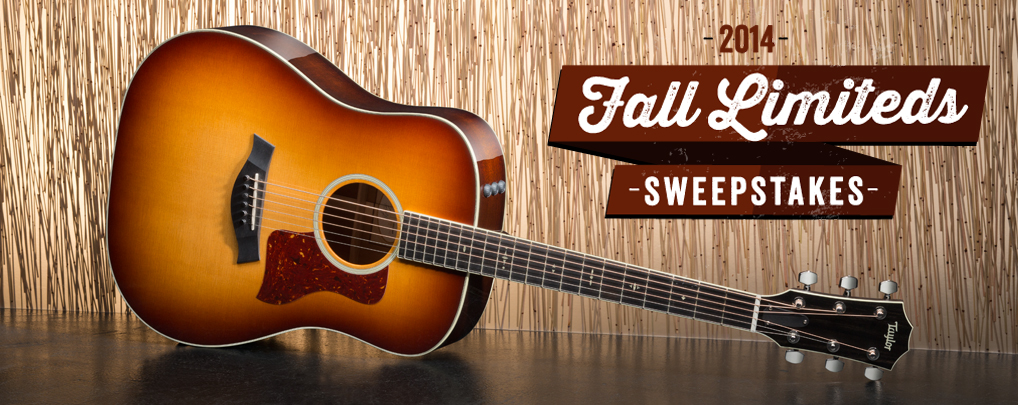
The Fall Limited Sweepstakes

http://www.taylorguitars.com/promotions/2014-fall-ltd

sweeps-2014-fall-ltd-header

Up for grabs, this beauty from Taylor Guitars. Unfortunately this sweepstakes is only open to US and Canadian residents.

The Taylor 510e-FLTD is a limited edition Dreadnought featuring Tasmanian blackwood back and sides and a Sitka spruce top. Neo-vintage aesthetic strokes include a shaded edgeburst body and neck, plus ivoroid appointments anchored by the Century fretboard inlay. We’ve partnered with Dunlop and JamPlay.com to offer the perfect player package, which includes a personalized pick tin, a supply of Dunlop Primetone picks, and a Victor capo. The winner will also receive a one-year membership to JamPlay.com with unlimited access to thousands of guitar lessons. One (1) grand prize winner will receive:

  • One (1) Taylor 510e-FLTD
  • One (1) Year Membership to JamPlay.com
  • One (1) Year Supply of Primetone Guitar Picks
  • One (1) Dunlop Victor Capo
  • One (1) Personalized Dunlop Pick Tin.

Great prize and great promotion and support for Tasmanian blackwood from Taylor Guitars.

I wonder if I can get my sister in the US to enter the competition for me?

Review of Taylor Guitars Fall 2014 Limited Edition models featuring Tasmanian blackwood and sassafras

Here’s a great review of three of the recently released limited edition models from Taylor Guitars featuring Tasmanian blackwood and sassafras.

Beautiful guitars from Taylor Guitars with tonewoods supplied by Tasmanian Tonewoods.

http://www.taylorguitars.com/guitars/acoustic/series/2014-fall-limiteds

http://blackwoodgrowers.com.au/2014/08/02/taylor-guitars-put-tasmanian-tonewoods-on-display/

http://blackwoodgrowers.com.au/2014/08/18/more-taylor-guitars-promotion-of-tasmanian-tonewoods/

Sassafras as a tonewood will only ever be available on a limited basis due to it’s restricted distribution and slow growth rate. Blackwood however has huge potential as a sustainable, readily available tonewood due to its wide distribution and fast growth rate. Provided we can convince Tasmanian farmers to grow it.

Now how do we do that?

Deloraine Stringfest 2015

Planning is underway to include a visit to a successful private blackwood plantation as part of the Deloraine Stringfest in March 2015. Transport will be by bus so places will be limited. Your chance to see and learn the art of growing commercial blackwood. Details to follow.

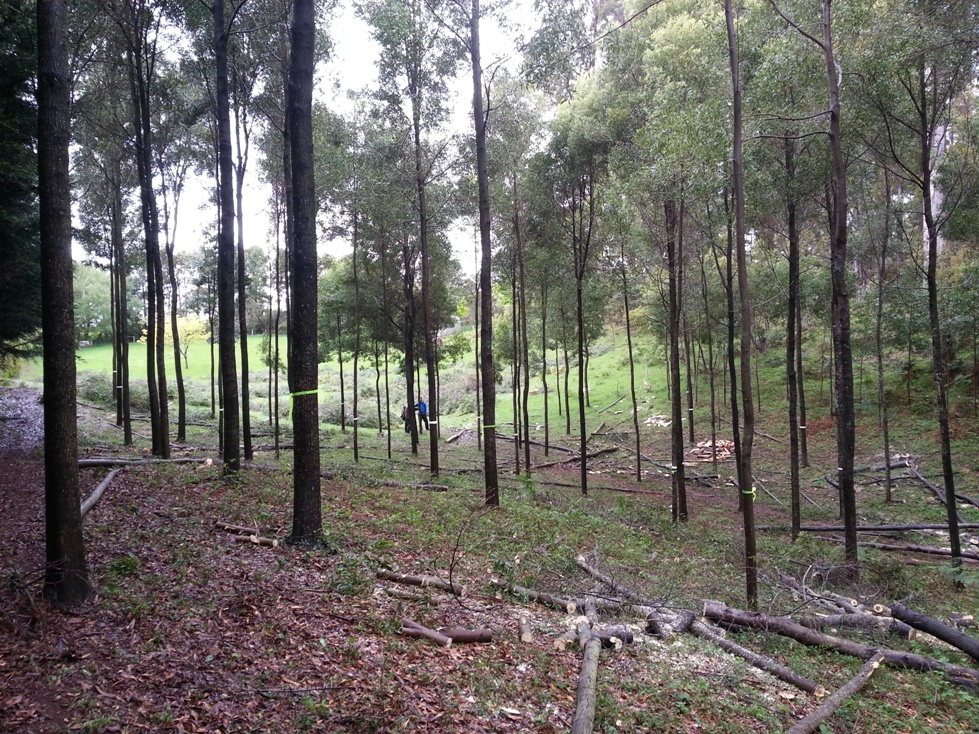
20131113_111101s

More Taylor Guitars promotion of Tasmanian tonewoods

Here’s Taylor Guitar’s Master Luthier Andy Powers promoting the new limited edition models featuring Tasmanian blackwood and black heart sassafras. Great video! Go Tasmanian tonewoods!


Taylor Guitars put Tasmanian tonewoods on display

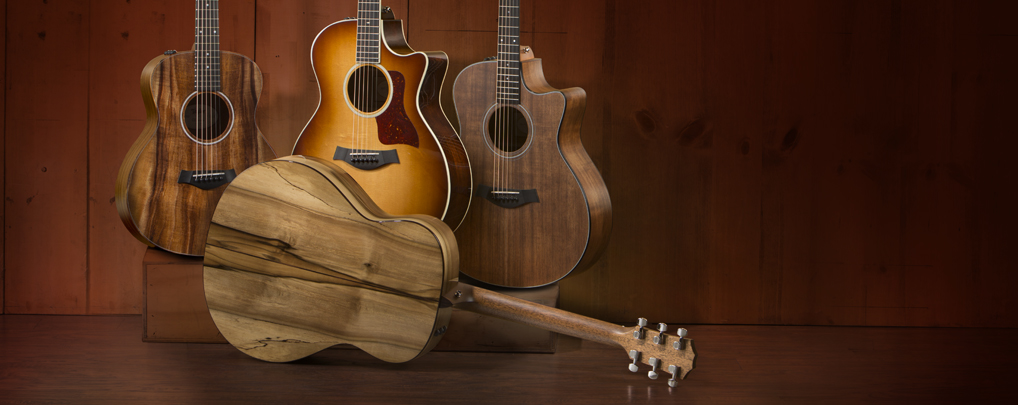
Taylor-fall-limited-2014

Major American builder Taylor Guitars have just released their 2014 (northern) Autumn Limited Edition guitars featuring beautiful Tasmanian tonewoods, including five Tasmanian blackwood models and three models featuring blackheart sassafras. The series also includes a selection of models featuring Acacia koa which is a tree native to the Hawaiian Islands.

http://www.taylorguitars.com/guitars/limited-editions/fall-2014

These timbers were supplied to Taylor Guitars by Robert Mac Millan of Tasmanian Tonewoods.


Taylor Guitars 524ce Tasmanian Blackwood prototype

The international appreciation and development of Tasmanian blackwood as a quality tonewood continues apace. Continuing on from my recent story about Bob Taylor

http://blackwoodgrowers.com.au/2014/05/01/bob-taylor-wants-more-tasmanian-blackwood-growers/

here’s a recent review of a new prototype from Taylor Guitars featuring all Tasmanian blackwood.

Beautiful quality blackwood supplied by Tasmanian farmers and Tasmanian Tonewoods.

Enjoy!


What the market wants is not always what the research says is the best

This story has nothing to do with blackwood, but in the tonewood business this recent research regarding Sitka spruce (Picea sitchensis) should be causing considerable discussion.

Sitka spruce is the mostly widely used timber in soundboards in acoustic guitars. Sitka spruce grows in the NW USA, western Canada and into Alaska. It has been heavily logged over the last 100 years to meet many market demands and end uses. Consequently sources of big old trees suitable for the tonewood market are becoming scarce.

Tradition has it that slow, even-grown sitka spruce makes the best soundboards. This tradition of slow even growth for soundboard timber goes back centuries to the violin makers of Italy, and possibly before that time.

But with the supply of this kind of timber in peril, a bit of research can go a long way.

One of the major suppliers of Sitka soundboard timber is Pacific Rim Tonewoods, based in Washington State. They recently sponsored some research to compare the wood properties of Sitka spruce of different growth rates.

It’s not the best written report, and there is no presentation of statistical analysis. But despite this the results should be turning the musical instrument world on it’s head.

Guess what? After hundreds of years of tradition the research clearly showed that faster grown Sitka spruce had better sound qualities than slow grown Sitka!

Fast grown Sitka in this case was defined as having an average annual growth ring width of 4.5mm, compared to slow grown Sitka at 1.1mm ring width.

Sitka1

This is great news as it means that much more timber is now potentially available for the soundboard market. I say “potentially” because in the music instrument market traditions can be hard to break. You and I as consumers need to understand the consequences of our choices. But in this case changing our spending preferences is a win for us and a win for the forests.

So next time you go shopping for a new acoustic guitar, look out for those guitars with the nice even, wide growth rings. They will give you a better sound, and help save the forests. I noticed one in my local music store just the other day.

Thanks to Pacific Rim Tonewoods for helping us all make better choices for ourselves and the planet.

Bob Taylor wants more Tasmanian blackwood growers

The latest Wood and Steel magazine produced by Taylor Guitars just arrived in my mail box. Here’s a letter in the “Ask Bob [Taylor]” column (p.6) that just “ticked all my boxes”. I couldn’t resist posting it here. The Ask Bob column lists a selection of letters sent in by Taylor guitar owners which are then answered by Bob Taylor.
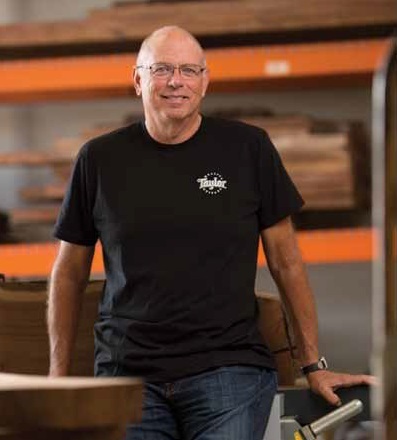
Bob Taylor

Here’s the letter:

I picked up a used [Grand Symphony] 426 with Tasmanian blackwood back, sides and top. After playing it a few weeks, it seemed to meld with my playing style (I got used to how to fingerpick it), and I’m one of those people who believes that good guitars will adjust themselves to a player’s sound. It sounds absolutely stunning with the kinds of blues I play. I think it sounds better than any all-koa, mahogany or walnut guitar I’ve heard. I’d bet you could find a pretty good market for this model with acoustic blues players looking for that really old-fashioned sound that can be elusive. Have you considered making this a regular model?

Jim Sabatke

And here’s the reply from Bob Taylor:

Actually, Jim, in some ways we prefer the sound quality of Tasmanian blackwood to koa. Both are acacia trees and are nearly identical, or as close as cousins can be to one another, but blackwood has a very nice sound. We have been considering using blackwood on a regular basis for many years, but the challenge is getting a regular supply of guitar-grade wood. We have spent considerable time and energy in the country, working and developing relationships. We want to obtain wood in the most ethical and environmentally sound manner, so we’ve backed away from the traditional logging supply in favor of more sustainable methods that benefit local people. Tasmania has so much going for it with the species available there, and the added plus is that it’s a well-developed country rather than a poverty-stricken country. This condition puts many wonderful rules in place, and we are now working on some wonderful possibilities for obtaining blackwood. Currently we have a great relationship with a man who gets blackwood in the most ideal way. You can expect to see at least limited runs of guitars with this wood for years to come. Someday it may also become a standard model, but it’s too soon to tell at this point.

Bob Taylor

I’ve been learning the guitar the last 4 years and like Mr Sabatke my inspiration are the old pre-war blues players; people like Skip James, Son House, Furry Lewis and Scrapper Blackwell. Just a man (or woman), their voice and an acoustic guitar. To me it’s the perfect combination. I would love an all-blackwood Taylor 426 like the one Mr Sabatke picked up (and featured in my December 2011 blog). The perfect country blues axe!

I think Bob Taylor’s reply contains many interesting points. Remember Bob Taylor is President of Taylor Guitars, one of the biggest guitar makers in the USA. So these comments should be of interest to many Tasmanians, especially Tasmanian farmers.

Bob Taylor’s response can be summarised as follows:

  1. We like Tasmanian blackwood a lot;
  2. We want to buy Tasmanian blackwood from private growers;
  3. We want more growers to help establish a regular supply;
  4. If we get a regular supply going then blackwood will become one of our standard timbers.

This is a clear signal of support for Tasmanian farmers to sit up and take notice.

Do Tasmanian farmers want to grow quality sustainable blackwood timber to supply Taylor Guitars?

Do Tasmanian farmers want to use their existing blackwood resource to build a sustainable supply for Bob Taylor right now?

There is a significant existing blackwood resource on private land in Tasmania that has the potential to supply the guitar industry. All we need to do is work together on this. This is a long term project. Utilise the existing resource and grow more blackwood.

Taylor’s “man” in Tasmania is Robert MacMillan of Tasmanian Tonewoods.

”Someday it may also become a standard model, but it’s too soon to tell at this point.”

I don’t think it’s too soon at all. I believe there is enough existing private “guitar-grade” blackwood on Tasmanian farms right now to make Bob Taylor’s wish a reality. With improved management and new plantations we can build this opportunity further.

So how can we make this opportunity happen?

Promotion

To date Bob Taylor has been pretty quiet about his support for blackwood. No doubt running a major company keeps him busy. No doubt he’s also cautious about wading into the war zone that is the forest industry in Tasmania.

But the war zone shows no sign of disappearing anytime soon, so if Bob Taylor wants to get his wish then wade in he must. A visit to Tasmania with some discussion, promotion and media coverage will go a long way to getting this opportunity started. The local media could show more interest as well, and not just peddle the old forest war clichés.

Quality, Price and Supply

Travelling around Tasmania picking up small volumes of blackwood from dozens if not hundreds of farms will be a challenging business. Keeping costs low so that everyone gets their fair share of the rewards will be important. Having the right equipment for the business will be essential. Maintaining and building strong long-term relationships and trust will be critical.

Establishing clear simple pricing structures and clear simple sales contracts will be vital. I hear many stories of farmers who have very optimistic expectations whenever someone enquires about buying their blackwood. Certainly high quality figured blackwood is worth good money, but plain grain blackwood is another matter. Often the quality of the timber isn’t known until the tree is “on the ground”. Given the general lack of experience in the timber market and poor market transparency it may take some time before farmers become familiar with the blackwood timber market. And it does take time to build trust and good relationships.

Harvesting guitar-grade blackwood from Tasmanian farms will also generate volumes of blackwood not suitable for guitars but suitable for other uses. Markets will need to be found for this timber.

Hopefully all of this extra activity will encourage Tasmanian farmers to want to learn to grow commercial blackwood and help build a growers cooperative. That’s my wish!

So if you are a Tasmanian farmer/landowner and want to be a part of Bob Taylor’s wish then please contact me or Robert MacMillan.

Thanks to Bob Taylor for his continuing support and belief in Tasmanian blackwood. Congratulations on the 40th anniversary of the Taylor Guitar company. And please come to Tasmania and promote you dream.