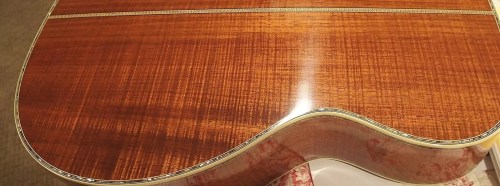
Category Archives: Tonewood

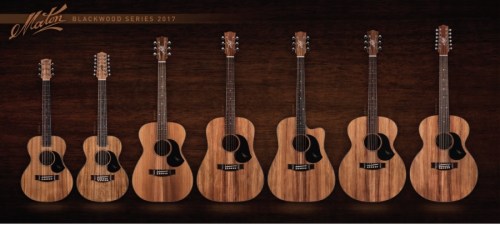
The New Maton Blackwood Series

Maton_Blackwood_Line_up_900_405_s

https://maton.com.au/product/the-maton-blackwood-series

Simplicity and purity of tone lay at the heart of the Blackwood range of Guitars.

Pure Blackwood tone -clear, bright trebles, strong mid range and full bass. The all Blackwood construction produces a unique compression, blending frequencies into a new, unique voice.

The Dreadnought Cutaway and the 808 from the New Maton Blackwood Series will be available from the 14th August 2017, the rest of the range will be available later in the year.

There were rumours of this new series of blackwood guitars earlier this year.

And here they are finally in all their blackwood glory.

As a blackwood enthusiast what can I say?

The all-blackwood acoustic guitar should be an Aussie music icon.

Cole Clark has been doing this for a few years now. And finally Maton has joined the team.

My wish is that Maton would open up and tell us the back story of where the wood comes from.

Does the guitar industry want to encourage farmers to grow more quality tonewoods?

Where does this blackwood timber come from? Who grew it? Please tell us the story so that other farmers are inspired!

This new blackwood series would be the ideal opportunity to start that journey.

In the mean time congratulations to Maton.

I hope they sell like hot blackwoods!!

When someone does a video review of these I’ll post it here.

Cheers!

So here is a video of the new all-blackwood EBW70c from Maton Guitars courtesy of The Acoustic Centre in Melbourne, Victoria:

Nice guitar!

Here’s another video from Music Junction in Melbourne:

This new Blackwood Series from Maton seems to be creating quite a stir.

Enjoy!

Unintentional path dependence: Australian guitar manufacturing, bunya pine and legacies of forestry decisions and resource stewardship

Bunya-Mountains-Bunya-Pines

Back in July last year I wrote about two academics from The University of Wollongong, NSW (Chris Gibson and Andrew Warren) who came down to Tasmania as part of a project they are working on concerning the guitar industry and its response to changes in the tonewood market.

At that time they had just published the first paper from their research:

https://blackwoodgrowers.com.au/2016/07/10/resource-sensitive-global-production-networks-gpn-reconfigured-geographies-of-timber-and-acoustic-guitar-manufacturing/

They have now published a second paper which looks specifically at the Australian industry and its use of Bunya pine (Araucaria bidwillii).

http://www.tandfonline.com/doi/abs/10.1080/00049182.2017.1336967?journalCode=cage20

Once again like the first paper, this is not an easy paper to read, containing dense academic text.

Being a forester I was already aware of the history of Bunya pine, and the trial plantings made by the Queensland Government in the early to mid 20th century on public land.

New to me was some of the history about the use of native timbers in the local guitar industry, particularly Maton and Cole Clark. Bunya pine is a major sound board tonewood for these two companies.

But the article makes clear that both these companies are now relying on the old Government Bunya trials for their supply, and the future of those trials is clearly subject to the whims of political fortune. The pressure to clear the Bunya trials and replant with the faster growing more profitable Hoop Pine is always there. Future Bunya tonewood supply hangs by a thread unless alternative supplies can be established.

BunyaPineS

Maton and Cole Clark are clearly struggling to secure and control their future tonewood supply.

It’s a complex and difficult challenge. Not the least of the challenges is that Bunya takes 60+ years to reach a size that allows soundboards to be sawn from the logs.

Unfortunately the article provides few clues as to how the problem can be resolved.

Long term thinking and commitment is needed.

Both of these companies appreciate that relying on Governments for their timber supply doesn’t work.

What we need here is a business model that encourages farmers/landowners to plant tonewoods for both commercial return and non-commercial planting. This will involve the collaboration and support of many players, especially Maton and Cole Clark. These companies are too small to have the resources to grow their own tonewoods.

Perhaps a “Tonewood Alliance” is needed to get the ball rolling?

Taylor 2009 Spring Limited Editions

2009SpringLTDs

Above (L-R): Tasmanian blackwood/Sitka spruce, 416ce-LTD, Sapele/ovangkol T5-LTD, Madagascar rosewood/Sitka spruce 714ce-LTD

Following the release of the mysterious 2008 Spring Limited Editions Taylor Guitars continued its steady promotion of Tasmanian blackwood in 2009 with 4 Spring Limited models.

With value on people’s minds, we’ve cooked up a special batch of LTDs for spring — inspired by Madagascar rosewood, Tasmanian blackwood and ovangkol — and added premium features, all at a sweet price point (Wood & Steel, Vol. 59).

The blackwood models were once again released in the 400 series.

Sounding just as good as they look, the 400 Series Limiteds feature a honey-colored Tasmanian blackwood back and sides and are dramatically accented with creamy maple binding and [back] mini-wedge. With a Sitka spruce top, a sparkling abalone rosette, stylish mother-of-pearl diamond fretboard inlays and a high-gloss finish on the top, back and sides, the blackwood 400 Series Limited Edition is available as a 410ce-LTD, 412ce-LTD, 414ce-LTD or 416ce-LTD. Along with the 700 Series, the 400 Series features a sloping Venetian cutaway and Taylor’s Expression System® for high fidelity plugged-in playing.

Production numbers (courtesy of Taylor Guitars) were:

MODEL PRODUCTION
410ce-LTD 115
412ce-LTD 62
414ce-LTD 332
416ce-LTD 241


https://www.taylorguitars.com/

My next spotlight will be on the 2010 Spring Limited Edition models.

Previous Taylor spotlights:

2004 Fall Limited Editions – when Taylor Guitars first introduced Tasmanian blackwood

Taylor GS4e 2007 Fall Limited Edition

Taylor 2008 Spring Limited Editions

The Green Shoots of Recovery

Green Shoots

Here’s a great article in the April edition (Issue 129, p. 41-46) of Acoustic magazine where Bob Taylor of Taylor Guitars talks about sustainable tonewoods.

http://www.acousticmagazine.com/

Green Shoots

In the article Bob Taylor makes some excellent observations and comments which I fully support. Here’s my selection:

there is plenty that smaller guitar manufacturers can do to promote sustainability. “Each guitar maker has the ability to do something,” he says. “If a guitar builder is large like Taylor, they should do ethical sourcing of wood and replenishing. A small luthier cannot replenish, but they can ethically source wood. One part of ethical sourcing is to care about the quality of life and the pay of the people closest to the wood. We must each know that our wood is coming from places where laws are followed and people are paid”.

Totally agree with this comment. I find it extraordinary there are so many luthiers out there more than happy to help keep plundering the worlds rainforests. Even in Tasmania and Australia this is true!

And the same goes for consumers! Please stop plundering the worlds rainforests!

If people think that growing trees is or should be charitable work, then they don’t understand sustainability at all. Are tomatoes sustainable? Of course they are, because it’s profitable to grow them. We just have to make trees profitable to grow. This will happen in many different forms, because in many industries like construction lumber or plantation teak, it is already profitable. Small operations such as our Paniolo in Hawaii, or Crelicam in Cameroon, attract attention. This magazine is interested, as are the readers, and so are some industrialists or landowners. We can· show that it can be profitable if you’re in the right situation to do so. In the case of ebony, we have to start it with investment from us, which looks like charity really, but others will be able to profit from it someday, and the sustainable cycle can start. Without selling something there is no sustainability.

But I do think it’s possible to farm guitar wood, if I can be so basic in my description.

A huge round of applause for these comments!!

That’s it! It’s all about profitable tree growing. Unless and until tree growing is profitable there will be no tonewoods in the future. Bob Taylor understands this.

That means paying higher prices than what we pay now for plundered wood.


This move [the recent CITES regulations around rosewoods] has already had an effect on Taylor’s guitars: “All the rosewoods we use will be used in lesser quantities and on more expensive guitars. Why? Because there is expense associated with using the wood and exporting and importing both the wood and the guitar. That expense for permits is the same for an expensive or a cheap guitar. Consequently, we’ll see fewer1ow-priced rosewood guitars in the market.

As rosewood is one of the major tonewoods used worldwide, this means that other species must now come into the market to replace the reduced supply of rosewood.

“no [tonewood] species now can be sustainable without a proper planting programme”.

Here in Tasmania we have no blackwood planting plan. In fact we have no blackwood plan at all. All we have is a plan to continue to plunder our public native forests using taxpayers money. For details see here:

https://blackwoodgrowers.com.au/2017/05/08/a-strategic-growth-plan-for-the-tasmanian-forests-fine-timber-and-wood-fibre-industry/

“I often say that most guitar buyers are environmentalists, except on the day they spend their hard-earned money on their dream guitar. But I forgive them and understand. If we work together, we will find a new excitement. We are working hard to make beautiful guitars that please all the senses”.

Farm grown Tasmanian blackwood has the potential to become a profitable sustainable tonewood, but it will be a long slow road ahead under the current circumstances.

CF Martin & Tasmanian blackwood

OM45TBc

CF Martin is possibly the name in steel string acoustic guitars in the world.

https://www.martinguitar.com/

As a tree grower, to have your product associated with the CF Martin brand is as good as it gets.

But the Tasmanian farmers who grew this wood never got that recognition and support. If they had, they might now be growing more quality tonewood.

Unfortunately the tonewood market and the guitar industry don’t work that way.

Not yet!!

Martin admits their customer base is conservative and fickle; they have a hard time introducing new tonewoods into their product range. Tasmanian blackwood has been a disappointment for them in terms of market acceptance.

Nevertheless here’s a not-so-complete summary of CF Martin’s use of Tasmanian blackwood.

For those unfamiliar with Martin’s product codes, the OM is an Orchestra Model body shape/size and D is for Dreadnought body shape; the 42/45 designates the amount of bling (abalone and other exotica) on the guitar with “45” being bling-max!

Eight months after Taylor Guitars first introduced Tasmanian blackwood into their Limited Editions, CF Martin also introduced blackwood into their Limited Edition models at the 2005 Summer NAMM Show. And whilst Taylor went for a more affordable market, Martin went for the top shelf market.

These are rare premium guitars from a premium builder!

https://blackwoodgrowers.com.au/2017/02/17/2004-fall-limited-editions-when-taylor-guitars-first-introduced-tasmanian-blackwood/

2005 OM-45 Tasmanian Blackwood (The Sounding Board Vol. 19 p. 8)

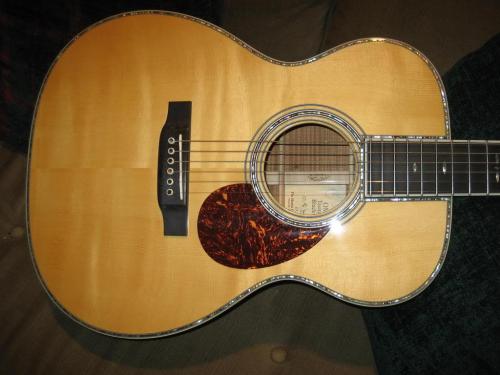
The OM-45 Tasmanian Blackwood NAMM Show Special is tonally enhanced with an extremely rare flamed Engelmann spruce soundboard, and bookmatched back, sides and headplate of highly flamed Tasmanian blackwood. Special appointments include fossilized ivory bridge pins and endpin, Style 45 abalone trim with a boxed endpiece, Style 45 snowflake fingerboard inlays, gold plated Waverly hand-engraved tuning machines, a modified torch headstock inlay nested beneath the C. F. Martin & Co. logo inlaid in abalone, and a premium Accord case. This NAMM Show Special will be limited to no more than thirty instruments. Dealers may only place orders in person during the 2005 Indianapolis NAMM Show.

Here’s a link with some images of the OM-45 TB:

http://acousticguitarforum.com/forums/showthread.php?t=287129
OM45TB

2010 D-42 Tasmanian Blackwood (The Sounding Board Vol. 29 p. 11)

Once again, Martin has produced a NAMM Show Special guitar which truly lives up to its “special” designation – the D-42 Blackwood. Backs and sides of this exquisite instrument are crafted of flamed Tasmanian Blackwood, a close relative of Hawaiian Koa both in looks and tone, and which grows primarily on the island of Tasmania off the southeast coast of Australia. Its tone is clear and bright and highly reflective, a perfect match for the D-42’s Adirondack (Red Spruce) top, prized for its resonance and big, open bass voice. Top braces, also Adirondack, are carefully scalloped and tapered. The small maple bridgeplate is typical of Golden Era 30s Martins. As a special touch, European flamed maple is used for the top binding, fingerboard binding, heelcap and endpiece. The entire top perimeter and fingerboard extension are inlaid with colorful heart abalone pearl as is the style 45 rosette. A polished and beveled Delmar tortoise pickguard accents the pearl binding. Ebony fingerboard (inlaid with Golden Era snowflake, cats eye & concave squares) and bridge (with long bone saddle). “Alternative” flower pot headplate inlay. Only 10 of these unique guitars will be offered. Orders will be taken only at the Summer NAMM Show.

Here’s a link with some images of the D-42 TB:

http://theunofficialmartinguitarforum.yuku.com/topic/103988#.WOHlJtKGNdg


2011 OM-42 Tasmanian Blackwood (The Sounding Board Vol. 31 p. 27)

We should have called OM-42 Tasmanian Blackwood NAMM Show Special the “Show Stopper!” This magnificent 14-fret, longscale (25.4″), Orchestra Model exemplifies the very best that Martin has to offer the discriminating collector and player. For starters, back and sides are crafted of rare flamed Tasmanian blackwood from Eastern Australia. Visually, it’s similar to premium figured Hawaiian koa. Tonally, it shares the brightness of koa but with the rich overtones of rosewood, giving it a unique and very balanced voice. With its solid Adirondack spruce top and 1/4″ scalloped “Golden Era” braces, it’s also got a big voice, with plenty of volume when you need it. Finger-picking or rhythm, this is your guitar. In the 42-style, the top, rosette and fingerboard extension are inlaid with colorful Paua pearl. Martin’s early (and rarer) “alternate” pearl torch design is inlaid into a polished ebony headplate. The ebony fingerboard is likewise inlaid with “Golden Era” snowflakes. A vintage 1930s ebony “belly” bridge features long bone saddle, bone bridge pins (and end pin) with pearl dots. European flame maple top binding, heelcap and endpiece. Gold engraved Gotoh tuners. Modified V neck, of course. Only 15 of these beautiful instruments will be offered, each personally signed by C. F. Martin IV and numbered in sequence. Exquisite. Resonant. And oh-so-limited.

Here’s a link with some images of the OM-42 TB:

https://artisanguitars.com/2011-martin-om-42-limited-edition-adirondack-and-tasmanian-blackwood-5-8-id-6647

2011 was the last time Tasmanian blackwood featured on a Martin Limited Edition guitar. Perhaps aiming at the top shelf market wasn’t best way to introduce a new tonewood into the market.

In addition to these limited release NAMM Show Specials Martin continues to produce the occasional custom model featuring Tasmanian blackwood, some of which have featured on this website over the years, including the Martin Custom Shop 018-T-Tasmanian Blackwood and the Martin Custom CEO7 Tasmanian Blackwood.

https://blackwoodgrowers.com.au/category/cf-martin-guitars/

With CF Martin’s focus on FSC as their lifeline to a sustainable future, Tasmanian blackwood will have a hard time staying in Martin’s tonewood catalogue. There is currently no FSC certified Tasmanian blackwood available anywhere, and this is unlikely to change in the foreseeable future. The best chance of FSC Blackwood will come from New Zealand as farmers there ramp up production over the coming years.

https://blackwoodgrowers.com.au/2017/03/28/c-f-martin-guitars-sustainable-tonewoods/

Tasmanian blackwood needs lots of market support to reach the stage where it may be possible to achieve FSC certification. It’s up to the market to build a sustainable future for Tasmanian blackwood. The FSC won’t achieve that by itself.

Bob Taylor – Searching the World for Sustainable Tonewoods

Bob Taylor, President of Taylor Guitars, and a group of friends are currently on a world tour looking for sustainable tonewoods.

Bob is posting regular updates of his tour on Youtube. You can watch them here:

https://www.youtube.com/playlist?list=PLIa-kz_oNaiTYa5ZWKYsKSML5eEAIQKu6

Traditional tonewoods such as rosewood and mahogany are disappearing fast due to overlogging.

Bob Taylor consequently has two enormous challenges if Taylor Guitars is to survive and prosper into the future:

Firstly he needs to find sustainable sources of new tonewoods with which to build quality guitars.

Secondly he needs to convince a guitar-buying public to say goodbye to traditional tonewoods (perhaps a Farewell Party is needed) and welcome the new sustainable alternatives.

Neither of these challenges will be easy.

Trees take a long time (30+ years) to grow so Bob needs to be thinking 30+ years ahead. How many of us have to think 30+ years ahead just so that we have a job tomorrow?

Now that is a rare challenge!

But he also needs tonewoods in the short term. Traditional tonewoods will be gone well before any trees planted today can be harvested. So the tonewood market over the next 30+ years will be a mixed bag, until people start planting tonewoods to produce a regular, managed supply.

Despite my efforts unfortunately Tasmania is not on Bob Taylor’s itinerary.

In terms of forestry opportunity Tasmania has a poor reputation around the world. The rhetoric here may be “world’s best practice” but that is definitely not how the rest of the world sees us.

Bob Taylor may love Tasmanian blackwood as a tonewood, but as yet he is not prepared to commit his time and energy trying to deal with the many challenges facing forestry in Tasmania.

It will be interesting to watch the videos and see what Bob Taylor & Co discover on their journey.

Enjoy!

C F Martin Guitars & Sustainable Tonewoods

CFMFTF

Martin The Journal of Acoustic Guitars is a glossy magazine published by CF Martin Guitars every 6 months.

The latest edition (Vol. 7, p. 64 – 69) contains a great article about what CF Martin are doing about promoting sustainable tonewoods.

https://issuu.com/cfmartin/docs/mag808_martin_journal_vol7-final_li?e=23350636/43337570

CF Martin has a problem, a problem called success.

Most of the world’s premium guitars are built from a combination of mahogany, rosewood, and ebony. However, these traditional tonewoods often come from areas of the world that are under severe pressure from logging and development.

“We’ve done such a good job of convincing the customer that these traditional, rare and exotic timbers make the best guitars, that it’s difficult to move customers away from those materials,” said CEO Chris Martin.

Being an old company can have its advantages and its disadvantages. In the case of CF Martin tradition and heritage can prevent change, even if that change is desperately needed. And in the international tonewood market change is definitely needed; change away from using rainforest and old growth timbers to a more sustainable future.

The customers of CF Martin are becoming a problem.

They are addicted to rosewood, mahogany and ebony!

So Martin Guitars approach to sustainable tonewoods is to establish a close working relationship with a third party forest certifier, in this case the Rainforest Alliance and the Forest Stewardship Council (FSC).

But…

one of the biggest challenges the FSC® and the Rainforest Alliance have had over the years is consumer awareness. “One of the goals has been to make the consumer more aware of these brands and, in turn, for these brands to become more relevant to the consumer.”

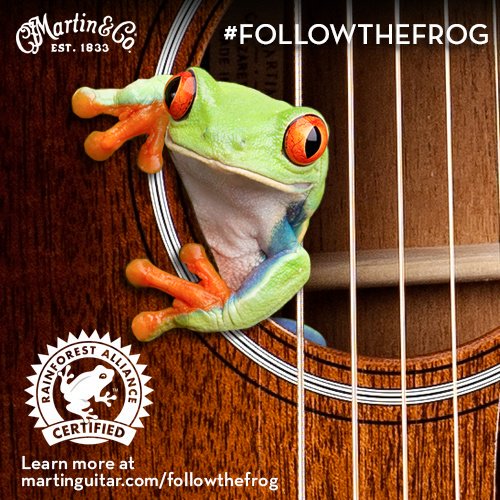
Hence the Rainforest Alliance has created the Follow the Frog program, which Martin Guitars has signed up to support.

https://www.martinguitar.com/FollowtheFrog

http://www.rainforest-alliance.org/followthefrog

www.fsc.org

Here’s a great video with Martin CEO Chris Martin explaining the history of the company’s relationship with the FSC and the Rainforest Alliance. Well worth watching:

In the mean time Martin Guitars are caught between an inflexible customer base and a rapidly changing tonewood market.

In the coming years, Martin will introduce a new line of guitars using temperate hardwoods from North America that relies on both historical and new shapes and designs.

I have absolutely no doubt about CF Martin’s commitment to sustainability, but I do have a few suggestions for them:

  • Can the FSC logo be displayed on the front page of the Martin website?
  • Under the “Guitars” section of the website, why can’t I select and view FSC guitars?
  • Even when I find an FSC guitar using the Search facility, the FSC logo isn’t prominently displayed.
  • And if I go to this page under Custom Shop (https://www.martinguitar.com/custom-shop/tonewoods/) the message is all about rare and exotic tonewoods.  Nothing about a sustainable future at all.

So whilst the commitment to sustainable tonewoods is there I think the marketing and promotion at CF Martin still needs extra work, whilst at the same time the focus on traditional, rare and exotic timbers needs to be ramped down.

I wish CF Martin all the luck in the world in their endeavours to change the acoustic guitar market.

2004 Fall Limited Editions – when Taylor Guitars first introduced Tasmanian blackwood

taylor355l712s

While still on the Taylor theme, I became curious as to when Taylor Guitars first introduced Tasmanian blackwood to their production.

Here’s an extract from the 2004 Fall Wood & Steel (Vol 42, p. 16) magazine published by Taylor:

Inasmuch as we love introducing new stuff for you to discover and explore, we are pleased to unveil a tonewood that is sure to catch your eye and your ear: Tasmanian blackwood. This beautiful wood shares some characteristics with its Hawaiian cousin, koa, in that its variegated coloring runs from a deep tawny to a light golden brown and is accentuated by rich dark grain patterns. Also like koa, Tasmanian blackwood has a warm, mellow tone highlighted by complex overtones. The more you know about this tonewood, the more there is to like.

Tasmanian blackwood’s charismatic visual allure will make the 300 Series Fall Limited Editions very special indeed. Each guitar will feature satin finish, mother-of-pearl fretboard markers, and a black/white/black fiber purfling on the body binding and in the soundhole rosette.

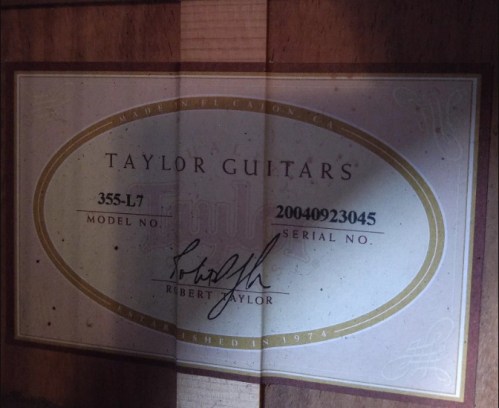
The 2004 Fall Limited Editions included 10 Tasmanian blackwood models in the 300 series, including three 12-string models. These had solid Tasmanian blackwood back and sides & Sitka spruce top. The models and production numbers were:

MODEL PRODUCTION
310-L7 Dreadnought 6-string 116
310ce-L7 Dreadnought 6-string with cutaway and ES 320
312ce-L7 Grand Concert 6-string with cutaway and ES 65
314-L7 Grand Auditorium 6-string 40
314ce-L7 Grand Auditorium 6-string with cutaway and ES 471
315-L7 Jumbo 6-string 5
315ce-L7 Jumbo 6-string with cutaway and ES (a) 34
354ce-L7 Grand Auditorium 12-string with cutaway and ES 37
355-L7 Jumbo 12-string 15
355ce-L7 Jumbo 12-string with cutaway and ES 47

(a) Model not listed in Wood & Steel Vol. 42.

These 1150 guitars may one day become iconic collector’s items in the new world of sustainable acoustic guitars.

Here’s a video of the 2004 355-L7 Jumbo 12 string Tasmanian blackwood:

And here’s one of these rare jumbos currently for sale:

https://reverb.com/item/3345670-taylor-355-l7-limited-edition-1-of-15-12-string-2004-w-taylor-hard-case

(NOTE TO REVERB USERS: If you are searching for blackwood guitars on reverb the search only picks up “blackwood” if it is in the title of the advertisement. If blackwood is in the text and not in the title, it will not appear in your reverb search results. The above 355 Jumbo is a good example of this faulty search program. You will also need to search by make and model to find blackwood guitars.)

For 13 years Taylor Guitars have been championing Tasmanian blackwood to the world. Thank you Taylor Guitars!

Thanks also to Taylor Guitars for their assistance with this article.

https://www.taylorguitars.com/

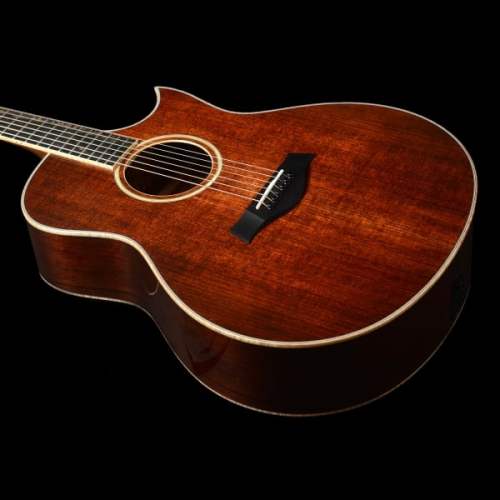
Taylor Custom GS Grand Symphony Tasmanian Blackwood

tcgs2017b

Here is a stunning custom Taylor GS all Tasmanian blackwood currently for sale in the UK at Sound Affects Premier, Ormskirk, Lancashire.

Ok its £5298 or $AU8640.

Ouch!

But this thing is eye candy! I bet it sounds even better than it looks.

http://www.soundaffectspremier.com/guitars-c93/acoustic-guitars-c96/custom-gs-grand-symphony-tasmanian-blackwood-electro-acoustic-guitar-p6325

The specifications are:

  • Grand Symphony
  • Florentine cutaway
  • Tasmanian Blackwood top, back & sides
  • Mahogany neck
  • Special Ebony fretboard
  • 2-piece back configuration with .200 backstrip
  • Ebony headstock overlay
  • Performance bracing
  • 1-11/16² nut
  • Short scale (24-7/8²)
  • V- carve neck profile
  • Slotted peghead
  • ES2 electronics
  • Tusq nut
  • Micarta saddle
  • Clear pickguard included in case
  • Figured Maple body & fretboard binding
  • Maple, single ring rosette with bound soundhole
  • Gloss back & sides finish
  • Gloss top finish
  • Satin neck finish

Worldwide shipping is available.

I love the blackwood top, the Florentine cutaway and the slotted headstock.

Guitar by Taylor Guitars:

https://www.taylorguitars.com/

Tasmanian blackwood supplied by Tasmanian Tonewoods:

http://tasmaniantonewoods.com/

I hope this one finds a good home.

Go check it out.

Two Fender blackwood guitars for sale

Here are two Fender Tasmanian blackwood guitars currently for sale.

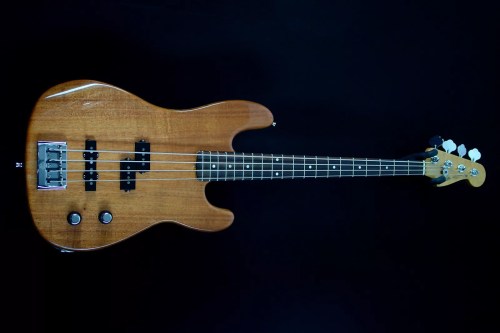
First is a Fender Custom Shop Artisan Postmodern Bass PJ 2016 Tasmanian Blackwood:

fender-bwdpmbass

https://reverb.com/item/3919477-fender-custom-shop-artisan-postmodern-bass-pj-2016-tasmanian-blackwood

I’m not sure what a postmodern bass sounds like, but it sure looks great!

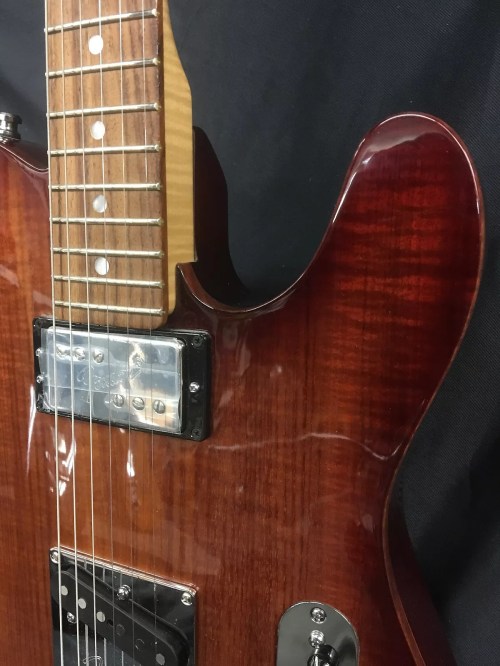
The second is an American Select HS Blackwood Telecaster:

fenderbwdtele

This Telecaster is for you budding Keith Richards types out there.

https://reverb.com/item/3991070-american-select-hs-blackwood-telecaster

Two fine instruments from Fender featuring Tasmanian blackwood.

www.fender.com