Here’s a couple of articles I found recently that feature around the troubled issue of international tonewoods.
The first is a recent article from National Geographic (April 2013) on the fate of mahogany in Peru titled “Mahogany’s Last Stand” – not a happy story.
The second is from a website called Impact Forestry – Smart Forest Investment. The articles about the tonewood market are interesting, especially his idea of creating an “international tonewood reserve & plantation” to ensure future tonewood supplies.
I just stumbled across this today on the internet. Santa can drop one of these off at my place this Christmas if he’s feeling generous (I really do promise to be good….). There’s no way as a forest industry volunteer that I’m ever going to be able to buy one.
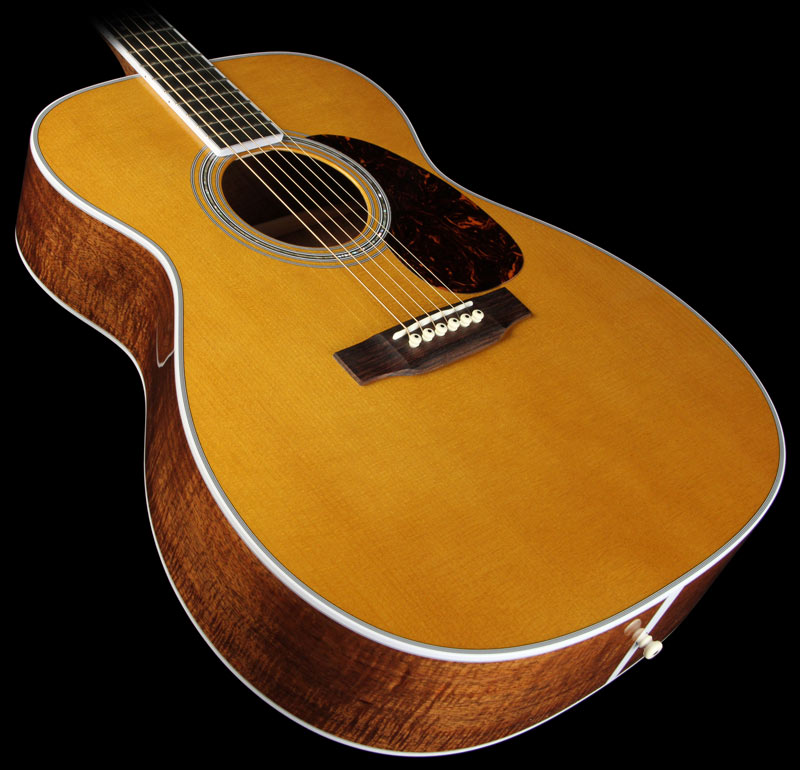
C.F.Martin is the prestige acoustic guitar company in America. This is Tasmanian blackwood appearing at Carnegie Hall; the very pinnacle of the timber value adding mountain. Martin has used Tasmanian blackwood occasionally in the past but it has been a while. The last examples that I’m aware of were beautiful OM-45 and D-42 models produced about 10 years ago.
And then today I found this absolute beauty. It is a Martin Custom Shop 018-T-Tasmanian Blackwood. Size “0” is the baby in the Martin family, while the “18” denotes a moderate degree of decoration (compared to the above “OM-45” that is literally dripping with bling). This custom baby model is only available at Music Zoo in Roslyn, New York. Check it out!
Baby Martin size “0” guitars are relative rare these days. They were common years ago, being introduced during the Great Depression to help boost sales at Martin Guitars. Martin also makes a custom order “0” in all solid mahogany including soundboard, which is another beautiful guitar. But I would happily sit this blackwood baby on my lap for a strum.
But all that Tasmanian promotion and marketing potential is being wasted. Tasmania is not internationally renowned as a reliable producer of sustainable profitable quality tonewood. To date most of the international commercial relationships have been short lived, difficult affairs, not to mention the local politics and conflict. We have the potential to once again walk the stage at Carnegie Hall with our quality profitable sustainable blackwood tonewood. To date there appears to be little interest here in Tasmania. Such a wasted opportunity.
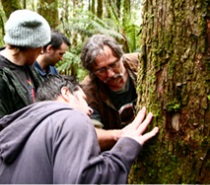
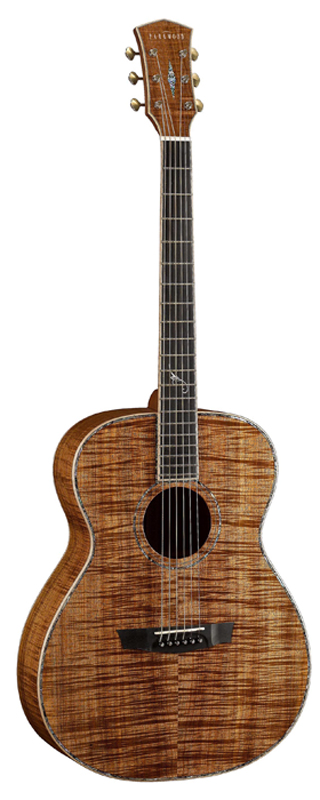
A series of coincidences allowed me to catch up last week with long-time blackwood legend Murray Kidman. Murray has been harvesting blackwood from the Otway Ranges in Victoria for the past 30 years. He started out salvaging stumps and other “waste” wood from commercially harvested areas of State forest. Word gradually spread that Murray had a very impressive collection of figured blackwood, which attracted the attention of a few local luthiers. Eventually Maton Guitars heard about Murray and a long-term partnership was formed. Murray now only supplies the tonewood market, including Maton Guitars, a number of custom luthiers and the occasional commercial order, such as the recent limited edition blackwood guitars by Cort and it’s subsidiary Parkwood, one of the largest guitar manufacturers in the world.
When commercial native forest harvesting ceased in the Otway Ranges in about 2008, with the help of Maton guitars Murray managed to get a license to continue small-scale selective logging of blackwood. Murray’s only tool is his chainsaw. All the timber harvested is carried out of the forest by hand, with all operations controlled and managed by the Department of Environment and Primary Industries. Murray has just had his license renewed allowing him to harvest a total of 100 cubic metres of blackwood over the next 3 years. This is a small boutique business that just manages to provide Murray with a very basic living. But the man loves his work and is passionate about blackwood. Here is a video about Murray from the Maton Guitar website.
And yes, Murray does have a very impressive collection of figured blackwood timber some of which can be seen on his website. He also has a very impressive dog! You can read more about Murray’s story on his website:
But what about the future? Murray is a sole operator approaching the end of his working life. His son James might take over the business, but it is a labour of love more than fortune. And what about the resource? The management of public native forest will always be contentious. In terms of regulation and politics Murray walks a tightrope every day in his accessing a public resource. Continuing access to the public resource is not guaranteed. There is a relatively active farm-forestry group in the Otway region, but so far there hasn’t been any collaboration with this group. There will certainly be blackwood growing on private land in the Otway Ranges, and opportunity to plant more. Can these various opportunities come together for everyone’s benefit to help build a more commercially, socially and politically sustainable blackwood industry in Victoria?
What Murray does may be inspiring and results in the creation of high-value products, but we need to get to the point where growing blackwood is a profitable commercial activity that attracts the attention of farmers. This can only happen if the market provides sufficient interest and attraction to farmers by way of price signals and communication. Only then will Maton and the other luthiers have a sustainable future supply of Otway blackwood.
Thanks Murray for a very enjoyable and informative afternoon.
Here is a great story featuring New Zealand farm-grown plantation blackwood timber being used in the manufacture of high-end custom-built stringed instruments.
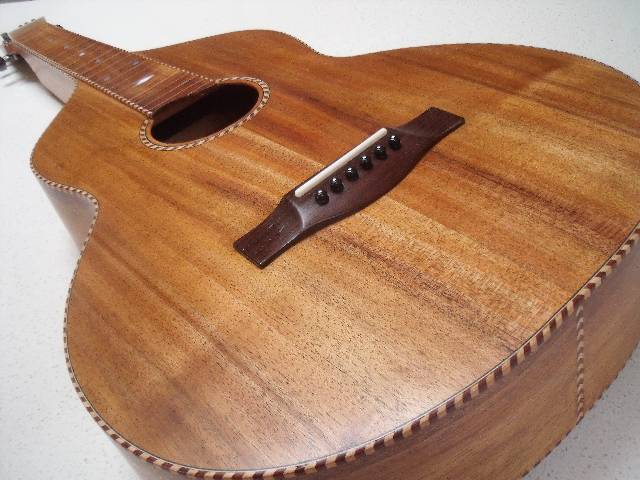
Paddy Burgin is a luthier based in Wellington New Zealand. Paddy has customers from all around the world. Amongst other timbers Paddy uses both Tasmanian and New Zealand grown blackwood to build his custom stringed instruments. The latter is farm-grown plantation blackwood, in this case sourced from a farm at Golden Bay in the far north-west corner of the south island. This particular farmer has been growing blackwood since the 1970s. While Tasmanian blackwood is more commonly used in instruments, examples of NZ blackwood in lutherie are still relatively rare. I suspect this is because a) there aren’t many luthiers in New Zealand, b) NZ blackwood is not widely available outside NZ, and c) there is still a lingering prejudice against plantation wood.
So here is a great example of a weissenborn guitar made from NZ plantation blackwood. Weissenborn are a style of lap slide guitar that was originally developed in the 1920’s in California during the Hawaiian music craze.
Paddy recognises that the NZ blackwood has different tonal properties to Tasmanian grown blackwood but is very well suited to the task of producing quality instruments. As time passes and the NZ blackwood industry matures perhaps a selection and breeding program may develop plantation blackwood that is custom grown to meet the needs of the tonewood market. But it takes pioneers like Paddy to challenge our prejudices and help drive the future of the tonewood and blackwood industries. Check out Paddy’s web site and read this great story. Thanks Paddy and keep up the great work!
PS. More blackwood stories from New Zealand would be greatly appreciated……
As I’ve written previously (1,2,3,4) blackwood is a recognised quality tonewood and international customers are scrambling to find sustainable sources as the traditional supplies (mostly from tropical rainforests) become exhausted. One of the key players in this movement is Taylor Guitars from California. They publish an impressive quarterly owners newsletter “Wood & Steel”.
So here’s the challenge – download a copy of the 2013 Winter edition of “Wood & Steel” below (7.5 MB pdf file) and see if you can discover how many times the word “Tasmania” appears, and I mean do more than just a quick word search. Read the articles. Especially read the article by Taylor’s President Bob Taylor on page 5. Bob Taylor is one switched-on, passionate executive.
There is enough potential demand in the international tonewood market to make a significant difference to the blackwood industry in Tasmania. And the advantage is this market can utilise shorter log lengths that traditional sawmillers don’t want; the kind of material that is currently growing unmanaged and unappreciated on hundreds of farms around Tasmania. This demand, coupled with this existing resource could kick-start a blackwood growers cooperative. Four steps to a profitable, sustainable blackwood future:
1. Realise the commercial potential of the existing farm blackwood resource and put money into farmers pockets now;
2. Build the industry by helping farmers grow more quality blackwood in plantations for the future;
3. Gain FSC Certification for farm-grown Tasmanian blackwood;
4. Build another iconic Tasmanian industry.
With the TFA legislation now passed in the Tasmanian Parliament and the associated $400 million of Federal money soon to become available, now is the time for the industry and the community to demonstrate support for the future of the blackwood industry. Please post you comments of support.
Check out this recent story on the ABC Radio Rural Report, especially the second part about Tasmanian Tonewoods Bob MacMillan. Read the story and listen to the podcast interview with ABC reporter Rosemary Grant.
Taking Tasmanian timbers to the end of the iconic, value adding chain. Most of the tonewood Bob ships is blackwood. What a great story!
But I do take exception to the final comment by Tasmanian shipping agent Brett Charlton about the product just “sitting in our forests”. Products that just “sit in the forests” are not sustainable and have no future. This just reflects such old 19th century thinking and attitudes.
Our commercially valuable blackwood should no longer be “just sitting in the forest”. We should be promoting it and encouraging farmers to better manage their existing blackwood, and learning how to grow more.
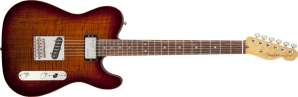
The international profile of Tasmanian blackwood as a premium tonewood just keeps on growing. American guitar makers Fender are now producing a limited release Blackwood Telecaster guitar as part of their Fender Select range.
The Fender Telecaster was originally developed by electric guitar pioneer Leo Fender in 1950, and was the design that finally put the solid-body guitar on the map.
Tasmania’s musical ambassador to the world. A thing of real beauty! An icon.
Now all we need is for a major artist to adopt this Tele as their axe of choice. Any suggestions?
Of course this story brilliantly highlights one of the major challenges that prevents a blackwood growers coop from becoming established. Here we have blackwood being harvested in Tasmania and going to the end of the line, the top of the tree in terms of iconic value-adding, and not a single Tasmanian farmer has been stimulated or motivated to grow more blackwood as a result.
Does anyone else besides me find this situation bizarre?
If we sell cherries to China, apples to Japan or truffles to France it is front page news. But put blackwood on the world stage – literally – and barely a whisper.
Blackwood is Australia’s premier forest product and has been making its way to the very top-end of the value-adding chain for over 100 years. If things had worked out better, farmers would have worked out how to grow blackwood for wood production long ago, and every farm in Tasmania that could, would now have a grove of blackwood managed for quality blackwood timber.
Instead the Government took control and we now have the forest industry on its death bed. It’s time to put the blackwood industry in the hands of the farming community.
Until players in the forest industry (and that includes manufacturers like Fender) come to understand that greater market transparency is essential for its future, then the industry will continue its current freefall. We need to develop regular strong public feedback from all industry players, particularly directed towards current and potential growers.
Here’s a great story (and update) of what Taylor Guitars (a major American guitar maker) are doing in Africa to help drive sustainability in the international tonewood market. Ebony is the traditional wood used for guitar fretboards. It is a slow-growing rainforest tree, with worldwide supplies becoming scarce.
I have established direct communication with one of the major US guitar makers who have recently visited Tasmania and initiated a commercial relationship with a supplier. The company wishes to remain anonymous for the time being. However they have been at the forefront of the sustainable tonewoods movement over the past 10+ years, having established commercial relationships with sustainable tonewood ventures in a number of countries. Here are some extracts from their emails:
“You seem to have a very well laid out [blackwood grower cooperative] plan, one we may discuss publicly supporting in the future. At this point we aren’t ready to do that, since we have yet to really do business on a long term (or short term) basis in Tasmania.”
“I will probably be taking a trip to Tasmania in the next 5 months and would like to meet with you at that time, we can see how we stand and how to move forward.”
While the local forest industry remains deeply divided and political, we have an important commercial opportunity in the making.
If we can get 2, 3 or even 4 major international guitar manufacturers buying farm-grown Tasmanian blackwood it might generate enough business to at least partly fund a cooperative, and certainly create plenty of market profile and momentum.
For the coop to be fully self-funding however there needs to be enough blackwood volume/value leaving farm gates to generate sufficient harvest levy. We don’t have any information about the existing private blackwood resource in terms of commercial volume/value/sustainable yield, but I doubt the resource is enough to fully fund a coop. Can the commercial potential of this existing resource be improved and realised? Absolutely! Can this resource be better managed to improve its future value? Absolutely! But we also need to plant more blackwood to create a new resource that will provide more volume/value out the farm gates of the future. Plantation blackwood will provide the necessary volume and value to help fully fund the coop. The tonewood market is the catalyst that will allow this process to begin.
The tonewood market is a premium market that can utilise short logs that are common in the existing unmanaged farm blackwood resource. Because it is a high-value market more of this low-volume, widely-dispersed resource can be profitably accessed. With enough support more information can be provided to landowners about their blackwood resource in terms of log specifications, prices, demand, etc. which should provide farmers with greater assurance that the forestry market is functioning more like a proper commercial market. Also many of these major guitar companies are looking for opportunities to promote their environmentally sustainable sources and practices once solid commercial relationships have been established. Tasmania could be next on the list as the home of premium quality sustainable tonewoods.
I’m looking forward to meeting with the guitar company representative when he is next in Tasmania and discussing how we might build the Blackwood Cooperative as a successful commercial business.
My friend Robert MacMillan (Tasmanian Tonewoods) was recently interviewed by Rose Grant on the ABC Radio Country Hour, providing a small window into what is currently happening in Tasmania regarding the tonewood market. Read the story and listen to the podcast.
As I’ve said previously, the international tonewood market has the potential to completely change the future of blackwood in Tasmania. Major buyers are looking for new sustainable supplies, and blackwood is already regarded as a premium tonewood. There is a large existing blackwood resource on private land that can supply current tonewood demand.
It’s great and so rare to get some real market information about blackwood. If this information was more regular and transparent, we would know much more about prices and product specifications. This would then help generate interest in growing blackwood and hence help build a growers cooperative.
In this interview Robert provides some indications of current demand (20 truck loads per year), product specs (almost –dead trees?) and pricing (fiddleback more valuable than plain grain), but it is really just a teaser. I don’t think it provides enough detail to get farmers to take notice in harvesting their existing trees, let alone consider planting more blackwood. But it is a start.
It would be even better if some of these major US guitar builders would come here and do some media and promotion in support of growing blackwood. If they think that sustainable farm-grown blackwood is going to happen with no transparency and promotion then they will be sadly disappointed.
Also checkout Roberts recent interview with Barratts Music in Launceston. Great work Bob!!
Recently I was contacted by a very well known Tasmanian custom furniture builder. I’ll call him M. We had a long conversation on the phone about forestry, blackwood, and future possiblilities. M prefers to source most of his timber from private land as he doesn’t support current forest industry policy and practices on public land. M is very interested in the growers coop proposal. Particularly the prospect it offers in the future for selecting and breeding premium blackwood cultivars such as fiddleback. I certainly value having M’s support, as things have been a bit quite lately.
I hope everyone had a great summer break, and are refreshed and ready for another year. And I hope the Legislative Council Committee see the light and approve the TFA Legislation.





 Tasmanian Blackwood Growers Cooperative