Category Archives: Politics

The Slow Awakening

HarrissAnnells

Many members of our State Parliament have been long-time staunch supporters of Forestry Tasmania as the foundation of our forest industry to the point where simple logic and commonsense fail to persuade.

This wonderful review by finance commentator John Lawrence of last Friday’s performance at the annual GBE scrutiny hearing is just inspired. The Minister for Resources (and forests) Paul Harriss was clearly on his mettle.

http://tasfintalk.blogspot.com.au/2015/12/will-minister-harriss-outlast-ft.html

Here’s the Parliamentary website for the review committees:

http://www.parliament.tas.gov.au/ctee/Council/Archived/lcgbe2015.htm

But it does show that after so many decades at least some of our elected representatives are finally beginning to understand they have backed the wrong horse.

Is Forestry Tasmania broke?

Yes!

Is Forestry Tasmania (and the State government) acting to disadvantage private forest growers?

Yes!

You can almost hear the old rusted pennies drop. Kerclunk!!

And it’s all too late!!

No legislation will save FT now. The application for FSC certification is just a political smoke screen.

All the decades of chest thumping and sabre (chainsaw??) rattling were for nothing.

Game over!

As John Lawrence poses the question, which will happen first? Will FT be shut down or will Minister Harriss be consigned to the backbenches?

For existing and potential (disadvantaged) blackwood growers both events can’t come soon enough.

Special Timbers Management Plan Update #2

FTSTS2010

http://www.stategrowth.tas.gov.au/forestry/special_species_timber_management_plan

Over at the Tasmanian Department of State Growth website they now have some information about special timbers.

Yet another Special Timbers Management Plan is being prepared.

The Management Plan is required to be in place by October 2017, with the draft Plan available for public comment in early 2017.

So get those pens warmed up. You only have 18 months to wait before you are permitted to have your say!!

Current work to inform the development of the Management Plan includes:

  • A resource assessment of the special timber resource available in existing production forest managed by Forestry Tasmania;
  • Market demand research is being undertaken to better understand demand for special timbers;
  • celery-top pine harvesting trial as part of investigations into alternative harvesting techniques;

It’s an incredibly myopic view of special timbers:

  • No mention is made of the fact that blackwood is by far the dominant special timber, accounting for over 90% of volume harvested each year.
  • No mention is made of the commercial potential of private grown Tasmanian blackwood.
  • No mention is made of the fact that blackwood sawlog supply and Tasmania’s iconic blackwood industry is now in jeopardy due to decades of overcutting and mismanagement by Forestry Tasmania and successive State governments.
  • No mention is made of the current and recent markets for special timbers including price and demand history. For example a summary and review of The Island Specialty Timbers public tender results for the past 5 years would make for very interesting reading. See my annual reviews of IST blackwood tender results as an example:

http://blackwoodgrowers.com.au/2015/06/18/ist-blackwood-sawlog-tender-results-2014-15/

  • No mention is made about possible sales, costs, prices and marketing arrangements;
  • No mention is made of the continuing fiasco of Tasmania’s most valuable timbers being a taxpayer-funded community service.
  • No mention is made of how the ongoing harvesting of special timbers from public forest will be funded, or how much it is likely to cost. One suspects that (as in the past) financial and commercial matters will not be discussed in this forthcoming management plan.
  • There’s no mention of the new Hydrowood project that is going to be supplying the market with significant volumes of salvaged special timbers over the next 5-10 years.

http://blackwoodgrowers.com.au/2015/11/21/hydrowood-update/

  • Unfortunately there is also absolutely no information about the proposal to log the Tasmanian Wilderness World Heritage Area, and the recent visit to Tasmania by delegates from UNESCO. This issue of international importance is completely ignored! I guess the Tasmanian Government does not want the UNESCO delegates to be fully informed, let alone anyone else who has concerns about World Heritage management.
  • They can’t even provide a Table of Contents, an indication of the scope of the management plan.

Would I be correct in guessing that State government special timbers policy is all about politics and supporting a handful of woodworking mates?

There is nothing here about commercial opportunity or industry development.

There is absolutely nothing here for existing and prospective commercial blackwood growers.

Once again its totally pathetic!

http://blackwoodgrowers.com.au/2015/04/23/special-species-timber-management-plan-update-1/

When will Tasmania get a fully commercial and profitable forest industry?

Specialty timber industry has Tasmanian Government support, despite [WHA] logging doubts

ST1

http://www.abc.net.au/news/2015-11-24/state-government-backs-speciality-timber-industry/6969944

http://www.abc.net.au/news/2015-11-23/hodgman-hoping-to-convince-unesco-delegation-of-logging-plan/6966218

http://www.themercury.com.au/news/tassie-tourism-leaders-in-key-talks-with-united-nations-heritage-body/story-fnj4f7kx-1227620092494

Mr Hodgman was confident of changing the [UNESCO] delegation’s mind.

“We’ve every confidence that the delegation are open to understanding what we do in Tasmania and accepting, we believe, that an appropriate balance is in place,” he said.

“Any harvesting would be subject to considerable controls and environmental protection, including at a national level.”

But if unsuccessful, the Premier said logging would be banned.


The UNESCO delegation is in town to find out “what we do in Tasmania”.

what we do in Tasmania”…???

What we do in Tasmania is make stupid forest policy and then stuff things up, again and again!

What is perfectly obvious from the last 35 years is that politically-driven forest policy in Tasmania has been a disaster for both the forest industry and the Tasmanian community.

The “appropriate balance” in place is nothing more than wedging the community and winning elections.

It has nothing to do with good profitable sustainable forest management.

And as for “considerable controls and environmental protection” haven’t these been in place for decades but still the special timbers industry is in crisis?

It’s not about the controls and protection is it? The dominant issue continues to be the politics and conflict.

Our forest industry will never be profitable and sustainable because logging public native forests is just too political. There is no resolution to this problem except stopping the logging of public native forest. That is the fundamental lesson of the last 35 years.

One thing is absolutely 100% guaranteed. Any logging of the Tasmanian Wilderness World Heritage Area would be an ongoing battleground that would further damage the Tasmanian community and our political system for decades to come. Not to mention the incredible waste of money and time it would entail.

Both of the major political parties DO NOT support the special timbers industry because they DO NOT support profitable tree growers.

Without profitable tree growers the special timbers industry has no future at all.

Tasmanian politics really does beggar belief!

When will Tasmania get a fully commercial profitable forest industry?

Hydrowood update

hydowoodS

The long anticipated Hydrowood project is finally under way on Lake Pieman on Tasmania’s west coast salvaging specialty timbers from flooded hydro dams.

http://www.examiner.com.au/story/3505999/lake-pieman-site-of-australian-first-underwater-logging-video/?cs=95

http://www.abc.net.au/news/2015-11-20/the-hunt-for-sunken-treasure-harvesting-underwater-timber/6957388?WT.ac=statenews_tas

Here is the projects new website.

http://hydrowood.com.au/

I have both hopes and fears for this project in terms of what it could do for the special timbers/blackwood market.

My hopes are that through Hydrowood sales the company will provide much needed special timbers price and market transparency. This is unlikely to happen but I will certainly be encouraging the company management to adopt a commercial/transparent model.

The main driver that will encourage Tasmanian farmers to grow commercial blackwood is if there is much more price and market transparency. Can I get Hydrowood on board?

Ideally I would like to see Hydrowood set aside the very best logs from the salvage operation and every 3-6 months have a major auction.

Let us put 1,000 cubic metres of Tasmania’s finest timbers on the auctioneers table every 3 months and see what the market is prepared to pay!

Let us clearly demonstrate that the forest industry has commercial muscle and is no longer a community service.

Let us use this opportunity to stimulate interest in the real value of quality timber, and growing trees as a profitable investment and primary industry.

The fears are that a) they will flood the market and drive down prices, or b) the ST oligarchy that are currently pushing for World Heritage logging will force the Government to put restrictions on the Hydrowood markets/prices, or c) given the history of the last 40 years that this will turn into yet another Tasmanian forest industry disaster.

Hydrowood estimates they will salvage 80,000 cubic metres of special timbers over the next 3 years, with the possibility of the project lasting another 5 years. This is far more special timbers than has ever been supplied to market before. I would be surprised if the Australian market can absorb this volume of wood. Some of it will have to go to export markets. Perhaps all of it should go to export markets.

Much of this 80,000 cubic metres will be blackwood.

I don’t have a problem with our valuable timbers going for export, especially if they are attracting premium prices and the market is kept informed.

What this huge volume of premium wood will do for the special timbers market and for prices will soon enough become apparent.

The Hydrowood project will definitely have a prolonged and significant impact on the profitability of a number of important Tasmanian businesses. Consequently there will be political repercussions.

So now the Tasmanian special timbers market has four different classes of suppliers:

  1. Forestry Tasmania and its subsidiary Island Specialty Timbers selling taxpayer-subsidised, community service special timbers from public native forests, for which the Tasmanian/Australian taxpayer contributes $80 per cubic metre to subsidise the sawmillers and craftspeople [unprofitable and unsustainable];
  2. Hydrowood supplying salvaged special timbers from Hydro dams, at a cost that reflects the cost of salvage [profitable (??) and unsustainable];
  3. Tasmanian farmers selling salvage special timbers from their farms at a cost that reflects the cost of salvage [profitable and unsustainable];
  4. Tasmanian farmers who are actually growing commercial, sustainable special timbers where the cost of the wood actually reflects the cost of growing, harvesting and replanting the trees [profitable (??) and sustainable]. These poor farmers now have a very difficult market in which to operate and compete. They have absolutely no support from the Government or industry. Do they have any support from the market?

If the State Government goes ahead with logging the Tasmanian Wilderness World Heritage Area there will be a fifth supplier in the special timbers market – taxpayer-subsidised, unprofitable and unsustainable.

If that’s not a buyers dream market I don’t know what is!

How can Tasmania’s special timbers and blackwood industries have any future with this mess of a marketplace?

The only business model for a successful forest industry is profitable tree growing. So where are the profitable tree growers in any of this mess?

Does Tasmania really want a special timbers industry? It sure doesn’t look like it!

Dear reader, please think carefully before making your next special timbers purchase.

It really is a pathetic joke!

But good luck to the Hydrowood team.

It’s a shame we can’t have a profitable, commercial and sustainable special timbers industry in Tasmania, as well as the clean-up and salvage.

HydrowoodBlackwood

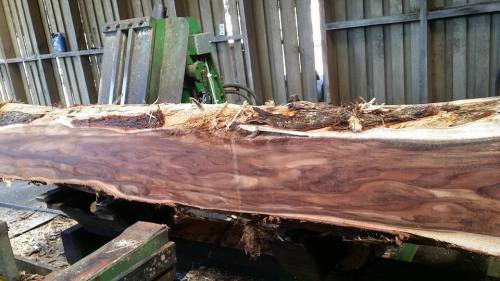
Some Hydrowood salvaged blackwood – unique but how valuable is it?


Another year of special timbers obfuscation and decline

FTAR2015

The Tasmanian State Government and Forestry Tasmania regard special timbers production as a taxpayer-funded community service. Tasmania’s most valuable timbers are produced for the poor, the needy, and the deserving.

Forestry Tasmania recently released their annual report for 2015, and it provides another wonderful opportunity to demonstrate the disaster that is public native forest management in Tasmania in the 21st century.

http://www.forestrytas.com.au/news/2015/10/2014-2015-forestry-tasmania-annual-report

Things are going from bad to worse. For my review of last years Annual Report go here:

http://blackwoodgrowers.com.au/2014/10/31/continuing-the-decline-forestry-tasmania-2014-annual-report/

But first an apology to readers. I have just become aware that I have been a victim of Forestry Tasmania’s special timbers obfuscations. Forestry Tasmania has an obligation and commitment to supply and report on “millable” special timbers sawlog production. But by including non-millable “outspec” and “craftwood” products in the reporting mix since 2008, they have created confusion and obfuscation to the point where “non-millable” products now dominate special timbers production and reporting. But FT has no obligation or commitment to produce or report on non-millable special timbers. Reporting on special timbers “millable” products is now at a minimum. Sustainable yield has become irrelevant. See below for details.

Special timbers are mentioned in many places in the Annual Report with the main production discussed on pages 21-22. Once again there is absolutely no discussion of commercial matters.

Deception #1

In 1991 with the Tasmanian Forests and Forest Industry Strategy, again in 1997 with the Tasmanian Regional Forestry Agreement (RFA), and again in 2010 with the Special Timbers Strategy Forestry Tasmania made the commitment to supply 12,500 cubic metres per year of millable special timbers sawlogs to the market (see Table below). This comprised 10,000 cubic metres of blackwood with the remainder being other species. That’s 25 years of commitment to supply and report on special timbers sawlog production.

This commitment was given within the context of significant ongoing “sovereign risk” concerning access to and management of the public native forest resource.

There has never been an obligation or commitment to supply or report on non-sawlog special timbers production.

In addition in both 1999 and in 2013 Forestry Tasmania published sustainable yield estimates for blackwood sawlog production. This has significance as the only other sustainable yield calculation that FT produces is for native forest eucalypt sawlog.

FT is therefore obliged to report against their repeated special timbers commitments and against the blackwood sawlog sustainable yield estimates.

However you have to go all the way back to the 2007 Forestry Tasmania Annual Report to get a clear unambiguous report on the production of total special timbers “millable logs”. In that year there was a separate table showing non-millable (craftwood & outspec) production. This was the first time that non-millable production was ever mentioned in the annual report.

Between 1995 and 2007 (12 years) Forestry Tasmania did not publish special timbers sawlog production by species. Only total production figures are available for this period.

From 2008 onwards the reporting of special timbers production becomes increasingly obfuscated. From 2008 onwards it is unclear exactly what the actual sawlog production by species is, as non-sawlog (outspec and craftwood) becomes mixed into the reporting structure.

The use of simple production tables and charts to show production by product and species, and hence demonstrate sustainability/profitability is completely absent.

Instead FT uses charts to show production by species, but it is unclear whether these charts relate to combined millable and unmillable production, or just the millable production. By 2014 and 2015 however it is clear that the charts of production by species refer to the combined and not the millable sawlog production. [Never mind the fact that the 2015 chart (p. 22) shows “Area (hectares)” and not “Production (cubic metres)”].

These are experienced, professional people who know how to write reports.

This is pure obfuscation!

So much for commitment! So much for transparency!

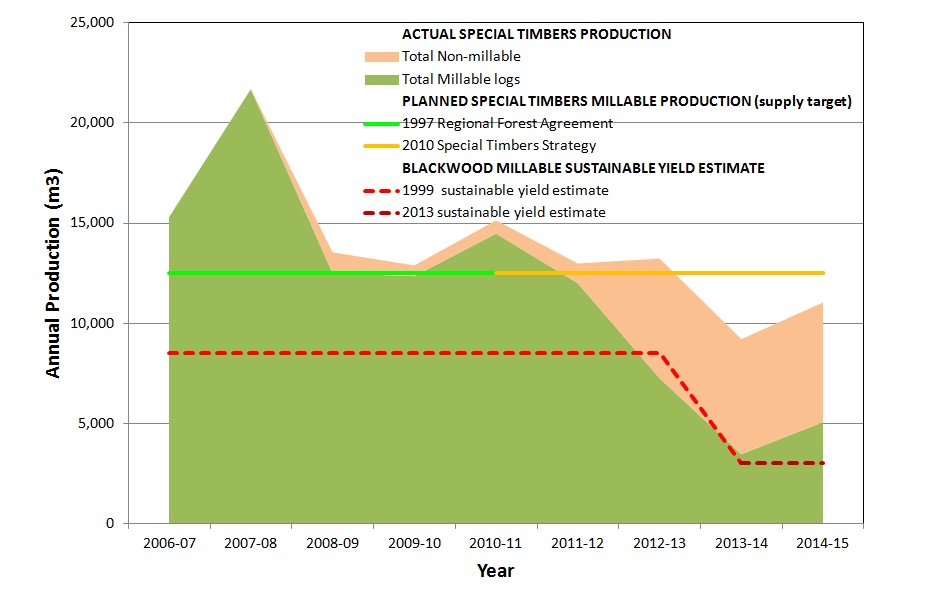
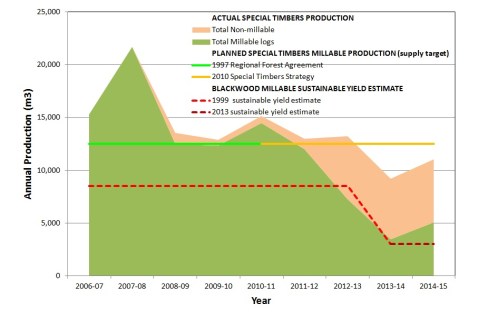
It’s a deliberate attempt to obscure the fact that millable special timbers sawlog production has plummeted, due to decades of overcutting of the resource and sovereign risk. See Chart below.

Here is the table of special timbers millable sawlog production commitments made by Forestry Tasmania in 1991, 1997 and again in 2010, against which they have not reported since 1995.

Annual supply targets for special timbers millable* logs for the ten-year period to 2019.

Species Annual volume (m3)
Blackwood 10,000
Silver Wattle 500
Myrtle 500
Sassafras 500
Celery-top pine 500
Huon pine 500
King Billy pine Arisings only
Other species (including figured eucalypt) Arisings only
Total 12,500+

* Millable logs include ‘Category 4’ sawlogs and ‘utility’ logs (Special Timbers Strategy 2010, p. 21).

I have contacted FT in the hope of gaining some clarity around their special timbers millable log production data.

Deception #2

The 2013/14 Forestry Tasmania Annual Report had a list of objectives for the 2014/15 year which included:

Produce 11,300 cubic metres of special species timber [quality unspecified], and conduct at least 12 tenders for special species logs (2014 Sustainability Report p.56).

That is an immediate breach of their commitment to produce 12,500 cubic metres per year of millable special timbers sawlog per year.

And so to this year’s Annual Report:

During 2014/15, Forestry Tasmania produced a total of 11,042 cubic metres of special timbers from Permanent Timber Production Zone land. This comprised 5,051 cubic metres of millable logs, with the remainder being [non-millable] ‘out of specification’ sawlog and craftwood.

Of the 11,042 cubic metres special timbers produced 3,744 cubic metres (34%) were “sold” through Island Specialty Timbers (IST). Of the 3,744 cubic metres “sold” through IST 220 cubic metres (2.0% and 5.9% respectively) were sold through the online tendering process to ensure that the best possible prices were obtained.

I created the chart below to clearly show what we currently know with certainty about special timbers production for the last 9 years from Tasmania’s public native forests. You won’t find a chart like this in any Forestry Tasmania publication.

Over the last 3 years FT has collected a whopping 17,700 cubic metres of special timbers non-millable craftwood off the forest floor at taxpayers expense for which they have no supply obligation or commitment!! That’s equivalent to 900 truck loads. For the same period only 15,700 cubic metres of special timbers sawlog was produced. That’s 20,000 cubic metres of sawlog short of the supply commitment!! Most of the missing volume is blackwood sawlog.

Why aren’t the alarm bells ringing??

Where is this vast volume of craftwood going? Who is buying it?

What are the sawmillers/boatbuilders/furniture makers doing with no sawlog resource?

Remember most of the special timbers story is about blackwood which makes up to 90% of annual production. So despite having a commitment to supply 10,000 cubic metres of blackwood sawlog per year, plus a sustainable yield estimate against which to demonstrate good forest management, we do not know with any certainly exactly how much blackwood sawlog has been harvested over the past 9 years.

Instead the chart shows the final declining years of Tasmania’s special timbers industry, including our iconic blackwood industry. Blackwood timber could be grown by Tasmanian farmers if they were encouraged. Instead all we get is politics, conflict and wasted taxes.

Welcome to Tasmania!
FTSTchart

Only two other useful pieces of information are provided in the Report concerning special timbers production. One is that 216 cubic metres of Huon pine sawlogs and 128 cubic metres of Huon pine craftwood were recovered from West coast forests, rivers and beaches. No information is available on how much it cost Tasmanian taxpayers to have this timber brought to market.

The other information is the curious comment:

The [IST] tendering program received strong interest, with the highlight for the year being a 0.57 cubic metre blackheart sassafras log that sold for $3,815 per cubic metre.

It’s curious because a) the Government has absolutely no interest in the real market value of its special timbers assets, and b) my records show that the IST highlight for the year was in fact a Tiger Myrtle log which sold at the April 2015 tender for $5,900 per cubic metre!! Curious!!

http://blackwoodgrowers.com.au/2015/06/18/ist-blackwood-sawlog-tender-results-2014-15/

Clearly the market is prepared to pay exceptional prices for quality Tasmanian timber. But forestry is not about business or profits. It’s a community service funded by taxpayers. Prices apparently are completely irrelevant.

Deception #3

Finally after many years we get a clear statement of exactly how much taxpayers money is being wasted subsidising boat builders, furniture makers, guitar makers and Salamanca trinket makers.

The community service obligations costs are set out on page 64-65 of the 2015 Annual Report. They total $6.87 million dollars of which $0.9 million dollars (13%) is used to fund special timber workers. That is a subsidy of $81.56 per cubic metre of special timber produced.

Community Service Obligations

In August 2014 the State Treasurer and the Minister for Resources directed Forestry Tasmania to provide the following community services. In undertaking these community service obligations Forestry Tasmania incurred net costs and was funded to the extent indicated below.

Special species management

  • Net cost $0.90 million
  • Government funding $0.90million
  • Identify, manage and harvest special species timber and manage the Huon pine log stockpile (Annual Report p. 64).

Tasmania is subsidizing wood that sells for hundreds to thousands of dollars per cubic metre in raw log form.

Tasmanian blackwood timber retails for $7,500 per cubic metre, and Tasmanian taxpayers subsidise this!! Why?

http://blackwoodgrowers.com.au/2015/10/26/blackwood-pricing-and-the-forest-industry-2/

Can anyone please provide me with some logic here?

That’s a $900,000 Tasmanian taxpayer subsidy so that the best possible prices are achieved on just 2.0% of the special timbers produced!!

So what’s the deception?

The deception is that any of this special timbers management and sales are logical let alone reasonable. Logic and reason, let alone profitable, sustainable forest management are completely absent.

Our forest managers and our politicians are definitely playing us for fools.

That this fiasco provides a sound moral, political, social and commercial basis for logging the Tasmanian Wilderness World Heritage Area is just offensive.

That this fiasco is applying for Forest Stewardship Council (FSC) certification is just a joke. Forestry Tasmania is a million light years from good profitable, sustainable forest management.

That this fiasco already has PEFC Australian Forestry Standard (AFS) certification makes a complete mockery of that particular certification system.

For his usual brilliant review of FTs miserable commercial performance and management for 2014/15 you should read John Lawrence’s blog here:

http://www.tasfintalk.blogspot.com.au/2015/10/has-ft-turned-corner.html

My apologies for such a long blog but what can one do when faced with such a disaster.

When will Tasmania get a fully commercial, profitable forest industry?

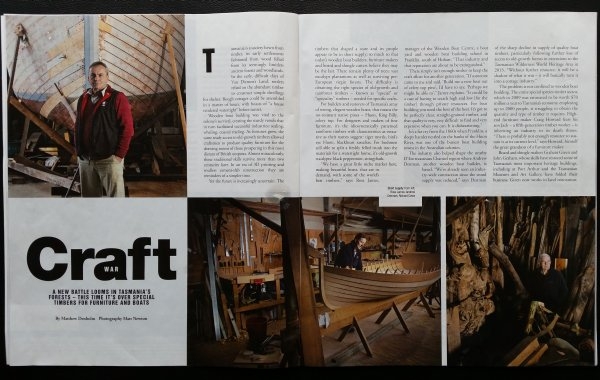
Craft War!

Craft-War-Weekend-Australian

I just found this article in The Australian from 10th October 2015 by the Tasmania correspondent Matthew Denholm.

http://www.theaustralian.com.au/life/weekend-australian-magazine/tasmanian-forests-timber-craftsmen-and-another-looming-battle/story-e6frg8h6-1227563469827

Oh the sad stories of taxpayer-funded cultural and family heritage. It’s enough to make one weep with sympathy.

But as a forester after watching this fiasco for 35 years these stories don’t work for me anymore. My sympathy was consumed in the forestry wars of the last 20 years, and the ongoing blatant politicisation of the forest industry in Tasmania.

Forestry is just about wedging the community and winning elections – nothing more.

Now I’ve had enough of the sob stories. In fact I feel deeply offended by this ongoing stupidity.

The public native forest special timbers industry has never been and never will be sustainable nor profitable. And all the fine craftsmanship and beauty in the world will not make it so.

This is not a Tony Abbott moment revisited! Good [special timbers] forestry does not start tomorrow, nor any other day.

The past 30 years have clearly demonstrated that good, profitable public native forestry will never happen in this State.

Most special timber craftsmen lay much of blame for the emerging crisis on the politicians and timber barons who presided over a forestry industry that “wasted” vast volumes of special timbers in a head-long rush to clear old-growth forests.

Excuse me!! Ever since I can remember the special timbers industry has pretty much universally supported the industrial forestry orthodoxy and State Government policy, including the 1996 Tasmanian Regional Forestry Agreement. They didn’t really have any choice in the matter. All the forest policy was made for the big boys. The cheap subsidized wood provided by large scale industrial forestry is exactly what allowed the special timbers industry to thrive over the past 40 years.

So to turn around now and blame the politicians and greenies is disingenuous in the extreme.

…until the politicians squandered it!

The politicians did indeed squander it [our public native forest resource] and the vast majority of Tasmanians including the special timbers industry were right there in full support. Millions of tonnes of special timbers burnt and chipped over the last 40 years.

And now it’s time for tears and regrets?

Find someone else to blame? Don’t take any personal responsibility?

No! It’s now game over!!

No sympathy! No excuses! No exceptions! No Tony-Abbott promises of “good forestry tomorrow”!!

What little remains of our precious old growth and rainforest must not be used for further political games, waste, and stupidity.

However, Paul Harriss faces stiff resistance from many of the craftsmen in whose name he is -acting. They might be united in condemnation of previous “waste” of their resource, but they are divided when it comes to securing new ¬supplies from within the TWWHA.

“If a government decision was taken to harvest inside a World Heritage Area, I think we would suffer a backlash,”

Absolutely!

The community reaction would rival if not exceed the Franklin Dam blockade. The damage done to Tasmania’s reputation, as a recalcitrant belligerent State would take decades to heal.

Brand Tasmania would be completely trashed!!

The article finishes with what I regard as a complete falsehood:

Whichever way the issue plays out, the special timbers and traditional skills that shaped a state are in ¬danger of being consigned to its past.

It’s the usual dramatic scaremongering that the mainstream media loves to peddle.

This article did not cover anything like half the real story of the special timbers industry. It just repeated what has been repeated many times before. There are many aspects of the story that were completely ignored.

The special timbers and the skills will not be consigned to the history books and museums. They will be confronted with reality just like the ivory traders and whalers were. Those that choose too can adapt and change to the new reality. Those that choose not to change will no doubt chew their old bones for comfort.

My own proposal to develop the commercial potential of growing blackwood timber via a blackwood growers cooperative is just one of the many special timbers opportunities waiting to be developed. But it’s not likely to happen whilst the old wars and the old warriors continue to play their games.

When will Tasmania get a fully commercial and profitable forest industry?

Blackwood pricing and the forest industry #1

Having had a few discussions recently about blackwood prices and price lists I have begun to investigate this aspect of the forest industry and the marketplace. Pricing a commodity that takes 20-100+ years to grow requires stepping outside the realms of normal economic theory. And when you are a retailer and not a grower, are you rewarding and motivating the grower, or are you killing the forest industry?

What the market is prepared to pay, product substitution and technology become critical issues. This is particularly true in the wood commodity markets such as pulp, paper and construction which accounts for the lion’s share of the wood market.

But what about the premium end of the wood market where wood quality and appearance are fundamental aspects of the market? This market exhibits a significant degree of inelasticity (with a high capacity to pay), and a resistance to product substitution, as well as technological change. This is the market that Tasmanian blackwood inhabits.

From a blackwood growers viewpoint, how does pricing affect grower behaviour? Most premium timbers around the world come from (public and private) native forests. Few premium timbers are grown in plantations. Economic management and performance of native forests is quite different to growing timber in plantations. Compared to native forests plantations have high establishment and management costs, with little or no income from the investment until harvest in 20-30+ years time. As a straight investment this requires careful planning and management in order to achieve a reasonable profit from the investment (not to mention a great deal of passion and patience).

So what does the marketplace tell us about the economics of growing trees for premium quality wood production?

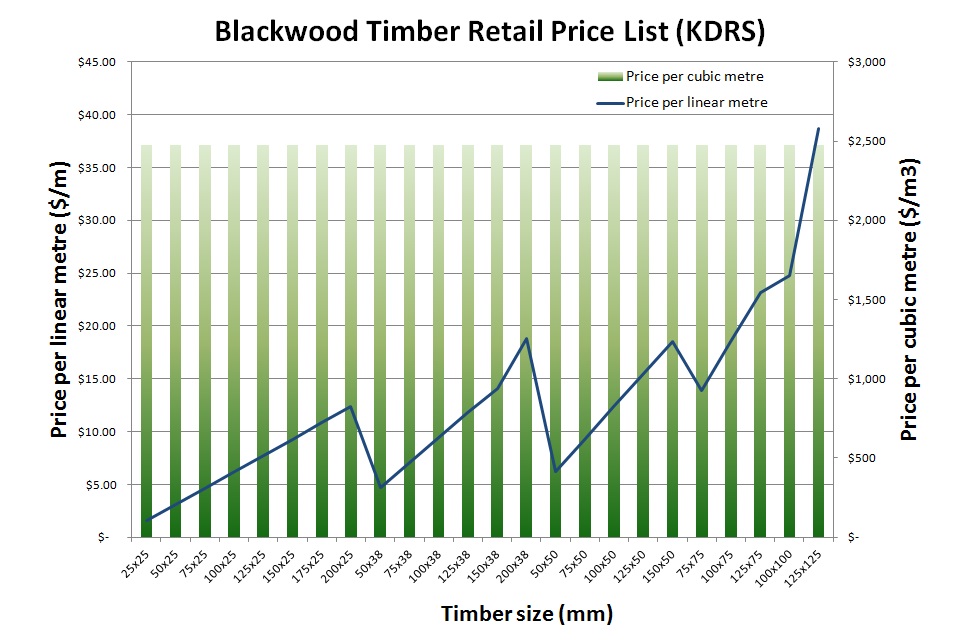
Here’s an example of a real blackwood price list of dimensions and prices per linear metre. I then calculated the price per cubic metre for each of the dimensions and made a chart of the results. The prices are for kiln-dried rough-sawn (KDRS) clear-grade blackwood.

I was horrified!

This pricing and pricing structure will kill the blackwood industry stone dead!!

Firstly I don’t know too much about the costs of regulation, harvesting, transport and sawmilling, but I suspect the growers of this blackwood got bugger all for their trees.

If the retailer is selling blackwood for $AU2,500 per cubic metre regardless of size, what did they pay the sawmiller? And after paying the costs of planning, harvesting, transport and sawmilling, what did the sawmiller pay the poor growers? I reckon the growers got the clear message that growing commercial blackwood is for mugs and losers!

Instead of providing incentive and reward for their blackwood growing efforts the marketplace punished these growers.

So do we want the forest industry to have a future?

It won’t have a future with this retail pricing!

Do we want to be able to buy blackwood timber in the future?

There wont be any to harvest if these prices continue?

I don’t know where in Tasmania the blackwood timber came from but it wasn’t plantation grown. It could be public or private native forest; meaning these trees were between 40 and 80 years old when harvested.

BPL1

The second failing of this price list is the complete absence of the cost of “time”.

Time costs money. That’s what interest rates are all about. They represent the cost of money over time – for either loans or investments.

In general the price of timber reflects the volume/size of the piece of wood. The greater the dimensions and length the greater the price. The above pricing structure would be fine IF blackwood was produced in a factory where the ingredients were fed into one end of a machine and the various sizes and lengths came out the other end, with little time involved in production.

Unfortunately blackwood timber grows on trees and trees take time to grow, and time costs money. The bigger the piece of timber the bigger the tree required, and the longer it takes to grow, and greater the cost to the grower/investor.

But the above pricing list says that size (and hence time) has no cost. Wrong!!

The above list says that a cubic metre of 25x25mm costs the same to grow/produce as a cubic metre of 125x125mm. Wrong!!

You can cut 25x25mm timber from young 30 cm diameter trees, but you need much older 60+ cm diameter trees to produce 200×50 mm or 125x125mm blackwood.

A common complaint in the premium timber market is the scarcity of wide boards. However the above price list fails to provide any incentive/reward to the grower to grow bigger older trees.

A common caveat in the premium timber market goes something like:

Availability of specific sizes and lengths cannot be guaranteed.

This is largely due to the wood being sourced from native forest where tree size and supply are relatively random. In forestry lingo it’s called “run of the bush” – whatever turns up.

Plantations however are highly controlled and managed, so that (if things work out) size and supply can be better managed. A bit of tree selection and breeding and wood quality and supply is more assured. No caveats required.

So if you want to contribute to the destruction of Tasmania’s iconic blackwood industry here’s the place to buy your timber. It’s a double whammy for the industry!

But if you want to support a profitable, sustainable forest industry then understand that time (and big trees) costs money!

Alternatively this price list may just reflect the fact that in Tasmania growing blackwood is according to Government policy a (taxpayer-funded if you are a public grower) community service not a business. These may just be community service prices, not real prices reflecting the cost of production let alone building and growing the industry.

In my next blog on blackwood pricing I’ll show an example of a better timber pricing structure together with much more realistic prices.

When will Tasmania get a fully commercial profitable forest industry?

Comments and ideas welcome!!


Centrelink Timbers

Centrelink_logo

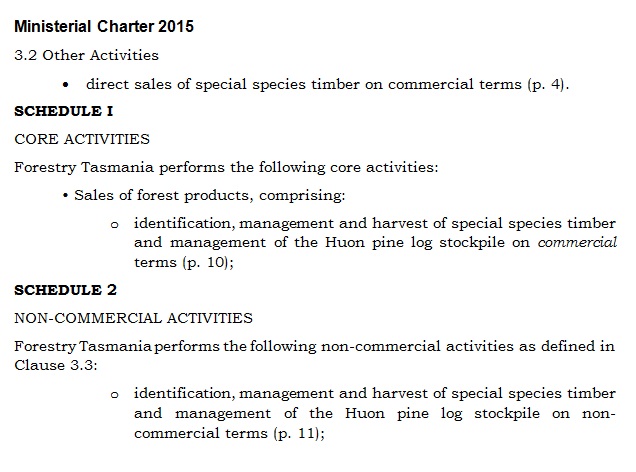
Below are extracts relating to special timbers from the recently released Forestry Tasmania (FT) Ministerial Charter 2015. The Charter provides another wonderful opportunity to highlight just how stupid Tasmanian forest policy and practice is in the 21st century.

http://www.forestrytas.com.au/forest-management/forestry-tasmania-ministerial-charter

According to the Ministerial Charter FT identifies, manages, harvests and sells special timbers on both commercial and non-commercial bases!

How’s that for a business model guaranteed to fail?

FTCharterSTextr

And don’t forget that FT’s non-commercial activities are funded by the Australian/Tasmanian taxpayer; these are Taxpayer Timbers!

How FT defines and distinguishes between “commercial” and “non-commercial” special timbers when profitability is clearly not the objective in either case, is not explained?

The FT Annual Report provides no clarity on this confusion either. The Annual Report shows how much special timbers are sold each year, but makes no distinction between direct and indirect, commercial and non-commercial sales or other activities.

It is a complete mess!

Which special timbers were sold as non-commercial? On what basis were these non-commercial sales made?

How are costs and revenues accounted for with commercial and non-commercial sales?

On what basis are prices determined for commercial and non-commercial special timbers?

Why are special timbers managed in this confusing manner?

Why is there no transparency in the reporting of FT’s special timbers operations?

Why are special timbers treated as a taxpayer funded (non-commercial) community service?

As a forester I am of the opinion that forestry is a profit-driven commercial business. There is no such thing as forestry charity.

So why is Tasmania running a wood production charity?

Public native forest special timbers management is a mess.

Scarce taxpayers money is being wasted providing a charity that should not exist. Apparently wood craftsmen are more important than teachers and nurses.

Tasmanian farmers are being actively discouraged from investing in commercial blackwood because of the anti-commercial and anti-competitive policies and practices of Forestry Tasmania and the State government.

This will destroy Tasmania’s iconic blackwood industry.

And to this total mess the Government wants to add the costly and divisive logging of the Tasmanian Wilderness World Heritage Area.

Having written-off all of its own failed public blackwood plantations (over 850 ha), Forestry Tasmania’s 2013 Blackwood Sawlog Resource Review states that:

Blackwood plantations may be more appropriate for intensive farm woodlots rather than for extensive land managers such as Forestry Tasmania.

As the largest blackwood grower (native forest) and seller in Tasmania Forestry Tasmania fails to see any conflict or irony in this statement. How are Tasmanian farmers supposed to be encouraged to grow commercial blackwood when FT regards blackwood as a charity timber?

Can Tasmanian forest policy get any more insane or ridiculous?

PS. For international readers Centrelink is the Australian Federal Government agency tasked with delivering social programs such as assisted employment and unemployment benefits.

When will Tasmania get a fully commercial profitable forest industry?

World Heritage Area logging: Boatbuilders need access to Tasmania’s protected forests due to lack of speciality timber, Government says

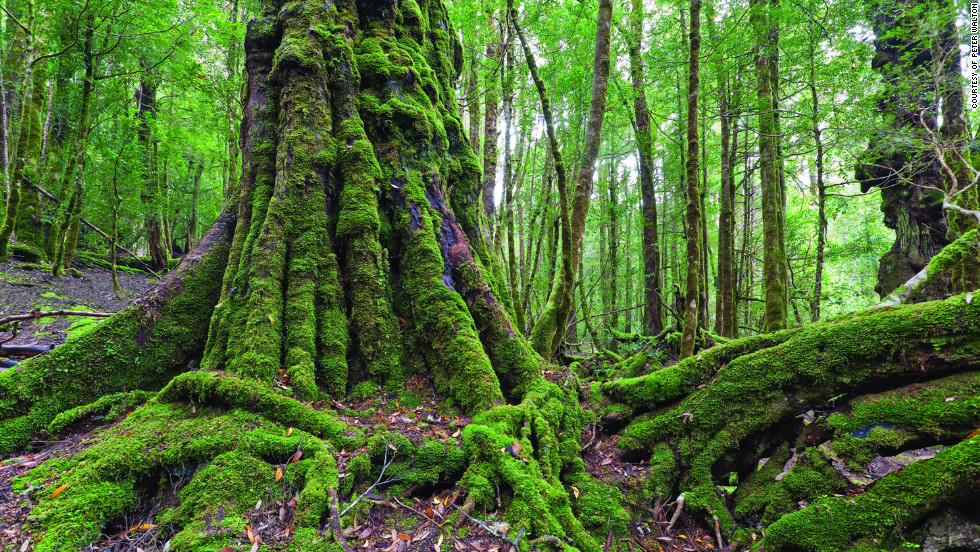
rainforest

http://www.abc.net.au/news/2015-09-16/new-analysis-shows-world-heritage-logging-necessary-for-demand/6780134

http://www.premier.tas.gov.au/releases/new_advice_proves_special_species_dudded_under_tfa

Here we go again continuing with the wasteful, divisive, political forestry wars.

“New analysis strengthens the argument that selective logging of speciality timber in Tasmania’s World Heritage Area is necessary to meet the demand from craft industries, including boat builders, the State Government says”.

As usual it’s not about profitable tree growing; it’s about tree growing as a community service.

It’s Centrelink Timbers!

How can Tasmanian blackwood have a profitable commercial future with Government policy like this?

Never mind the Tasmanian Forestry Agreement (TFA). It’s history! Using the TFA as an excuse to vilify your opponents and justify logging the World Heritage Area is complete nonsense.

Of course if you give away trees there will be a demand. But what would happen if the Government decided it was actually running a business and had to make a profit instead, like private tree growers, like Tasmanian farmers?

There is no discussion here about costs, prices or profits; and supply and demand are discussed as political not commercial objectives. Any relationship between cost, price, supply and demand is completely ignored. It’s a sad pathetic joke!

It’s the same with Forestry Tasmania as with the special timbers industry; the whole lot is run as a community service. Wasteful political nonsense.

As Vica Bailey of the Wilderness Society says “the specialty timber sector has traditionally been a by-product of clear-felling and woodchipping of vast areas of old-growth and rainforest, a model that glutted the market with heavily subsidised wood, there was never any expectation that historical levels of supply could, would or should continue“.

The public native forest special timbers industry has never been sustainable nor profitable.

The last 30 years have clearly demonstrated there is no such this as sensible when it comes to logging public native forests. Logging the World Heritage Area would be yet another forest industry disaster.

Resources Minister Paul Harriss said he would present the new analysis to the World Heritage committee delegation during its visit in November in a bid to reverse opposition to logging inside forests added to Tasmania’s World Heritage Wilderness Area in 2013.

Will Minister Harriss present the same analysis to the Tasmanian community for broader scrutiny?

The interesting thing in this news report is that blackwood is included in the discussion. World Heritage Area is now also about saving the blackwood industry. For the first time the Government admits the public native forest blackwood resource is not sustainable, only 12 months after the last blackwood resource review declared the resource sound and sustainable.

The incomplete history of unsustainable blackwood mismanagement

Forestry Tasmania’s own data clearly shows they have been overcutting the public blackwood resource for at least the past 25 years. And now as a consequence they want to try and justify logging the World Heritage Area. It’s just sickening!!

UNESCO must get the clear message from the Tasmanian community that logging the Tasmanian Wilderness World Heritage Area is not acceptable.

When will Tasmania get a fully commercial, profitable forest industry?
Hooray for Peter Adams

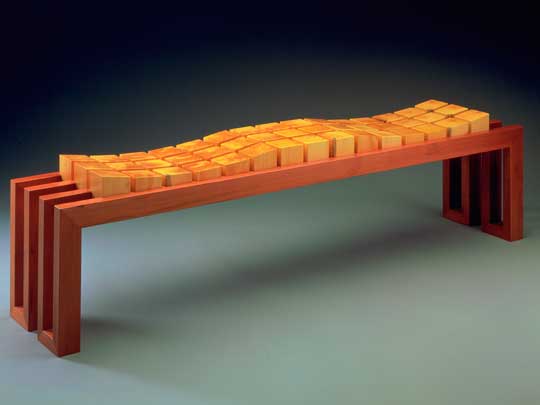
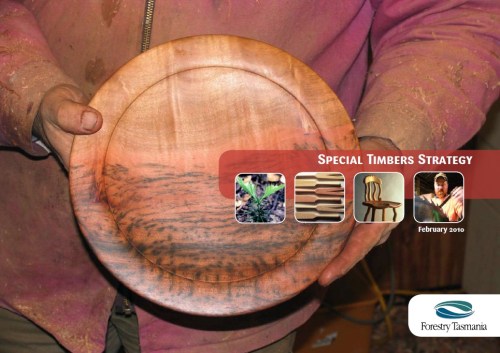
The Talking Point in today’s Mercury newspaper by furniture designer/maker and artist Peter Adams is a rare and much welcome alternative opinion in the ongoing nonsense around special timbers and the prospect of logging the Tasmanian Wilderness World Heritage Area.

http://www.themercury.com.au/news/opinion/talking-point-far-more-beautiful-left-standing/story-fnj4f64i-1227474696519

Adams-bench

It is just so rare for someone within the forest industry to come out and publically challenge the current industry and policy orthodoxy.

From today forward, all timber workers, myself included, have to re-examine their use of speciality timbers.

That said, what I will never do is use any timber cut within the boundaries of a World Heritage Area. Nor should anyone.

My suggestion to Peter Adams and others (including consumers) is to:

  1. Use only farm-grown Tasmanian timbers;
  2. encourage Tasmanian farmers to grow more quality wood;
  3. pay Tasmanian farmers a price for their wood that reflects its real value and encourages more tree planting;
  4. support organisations such as mine that seek to encourage and teach farmers how to grow commercial blackwood in both plantations and remnant native forest.

Wood is not a taxpayer-subsidised community service. It is a commercial product.

Planting trees and managing plantations and forests costs real time and money.

The only way for Tasmania to have a successful forest industry, and realise the vision of Peter Adams, is for tree growing to be blatantly and transparently profitable.

Only Tasmanian farmers can make this happen; farmers who are passionate about growing a quality product.

I was up in the north west of the State this week for the first time in a while, and driving around imagining a rural landscape dotted with well managed forest remnants and plantations of blackwood. Instead I saw opportunities being wasted. Most farms have wet gullies, steep slopes and small areas too difficult to manage. Good land going to waste. These areas are just ideal for growing commercial blackwood.

One of the key things missing is the right commercial and political context to get these areas planted.

Peter Adams points the way to the future.