Category Archives: Politics

Private Forests Tasmania

pft

A dedicated Government agency fostering the private forestry sector seems like a great idea at face value.

Private Forests Tasmania (PFT) is the only government-funded authority established in Australia to specifically promote, foster and assist the private forestry sector on forestry matters. We provide strategic and policy advice to Government on private forestry issues and represent Tasmanian private forest owners’ interests nationally.

http://www.pft.tas.gov.au/

But as soon as you start thinking about it the idea doesn’t look so good, especially when the Government is itself a major player in the industry in terms of wood production, market domination and control, and industry policy.

What happens when Government policy is in direct conflict with the interests of private forest growers as it often is? PFT cannot come out and oppose Government policy. They are Government employees after all.

And as for providing policy advice to Government that must present quite a challenge within a policy vacuum. The PFT website has no policies so what it says to Government remains a complete mystery.

Where’s the policy for the Radiata industry?

Where’s the policy for the pulpwood industry?

And where’s the policy for the high-value appearance grade timbers industry, including blackwood?

And where are the policies around the changes that are needed to the Forest Practice Code around plantation establishment and management?

And how about some policies about greater competition, price and market transparency?

I could go on….

And what about a PFT business plan?

You know a plan with goals and objectives and performance benchmarks and criteria, and a regular review process.

At least they have Vision and Mission statements.

But that seems to be about as far as it goes.


Our Vision

Sustainable private forestry in Tasmania as an integral and crucial part of our social fabric, economic well-being and a healthy environment in which soil, water and biodiversity are valued and widely used.


Our Mission

To facilitate the sustainable management of native and plantation forestry on private land in Tasmania. This mission includes:

  • encouraging commercial wood production;
  • encouraging the use of trees in land management;
  • promoting the environmental benefits of trees and forests;
  • promoting opportunities for competitive markets; and
  • optimising returns for all parties.


That mission statement should be clearly divided into a Commercial Wood Production and Other sections.

Regular community forums wouldn’t be a bad idea either.

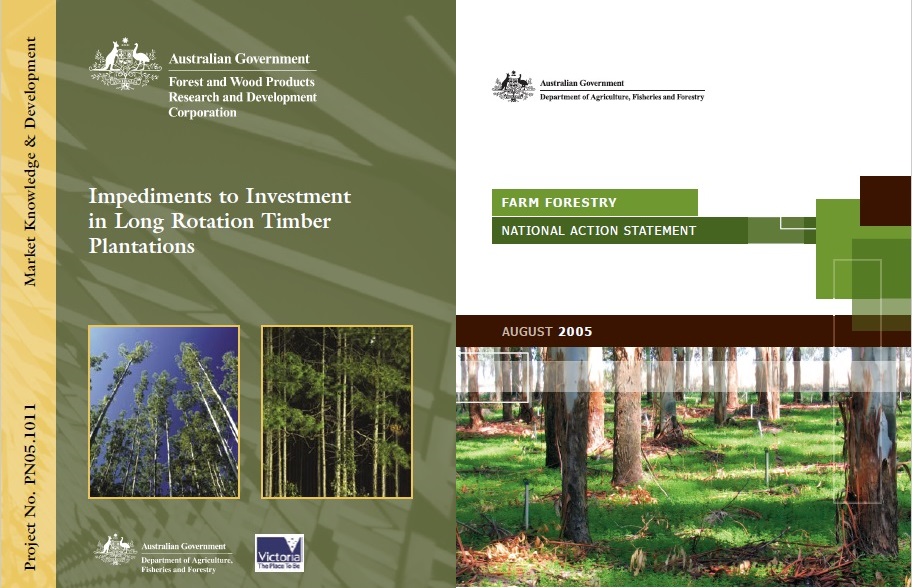
And a plan of action for implementing the 2005 National Action Statement on Farm Forestry wouldn’t hurt either.

https://blackwoodgrowers.com.au/2016/02/25/two-significant-forest-industry-reports-that-went-nowhere/

Don’t get me wrong. PFT could be a really great organisation but it remains fundamentally conflicted whilst the Government dominates the forest industry.

The objectives of the Government as a grower, price manipulator and policy maker, are not the same as those of private forest growers.

The only basis for a successful forest industry is profitable tree growers. The PFT website doesn’t seem to mention them.

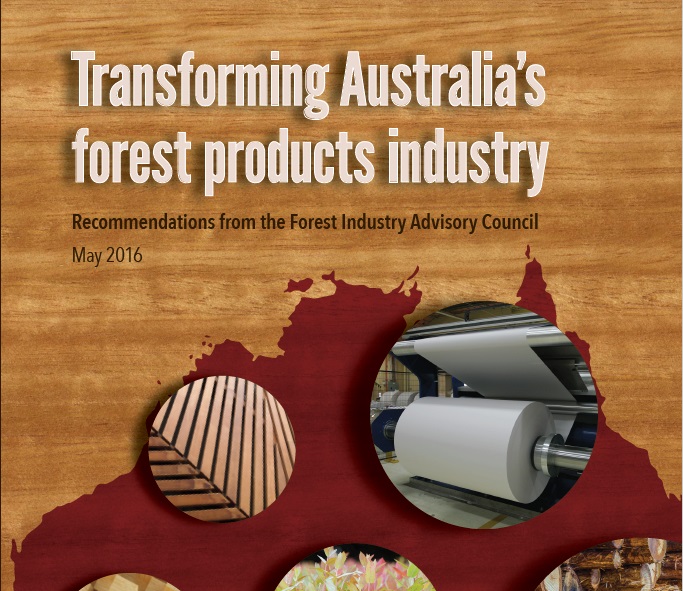
Transforming Australia’s forest products industry: recommendations from the Forest Industry Advisory Council

Transforming_FIAC

I would love to know how many hundreds of forest industry reports, strategies and reviews have been written in Australia over the last 50 years; how many thousands of dust-covered pages now lie forgotten on library shelves?

So here we have yet another new report to join the list:

https://dl.dropboxusercontent.com/u/4187545/Transforming%20Australia’s%20forest%20products%20industry%20-%20Recommendations%20from%20the%20Forest%20Industry%20Advisory%20Council%20May%202016%20(2).pdf (10.7 MB pdf file)

And straight away from the title of the report it is clear where the focus of the report lies, and why we have another industry report already consigned to the dusty library shelves.

The focus is the forest industry, the wood processors. Once again wood growers are the minor party in the scheme of things.

The maxim that the only basis for a successful forest industry is profitable tree growing is completely absent in this report. In fact the word “profit” is completely absent from the report.

This report originated in the Tony Abbott government era when Richard Colbeck, minister responsible for forestry, established the Forest Industry Advisory Council. The FIAC was tasked with developing yet another vision for the future of the industry.

It’s a political document. It’s not a business plan. It’s not a report designed to engage the rural community, nor the broader Australian community.

So why am I bothering to review this new report?

Well at least the report does mention farm forestry, if not in a very encouraging manner.

Farm Forestry features on page 8 of the report under the heading:

Strategy: Expand the productive forest estate in strategic regions – Farm forestry

This is one of 8 strategies in the report, and here are a few of the more positive quotes from the section:

Farm forestry can provide an opportunity to contribute to the industry’s resource needs through increasing the volume of wood.

And another….

Landholders can derive financial returns from farm forestry through improved land values and on-farm benefits. Benefits include: shade and shelter for stock or crops; soil and water protection; erosion control; reversed salinity; and increased biodiversity, landscape and amenity values.

No mention at all of profits or good financial returns from tree growing, just secondary benefits from trees on farms. Are farmers expected to sell their trees at a loss to subsidise the forest industry?

Exciting stuff!!

That kind of talk will definitely ignite the interest of rural community!!

The report then talks about barriers to farm forestry investment and participation.

This confused discussion on farm forestry ends with the recommendation:

Recommendation 5: That industry develops a strategy for expanding the productive forest estate in strategic regional hubs through farm forestry, and identifies the role for government.

Well we already have a strategy developed including a role for Governments. As I identified in an earlier blog it’s called the National Action Statement on Farm Forestry (NASFF). It was written in 2005 and currently resides on one of those dusty library shelves.

https://blackwoodgrowers.com.au/2016/02/25/two-significant-forest-industry-reports-that-went-nowhere/

This new report has a list of references at the end that does not include the NASFF. Curious!

The new report finishes with the following recommendation:

Recommendation 19: That the Australian Government convenes a meeting of state and territory ministers responsible for forestry to discuss issues raised in this paper.

Yet another ministerial meeting. Another talk-fest!

Instead of expecting politicians to solve the industries many problems why doesn’t the report have a list of all the new initiatives that the forest industry is implementing to move towards this new/old vision?

Does the forest industry know anything about profitable tree growing?

Unfortunately there is nothing in this new report/vision for growers of high value timbers such as blackwood.

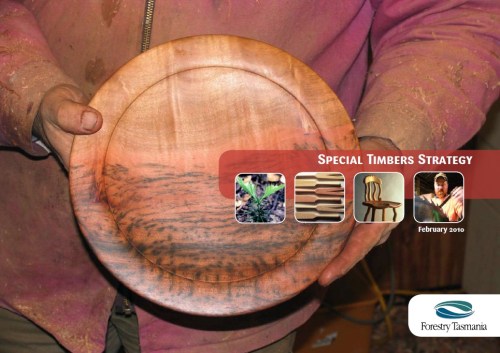
Special Timbers Management Plan April 2016 Update

FTSTS2010

After the embarrassing back down by the Tasmanian State Government over the proposal to log the World Heritage Area, two important reports were quietly released last week with no fanfare from our politicians or forest industry leaders. These reports relate to the forthcoming 2017 Special Timbers Management Plan.

http://www.stategrowth.tas.gov.au/forestry/special_species_timber_management_plan

You can read my previous blogs on the very long drawn-out process to create yet another special timbers management plan here:

http://blackwoodgrowers.com.au/category/management-plan/

Special Timbers Resource Assessment

The first report is a special timbers resource review produced by Forestry Tasmania of the 812,000 ha of the Permanent Timber Production Zone Land (PTPL).

The report does not include forests on private land, or forests on public land that are managed by other agencies (including Future Potential Production Forest).

The report does not speculate about any potential for helicopter harvesting or underwater salvage, nor make any assessment about the commercial viability or costs associated with [management,] harvesting and/or extraction operations.

Given that in 2010 Forestry Tasmania determined that its special timbers operations were no longer commercially viable one must presume that this situation remains unchanged. In other words how much taxpayers money is to be wasted harvesting this wood is not considered important in determining the resource that is available!

As always with State forest policy and practice it is about the volumes of wood to be given away never about the profitability of the forest asset.

One suspects that if commercial viability was considered in the report, then little if any of this public native forest special timbers resource would be available for harvesting!

Centrelink Timbers is a thriving industry in Tasmania.

The blackwood resource figures in this report are from the 2013 Blackwood sawlog resource review. No additional work has been done in this assessment for the north west blackwood production zone.

The significant reduction from the targets set in the 2010 Special Timbers Strategy reflects the smaller landbase that is now available, longer rotations required for some species and more accurate volume estimates resulting from the rainforest modelling work using LiDAR.

So two of the three issues [longer rotation age estimates and more accurate inventory ]that have driven down the estimate of available special timbers resource, have nothing whatsoever to do with any forest industry agreement, but are the result of changes in methodology.

Now to blackwood…

The headline figure which this report uses is not the “millable sawlog” figure that the RFA and the 2010 Special Timbers Strategy used, but now includes outspec wood including craftwood. This outspec wood makes up 55% of the headline blackwood volume. Forestry Tasmania does not have any sales obligations or commitments for outspec wood!!

So in addition to the 3,000 cubic metres per year of millable sawlog from the north-west blackwood production zone as outlined in 2013, there will be another 1,275 cubic metres of millable sawlog per year from the rest of the State up until 2027, when the blackwood resource in the rest of the State will be exhausted.

So much for guarantees! So much for sustainability!

In 1991 with the FFIS, again in 1996 with the RFA, and again in 2010 with the Special Timbers Strategy, Forestry Tasmania guaranteed an annual supply of 10,000 cubic metres of millable blackwood sawlog to industry.

And here we are at the end of the blackwood industry!

These volumes of blackwood sawlog will not be enough to sustain a commercially viable industry. There will not be enough resource to sustain our commercial furniture makers. These volumes will barely be enough for our custom furniture makers.

The Tasmanian blackwood industry now has only two clear choices:

  1. Close down due to the exhaustion of the public native blackwood resource; or
  2. Look to Tasmanian farmers as the future of the blackwood sawlog resource.

Salvage blackwood sawlog from the Hydrowood project may keep the industry going for a few more years, but it too will end. The Hydrowood resource can either be seen as a last gasp for the backwood industry, or as a useful stop-gap whilst relationships with Tasmanian farmers are established.

So what’s it going to be? Extinction or a new future?

Market Demand Analysis

The second report is a market demand analysis for Tasmanian special timbers conducted by Indufor. You may remember I was invited to participate in this market survey:

http://blackwoodgrowers.com.au/2015/04/23/special-species-timber-management-plan-update-1/

Despite my being interviewed by the author of the report, the report contains no mention at all of private commercially-grown blackwood, and no mention of opportunities for private investment and private growers. The reports entire focus is on the Forestry (Rebuilding the Forest Industry) Act 2014 and the public native forest resource!

Clearly the consultant had to appease a very narrow-minded client!

This observation on political bias is further strengthened by the fact that Appendix 1 of the report describes in detail the various sub-sectors of the industry, but Appendix 1 begins with sawmillers. Apparently growers are not a sub-sector of the special timbers industry! Not even harvesting and transport is mentioned as a sub-sector!!

This is yet another failed report into Tasmania’s iconic special timbers industry.

The report contains no mention of blackwoods unique position as the only Tasmanian special species that has the potential to be grown commercially due to its fast growth rate and wide natural distribution. Given the unique and dominant position that blackwood occupies within the special timbers market it should have been given an entire chapter to itself.

The only basis for a successful forest industry is profitable tree growers, and profitable tree growers are conspicuous by their absence in this industry report. In fact discussing special timbers market demand without discussing the economics of tree growing and forest management is completely stupid. Imagine a report that discussed market demand for dairy products whilst ignoring the economics of dairy farming. Anyone would regard such a report as a waste of time.

When I was talking to the author of the report during my interview last year I specifically suggested that the report needed to have a strong focus on the economics of tree growing and forest management. And guess what the report specifically and completely ignores?

For example the report fails to discuss the existing special timbers industry community service business model and the significant taxpayer subsidy that guarantees the survival of the industry. Discussing prices, markets and demand whilst ignoring the business model and taxpayer subsidy is completely fallacious.

From a blackwood growers point of view the parts of the report most worth reading are:

Resource Supply on Page 4.

It’s a carefully selected view of the historical blackwood production from public native forest. Certainly no comparison of production with sustainable yield. In fact no mention of blackwood sustainable yield at all!

Blackwood Markets on Page 14.

Throughout the Report and especially in this section there is a lot of veiled criticism of the forest industry’s lack of market competition and transparency. The fact that most blackwood is “sold” outside normal competitive market processes is particularly relevant, ie. log prices are NOT market-based.

Anyway the report notes that of all the special species, Tasmanian blackwood is sold into the widest range of high value markets.

Resource supply and substitution

According to the report survey the biggest constraint on the industry is the uncertainty of log supply. Section 4.8 (p. 38) talks about survey responses to possible falling supply from public native forest. The option of “shifting to alternative growers” (ie. Tasmanian farmers) is not mentioned. And yet Table 4-5 on page 41 analyses the market’s willingness to pay for the various timber grades of the various species. Blackwood comes out extremely well in this analysis. The market says it is prepared to pay good prices for access to quality blackwood.

So given the dire situation of the public native forest blackwood supply why isn’t the industry asking Tasmanian farmers to grow quality blackwood timber? What is preventing this fundamental market process from being realised? In every other primary industry the combination of high prices and willingness to pay would lead to investment. Why does this NOT happen with the forest industry? The report fails to address this fundamental question!!

This situation provides the perfect opportunity for the TFGA to step up and demonstrate leadership. The TFGA needs to organise a forum between farmers and blackwood industry representatives and let’s start rebuilding the blackwood industry.

The report makes no mention of New Zealand farmers and what they are doing regarding blackwood and other special species. No mention in the report of the handful of Tasmanian farmers who are actively growing commercial blackwood.

One thing is perfectly clear in the report – the Tasmanian Government does not want Tasmanian farmers to grow commercial blackwood!!

The Special Timbers Market Demand report is fundamentally flawed. It certainly cannot be used to help justify the continued logging of our public native oldgrowth and rainforests in Tasmania.

Commentary

Neither of these reports offers much hope to the special timbers industry. Both reports show that the public native forest special timbers industry – including the iconic Tasmanian blackwood industry – is on the verge of collapse due to overcutting and mismanagement of the resource.

So much for declarations sustainability!

The major positive is that the market demand report confirms the continuing demand for premium timbers at good prices.

What is perfectly clear is that these two reports are especially designed to keep the forestry wars at the forefront of Tasmanian politics. The reports avoid discussing alternatives outside the public native forest resource and the taxpayer-funded community service business model.

That Tasmania cannot work positively towards realising the commercial opportunities around Tasmanian blackwood remains a fundamental continuing failure of our political and business leaders.

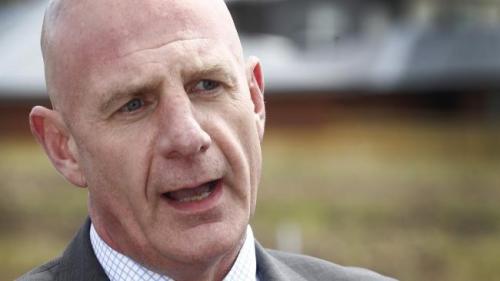
“..we will take wood….”

gutwein

It didn’t take long.

No sooner had UNESCO ruled out logging the Tasmanian Wilderness World Heritage Area than the Tasmanian Government and sectors of the special timbers industry are already setting themselves up for yet another conflict with consumers, the environment movement and the Tasmanian community.

Tasmanian forest policy especially around so called special timbers just keeps going from the sublime to the ridiculous in a never ending spiral of senseless politics, waste, conflict and stupidity.

We are all being played for fools.

http://www.themercury.com.au/news/politics/unesco-report-sparks-state-search-for-speciality-timbers-outside-of-world-heritage-area/news-story/97d8e65a2ff6fcb1d35f8c3b7abd404d#load-story-comments

http://www.themercury.com.au/news/tasmania/showdown-set-for-tasmanias-special-timber-as-state-government-seeks-way-to-source-supply/news-story/dedecb43ecb8b1b0478738b1609d1084

http://www.abc.net.au/news/2016-03-22/cut-out-wastage-of-specialty-timbers-to-reduce-need-for-harvest/7265402?section=tas

Here’s the press release from the Resources Minister Peter Gutwein (above):

http://www.premier.tas.gov.au/releases/government_committed_to_working_with_the_special_species_timber_industry

Much of the information in the press release is old news as shown on the Department of State Growth website:

http://www.stategrowth.tas.gov.au/forestry/special_species_timber_management_plan

But the rhetoric in the press conference is clearly hostile and inflammatory. With a State election campaign coming up in 2017 forestry is yet again going to be one of the key election issues.

“…I’m not going to point the finger at anyone, but they know who they are…”

“..we will take wood…”

This is now very personal and vindictive, and above all else political.

It’s not about business.

It’s not about profitable tree growing.

It’s about taking wood [a public resource] and giving it to the “deserving” regardless of the cost or consequences.

When will Tasmania get a fully commercial profitable forest industry?

What can I do?

What can Tasmanian farmers do in the face of such relentless reckless commercial-opportunity and market-destroying stupidity?

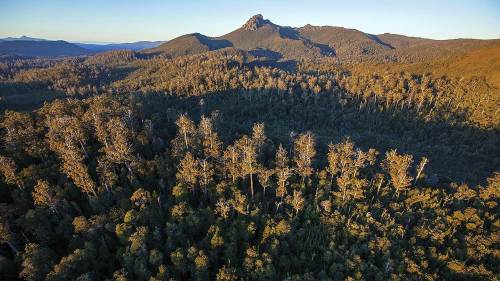
Tasmania abandons World Heritage Area logging plans on UNESCO advice

TWWHA.jpg

Hooray!!

It’s time to break out the champagne!!

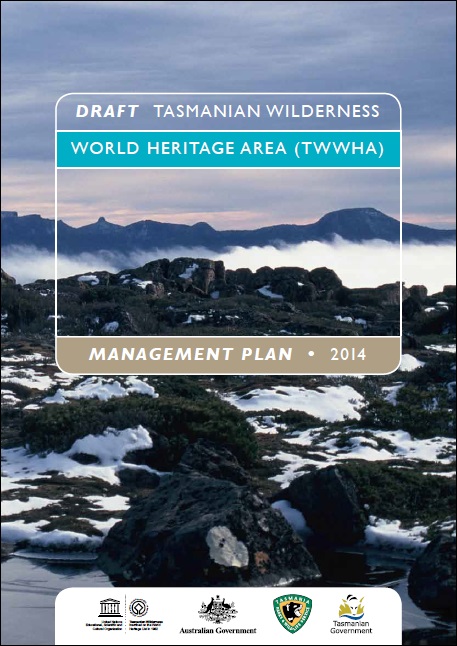
In a rare show of forest-policy commonsense the Tasmanian Government has apparently accepted the umpire’s decision and abandoned plans to log special timbers (including Tasmanian blackwood) in the Tasmanian Wilderness World Heritage Area (TWWHA).

http://www.abc.net.au/news/2016-03-20/unesco-tasmania-abandons-world-heritage-area-logging-plans/7261350

News reports just in say the UNESCO recommendations will be accepted but that the Government was still committed to supporting the [special timbers] industry.

Here’s the Tasmanian Governments announcement on the UNESCO Report:

http://www.premier.tas.gov.au/releases/monitoring_mission_report_on_the_twwha

Here’s the single recommendation in the UNESCO report regarding logging the TWWHA and some worthwhile comments from the UNESCO Mission:

Recommendation 2

The State Party should confirm an unambiguous commitment that the property is off-limits to commercial logging in its entirety, and fully reflect this commitment in the Management Plan for the whole of the property.


The mission would like to put on record that it considers the interests of the special species timber sector per se fully legitimate and by no means excessive. Despite the regrettable lack of conclusive data, the mission finds it difficult to imagine that resource security could not be achieved in the vast forest estate available for logging outside of the TWWHA. While a mixed World Heritage property, recognized for globally significant cultural and natural heritage, is not the place to experiment in the view of the mission, there is every reason to further discuss and test sustainable forest management elsewhere in Tasmania in less polarized fashion. The political support to the special species timber industry should be channelled to areas available to commercial logging outside of the TWWHA, while fully considering that there are areas outside of the TWWHA, which are likewise of the highest conservation value, including in the Tarkine area. New approaches to manage the desired species can draw on longstanding research conducted in Tasmania and a growing body of knowledge about the ecology of the species (UNESCO, p. 13).


The concept of “outside the TWWHA” should include commercial private growers.

Here is the link to the UNESCO report:

http://whc.unesco.org/en/documents/140379

To see my many blogs on this issue go here:

http://blackwoodgrowers.com.au/?s=UNESCO

So now the State Government is faced with developing a Special Timbers Management Plan with next-to-no public special timbers resource.

http://www.stategrowth.tas.gov.au/forestry/special_species_timber_management_plan

What will be the next political play?

Tasmanian blackwood has been and will continue to be the backbone of the special timbers industry, and the only Tasmanian special timber species with the potential for a profitable commercial future on private land.

Will the Tasmanian Government and Parliament now look to a different future for the special timbers industry or will politics continue to reign supreme in Tasmanian forest policy?

Tasmanian Farmers and Graziers Association (TFGA)

TFGA

The TFGA is the only peak farming lobby group in Australia that includes forestry in its list of major primary industries.

Curiously even Agforce Qld, which a few years ago helped fund a joint program with Timber Qld called AgForests Qld to promote better use/management of Qld private native forests, does not recognise/represent the forest industry.

Not even the National Farmers Federation considers forestry an important primary industry relevant or important to the rural community!

It real is extraordinary!

As a forester that says a great deal about the myopic views of the forest industry and the farming lobby.

An enormous ideological abyss still exists between the forest industry and agriculture.

Up until 10 years ago the forest industry was dominated by State governments, public forest resources and a community service business model. No self respecting farmers lobby bothered with forestry.

But not anymore!

Most wood now grown and sold in Australia comes from private commercial forest growers.

Forestry is now a real primary industry!

But the farming lobby groups have not understood the fundamental changes happening in the forest industry.

And the forest industry still doesn’t understand that its future is now with farmers and private land owners, and not with politicians.

The forest industry has no future unless it can get the farming lobby onside.

Alternatively the forest industry has no future whilst the farming lobby regards commercial tree growing as irrelevant and unimportant.

There is a lot of work to be done.

Here’s a list of the major farm lobby groups around Australia:

Tasmanian Farmers & Graziers Association http://www.tfga.com.au/

Victorian Farmers Federation http://www.vff.org.au/

NSW Farmers Association http://www.nswfarmers.org.au/

Queensland Farmers’ Federation http://www.qff.org.au/

Agforce Qld http://www.agforceqld.org.au/

Primary Producers SA http://www.ppsa.org.au/

Western Australian Farmers Federation http://www.wafarmers.org.au/

NT Farmers http://www.ntfarmers.org.au/

National Farmers’ Federation http://www.nff.org.au/


So why is the TFGA important to the future of the forest industry?

  • The future of the industry is with profitable commercially focused private tree growers;
  • We need a strong independent advocate for private growers to help counteract the political distortions and corruptions in the forest industry;
  • We need a new conversation about forestry that is not lead by politicians, sawmillers and conservationists.

So where is the TFGA as a strong independent advocate for private tree growers?

Forestry is the only primary industry that pits private growers against a taxpayer-funded Government grower? No other industry (diary, vegetables, fruit, beef, wool, etc) faces this problem!

The traditional advocates for the forest industry in Tasmania are politicians and the Forest Industries Association of Tasmania (FIAT) neither of whom give a toss for private tree growers.

So why do you think the forest industry is in such a mess?

We need policies that will help drive an efficient, commercially focused, flexible and profitable forest industry? And we need a strong independent advocate!

The TFGA website says: The TFGA constantly develops and reviews policies in almost every area of economic activity, through its board, committees, commodity councils and annual general meetings.

So where are these policies?? Certainly not on the TFGA website!

I should mention here that my definition of a forest industry is first and foremost focused on profitable tree growing. Profitable tree growing is the only basis for a successful forest industry, even if that means every log grown and harvested has to be exported.

Come on TFGA! We need you!! Organise some industry/community forums. Write some policies. Start a bold conversation about profitable tree growing!! Help implement the National Action Statement on Farm Forestry!

http://blackwoodgrowers.com.au/2016/02/25/two-significant-forest-industry-reports-that-went-nowhere/

We need leadership!!!


Two significant forest industry reports that went nowhere

Combined

Both of these reports were published in 2005.

Both of these reports have (had??) significant potential impact upon the future of the Tasmanian blackwood industry.

Both of these reports contain important information and recommendations about reforms to the forest industry.

From what I have seen nothing from either of these reports has ever been implemented!!!

Ten years after these reports were published both are still available on Government websites as if they form the basis of current Government policy, but from what I can see neither of them are currently active.

The information and recommendations in these two reports has not been taken up and included in any forest industry policy documents (eg. FIAT), political party policies, nor in any farm lobby group policies (eg. the TFGA). Why not??

Tasmanian Government forest policy does not include any of the recommendations from these reports.

If only half of the recommendations from these two reports had been implemented the forest industry would be in a much better position today, and investment in the future of the blackwood industry would be a whole lot easier.

Here are the links to these two reports:

http://www.planningplantations.com.au/assets/content/plantations_sustainability/economic/ownership.html

(the link to the pdf report is at the bottom of the page)

http://www.agriculture.gov.au/forestry/australias-forests/plantation-farm-forestry/publications/farm_forestry_national_action_statement

Personally I think the future of long rotation plantations is looking more uncertain except in markets where high value appearance-grade timber is needed. Construction-grade timber is increasingly made from engineered wood products rather than solid wood; engineered from short-rotation plantation-grown wood.

But the market for long rotation appearance-grade timber is relatively small, especially if we are just talking about the domestic Australian market. The international market for quality appearance-grade timber is significant but is still dominated by the illegal trade in rainforest timbers.

The opportunity for supplying profitable, quality, farm-grown plantation grown Tasmanian blackwood into the export market is significant.

And this is where the Farm Forestry National (In)Action Statement (NAS) becomes important.

To achieve the vision, the Australian, State and Territory governments and the forest and wood products industry need to progress 16 actions, grouped under four action imperatives:

  1. Develop appropriate, integrated and consistent Australian, State, Territory and local government policies for farm forestry;
  2. Coordinate actions and build relationships to support farm forestry;
  3. Recognise and, where possible, quantify farm forestry’s economic, environmental and social benefits and costs;
  4. Promote the development of markets for farm forestry products and services.

The 16 actions are broken down into 33 measurable outcomes, listing deadlines and who is responsible for implementing the outcomes.

None of it has been implemented!!

The Federal and all State Governments and the forest industry all signed up to do this.

So much for commitment!

So much for leadership!

Perhaps the Tasmanian Government and the Tasmanian forest industry should revisit the NAS and recommit to implementing its recommendations.

Lapoinya and Forestry Tasmania profitability and commercial management


Here’s a great video interview with economics commentator John Lawrence who has been following the mismanagement of Forestry Tasmania for a very long time.

His comments relate somewhat to the current conflict around the logging at Lapoinya in north west Tasmania. But much of his observations relate to FTs general business operations.

I have two comments to make in relation to what Mr Lawrence has to say:

  1. John talks about FT profitability and covering the costs of harvesting and overheads. But the discussion is almost as if the objective is to breakeven. Forestry is a business! It’s about making profits NOT breaking even!! I think the best analogy is to remember that FT competes in the marketplace with private forest growers. And private forest growers do not grow trees in order to break even. They grow trees so they can make a profit. They grow trees so they can put food on the table and a roof over their heads. Forestry Tasmania needs to be run just like the private businesses against which it competes. Forestry Tasmania needs to set commercial performance objectives and meet them ever year without fail!
  2. Later in the interview John Lawrence talks about selling our native forest wood as if it were all special species. It’s about marketing and product placement. Every single log needs to achieve top dollar. It’s a great idea. I remember making the same recommendation 25 years ago to a meeting at FT. The FT senior managers at the meeting laughed at the idea.

But it’s way too late!

The forest industry should have been reformed along commercial lines back in the mid 1980s when the Hawke-Keating economic reforms were in progress. But the forest industry refused to reform. By my reckoning the last chance the forest industry had to reform was during the RFA process in the late 1990s. But once again the forest industry resisted change.

And now it’s too late!

The public native forest industry is all but gone. Decades of politics, conflict and waste have driven the industry to the point of extinction.

Any idea that there is still something that can be rescued is pure delusion.

Forestry Tasmania is now just a political play thing. A toy to help win the next State election.

The problem for Tasmania is that no politician has the courage to face the truth.

Federal Government to abandon plans to log World Heritage Area if UNESCO will not ratify it

DTWWHAMP

In yesterdays news media:

http://www.abc.net.au/news/2015-12-13/federal-government-could-abandon-plans-to-log-world-heritage/7024154

A UNESCO delegation recently visited the state to assess the practices and meet with stakeholders, with a final report expected next year.

The Federal Assistant Minister for Agriculture, Senator Anne Ruston, said the logging plan would be scrapped if UNESCO did not support it.

“When they [UNESCO] bring down that report I would be really surprised if the Federal Government did anything other than respect those decisions,” she said.

With the hardline, anti-conservation Tony Abbott administration now gone the politicians are already softening up the electorate and protecting their positions in the likely event that UNESCO will continue to not support logging special timbers in the Tasmanian Wilderness World Heritage Area.

Senator Ruston said she had some sympathy for users of specialty species timber.

“They also have an argument which is reasonable, that they have very low impact where they take those timbers from,” she said.

To forget the lessons of the last 30 years of bitter conflict over public native forest management in Tasmania would be foolish in the extreme. Tasmania has not changed and neither has our forest policy and management. Opening up the WHA to logging would be yet another forest industry disaster to add to an already long list of disasters.

Within the context of the past 30 years promises of “low impact” are utterly meaningless.

“It’s a major concern that the [special timbers] resource is now essentially behind closed doors.”

The remaining public native forest special timbers resource is “behind closed doors” precisely because of what has happened over the last 30 years.

The taxpayer-funded logging of public native forest old growth and rainforest for special timbers is over [subject to UNESCOs report].

Now when will Tasmania get a fully commercial and profitable forest industry?

Legislative Council GBE Oversight Committee 2015 – Forestry Tasmania

HarrissAnnells

Following on from my previous blog I have now reviewed the GBE Scrutiny transcripts in relation to special timbers. They provide me with no cause for optimism.

I don’t know why we have Corporate Governance standards in Australia.

Clearly they don’t apply to Government business enterprises.

Even more clearly our politicians have no understanding of their corporate governance responsibilities.

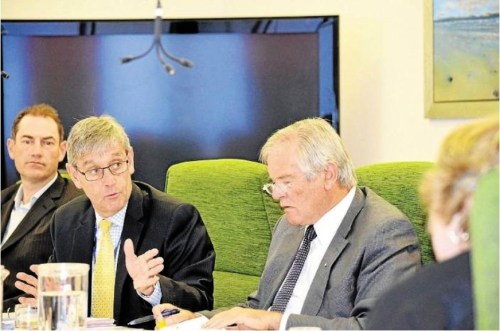
Friday the 4th of December was the annual fiasco called the GBE Oversight Committee with Forestry Tasmania as one of the performing circus acts.

The transcript from the 3.5 hour performance is available here:

http://www.parliament.tas.gov.au/ParliamentSearch/isysquery/9b76370a-4ba7-473d-9766-61717c5e7862/1/doc/

It makes for sad reading. In fact I would advise against reading all 52 pages. Severe brain haemorrhaging may result.

My review here focuses on special timbers/blackwood as they were discussed by the committee.

Special timbers are mentioned 28 times in the 52 pages of transcripts, on pages 2, 17, 18, 37, 39, 40, 49, 50, and 51.

Blackwood is mentioned only 3 times, even although blackwood comprises 80 % of special timbers harvest volumes, on pages 18, 49 and 51.


Community service obligations (CSO)/grants are mentioned only in relation to roads not special timbers!

The World Heritage Area is mention 9 times in the transcripts, on pages 39, 40, 46 and 48.

The word “profit” is mentioned 26 times even although Forestry Tasmania has no corporate objective to generate a profit.

So what matters pertaining to special timbers were discussed in the annual “scrutiny”?

What clarity, meaning and understanding does the annual scrutiny hearings provide for special timbers?

Page 2

Spin from the Resources Minister trying to oversell FTs performance including “and the speciality timbers effort has also been buoyant – I think more buoyant this year than even two years ago, at about 11 000 cubic metres of speciality timber”. Most of this 11 000 cubic metres is craftwood and outspec log for which FT has no supply contracts or commitments. FT is supposed to produce 12 500 cubic metres of special timbers sawlog per year.

Pages 17 & 18

A question from MLC Ivan Dean about the profitability of special timbers:

“CHAIR – That was the point of your question: how long before you can see the business becoming profitable as a whole?

Mr DEAN – That is very clearly it. With specialty timbers, is there a profit returned to Forestry Tasmania?

Mr ANNELLS – It depends who you ask.

Mr DEAN – That’s why I am asking you. You are the chairman and you ought to know – and with the minister here I would thought we would get the truth.

Mr ANNELLS – I certainly hope you would.

Mr DEAN – I would hope so.

Mr ANNELLS – I will flick it to my chief executive.

Mr WHITELEY – With special timbers, some portion of it is profitable and others it is done as a CSO. Things like blackwood swamps and those sorts of things are really profitable. Wood that is picked up associated with native forest harvesting is profitable in the sense that roading has been provided by an outscale operation. Things like Huon pine aren’t profitable in their own right. We receive some assistance in recovering Huon pine – and it varies. Within our operations there is a profitable component and another component that requires some support.

Mr DEAN – Why can’t it be profitable? It’s a very sought-after timber worldwide. The users of it tell us they are paying higher prices for it where they are getting it from – obviously a lot of it through Forestry Tasmania. Why is it not possible to make it profitable in the circumstances – Huon pine, for instance?

Mr ANNELLS – Basically because the market will only pay a certain price. It is not an inexhaustible or elastic price mechanism. Huon pine is harvested like a lot of specialty timbers, as a by-product of our main activity. At the moment we have very significant costs for roading and other establishment costs that if we try to apply it against Huon pine, for example, would take it beyond the reach of all but the very few. We choose to sell special species timber at what we think the market will bear, but we do not seek to gouge in that process because to do so, we think, would lead to more bad publicity and, quite frankly, the market would simply dry up until we reduced the price again.

I have a lot of confidence in our people who are setting the price for this sort of stuff. You will always be able to find examples where people say, ‘You could have got more for this or that’. That is why we set up Island Specialty Timbers, much criticised in certain places, but it was a genuine attempt to bring some stability into the marketplace and to test the marketplace pricewise on a more regular basis”.


And the answer is a lot of mealy-mouth waffle.

No mention of the fact that in 2014-15 FT received a $900 000 taxpayer subsidy for it special timbers operations. That’s $82 per cubic metre subsidy.

Given the context of the question I find Chairman Bob Annell’s answer “It depends on who you ask” to be highly offensive; as if squandering taxpayers money is of no consequence whatsoever. And none of the MLCs called him on his attitude!

Mr Dean was after “the truth”. Instead he got obfuscation.

Some parts are profitable some parts aren’t. Why can’t it be profitable? “because the market will only pay a certain price!” “we choose to sell special species timber at what we think the market will bear!”

Has anyone heard of competitive market-based pricing?

It’s enough to make you cry!

These are adult businessmen talking as though they know absolutely nothing about economics and markets.

“That is why we set up Island Specialty Timbers, much criticised in certain places, but it was a genuine attempt to bring some stability into the marketplace and to test the marketplace pricewise on a more regular basis.”

Even although the tiny amount of wood that IST sells through tender and the prices they get bear no relationship at all to the administered price that FT sells to its long term customers.

And no member of the oversight committee sought any further clarification or understanding around wood prices and markets!!

No mention of the CSO grant and no question about how the $900 000 of taxpayers money was spent?

Pathetic!!


Page 37

A very specific question about 72 kilometres of new roading for special timbers from Ivan Dean, for which he got no answer.

Page 39

A question from Rob Valentine about special timbers regeneration following clearfelling. A question that seems completely irrelevant as it is generally known that the eucalypt regeneration will be harvested again long before the special species are of any commercial value for wood or honey.

Page 40

A question from the committee Chair MLC Tania Rattray about the UNESCO delegation visit and special timbers harvesting in the World Heritage Area.

Given the political and social significance of special timbers logging in the World Heritage Area the lack of any serious questions from the committee about this subject is truly negligent. True it doesn’t directly involve Forestry Tasmania, but this is the main forum for discussing public native forest management and special timbers, so why the silence?

Pages 49, 50 and 51

More questions from MLCs Ivan Dean and Tania Rattray about special timbers supply and demand, which produce no clear credible answers. A new management plan is mentioned. The Three Year Wood Production Plan is mentioned. Hydrowood is mentioned, but not by name. By page 51 the mind is confused and exhausted.

Not one of the committee members seems to understand that the Hydrowood project may have significant positive and negative impacts on the special timbers industry. Certainly no one asked any questions in this regard.

Mssrs Dean and Rattray seem to be the committee members who have an interest in special timbers, but they seem to share the general view that our forests are a community service not a commercial resource. Never mind the fact that private growers are also competing with FT in the special timbers market.

I guess our elected representatives are busy people and just don’t have the time or interest to understand the special timbers industry and forest economics generally.

Three and a half hours and barely one useful question and certainly no useful answers.

I’m not sure what is more pathetic – the lack of quality and depth of the questions or the lack of quality and depth of the answers.

Even reading small parts of these transcripts is a mind numbing experience. The lack of clarity, purpose and outcome in these scrutiny hearings is truly staggering.

Twelve highly paid people in one room for 3.5 hours wasting time and money.

Three and a half hours of scrutiny and the special timbers industry is no better off than before.

Perhaps I should send a list of questions to the committee members next year so that they may better perform their corporate governance responsibilities, and the Tasmanian community may actually get some useful information from this circus act.

When will Tasmania get a fully commercial profitable forest industry?