A big part of the blackwood cooperative (if we get funding) will be sharing experiences in growing blackwood, both the successes AND the failures. Only by sharing can we gain greater understanding and confidence.
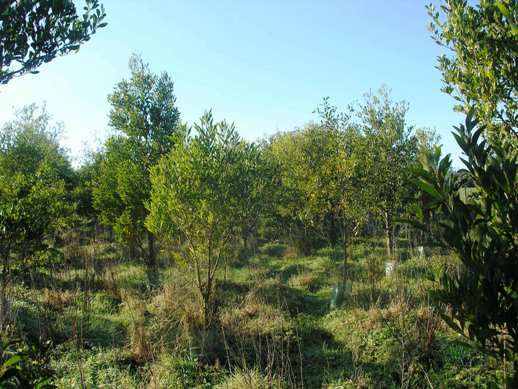
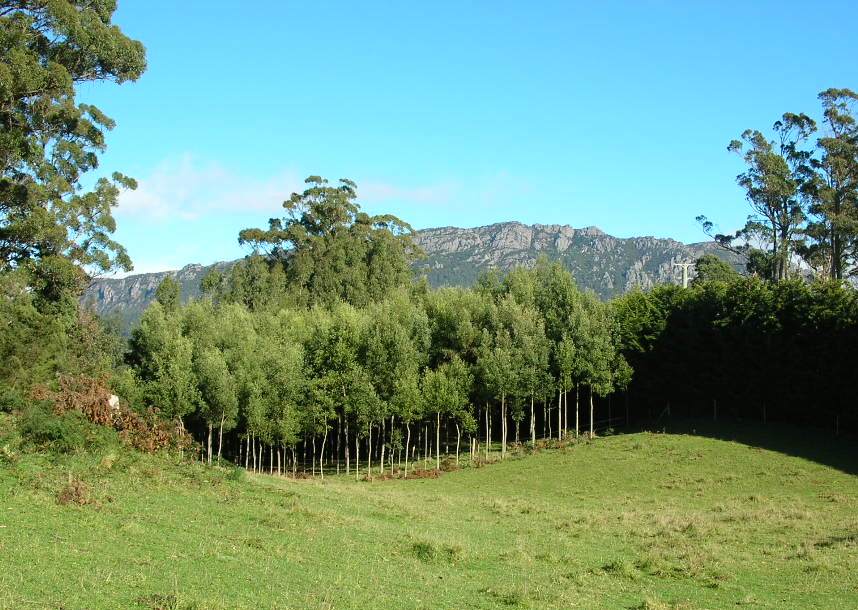
Having previously reported on this plantation based on photos and emails supplied by the owner I can now provide an update based on my visit in March 2012. This is one of the very few successful blackwood plantations in Tasmania, and is a testament to the care and dedication of the owner Gilles Carrabin. Gilles is not only passionate about his trees, he is a joiner/builder/cabinetmaker with a great love of fine timber.
The plantation is not without problems, but with continued care and management this plantation will eventually produce high quality blackwood timber. Most of the intensive management has been completed. The major task now is to carefully thin the plantation down to a final stocking and watch the blackwoods grow.
Site selection and establishment
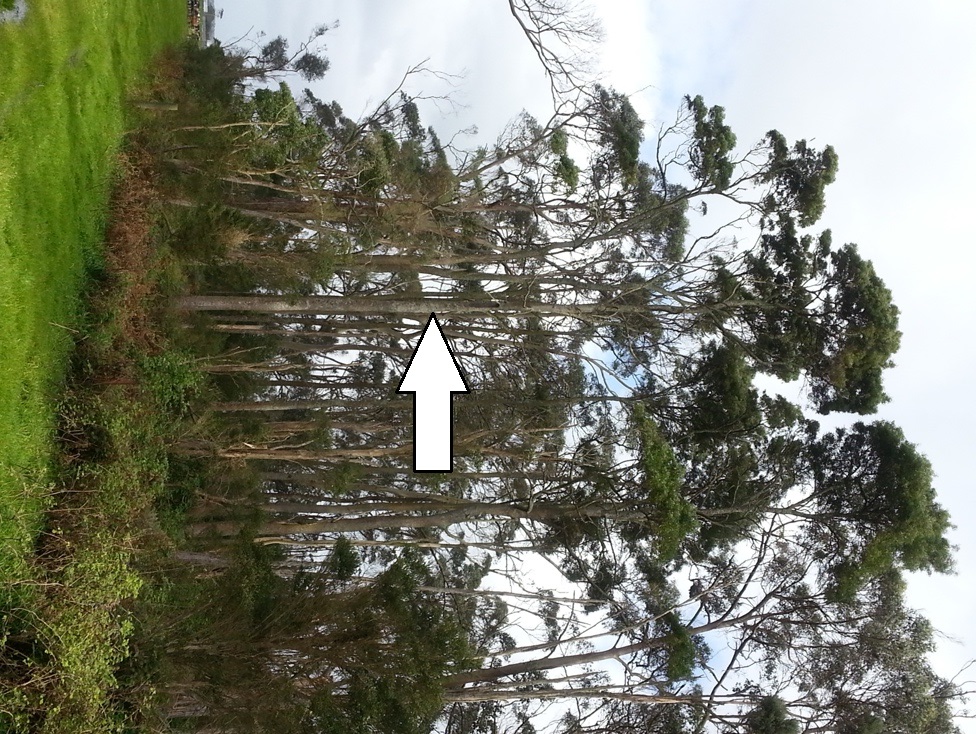
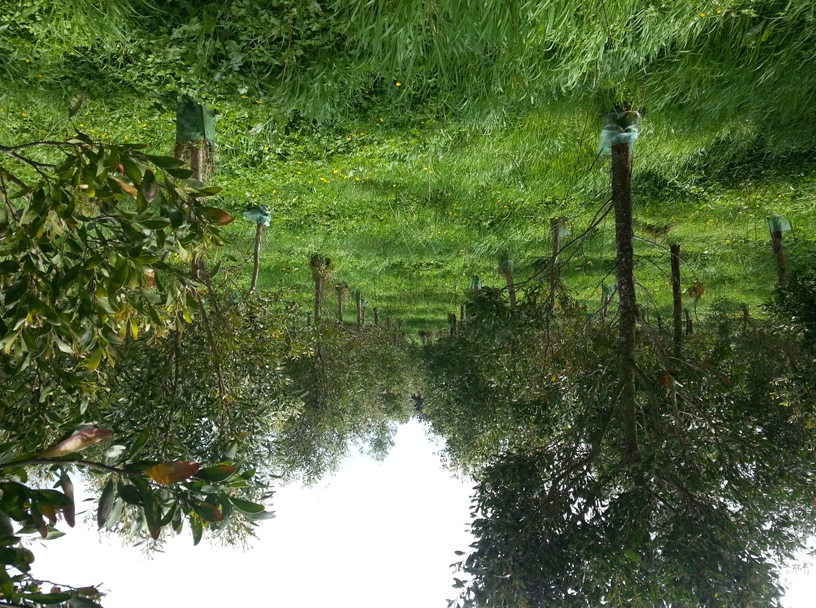
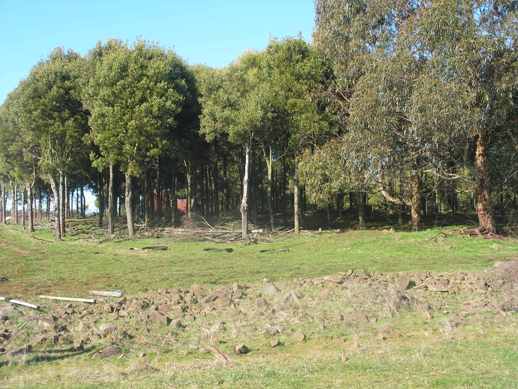
The plantation is approximately 0.5 ha in area. Originally I assumed the site was on red basalt soils, but I was wrong. Nevertheless the deep clay loams still support tall eucalypt forest nearby. At time of planting no soil preparation was done, no fertiliser added, but weeds were sprayed. Blackwoods were planted at 2x2m spacing (=2,500 trees per hectare!!) to try and control branching and promote good stem form. Protection for from browsing was provided by mesh fencing around the site and 900mm tall tubular Corflute® tree guards. Trees were mulched. Two different blackwood seed sources were planted. The blackwoods were originally interplanted with Silver wattle as a nurse crop, but these grew so quickly that they were removed after a few years.
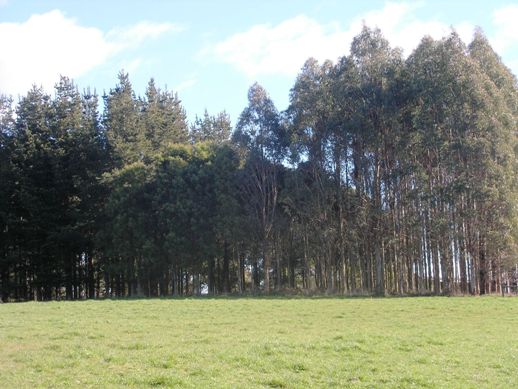
The plantation has a cypress hedge on the western boundary which was planted some years prior to the plantation been established. This has provided valuable shelter from the prevailing strong winds, with a single row Eucalyptus nitens hedge planted along the southern boundary. Shelter from strong winds is critical in ensuring good growth and stem form are achieved in plantation blackwood. Of particular interest is that the blackwoods planted next to the cypress hedge show no signs of reduced growth or vigour from competing with the pre-existing hedge.
Another advantage of the chosen site is that it adjoins a public road, so that come harvest time, access for machinery will be easier.
Management
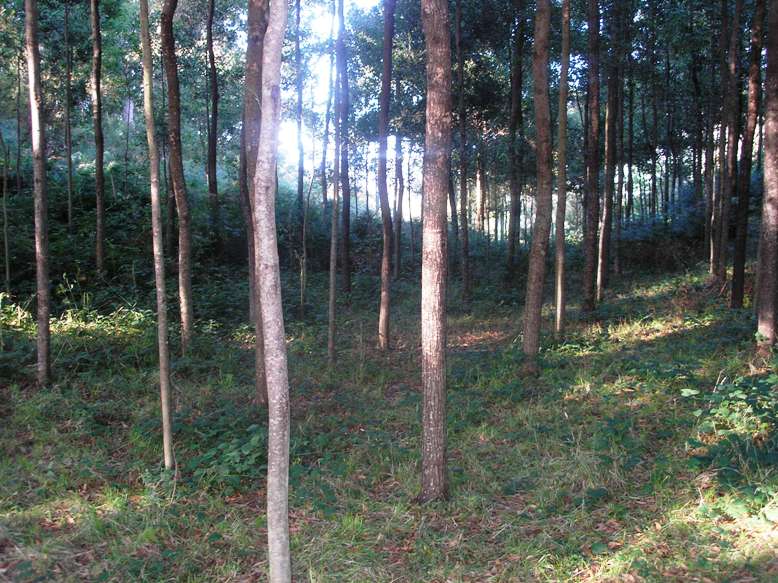
Gilles has focused enormous effort on ensuring the blackwoods have good stem form and small branches. No thinning has yet been done and there has been little mortality. Every single tree has been pruned to 5-6 metres. This is an incredible effort given that 92% of the existing trees will need to be removed to allow the best 200 trees per hectare grow to final commercial size. Perhaps not the most efficient way to achieve the desired end result, but given the uncertainty and blackwoods reputation as a difficult tree to control, a very understandable approach.
The strong focus on achieving good stem form has come at the expense of diameter growth. The current trees range in diameter from 3 – 20 cm dbh with a probable average of 4-5 cm. This is very small for a 12 year old blackwood plantation, where average diameter growth rates should be about 2.0 cm per year. At age 12 years this plantation should have an average stem diameter of about 20 – 24 cm. At least another 10 years has been added to the rotation length as a result of this conservative approach to management. Thinning of the plantation is now critical to allow the final crop trees to start to put on some serious diameter growth.
The goal is to produce ~200 trees per hectare with an average diameter of 60cm at 1.3m above ground at time of harvest, with all trees straight and pruned to 6 metres.
On the positive side the trees are all very healthy and growing well given the intense competition they must be experiencing. There are many pruned trees with excellent stem form from which to select the final crop trees. With such a high stocking of 2,500 trees per hectare, the trees are tall and thin, which makes them potentially susceptible to windthrow. Gilles will have to thin the plantation in stages over a number of years (say 3 years) to minimise the chance of windthrow. This gives the trees adequate time to become windfirm.
I would also recommend Gilles begin an inventory of his plantation. It is small enough that all trees could be measured for diameter at breast height (1.3m) before any thinning. When he has identified the final crop trees that will remain after the thinning is completed, the pruning history and pruned height of these trees should also be recorded and photographed. This will help future potential buyers know that the pruned sawlogs in the trees are indeed free of branches and knots. The retained crop trees can then be remeasured every 5 years or so, so that Gilles can track their response to the thinning, and understand how blackwood responds to good management on this site.
During the thinning process wood samples (discs) should be kept from any thinned trees that have begun to develop heartwood. These will become valuable in helping determine the heartwood colour range that is likely to be encountered when the final harvest becomes due. Heartwood colour, as well as wood basic density, are two of the most important wood properties determining blackwood value. While we don’t yet know whether wood colour within the tree changes over time, we do know that heartwood colour may or may not vary from the pith to the outer edge of the heartwood as the tree grows. We also know that there is wide tree-to-tree variation in heartwood colour in blackwood (at least some of this variation is under genetic control), so having any information on this at the time of final harvest will be important in negotiating a sale.
Oh yes, and I’m sure the retained trees would appreciate a dose of super phosphate to help them to achieve those greater growth rates.
Conclusion
As I said in the original blog, this plantation shows many positive features, including the use of hedges for shelter, good site selection and establishment techniques, and the importance of dedicated, focused management for the first 10 years. Gilles passion for blackwood is clearly evident. The completion of the task with thinning, plus commencing an inventory, should see this excellent plantation become an inspiration to other Tasmanian farmers wishing to grow blackwood.
Cheers!

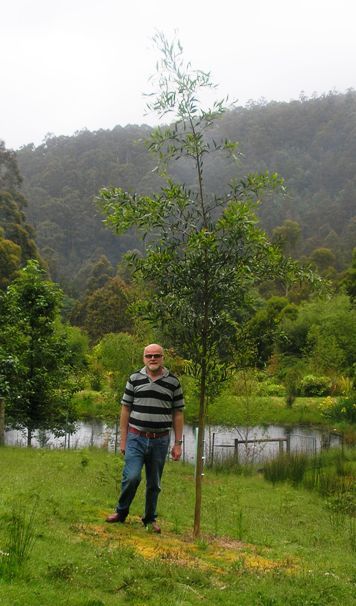
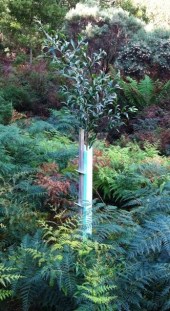 This 2.5 metre tall tree is the first 12 months growth on an impressive tree a in a new blackwood plantation in southern Tasmania. Not bad given it was such a dry season! It should be stressed that this was an exceptional tree in the plantation. Even so the rest of the plantation did very well considering, most trees being about 1.3 metres tall.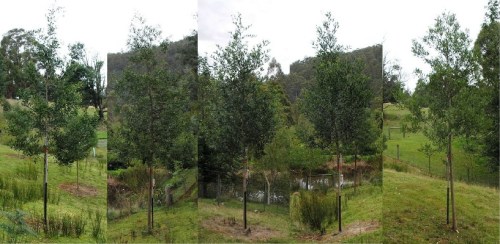


 Tasmanian Blackwood Growers Cooperative
Happy tree-growing farmers
In travelling around and talking to Tasmanian farmers and others about growing blackwood I’m often faced with the statement (or some variation of it) – “but they take so long to grow!”
I’m certainly not saying that time and money are not essential issues in investment; but good money can still be made on investments up to around 40 years. And this is without considering the many other benefits in growing trees on farms.
So how do farmers get past this initial resistance to investing in trees and including trees in their farming business?
As a passionate forester I’m always inspired by the stories from New Zealand where many farmers have taken to growing trees as part of their farming business. Twenty years ago the New Zealand Government (which was then the major player in the forest industry) decided that politics and forestry didn’t mix, and if the forest industry was to succeed and thrive then it was time for the Government to exit the industry. So the Government shut down the public native forest industry and sold off the large public plantation and sawmilling assets. It was a controversial decision that was opposed at the time by the industry and the forestry profession, but the Government still went ahead. Today the forest industry is a thriving cornerstone of the NZ economy, and the farmers are the beneficiaries of that brave decision 20 years ago. I only wish Tasmanian farmers were in the same situation.
The organisation that represents New Zealand farm foresters is the NZ Farm Forestry Association. Their website has a vast array of information and ideas. One is this collection of farm case studies that showcase 15 farmers and their experiences with growing trees. They are all well worth reading. Some of the stories include farmers growing blackwood.
http://www.nzffa.org.nz/farm-forestry-model/case-studies/
These stories demonstrate that farmers can overcome their reluctance to long-term investment of trees. Where the opportunity allows, a series of forestry investments over time can eventually make a major ongoing contribution to farm income. Some of the case studies include harvesting and the financial returns that have been achieved. Perhaps the best example is “Hockings, Bulls, Wanganui” the sixth on the list that includes a table showing the significant contribution of forestry to farm income over an 18 year period. Very impressive! Indeed I have read of NZ farmers who over time have converted their entire properties to forestry and become 100% tree farmers. They have discovered that farming trees is both enjoyable and profitable.
And because blackwood is high-value, smaller investments are still viable and profitable, compared to hardwood pulpwood or radiata pine where scale of investment is more important.
I hope you find these stories inspirational and educational.
Leave a comment
Posted in Commentary, New Zealand, Plantations