

It’s that time of the year again!
Time to present my annual summary of competitive blackwood and specialty log prices from the Island Specialty Timber (IST) log tenders.
https://www.islandspecialtytimbers.com.au/
Island Specialty Timbers is the only source of competitive, transparent log prices anywhere in Australia, including blackwood sawlog prices. That simple statement tells us a great deal about the dire condition of the forest industry!
IST themselves never do any market updates so I decided to do that job for them. Otherwise the forest industry would have no market information at all.
The lack of commercial credibility is just one of the many challenges facing the forest industry in Australia.
IST is a business enterprise of Sustainable Timber Tasmania (STT) which sources and retails raw material of Tasmanian specialty timbers from harvest or salvage operations conducted on State owned Permanent Timber Production Zone land (PTPZl).
IST is not really a “business” just as the State forest agency Sustainable Timber Tasmania is not a business either. Logging of public native forest in Tasmania requires significant taxpayer subsidies every year.
You can read my previous annual tender summaries here:
https://blackwoodgrowers.com.au/?s=tender
IST conducted 7 tenders during the year with approximately 280 cubic metres of special species sawlog and craftwood put to public tender. Tasmania defines “special species” as any native forest timber apart from plain grain Tasmanian oak (Eucalyptus sp.).
Blackwood Results
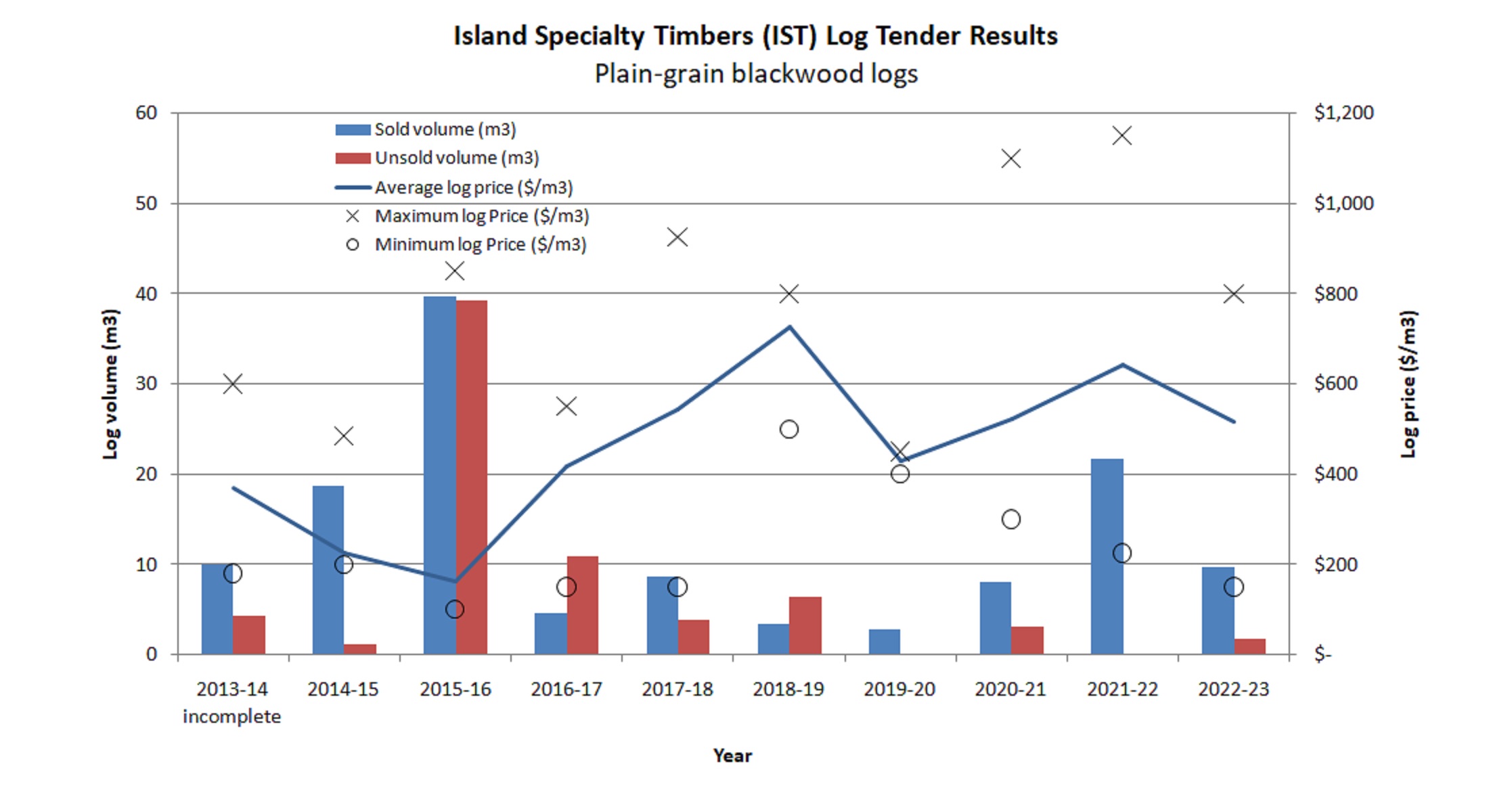
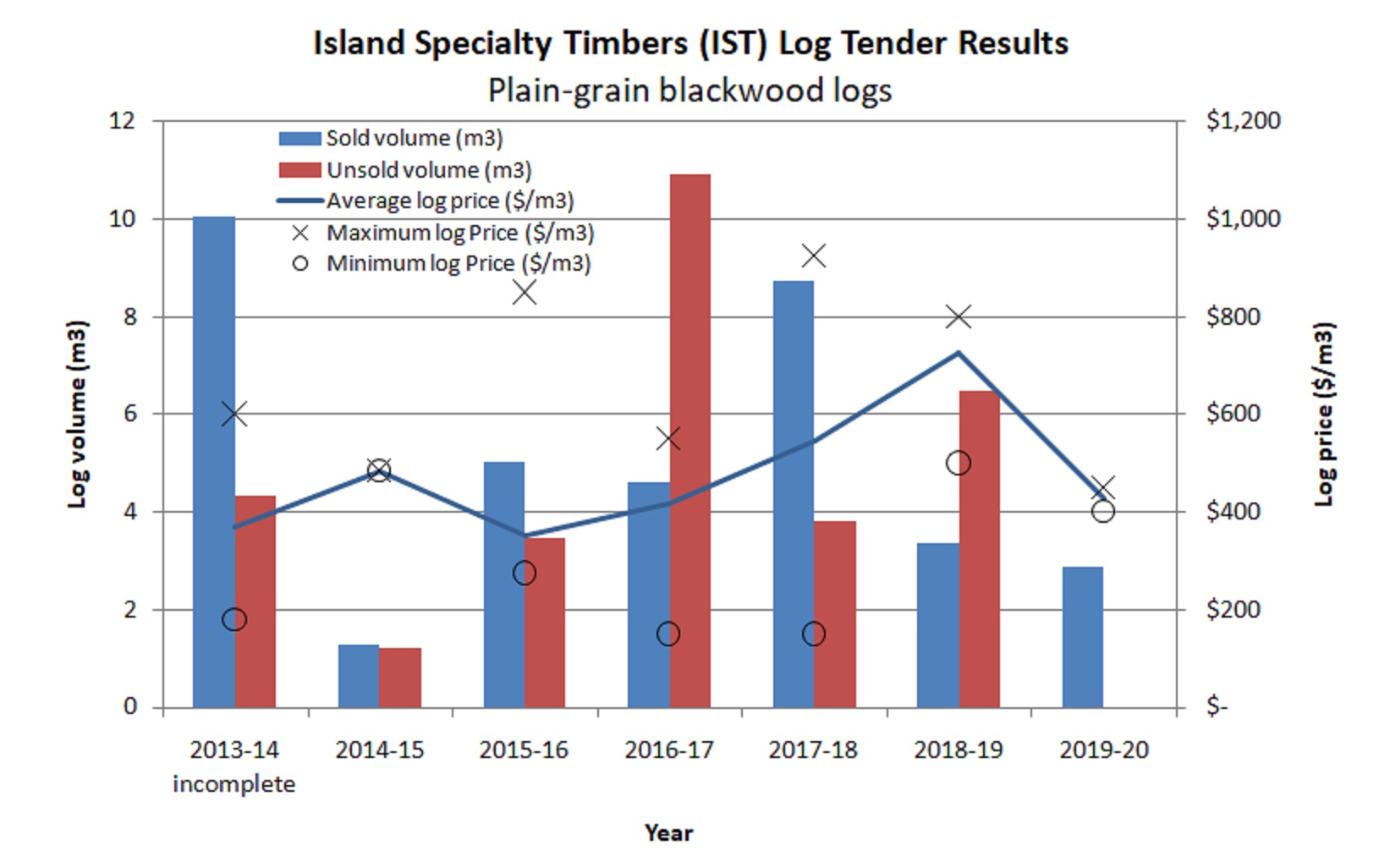
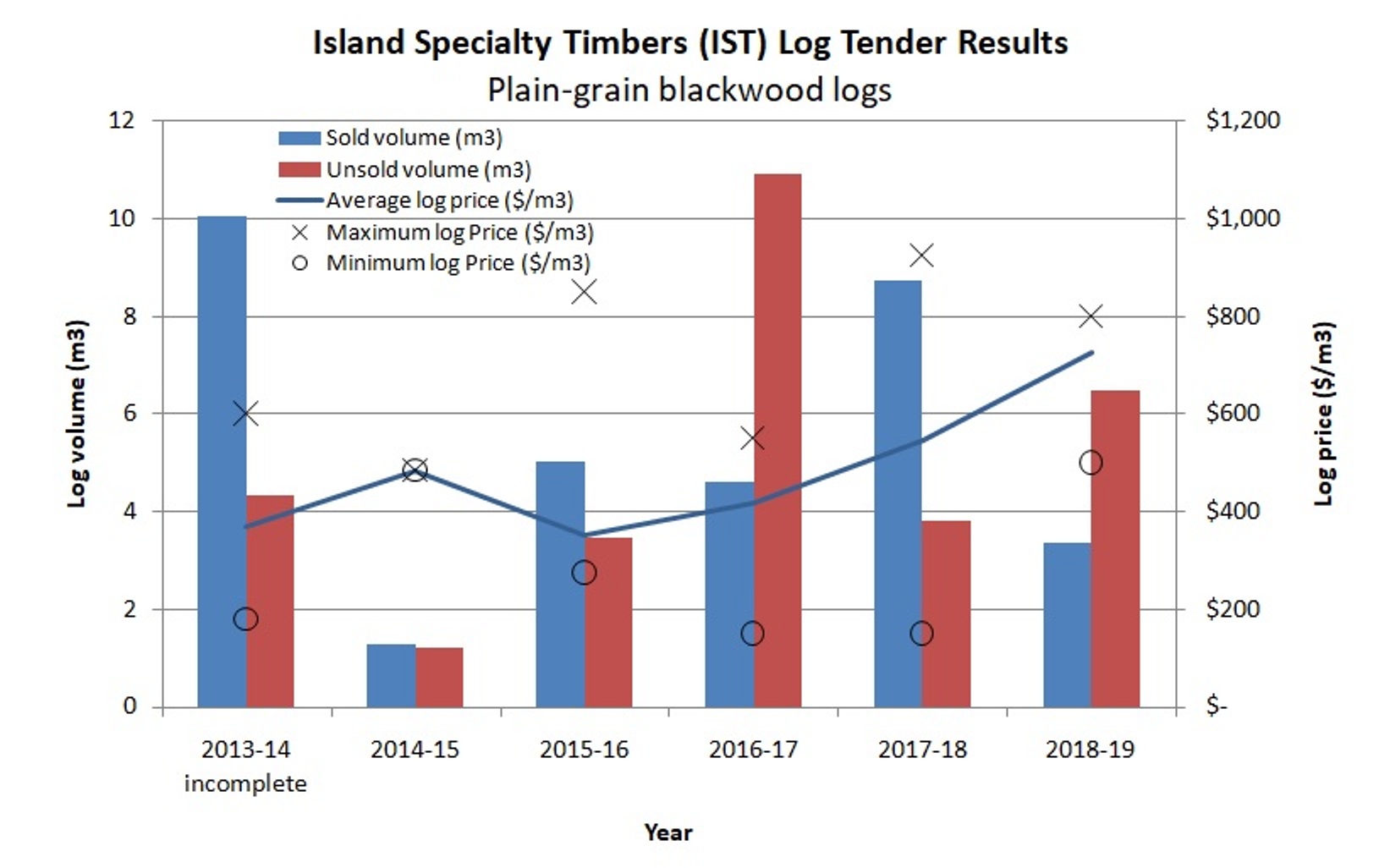
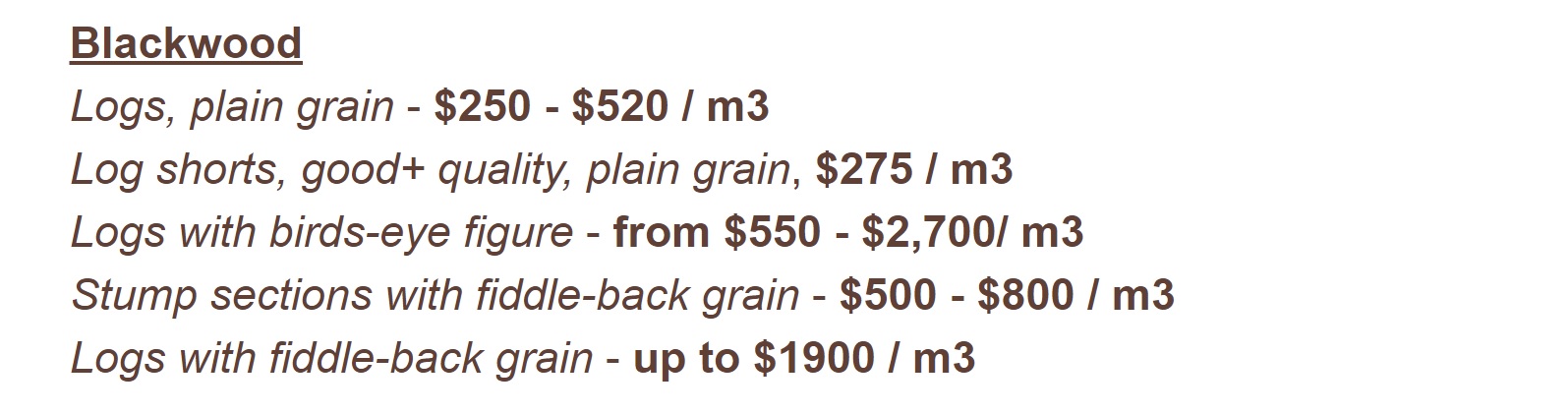
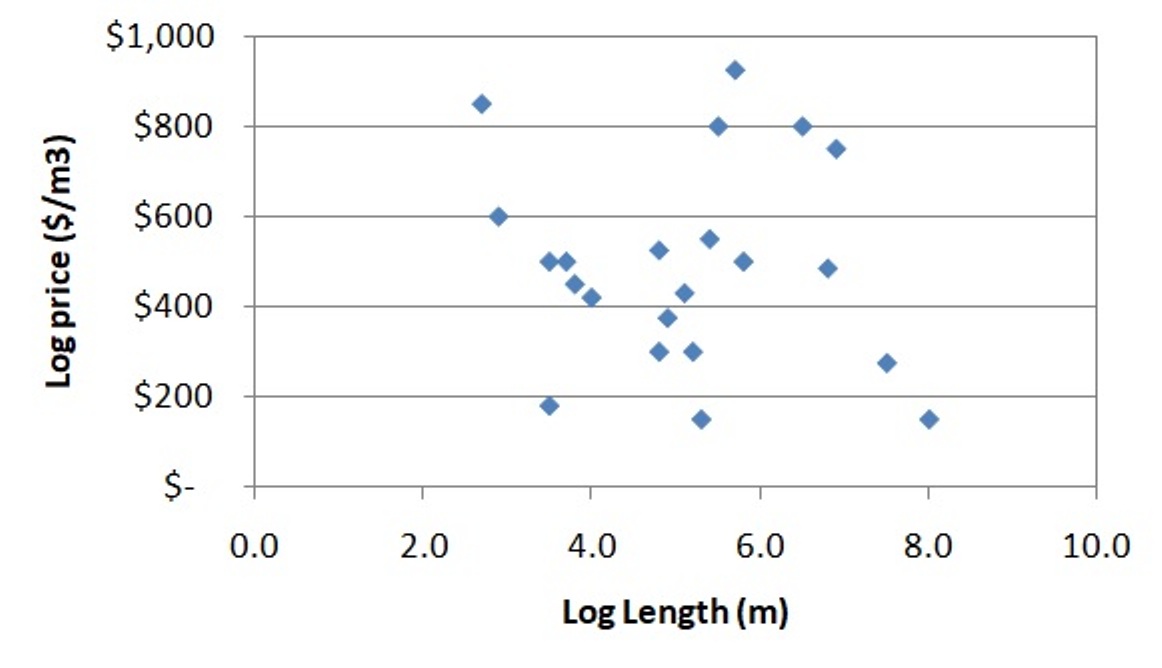
IST put a mere 20 blackwood logs to tender totalling 21.7 cubic metres in 2023-24. Only one log had feature grain, all the rest being straight plain grain logs. Six logs (including the feature grain log) totalling 7.7 cubic metres failed to sell at tender. For the 14.0 cubic metres of sold plain grain logs, prices ranged from $250 to $925 per cubic metre with an average price of $454 per cubic metre.
The last few years have seen mixed results in the market as shown in the following chart. This year saw an increase in the minimum and maximum prices paid but a fall in the average price.

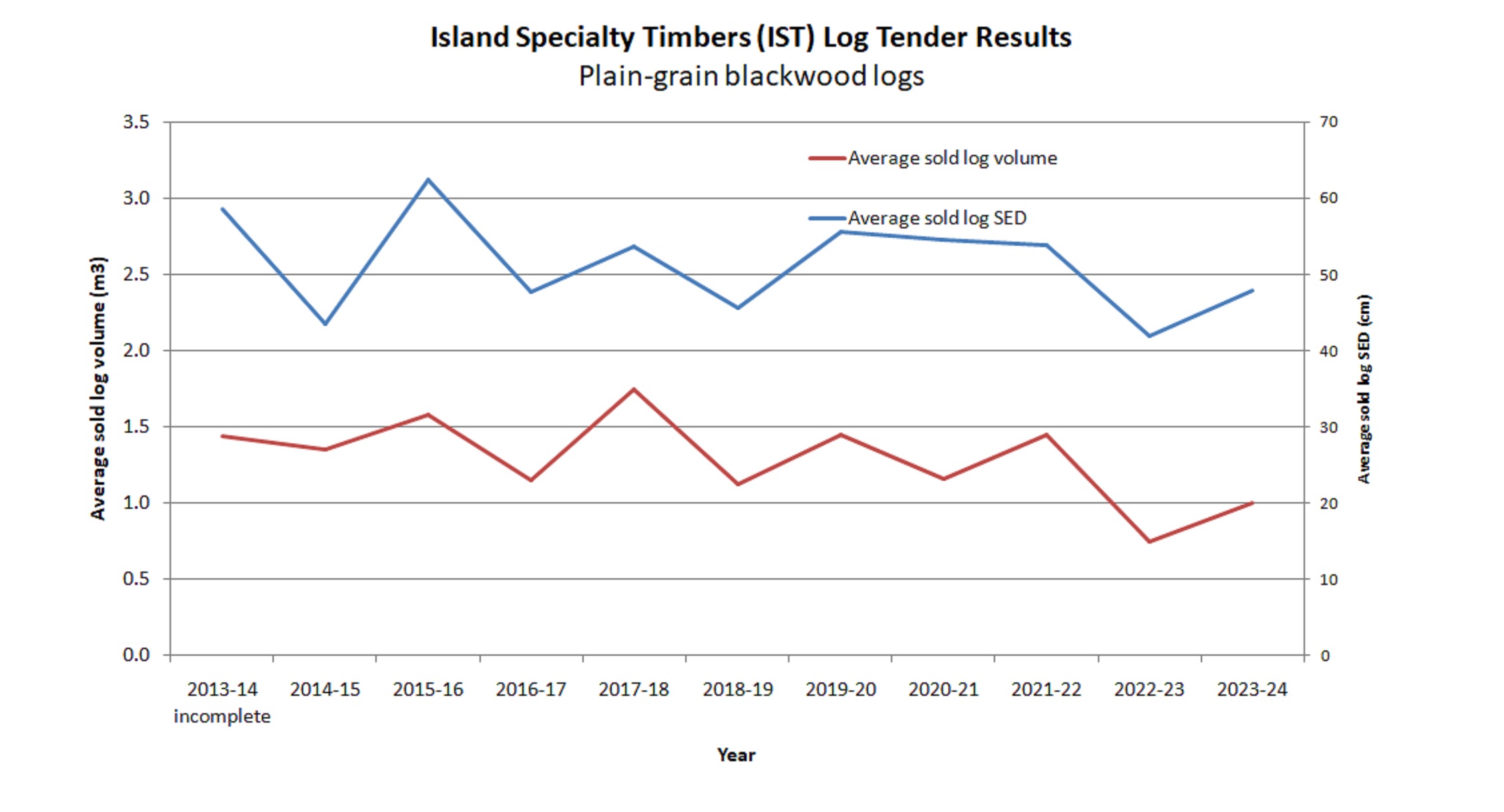
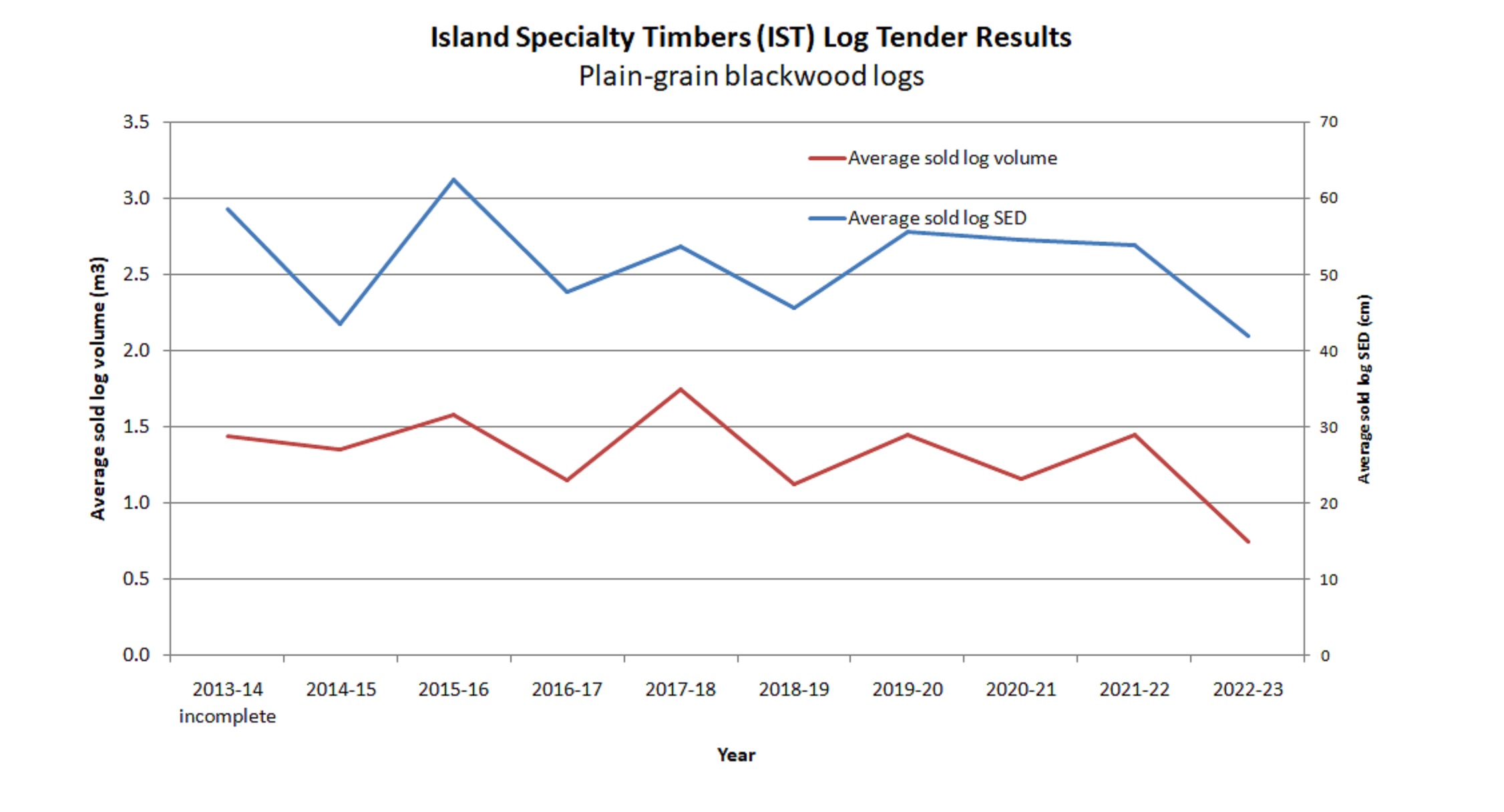
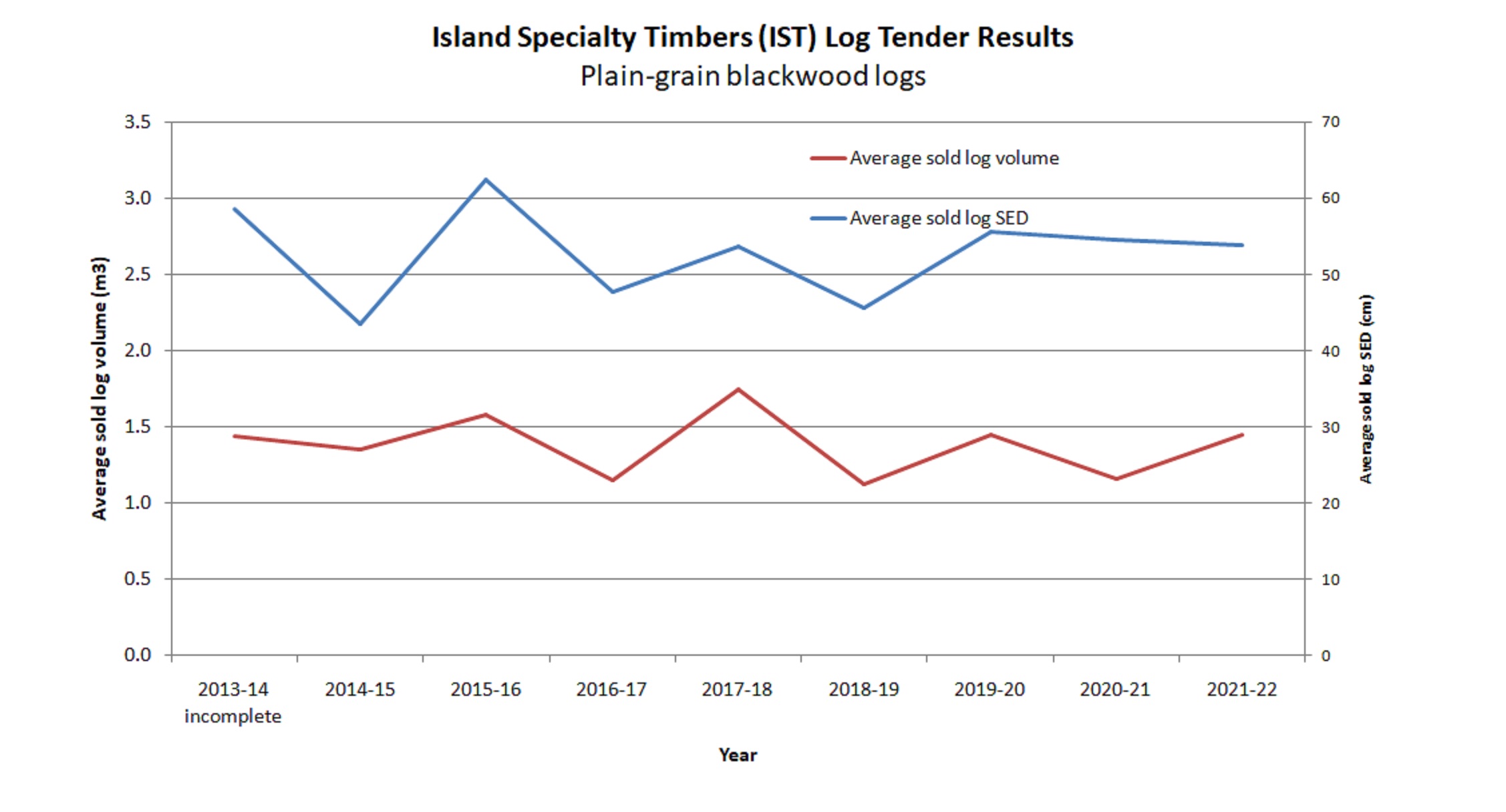
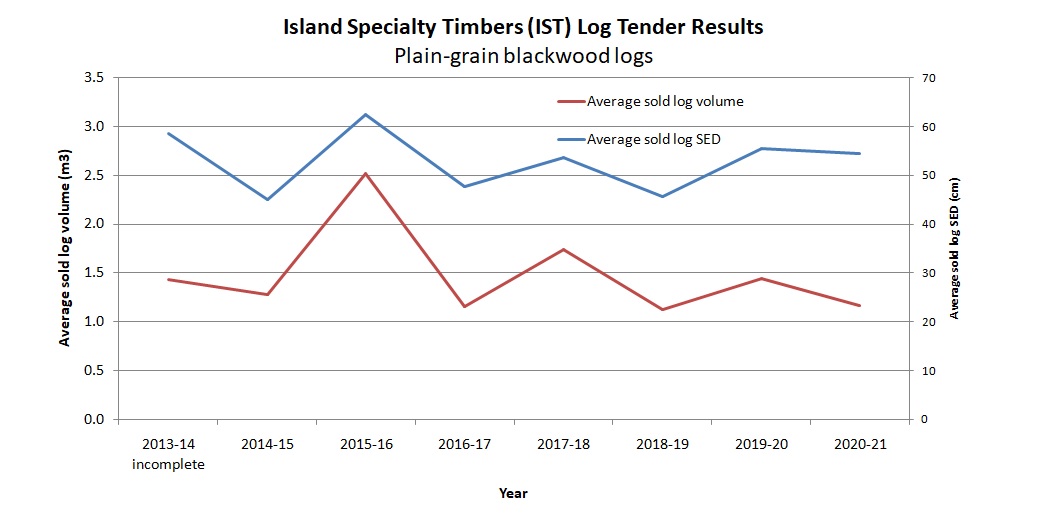
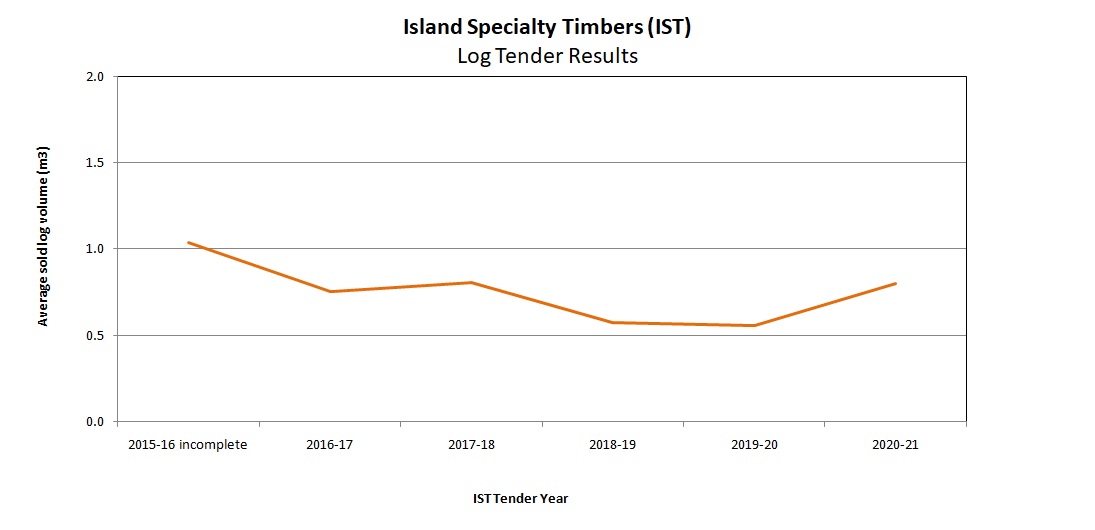
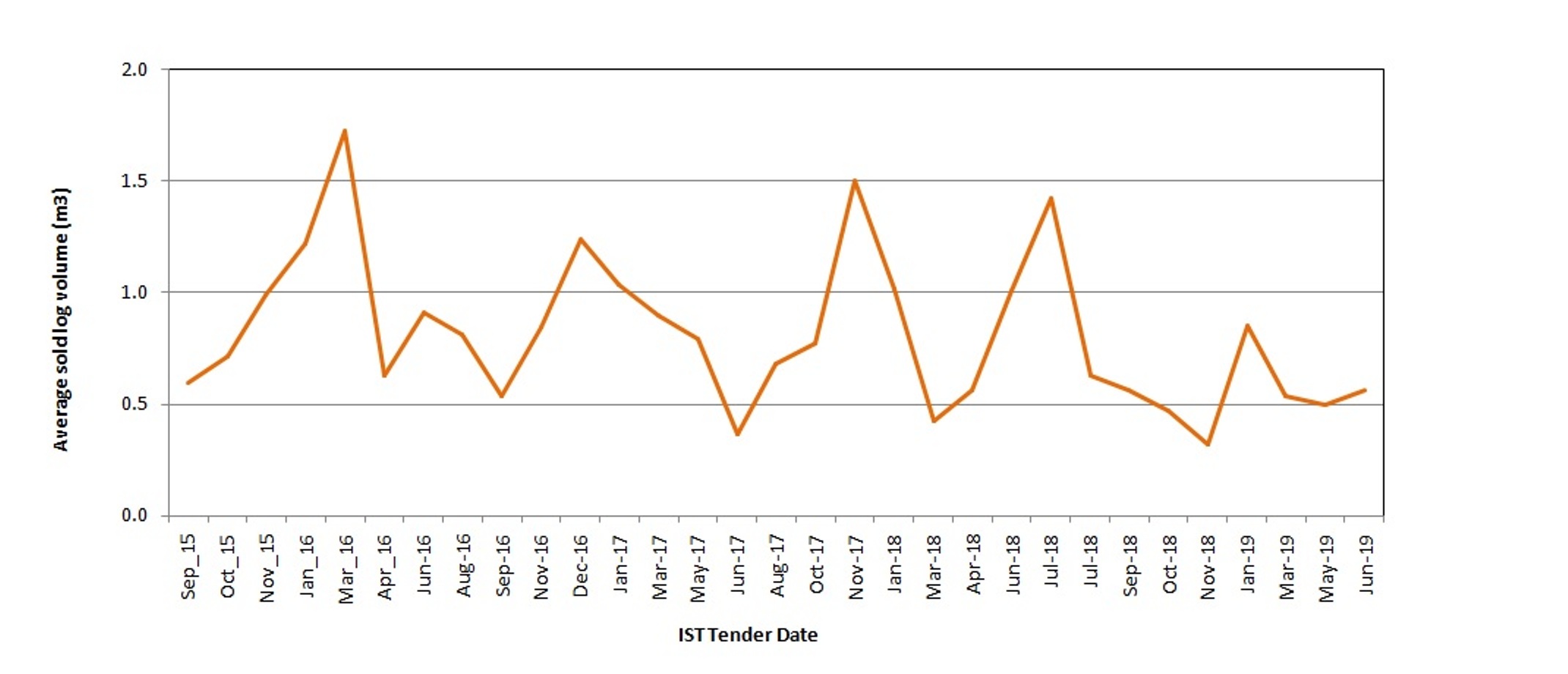
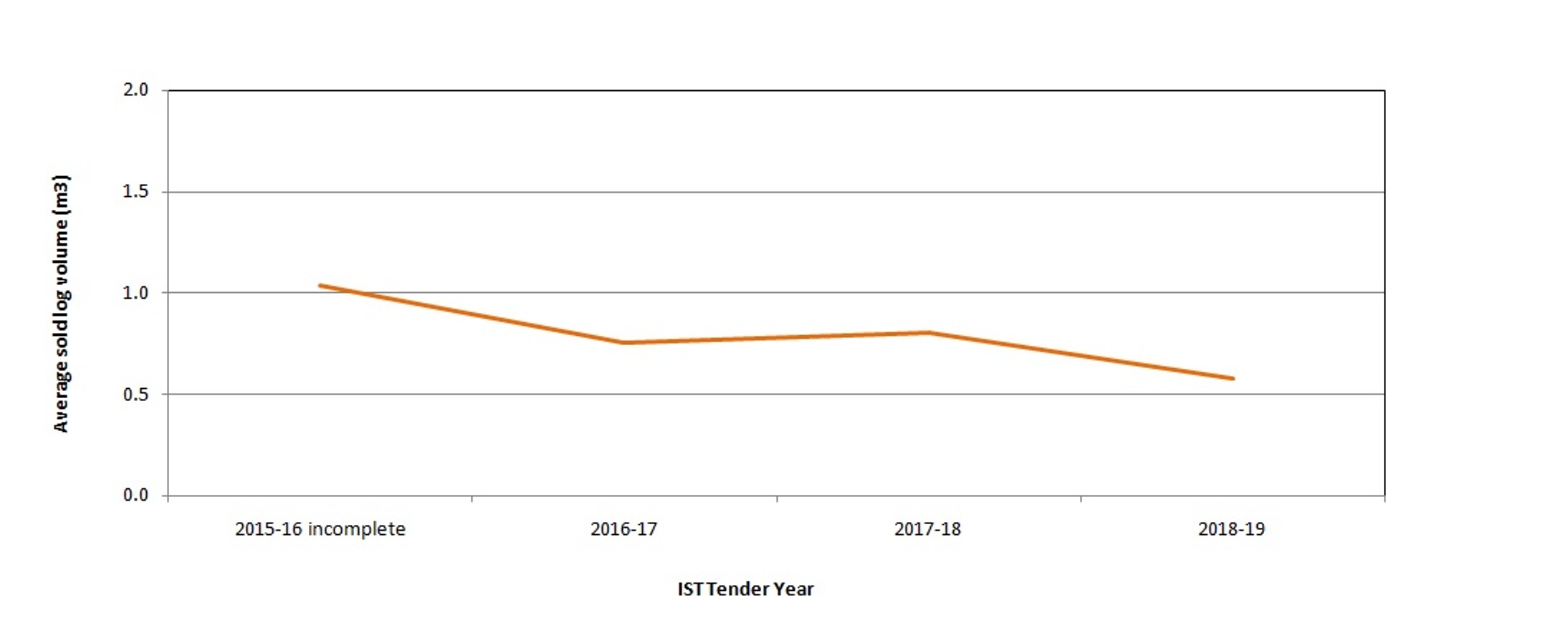
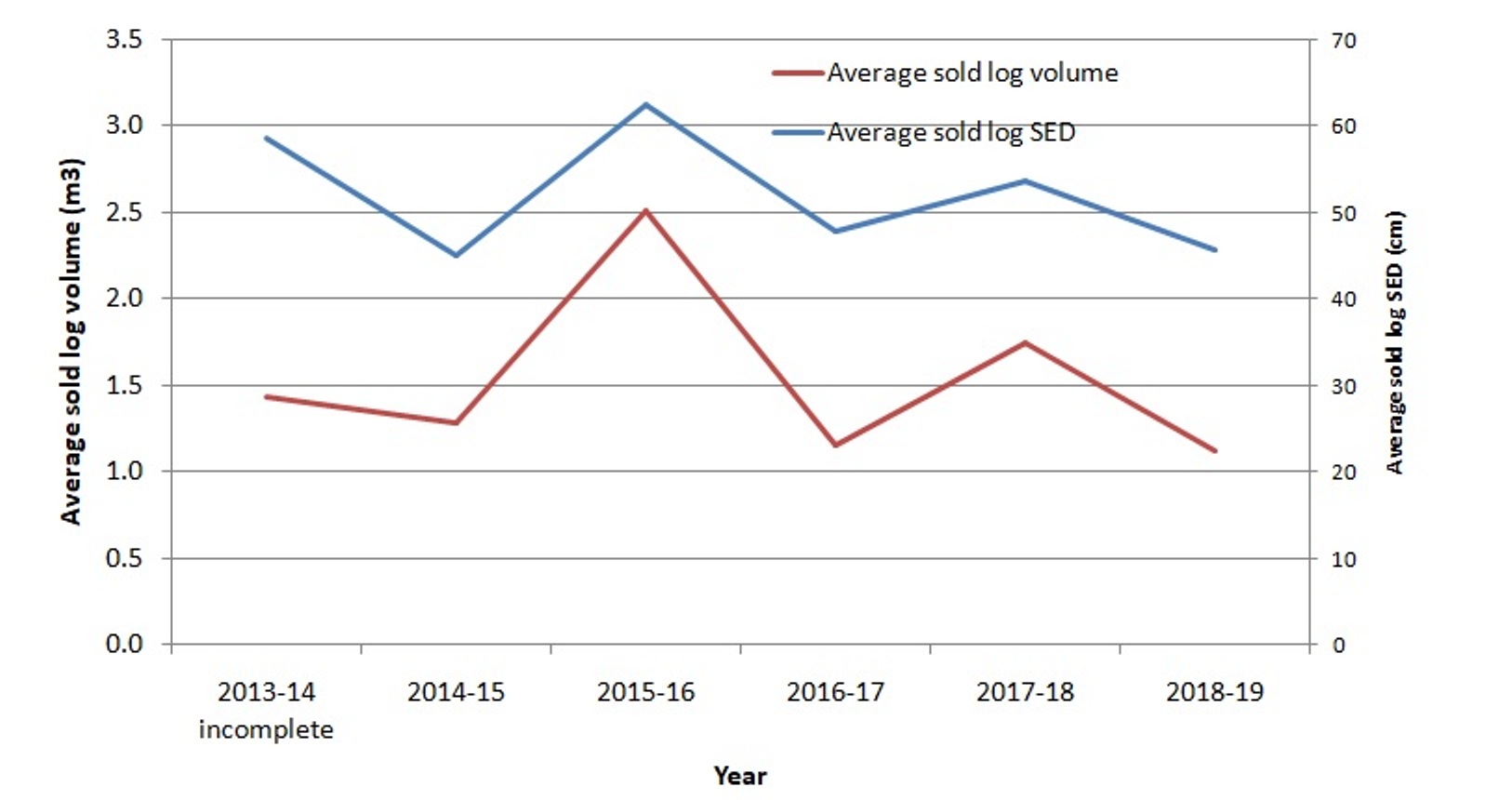
The chart below shows the average volume and small end diameter (SED) for sold blackwood logs. Average log size was slightly up on last years, but still much smaller than a target size for plantation-grown blackwood. Smaller logs mean less sawn timber recovery per log volume so lower prices.
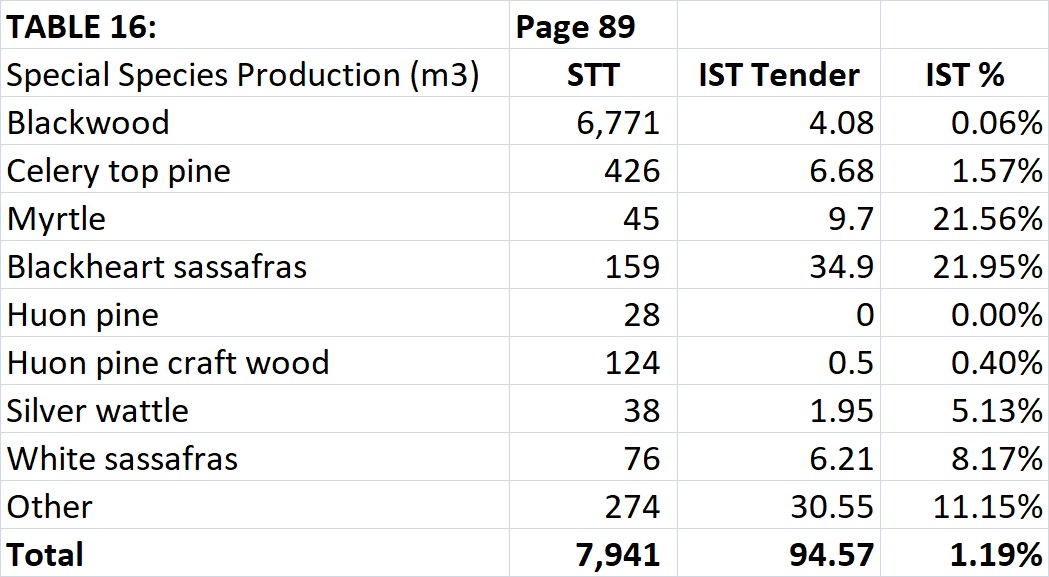
Generally ~9,000 cubic metres of blackwood is harvested annually from Tasmania’s public native forests with 99.99% being sold at heavily discounted Government prices on long term sales contracts. The Tasmanian government deliberately engages in anti-commercial, anti-competitive behaviour. These log tender results need to be interpreted bearing this fact in mind.
Premium plain grain sawlogs are what can be grown in blackwood plantations. The “target” sawlog in a blackwood plantation is 1.5 cubic metres in volume.
This year marks 10 (complete) years of blackwood sawlog price reporting. It is my small contribution to light a candle in the deep dark recesses of the Tasmanian forest industry. To my knowledge none of this price reporting has resulted in any change whatsoever in the blackwood marketplace, either at the farming community end nor in the processor/end user marketplace.
Trying to establish a proper functioning specialty timber market where supply and demand, cost and price are connected and in balance will be a very long process indeed, if it ever happens at all.
General Results
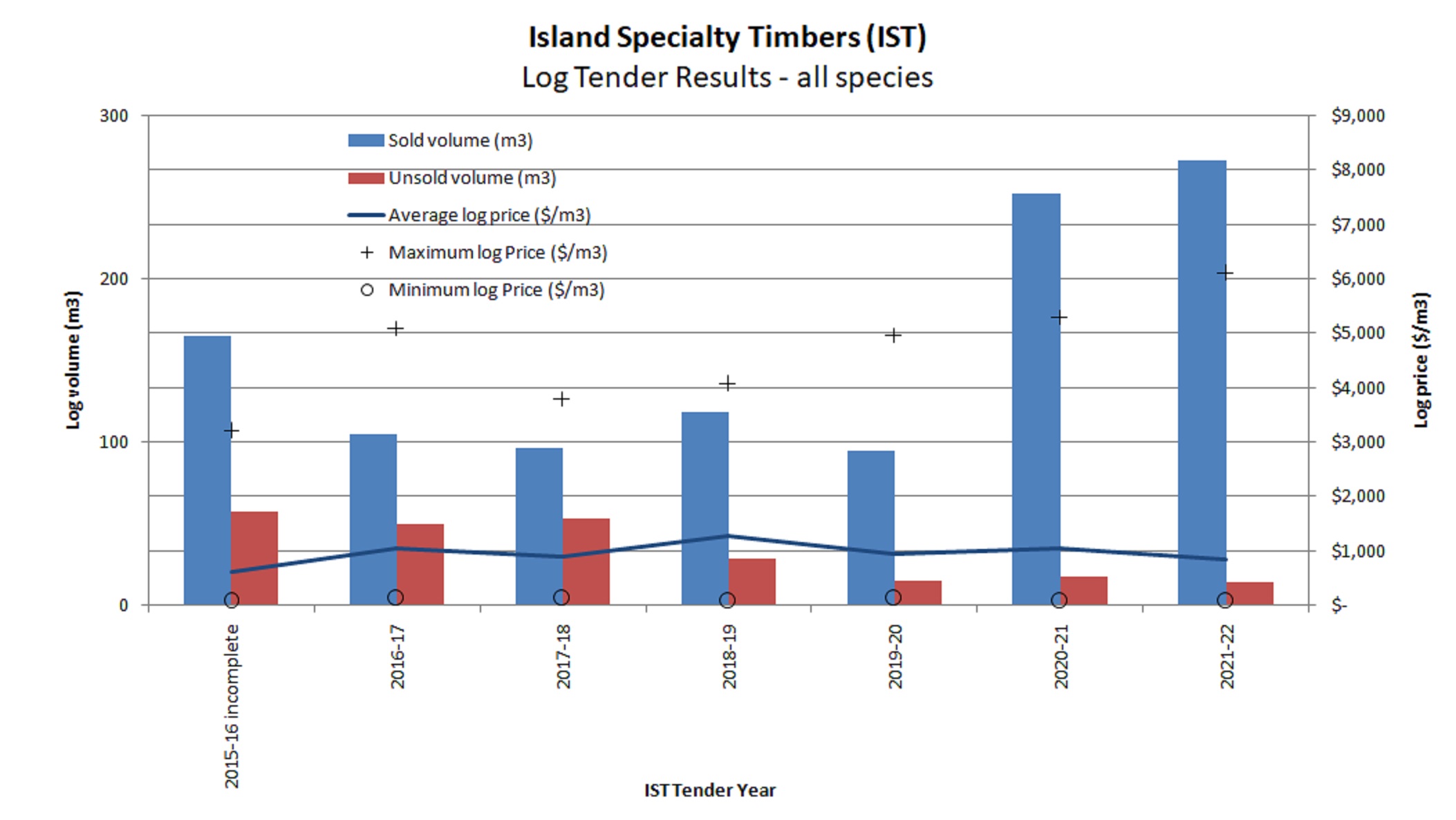
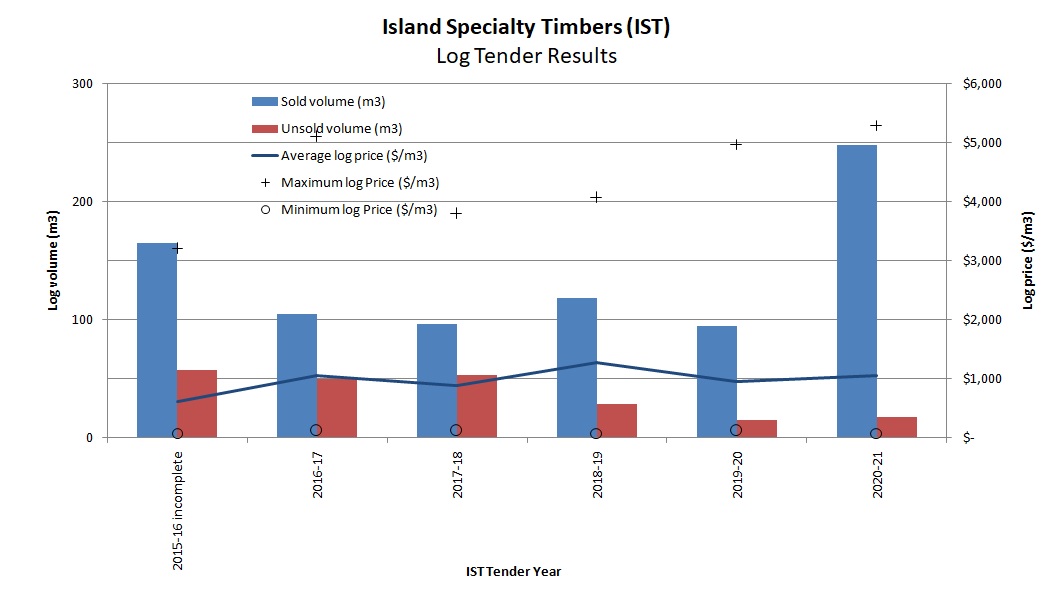
Overall a total of 262 cubic metres of special species sawlog and craftwood were put to public tender during the year. Fifty five cubic metres failed to sell at tender.
Average log price for 2023-24 ($769 per cubic metre) was slightly up on last year, probably partly helped by the slight increase in average log size.
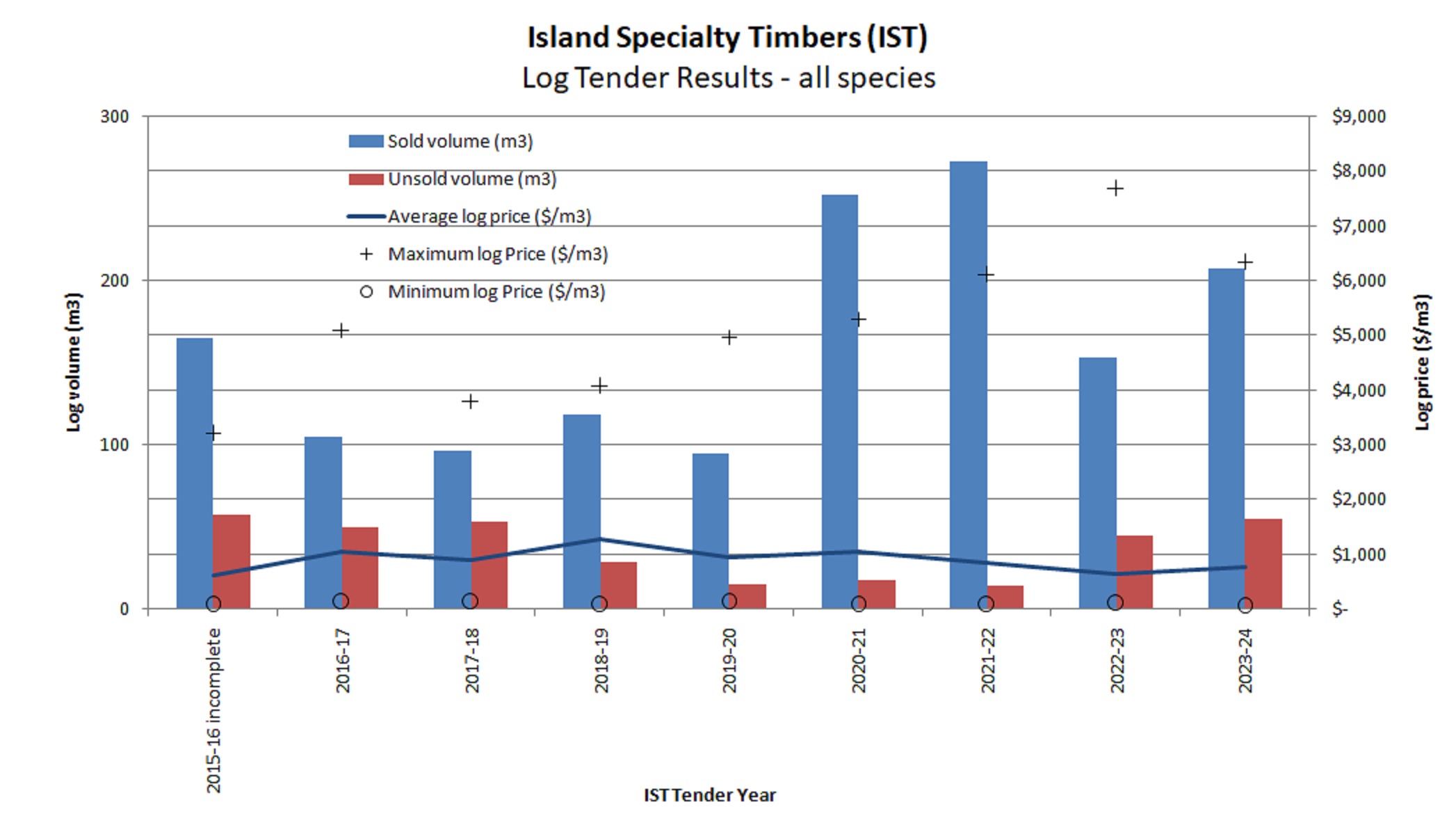
Total tender revenue for 2023-24 was $159,400, the result of the combined higher volumes and slightly higher prices.
Following 5 years of increasing maximum log price paid for specialty logs this year saw a decline. Does this indicate a softening of the specialty timbers market, in line with the general economy? The prize this year went to a large Huon pine log in the February 2024 tender. This log – 75cm small end diameter, 5.3m length and 3.0 cubic metres volume – sold for $6,325 per cubic metre, or a total price of $18,975!!

Remember these IST tender sales represent tiny log volumes sold into the small southern Tasmanian market. They represent mill door prices not stumpages.
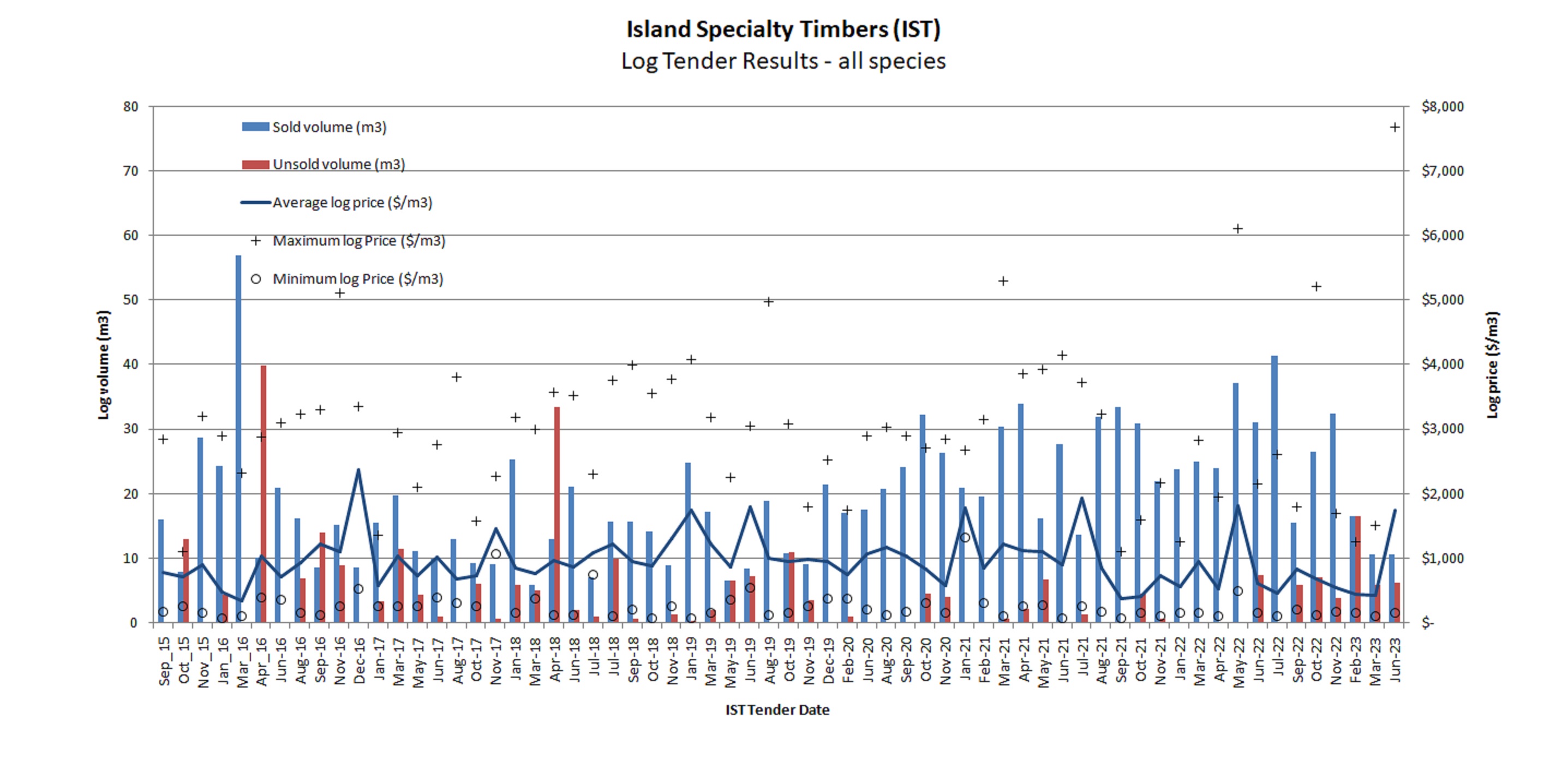
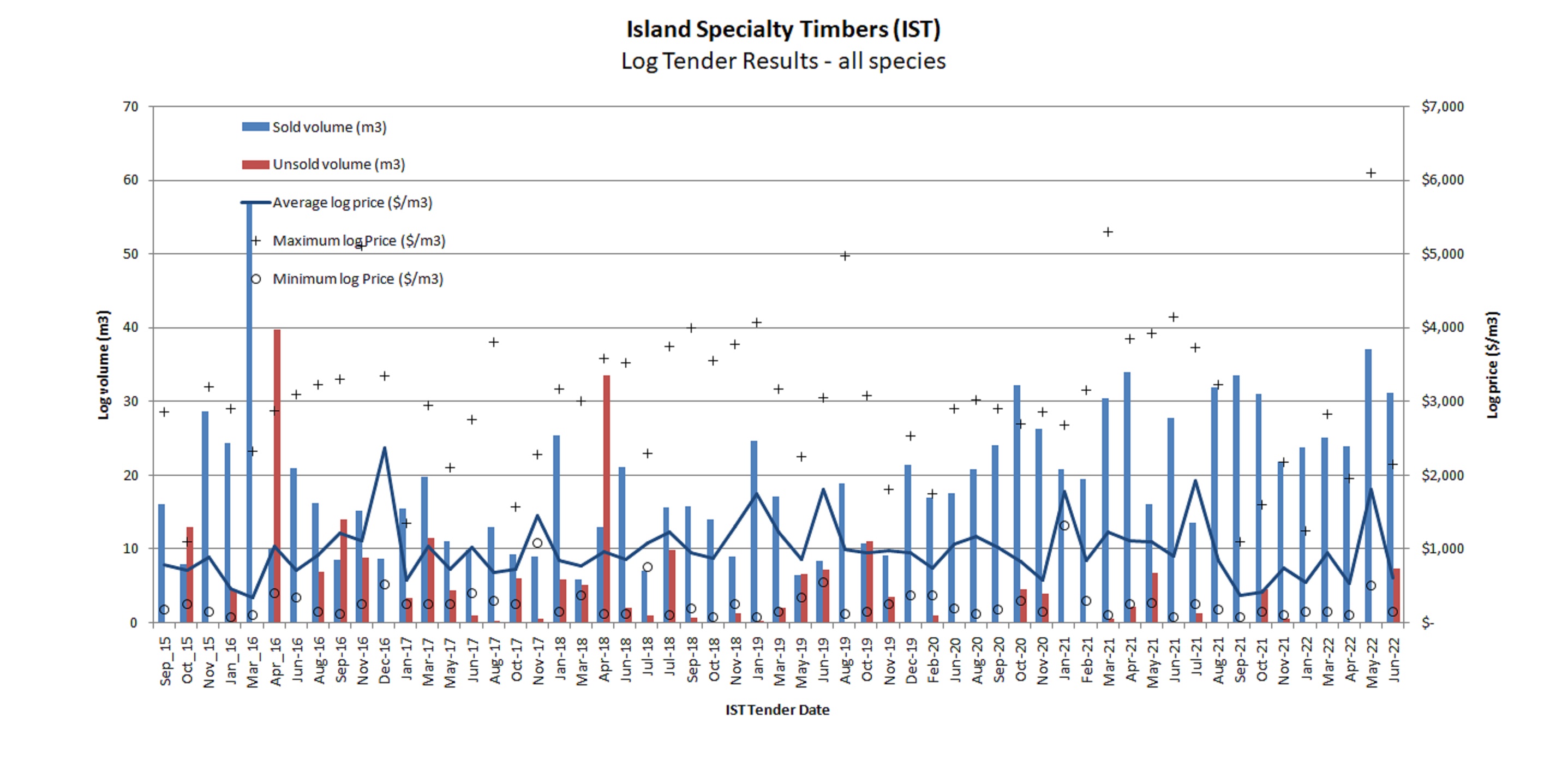
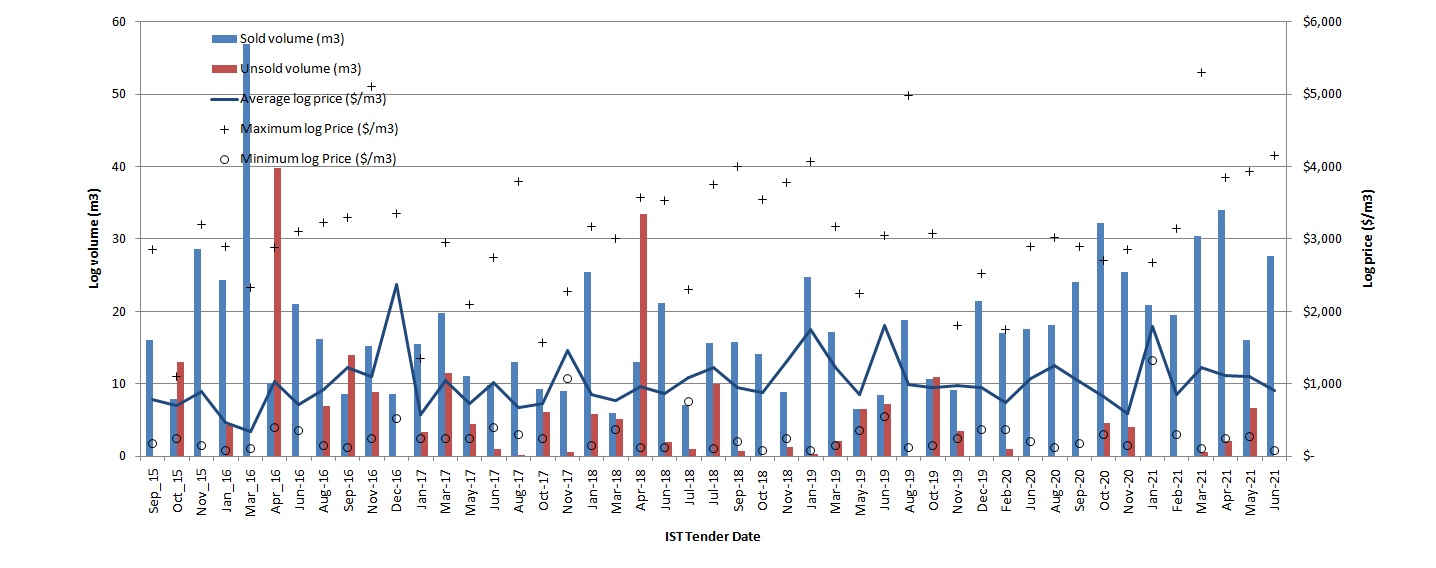
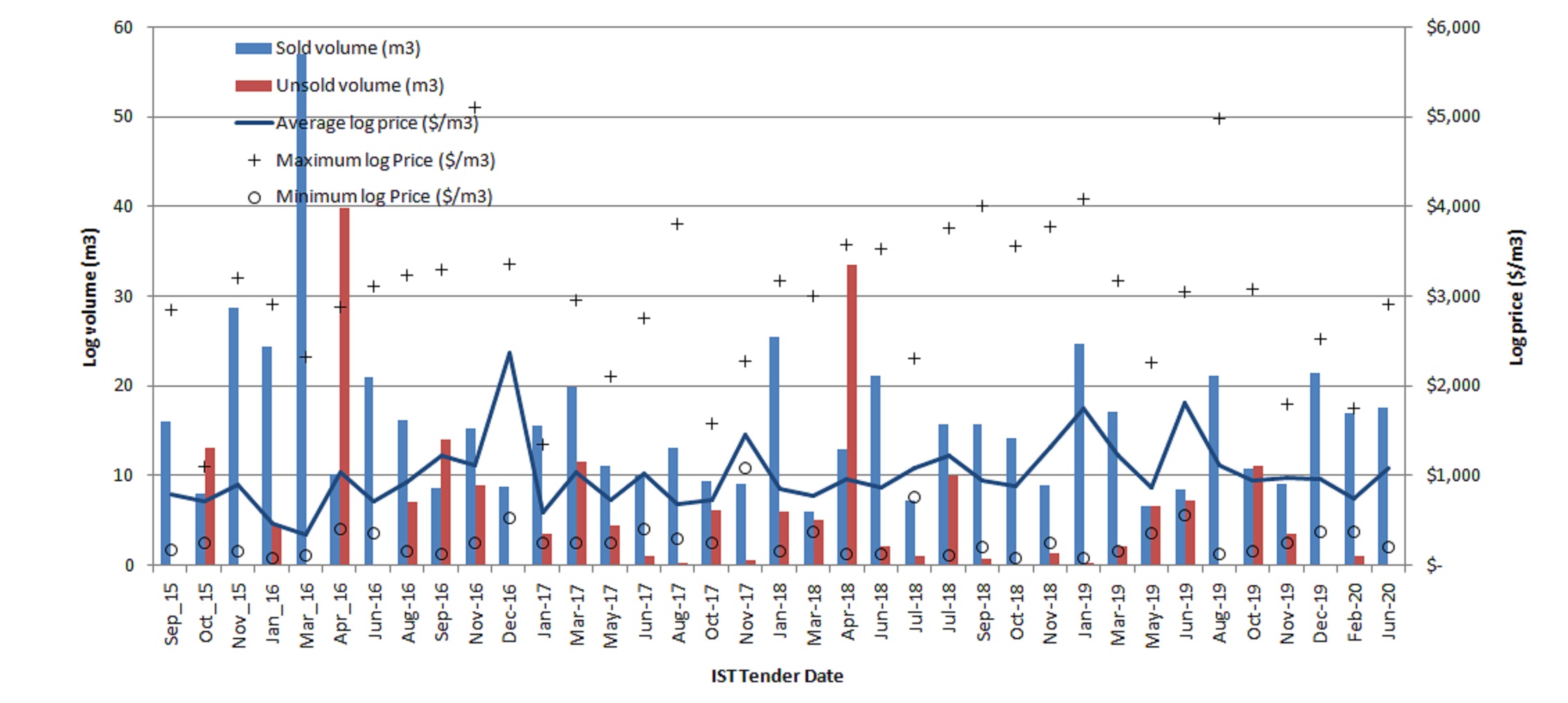
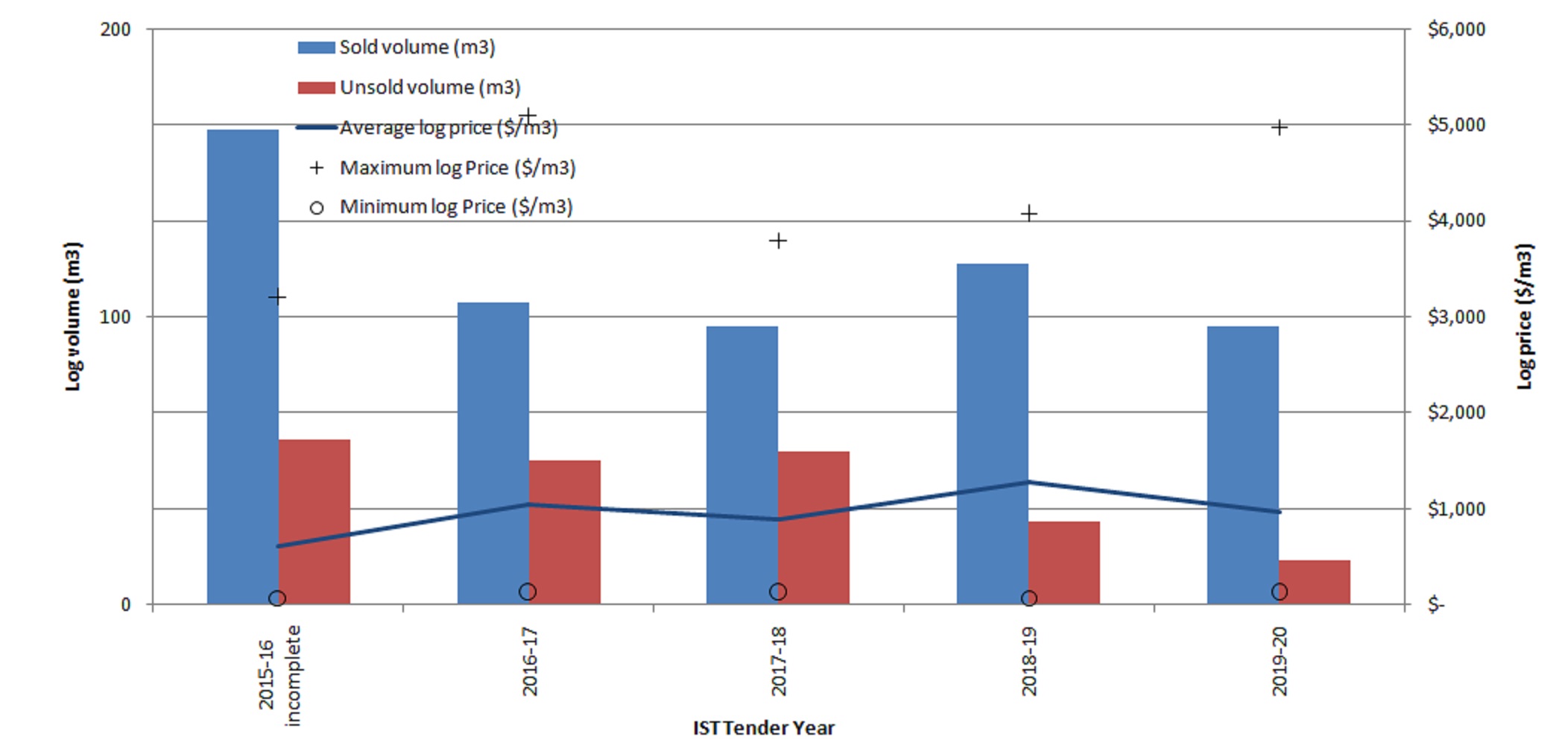
The following chart shows the volume and price summary for 65 IST log tenders back to 2015. That is over 1800 cubic metres of tendered log and craftwood.
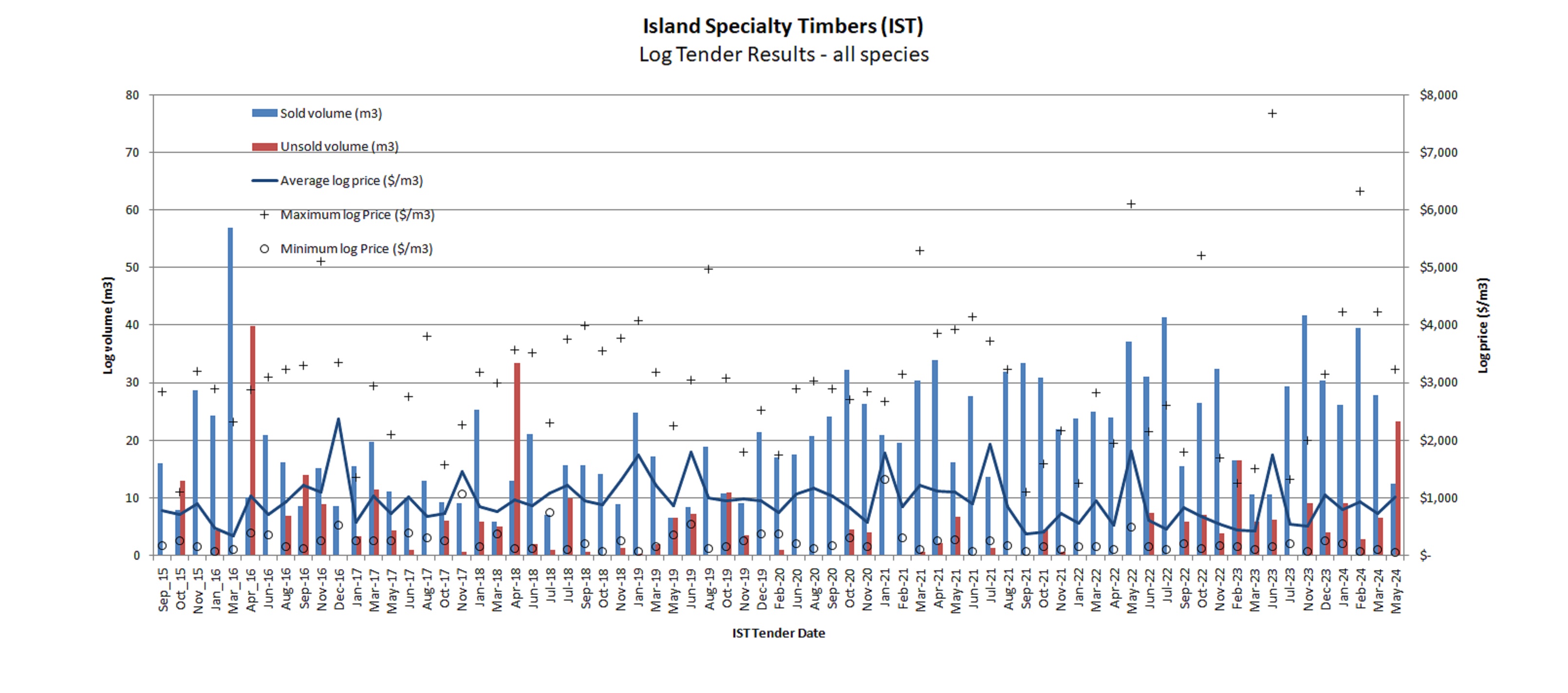
The tiny volumes and wide variability in species and quality of logs that IST put to tender makes assessing market trends over time difficult.
One thing is obvious in the above chart is the lack of increase in the average price paid for this rare old growth forest resource over the last 9 years.
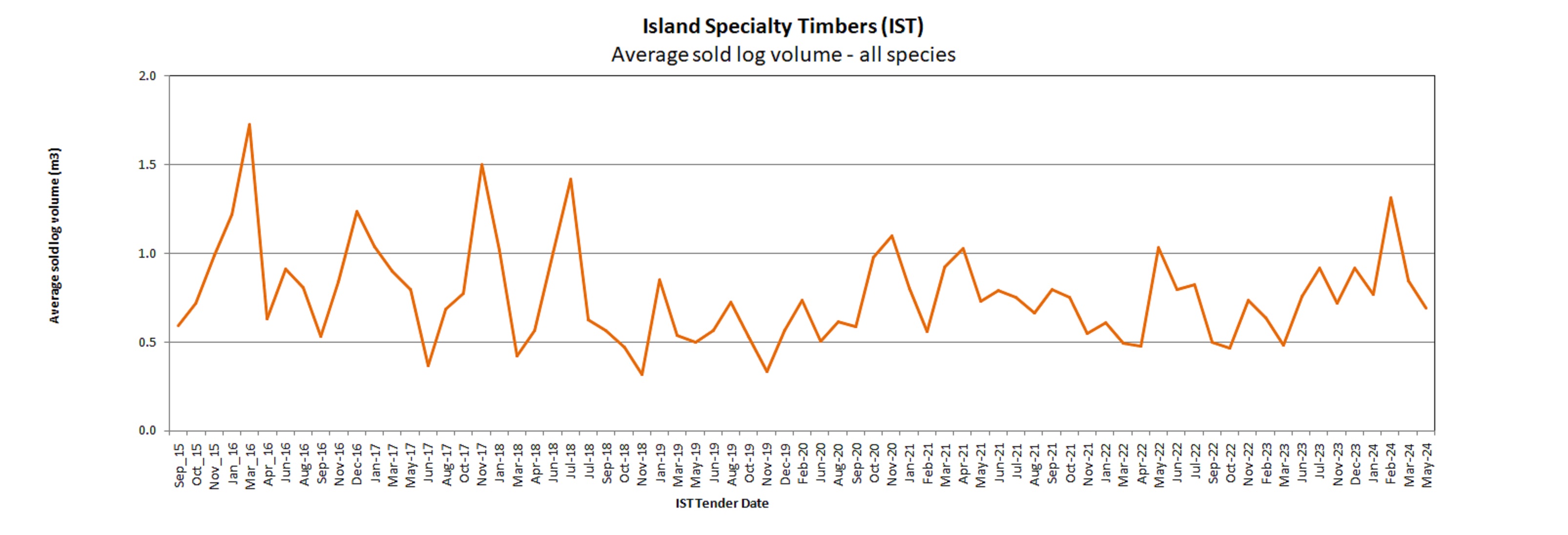
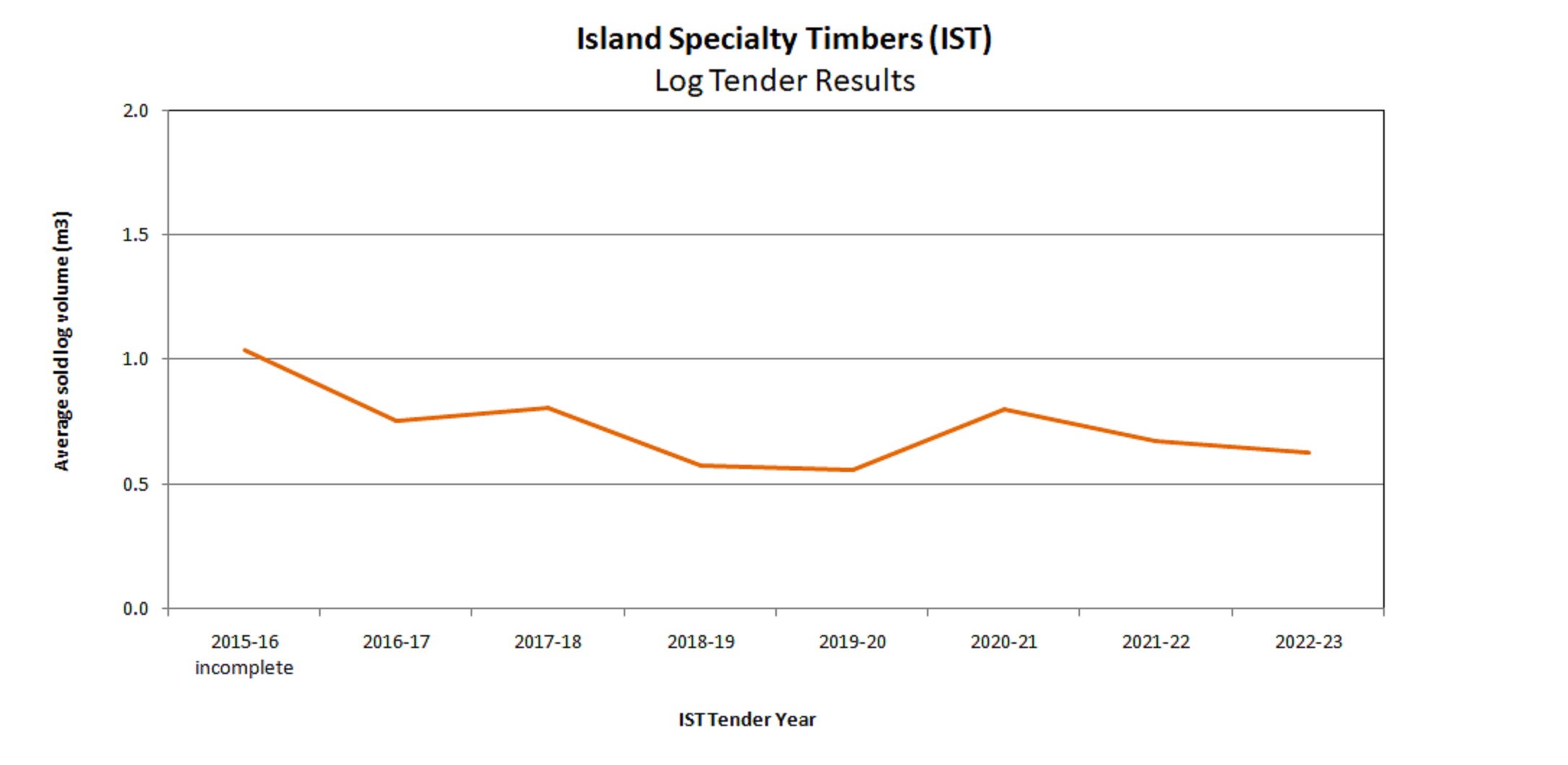
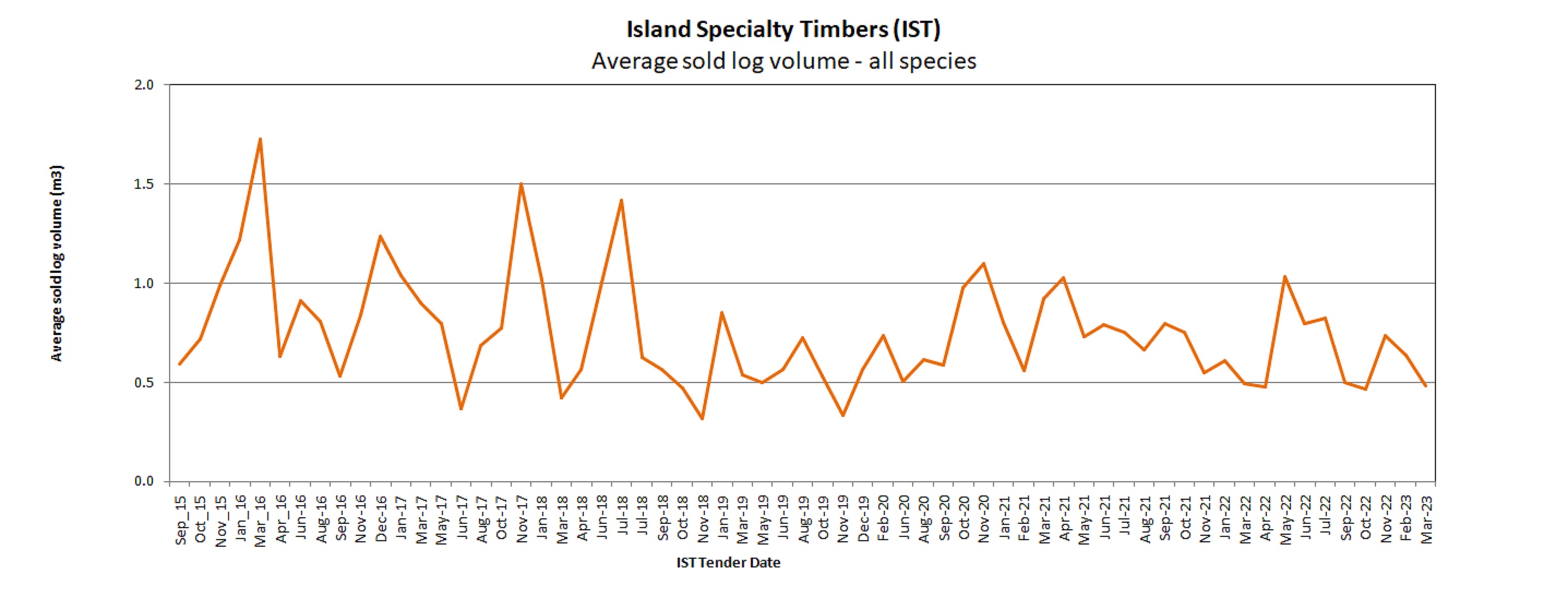
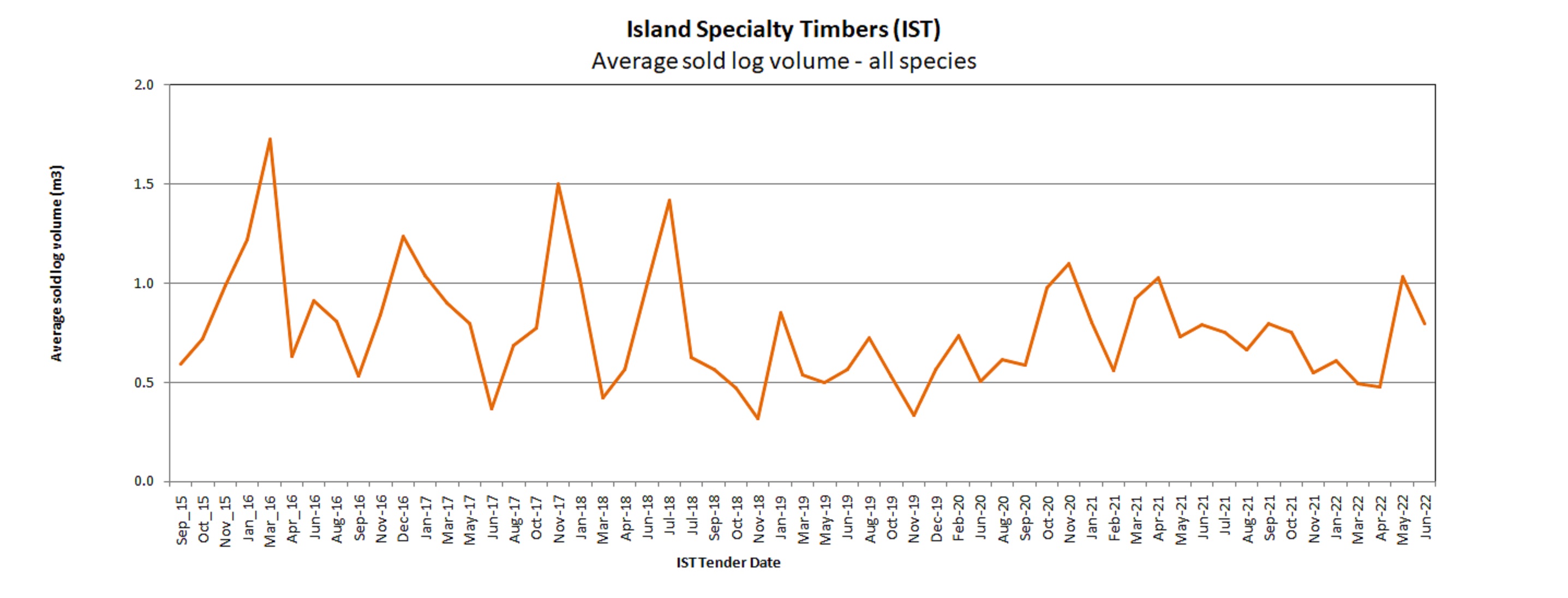
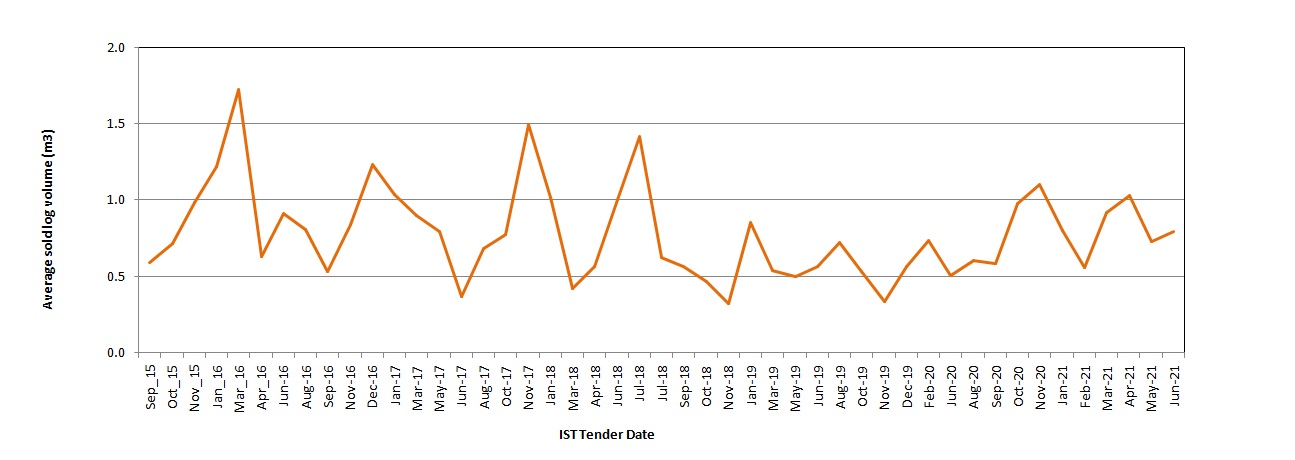
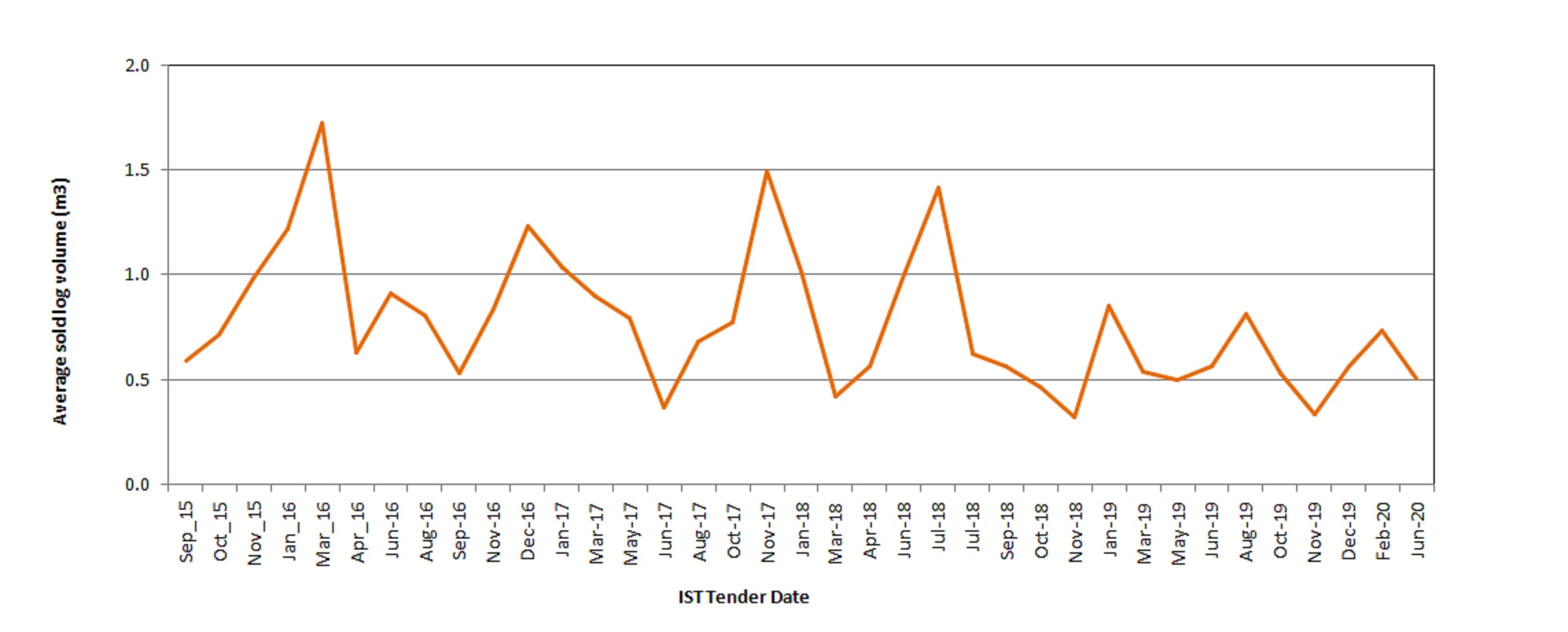
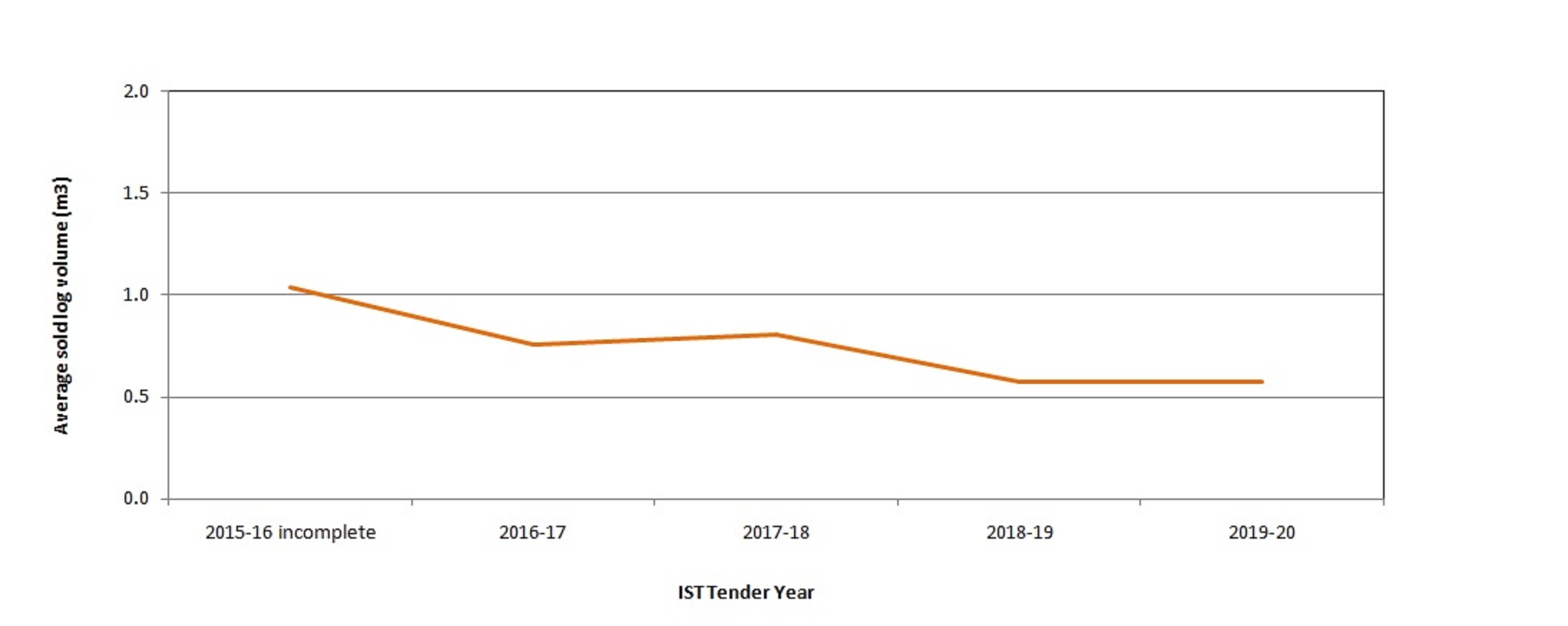
The following chart shows that average log size at the IST tenders continues to be small. Extracting value out of these small logs must present quite a challenge for the buyers.
With Tasmania and New South Wales now being the only States continuing to log public native forest the future of Island Specialty Timbers must now be on borrowed time.
I won’t be writing these annual reports for much longer!










 Tasmanian Blackwood Growers Cooperative
The burning of Notre Dame and Tasmanian Special Timbers
The burning of Notre Dame Cathedral in Paris on 15/4/2019 provides the perfect metaphor for the continuing destruction of Tasmania’s natural heritage.
The world was horrified that the 800 year old World Heritage Listed cathedral was on fire. How could humanity lose such a treasure?
But here in Tasmania 800+ year old heritage is destroyed every single day!
Here in Tasmania 800+ year old trees are cut down every day, at taxpayer expense, to provide a lowly subsistence for the rent seekers in the Tasmanian special timbers industry; sawmillers, furniture makers, luthiers, craftsmen, shop keepers, etc..
Trees such as Celery Top Pine (Phyllocladus aspleniifolius) and Myrtle (Nothofagus cunninghamii) live within Tasmania’s cool temperate rainforest and can live for 800-1000 years, germinating long before Bishop Maurice de Sully commenced the construction of Notre Dame in 1160.
Some of these trees are even in designated Conservation Reserves that were specifically established to protect these very same ancient trees and forests.
Such is the perverse corrupt nature of public native forestry and politics in the island State of Tasmania.
https://www.stategrowth.tas.gov.au/energy_and_resources/forestry/special_species_timber_management_plan
The public response to the damage at Notre Dame has been nothing but extraordinary. €100s millions have been pledged by individuals to rebuild Notre Dame and restore this international treasure.
Meanwhile in Tasmania these 800+ year old trees are destroyed with no process transparency, no FSC certification, at considerable public expense and no thought for the heritage that is being destroyed.
These people are the Notre Dame arsonists of Tasmania:
http://livingwoodtasmania.org.au/
https://www.facebook.com/TasmanianSpecialTimbersAlliance/
and many, many more. They number in the thousands in Tasmania!
Leave a comment
Posted in Commentary, Island Specialty Timbers, Markets, Politics
Tagged Notre Dame Cathedral