Category Archives: Forestry Tasmania

World Heritage Area logging: Boatbuilders need access to Tasmania’s protected forests due to lack of speciality timber, Government says

rainforest

http://www.abc.net.au/news/2015-09-16/new-analysis-shows-world-heritage-logging-necessary-for-demand/6780134

http://www.premier.tas.gov.au/releases/new_advice_proves_special_species_dudded_under_tfa

Here we go again continuing with the wasteful, divisive, political forestry wars.

“New analysis strengthens the argument that selective logging of speciality timber in Tasmania’s World Heritage Area is necessary to meet the demand from craft industries, including boat builders, the State Government says”.

As usual it’s not about profitable tree growing; it’s about tree growing as a community service.

It’s Centrelink Timbers!

How can Tasmanian blackwood have a profitable commercial future with Government policy like this?

Never mind the Tasmanian Forestry Agreement (TFA). It’s history! Using the TFA as an excuse to vilify your opponents and justify logging the World Heritage Area is complete nonsense.

Of course if you give away trees there will be a demand. But what would happen if the Government decided it was actually running a business and had to make a profit instead, like private tree growers, like Tasmanian farmers?

There is no discussion here about costs, prices or profits; and supply and demand are discussed as political not commercial objectives. Any relationship between cost, price, supply and demand is completely ignored. It’s a sad pathetic joke!

It’s the same with Forestry Tasmania as with the special timbers industry; the whole lot is run as a community service. Wasteful political nonsense.

As Vica Bailey of the Wilderness Society says “the specialty timber sector has traditionally been a by-product of clear-felling and woodchipping of vast areas of old-growth and rainforest, a model that glutted the market with heavily subsidised wood, there was never any expectation that historical levels of supply could, would or should continue“.

The public native forest special timbers industry has never been sustainable nor profitable.

The last 30 years have clearly demonstrated there is no such this as sensible when it comes to logging public native forests. Logging the World Heritage Area would be yet another forest industry disaster.

Resources Minister Paul Harriss said he would present the new analysis to the World Heritage committee delegation during its visit in November in a bid to reverse opposition to logging inside forests added to Tasmania’s World Heritage Wilderness Area in 2013.

Will Minister Harriss present the same analysis to the Tasmanian community for broader scrutiny?

The interesting thing in this news report is that blackwood is included in the discussion. World Heritage Area is now also about saving the blackwood industry. For the first time the Government admits the public native forest blackwood resource is not sustainable, only 12 months after the last blackwood resource review declared the resource sound and sustainable.

The incomplete history of unsustainable blackwood mismanagement

Forestry Tasmania’s own data clearly shows they have been overcutting the public blackwood resource for at least the past 25 years. And now as a consequence they want to try and justify logging the World Heritage Area. It’s just sickening!!

UNESCO must get the clear message from the Tasmanian community that logging the Tasmanian Wilderness World Heritage Area is not acceptable.

When will Tasmania get a fully commercial, profitable forest industry?

Wish List

Makeawish

The forest industry in Tasmania is heading towards oblivion, at least the part of the industry dependent on the public native forest resource. Decades of poor policy, politics and conflict have reduced the industry to a smoking ruin. But we seem to have trouble learning from past mistakes and from other people’s successes. Getting people to invest in the forest industry (from planting trees to investing in sawmilling and processing equipment) just won’t happen under the current regime. So here is my one dozen wish list:

  1. We need to start thinking of forestry as a primary industry and not as a Government-run, politically-driven, employment program. Sure it has a few unique features like a long investment time lag, but forestry is about business and profits; markets, costs and prices. It is not about politics or employment! Most wood now grown and sold in Australia comes from private tree growers. It is time to put the policy focus on private growers.One example of this change in focus would be to move Private Forests Tasmania (PFT) from the Department of State Growth Tasmania to the Department of Primary Industries, Parks, Water and Environment (DPIPWE). At the moment this DPIPWE website contains no mention of forestry at all:http://dpipwe.tas.gov.au/agricultureWhy isn’t forestry regarded as a primary industry in Tasmania?

    Also the Government Minister responsible for PFT/DPIPWE should also be responsible for Forestry Tasmania, so that all commercial forest policy and practice is aligned with primary industry policy. Does that sound logical or what?

  2. And like all primary industries the only basis for a successful forest industry is for tree growing (public and private) to be transparently profitable.That’s the golden rule! It’s that simple!Commercially focused, profitable tree growers are the foundation of a successful forest industry. The forest industry is not about subsidizing the sawmillers, papermakers, or woodchippers, or the furniture makers, craftsmen, luthiers or boatbuilders. These people are important, but without profitable tree growers they are irrelevant. Forest industry policy should be focused on profitable tree growers.
  3. We need to get the politics and conflict out of the industry. That means either a) completely transforming Forestry Tasmania into an independent, fully commercial, profitable business, or b) shutting down public native forest logging. There are no other options!
  4. Public and private tree growers must be able to compete in the marketplace on a level playing field. This means no more subsidies or political protection for public tree growers. Forestry Tasmania must be structured and managed just like a private tree grower – independent, fully commercial and profitable. Anything else is anti-competitive.
  5. The Tasmanian Farmers and Graziers Association (TFGA) needs to become a genuine independent, vigorous advocate for private forest growers. The interests of private forest growers are not the same as those of sawmillers, or Forestry Tasmania nor the Government of the day. A thriving commercially competitive, profitable forest industry can only exist when private tree growers have a strong, fearless, independent voice.
  6. It’s time for the forest industry (and I’m talking about everyone here from tree growers to wood processors and log exporters) to publically demonstrate some real commercial muscle. Where are the profits? Where are the prices? Where are the markets? Where is the transparency and market feedback? For far too long the industry has focused on political muscle. It’s time to “put the rubber to the road” and lead by commercial example.
  7. Unlike many other primary industry markets, Australia’s forestry markets have historically been opaque to near invisible, and continue to be that way. Hidden markets do not encourage investment in planting and infrastructure. The forest industry in New Zealand issues regular monthly market reports. This helps everyone better understand the marketplace. We desperately need similar transparency in forestry markets here in Australia.
  8. To help overcome the natural reluctance of many people to make the long-time investment in forestry (the time between planting and harvesting), the industry needs to be incredibly (aggressively??) transparent in the marketplace. This means lots of market reports and updates, lots of price and demand information, etc. We need significant market stimulation to help landowners get past the big time factor!!
  9. Farmers need to have greater understanding and confidence in forestry markets. Again this requires forestry markets to be much more transparent and commercially focused; just like other rural commodities. Investing in forestry is not easy. There’s the technical stuff and the long investment period, and just the switch to thinking “long term”. When we start getting forestry market updates in the rural media then I will know that the forest industry has come of age.
  10. The forest industry needs a new Forest Practices Code, or rather it doesn’t. Let me explain.The forest industry in New Zealand is huge (bigger than Australia’s) and very successful, but New Zealand does not have a Forest Practices Code. Imagine that! In New Zealand they regard the forest industry as just another primary industry, which must abide by the same code of environmental practice as all the other primary industries. It’s called a level playing field.The code is called the Resource Management Act 1991, and it applies to most primary industries. It is designed to protect environmental values regardless of land use. So growing trees for wood production has the same regulatory framework as other primary land uses. A brilliant idea!Here in Tasmania the forest industry is far and away the most (over?) regulated primary industry in the State. This creates market distortions and discourages sensible land use and investment decisions.Forest plantations on already cleared land should be no more or less regulated that any other agricultural crop. For many Tasmanians that will be a very difficult thing to imagine after the MIS hardwood plantation disaster.

    (And whilst on the subject of New Zealand, the forest industry there survives without any resource security. That’s right! Whatever trees the private forest growers have to sell is the only resource available to industry. That’s all. If a sawmiller wants “resource security” then they need to pay a competitive price to stay in business. The issue of “resource security” is a furphy!)

  11. And following on from the previous item, why do we have Private Timber Reserves in Tasmania?http://www.pft.tas.gov.au/index.php/services/services/1-website-articleWhy not Private Onion Reserves, Private Poppy Reserves, Private Cow Reserves or Private Apple Reserves? In fact why not make all primary industries subject to a single Statewide planning system? Wouldn’t that be fairer? We could even call it the Resource Management Act!
  12. And finally I’d like to see Tasmanian farmers incorporate commercial blackwood growing into their business models (either plantation or native bush), developing the skills, passion and expertise in growing this iconic quality Tasmanian product. But this won’t happen to any extent unless change occurs within the forest industry and Government policy.

When you compare my wish list with the current forest industry you can see an enormous abyss. Current forest policy is focused on a public native forest resource, a bankrupt, non-commercial public forest manager, a handful of taxpayer-subsidised sawmillers and processors, and enormous amounts of politics and community conflict. It has been this way for decades!

It seems that none of this will change unless the TFGA (on behalf of private forest growers) start demanding reform. And based on recent events I can’t see this happening any time soon.

What do you think? Comments? Continue reading

Gagged!

gagged

Isn’t this just so predictable and pathetic?

Just when we start to get some real debate and transparency into the Tasmanian forestry wars along comes the Honourable Minister and slams the door.

It was so newsworthy that it made both the major State news media.

http://www.abc.net.au/news/2015-06-19/forests-minister-tells-advisory-council-to-keep-opinions-private/6559572?section=tas

and

http://www.themercury.com.au/news/politics/resources-minister-paul-harriss-puts-clamp-on-forestry-tasmania-talk/story-fnpp9w4j-1227406689089

What is the purpose of an advisory council if “everyone is on the same page”? That’s not an advisory council. That’s a political smokescreen, a whitewash!

The whole purpose of an advisory council, as Sue Smith said, is to promote and foster vigorous, open discussion and canvas as wide a range of opinions and options as possible.

The Tasmanian forest industry is going absolutely nowhere until the future of Forestry Tasmania is resolved. And after 21 years we know that the GBE business model has been a total failure. Forestry Tasmania remains the “albatross around the neck” of the forest industry.

So vigorous and open debate about this issue is absolutely fundamental.

And yesterday the State government shut that debate down.

Judging by the response in the media the Tasmanian community is absolutely sick and tired of the continuing political games and squandering of taxpayers money on the forest industry. But the advisory council and our politicians just aren’t listening.

The issue of retaining skills is yet another forest industry furphy. The one and only skill that Forestry Tasmania needs right now is to be fully commercial and profitable. Without this fundamental skill everything else is completely irrelevant.

The advisory council is now a lame duck with no integrity, credibility or purpose. Send the bill to the Tasmanian taxpayer.

When will Tasmania get a fully commercial profitable forest industry?

TFGA supports continuation of failure

TFGA_Skillern

TFGA CEO Mr Peter Skillern

Well the TFGA retains its historical position as being incredibly conflicted and confused about the role of the private forest grower and the future of the forest industry in Tasmania.

http://www.abc.net.au/news/2015-06-19/tfga-supports-forestry-tasmania-dismantle-discussion/6558536

With the Forestry Tasmania GBE business model being shown to be a complete disaster over the past 21 years the TFGA comes out today and says that’s fine, keep it going!

It’s pretty pathetic and shows a complete lack of independence and vision.

Typical!

Private forest owners now dominate the forest harvest in Tasmania for perhaps the first time ever.

State forest policy should now be focused entirely on building a profitable, commercially focused private forest grower base.

But the TFGA appears not to want this. Instead the TFGA wants State forest policy to remain 100% focused on the public forest resource and a failed GBE.

More politics and conflict and a failed forest industry.

The TFGA is the only representative and voice of the private forest grower in Tasmania.

I just don’t understand!

At least Sue Smith had the guts to have a go and say something different.

IST Blackwood Sawlog Tender Results 2014-15

IST 0515 log 16

Here is a summary of blackwood sawlog tender results from Island Specialty Timbers (IST) for the 2014-15 financial year.

http://www.islandspecialtytimbers.com.au

This follows my inaugural report last year:

http://blackwoodgrowers.com.au/2014/06/14/blackwood-sawlog-tender-results-2013-14/

During the year 14 lots of blackwood logs were put to tender by IST. These were individual logs except for two parcels of small logs in the October 2014 and January 2015 tenders. Only one log was unsold for the year from the August 2014 tender.

Total volume of blackwood logs sold was 31.06 cubic metres (or approximately 0.3% of the total volume of blackwood logs sold by Forestry Tasmania for the year) for a total value of $20,660.

Plain grain logs in 3 lots totalling 18.7 cubic metres sold for an average volume-weighted price of $227 per cubic metre.

Feature grain logs totalling 12.4 cubic metres sold for an average volume-weighted price of $1,325 per cubic metre.

These good prices were achieved despite many of the lots having quality issues (spiral grain, flutes, branch stubs, small diameter). Some of the lots could best be described as craft logs.

This compares with the special timbers average mill door log value of $134 per cubic metre that Forestry Tasmania received in 2013/14.

There was such a variety of log grades and qualities in these 14 lots that for analysis and summary I’ve grouped the logs into just plain and feature grain, as these seem to be the main determinants of price.

In general logs sold by IST are smaller and with more defects compared to logs sold under long-term contract to favoured customers. They do not represent average “run-of-the-bush” quality logs.

Table 1 summarises the tender results.

  Lot count Average of SED (cm) Average of Len (m) Average of Vol (m3) Sum of Vol (m3) Average of Unit Price ($/m3) Total Price ($)
Plain 3 44 5.9 1.0 18.67 $302 $4,244
Figured 10 60 3.9 1.2 12.39 $1,280 $16,420
Sold 13 57 4.3 1.1 31.06 $1,054 $20,664
Plain 1 69 2.4 1.2 1.20
Unsold 1 69 2.4 1.2 1.20

The highlights for the year were:

  • One small feature-grain log that sold for a unit value of $2,400 per cubic metre in the January 2015 tender, and
  • A log (1.6 cubic metres) that sold for $3,260 ($2,000 per cubic metre) in the February 2015 tender, which contained some feature grain but also had significant quality issues (sweep and spiral grain).

The lowest unit price for the year was achieved by the parcel of 13 small plain-grain logs in the October 2014 tender. This parcel totalled 10.1 cubic metres in volume, with average dimensions SED 42cm, LED 47cm, Len 5.0m, vol 0.78 cubic metres. This parcel sold for $200 per cubic metre.

Only one of the logs tendered approximated in size and quality what might be grown in a well managed blackwood plantation. This was Lot 20 in the March 2015 tender that sold for $620 or a unit price of $485 per cubic metre. This is a very good price and puts the value of a blackwood plantation at harvest at well over $100,000 per hectare!

Are any Tasmanian farmers interested?

In 2013/14 IST sold a total of 1,531 cubic metres of product including 136 cubic metres sold through the tender process “to ensure that the best possible prices were obtained” (Forestry Tasmania 2013/14 Annual Report). Only 16.1 of the 136 cubic metres (12%) was blackwood, despite the fact that blackwood comprises 80% of the special timbers harvest annually. I wonder how much of the 1,531 cubic metres of product was blackwood? We will never know. Frustratingly Forestry Tasmania don’t tell us how much the 1,531 or the 136 cubic metres sold for.

These tender results represent the only publically available competitive market prices for blackwood sawlogs. Given that blackwood is the only Tasmanian specialty timber that has the potential to have a commercial future these prices are important in alerting Tasmanian farmers and the wider community to the commercial opportunity that is available.

One thing that is clear from watching the regular IST tender results, the special timbers market is capable of paying extremely high prices for quality special timber logs as evidenced by the massive $5,900 per cubic metre paid for a tiger myrtle log at the April tender.

Caveats:

  1. Island Specialty Timbers (IST) is an enterprise of Forestry Tasmania established in 1992 to increase the recovery, availability and value of specialty timbers from harvesting activities in State forests.
  2. Forestry Tasmania manages its special timbers operations (including IST) as a taxpayer-funded, non-commercial, non-profit, community service.
  3. Note that all logs and wood sold by IST comes from the harvesting of public native old-growth forest and rainforest certified under AFS (PEFC).
  4. It is unlikely that this tiny set of market-based blackwood log prices is representative of the broader blackwood market.
  5. The dataset is too small to allow any analysis or correlations to be made between price and log quality apart from the obvious result that feature-grain logs attract a significant price premium over plain-grain.
  6. Remember also these tender prices are effectively mill door prices that already include harvesting and transport costs. They are not stumpage prices.

It would improve market transparency and stimulate greater investor interest if IST would tender more blackwood logs and demonstrate real commercial focus. Increasing the blackwood volume tendered to even 100 cubic metres per year would be a good start.

But whilst Forestry Tasmania, the State government and the State parliament all regard the special timbers industry as a community service and political play-thing rather than any commercial opportunity, then blackwood’s commercial future remains difficult.

When will Tasmania get a fully commercial, profitable forest industry, based on profitable tree-growing?

Forestry Tasmania job losses: the house of cards crumbles

FT logo http://www.abc.net.au/news/2015-05-12/as-many-as-100-forestry-tasmania-job-could-be-lost-union-says/6463900?section=tas

Forestry Tasmania, Australia’s major blackwood grower, appears to be in free fall. Following on from this recent blog:

http://blackwoodgrowers.com.au/2015/04/30/ft-closer-to-closure/ it appears we are seeing the final act of this decades-long fiasco.

After years of poor financial management and performance and decades of political intrigue and community conflict, the last remnants of the Government business appear to be crumbling.

As the recent blog discussed, there is no road to recovery for Forestry Tasmania. These is just the next round of job losses.

The Smithon office in the north-west, where most of the blackwood is grown and harvested, is to lose 50% of its staff. But stakeholders in Australia’s iconic blackwood industry are completely in the dark. There is no transparency in any of this. All we know is that FT are cutting costs, and their biggest cost is staff.

Whatever happened to the Stakeholder Engagement Policy?

Whatever happened to the Stakeholder Engagement Strategy?

http://www.forestrytas.com.au/forest-management/policies

Do any of these corporate initiatives have any purpose or meaning?

It seems not! Perhaps they’re just window dressing when the need suites the occasion (like an FSC audit).

The impact of staff cuts on forest management and operations has not been made public.

So much for sustainability and certification! It’s business.

If you can’t make a profit then you aren’t sustainable!

Will this be the end of Australia’s iconic blackwood industry? Or will the industry finally turn to private blackwood growers for its future?

When is Tasmania going to get a fully commercial, profitable forest industry based on profitable tree growing?

FT closer to closure

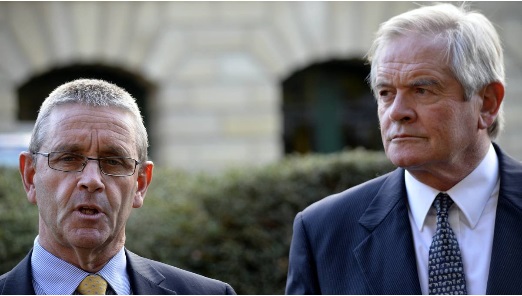
Harriss&Annells Resources Minister Paul Harriss (L) & Forestry Tasmania Chairman Bob Annells (R)

The ministerial statement on the future of Forestry Tasmania today was a de facto announcement of the appointment of an Administrator.

Expressions of interest are to be invited for some of FT’s assets, mainly the hardwood plantations, which hopefully will be enough to cover the costs of Administration.

FT will then almost certainly be wound up.

http://www.tasfintalk.blogspot.com.au/2015/04/ft-closer-to-closure.html

I was going to write my own response to Wednesdays announcements by Resources Minister Paul Harriss but John Lawrence beat me to it and with much greater depth and understanding.

http://www.premier.tas.gov.au/releases/securing_the_future_of_forestry_tasmania http://www.premier.tas.gov.au/releases/ministerial_statement_review_of_forestry_tasmania

Thank you John. And I fully agree with his analysis.

Please read John Lawrence’s analysis and response to yesterdays announcements.

Remember that Forestry Tasmania is the largest grower/supplier of Tasmanian blackwood timber to the market. When FT goes the blackwood industry will have some tough times adjusting.

I will leave you with John’s closing statement:

Minister Harriss hasn’t produced a plan. Rather a plea. Help me.

After all the talk about growing the industry when the figures suggested growing the industry will grow the losses has left him with the credibility of miracle cancer survivor Belle Gibson and the strategic smarts of Colonel Custer.

One good reason for maintaining FT for a while longer is that sale of assets will be more easily effected by a GBE.

When Minister Harriss talks about finding a way to fund a transition, he is referring to the transition from Administration to Liquidation.

Nothing else is likely at this stage.

PS. This is not to say it will be the end of the forest industry. Quite the opposite.

I believe the best option now available is to recognise that the future of the industry is with private forest growers and farmers. It already is! Most wood now grown and sold in Australia comes from private forest growers. This is even now true in Tasmania. The future is already here.

The sooner we move on and get the conflict and politics out of the industry the better it will be for everyone, including blackwood growers.

Forestry Tasmania fate in balance

Annells

http://www.examiner.com.au/story/2926663/forestry-tasmania-fate-in-balance/?cs=95

[The fate of] Forestry Tasmania hangs in the balance, with its chairman telling staff the company’s immediate future is entirely in the government’s hand.

In an email sent to Forestry Tasmania staff yesterday, chairman Bob Annells [pictured above] responded to mounting concerns that the cash-strapped company may be dissolved and folded into a government department.

[“folded into a government department” What an absolutely terrible idea! What Government department would it fit into? And what would be the point? It would fix none of the existing problems, and create even more new problems. A classic case of duck shoving!]

This article in today’s The Examiner tells us that things are pretty grim at the Government forest management agency.

While no official announcement has been made it now seems clear that FTs application for FSC Certification has been rejected. FSC auditors SCS Global were due to deliver their report last month.

And yet another review into Forestry Tasmania is currently being written. I’ve lost count of how many of those we’ve had. Far too many. And none of them have been at all useful, at least in terms of their implementation.

But enough is already known to understand that FT has absolutely no commercial future.

The Tasmanian Government is no doubt finding it increasingly difficult continuing to sack teachers and nurses whilst propping up the forest industry.

It is now just a matter of how best to clean up the decades of mess and close the organisation down.

It will be a bitter pill for many Tasmanians.

Decades of mismanagement may finally be coming to an end. Or it may drag on for a few more painful, bitter years. History tells me that the latter is more likely eg. the “fold” option.

The shutting down of FT will see the supply of blackwood to the market drop dramatically, with a corresponding rise in price very likely. Will Tasmanian farmers finally reap the rewards of a more competitive blackwood market?

UPDATE:

Seems like the FSC outcome is indeed correct judging by the article in today’s The Examiner. No medal for FT.

http://www.examiner.com.au/story/2929002/demands-on-forestry/?cs=95

So FT will “keep trying”. They don’t have the time nor the money to keep trying.

The longer FT stays in business the longer it will take for private tree growers and private investment to rebuild the forest industry. It just wont happen whilst FT continues to play zombie corporation.

Rise and Rise of Crony Capitalism….

and the Destruction of the Tasmanian Community!

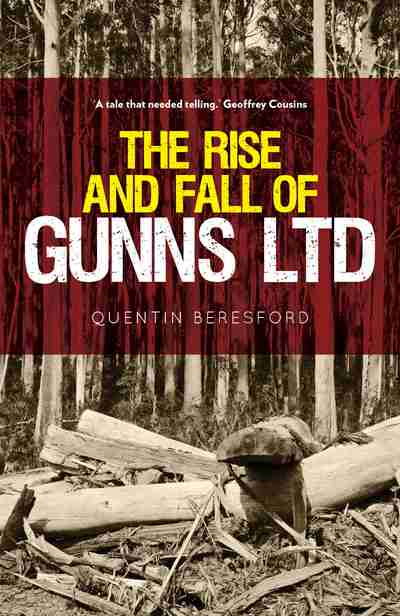
You can’t live in Tasmania without this book and the story it tells having a deep impact. If you are in anyway connected with the forest industry in Tasmania the impact is magnified tenfold. The book was recently released and is a timely reminder that Tasmania has significant political, commercial and social issues that remain unresolved.

The decade 2003-2013 saw Tasmania in a state of virtual civil war with Gunns Ltd at its epicentre.

http://en.wikipedia.org/wiki/Gunns

http://en.wikipedia.org/wiki/Bell_Bay_Pulp_Mill

The book has little to do with growing commercial blackwood apart from the fact that it details the corrupt hostile commercial, political and social context in which my dream of a blackwood growers cooperative is trying to become a reality.

Am I wasting my time? As a forester this book makes for sad, depressing reading.

If we can’t turn Australia’s number one premium appearance grade timber species into a commercial opportunity then it is due to a profound failure of policy, business and politics.

And as the author so clearly articulates in the Afterword of the book Tasmania continues to head in the wrong direction. Power and corruption continue to dominate the island State.

A fabulous read. Highly recommended!

Beresfordcover

Buy the book directly from the publishers:

https://www.newsouthbooks.com.au/books/rise-and-fall-gunns-ltd/

The book is also available on Amazon:

http://www.amazon.com/The-Rise-Fall-Gunns-Ltd/dp/1742234194/ref=tmm_pap_title_0?ie=UTF8&qid=1423691070&sr=8-1

and hopefully at Book Depository:

http://www.bookdepository.com/Rise-Fall-Gunns-Ltd-Quentin-Beresford/9781742234199

Forestry Tasmania and the Economic Regulator

FT logo

The Government’s willingness to breach the spirit of national competition policy by its use of State resources to prop up Forestry Tasmania whilst imposing austerity on broader sections of the Tasmanian community has struck a discordant note with many of the affected. If prices charged by Forestry Tasmania were required to fully cover costs [never mind the idea of actually making a profit] then it would be required to cease its unprofitable native forest harvesting.


A willingness by the affected to pursue remedies and solutions has precipitated this note.


Competitive neutrality complaints are handled by the Office of the Tasmanian Economic Regulator (OTTER) pursuant to the Economic Regulator Act 2009 .

http://www.tasfintalk.blogspot.com.au/2014/12/ft-and-economic-regulator.html

This blog by Tasmanian finance and economics commentator John Lawrence came out before Christmas, but it drives home the continuing failure of policy and corporate governance that is the hallmark of Government Business Enterpises such as Forestry Tasmania.

The fundamental lesson remains that Governments should not be in the business of competing with private business. Forestry is a business and there are many private tree growers who are being disadvantaged by Government policy and action.

One of the many failures in all of this is that farmer representative bodies such as the TFGA fail to bring the Government to account. If the Government opened a public service-run dairy, sold milk at below cost and then sacked teachers and nurses to help pay for it, the TFGA, dairy farmers and the rest of the Tasmanian community would be marching on Parliament. But for some reason forestry is different. Disadvantaging dairy farmers is out of the question but apparently disadvantaging private tree growers is perfectly acceptable behaviour amongst the farming community. It is very curious!

Another failure, as John Lawrence highlights, is that the so called Economic Regulator is a toothless tiger that spends more time licking the hands of politicians than biting their ankles.

http://www.energyregulator.tas.gov.au/

It is certainly curious that Forestry Tasmania, the one Government agency that clearly competes with the private sector (unlike gas, electricity and water), is completely off the Regulator’s radar. Coincidence? I doubt it!

So forestry industry workers enjoy complete Government protection whilst front line services such as nurses and teachers continue to lose their jobs. And forestry markets remain completely distorted and corrupted by Government policy.

When will Tasmania wake up? When will farmers and private tree growers rally of the lawns of Parliament House and demand reform?